







Question: Based on the case and the chapter text, which option from Ansoff's strategic opportunity matrix did Nintendo engage in when it launched the Wii U?
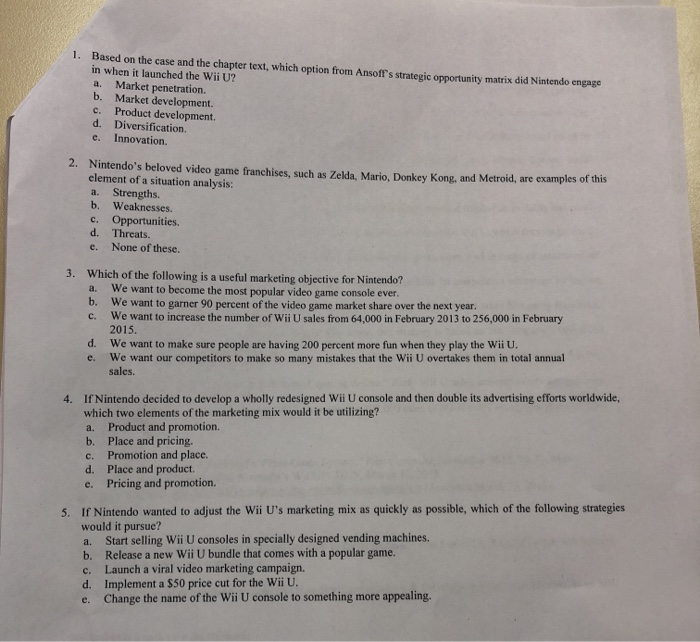
Based on the case and the chapter text, which option from Ansoff's strategic opportunity matrix did Nintendo engage in when it launched the Wii U? a. Market penetration. b. Market development. c. Product development. d. Diversification. e. Innovation. Nintendo's beloved video game franchises, such as Zelda, Mario, Donkey Kong, and Metroid, are examples of this element of a situation analysis: a. Strengths. b. Weaknesses. c. Opportunities. d. Threats. e. None of these. 3. Which of the following is a useful marketing objective for Nintendo? a. We want to become the most popular video game console ever. b. We want to garner 90 percent of the video game market share over the next year. c. We want to increase the number of Wii U sales from 64,000 in February 2013 to 256,000 in February 2015. d. We want to make sure people are having 200 percent more fun when they play the Wii U. e. We want our competitors to make so many mistakes that the Wii U overtakes them in total annual sales. 4. If Nintendo decided to develop a wholly redesigned Wii U console and then double its advertising efforts worldwide, which two elements of the marketing mix would it be utilizing? a. Product and promotion. b. Place and pricing. c. Promotion and place. d. Place and product. e. Pricing and promotion. 5. If Nintendo wanted to adjust the Wii U's marketing mix as quickly as possible, which of the following strategies would it pursue? a. Start selling Wii U consoles in specially designed vending machines. b. Release a new Wii U bundle that comes with a popular game. c. Launch a viral video marketing campaign. d. Implement a $50 price cut for the Wii U. e. Change the name of the Wii U console to something more appealing. Based on the case and the chapter text, which option from Ansoff's strategic opportunity matrix did Nintendo engage in when it launched the Wii U? a. Market penetration. b. Market development. c. Product development. d. Diversification. e. Innovation. Nintendo's beloved video game franchises, such as Zelda, Mario, Donkey Kong, and Metroid, are examples of this element of a situation analysis: a. Strengths. b. Weaknesses. c. Opportunities. d. Threats. e. None of these. 3. Which of the following is a useful marketing objective for Nintendo? a. We want to become the most popular video game console ever. b. We want to garner 90 percent of the video game market share over the next year. c. We want to increase the number of Wii U sales from 64,000 in February 2013 to 256,000 in February 2015. d. We want to make sure people are having 200 percent more fun when they play the Wii U. e. We want our competitors to make so many mistakes that the Wii U overtakes them in total annual sales. 4. If Nintendo decided to develop a wholly redesigned Wii U console and then double its advertising efforts worldwide, which two elements of the marketing mix would it be utilizing? a. Product and promotion. b. Place and pricing. c. Promotion and place. d. Place and product. e. Pricing and promotion. 5. If Nintendo wanted to adjust the Wii U's marketing mix as quickly as possible, which of the following strategies would it pursue? a. Start selling Wii U consoles in specially designed vending machines. b. Release a new Wii U bundle that comes with a popular game. c. Launch a viral video marketing campaign. d. Implement a $50 price cut for the Wii U. e. Change the name of the Wii U console to something more appealing
Step by Step Solution
There are 3 Steps involved in it

Get step-by-step solutions from verified subject matter experts
 Study Help