







Question: Based on the information provided in the materials within this module, which of the financial challenges do you feel are the most important for Chief
Based on the information provided in the materials within this module, which of the financial challenges do you feel are the most important for Chief Financial Officers (CFOs) to address immediately?
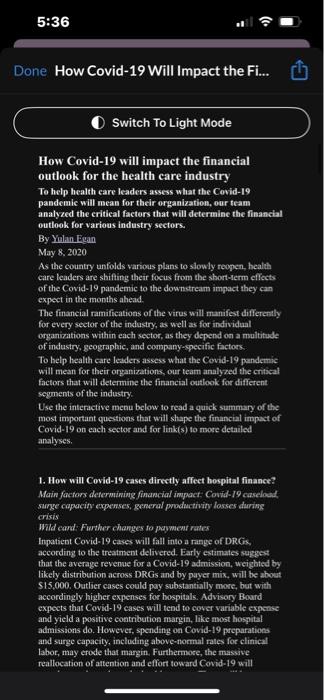
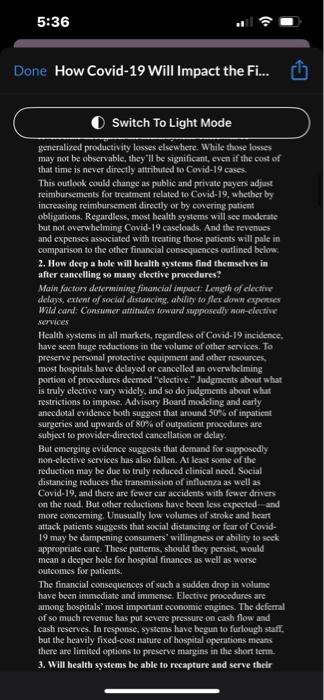
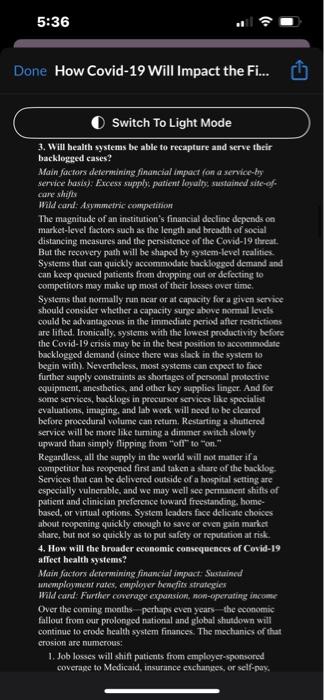
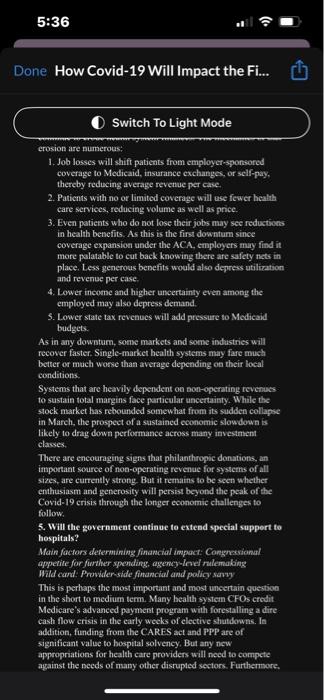
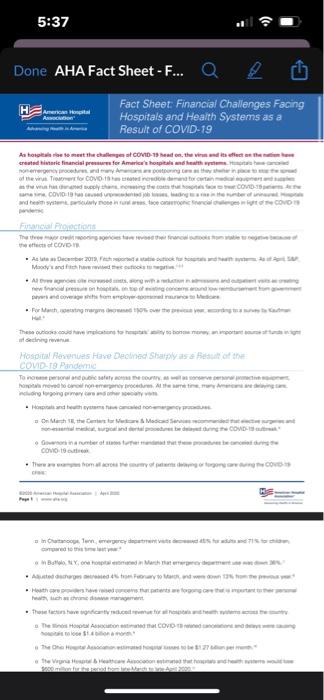
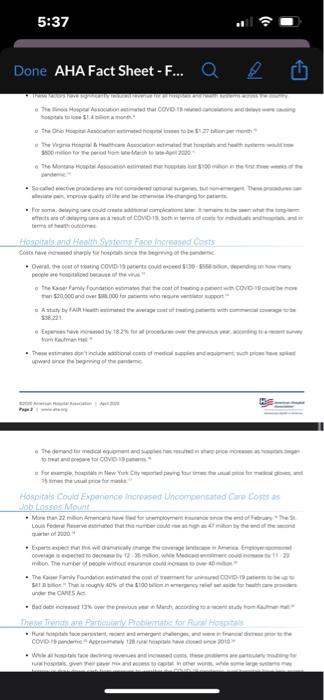
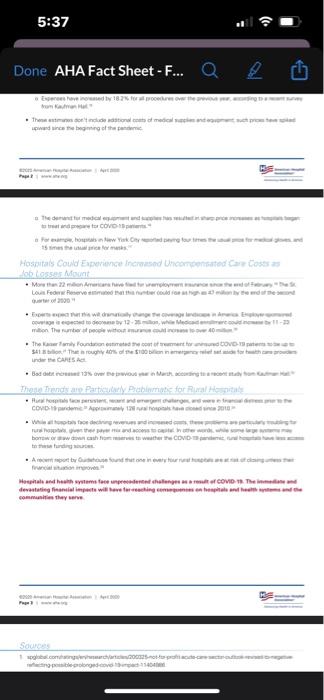
1. How will Covid-19 cases directly affect hospital finance? Main factors defermuning finunclal impact: Covid-19 caseload surge copacity expenses, general prodactivity lasses derring crisis Wild cand Fiother changes to pavment rates Inpatient Covid-19 cases will fall into a range of DRGis. according to the treatment delivered. Early estimates suggest that the average revenue for a Covid-19 admission, weighted by likely distribution across DRGs and by payer mix, will be about $15,000. Outlier cases could pay substantially more, bet with accordingly higher expenses for hospitals. Advisory Board expocts that Covid-19 cases will tend to cower variable experse and yicld a positive contribution frargin, like most hospital admissions do. However, spending oa Covid-19 preparations and surge capacity, including above-nomal rales for clinical labor, may crode that margin. Furthermore, the massive reallocation of attention and effort toward Covid-19 will Switch To Light Mode generalired productivity losses elsewhere. While those losess may not be chservable, they"ll be significant, even if the coet of that time is never directly attributed to Covid-19 cases. This outlook coald change as pablie and private payers adjus reimbursements for treatment related to Covid-19, whether by increasing reimbursement directly or by covering patient obligations. Regardless, most health systems will see moderate but not overwhelming Covid-19 caseloads. And the revenues and expenses associated with treating those patients will pale in comparison to the other financial consequences outlined belors: 2. How deep a hole will health systems find themselves in after cancelling so many elective procedures? Main fartars determining financial ingpact- Length of electir delags, extent of social distancing, ability to fter donvereseres Wild card: Conswmer attindes foward sepposedly non-etective services Health systems in all markets, regardless of Covid-19 incidence, have seen huge reductions in the volume of other services. To preserve personal protective equipment and other resources. most hospitals have delayed or cancelled an overahelming portion of procedures deemed "elective "Jadgmeats about what is truly eloctive vary widely, and 50 do judgments about what restrictions to impose. Advisory Board modeling and early anecdotal evidence both suggest that around 50$ of inpatient surgeries and upwards of 80te of outpatient procedures are subject to provider-directed cancellation or delay. But cmerging evidence suggests that demand for supposedly roa-clective services has also fallen. At least some of the reduction may be due to truly reduced clinical need. Social distancing redaces the transmission of influenza as well as Covid-19, and there are fewer car accidents with fewer drivers on the roed. But other reductions have been less expected and more concerning, Unusually low volumes of stroke and heart attack patients suggests that social distancing or fear of Covid19 may be dampening consumers' willingness or ability to sock apprepriate care. These pattems, should they persist, would mean a deeper hole for hospital finances as well as worse outcomes for paticnts. The financial consequences of such a suddea drop in volume have been immediate and immense. Eloctive procedures are among bospitals most important economic cagines. The defemel of so much revenue has put severe pressure on cash flow and cash reserves. In response, systeas have begun to furlough staff, but the hecavily fixed-cost nature of hospital operations meana there are limited options to preverve margins in the short term. 3. Will health systems be able to recaptare and serve their Done How Covid-19 Will Impact the Fi... Switch To Light Mode 3. Will health systems be able to recapture and serve their backlogged cases? Main factors defermining financial impact fon a sentice-by service basis): Ercess supply, patient loywiby susfained sitcrof? care shifle Whild card: Asymetric competition The magnitude of an institution's financial decline depends an market-level factors such as the length and breadth of social distancing measures and the persistence of the Covid-19 threat. But the recovery path will be shaped by system-level realities. Systems that can quickly accommodate hacklogged demand and can kesp queued patients from dropping out or defecting to competitors may make up most of their loses ever time. Systems that normally nun near or at capacity for a qiven service should consider whether a capacity sugge above nocmal levels could be advantageous in the immediate period after restrictions are lifted. Ironically, systems with the lowest productivity before the Covid- 19 crisis may be in the best position to accommodote backlogged demand (since there was slack in the system to begin with). Nevertheless, most systems ean expect to face firther supply constraints as shortages of personal protective cquipment, antesthetics, and other key supplies linger. And for some services, backlogs in procurver services like specialist cvaluations, imaging, and lab wotk will nocd to be cleared before procedural volume can return. Restarting a shuttered service will be more like tuming a dimmer wwich slowiy upward thas simply flipping from "off to "on." Regardless, all the supply in the world will not matier if a competitor has reogened first and taken a share of the backlog. Senvices that can be delivered outside of a hospital setaing are especially vulacrable, and we may well sec permanent shifts of patient and clinician preference toward freestanding, homebased, or virtual options. System leaders face delicate choises: aboat roepening quickly enoagh to save or even gain market share, but not 50 quickly as to put safety or reputatioa at risk- 4. How will the broader economic consequeaces of Covid-19 affect health systems? Ma factors determining fonancial ingagct: Sustainced memploymen rates, employer benefits strategien Wild card: Firther coverage expansion, non-operating incume Over the coming months - perhaps even years - the economic fatlout from our prolonged national and global shutdown will continue to erode bealth system finances. The mochamics of that crosion are numerous: 1. Job losses will shift patients from employer-sponsercd coverage to Medicaid, insurance exchanges, or self-pay. Done How Covid-19 Will Impact the Fi... Switch To Light Mode erosion are numerous: 1. Job losses will shift paticats from employer-sponsored coverage to Medicaid, insurance exchanges, or self-pay, thereby reducing average revenue per case. 2. Paticnts with no or limited coverage will ase fewer healyh care services, reducing volume as well as price. 3. Even patients who do not lose their jobs may see reductions in health benefits. As this is the first downtum since coverage expansioa under the ACA, employers may find it more palatable to cut back knowing there are safety nets in place. Less generous benefits would also depress utiliration and revenue per case. 4. Lower income and higher uncertainty even among the employed may also depress demand. 5. Lower state tax revenues will add pressure to Medicaid budgets. As in any downturn, sonc markets and some industries will recover faster. Single-market health systems may fare much better of much wosse than average depending en their loeal conditions Systems that are heavily dependent on non-operating revemess to sustain total margins face porticular uncertainty. Whille the stock market has rebounded somewhat from its sudden collapse in March, the prospect of a sustained economic slowdown is likely to drag down performance across many investment classes. There are encouraging signs that philanthropic donations, an important source of non-operating revenue for systems of all sizes, are currently strong. But it remains to be seen whether enthusiasm and generosity will persist beyond the peak of the Covid-19 crisis through the longer economic challenges to follow, 5. Will the government centinue to extend special suppert to hospitals? Main foctors determining financial impoct: Congnesvionat? appetile for fiother spending, agency-level rulemalding Hild cand: Provider-side financial and policy saryy This is perhaps the most important and most uncertain question in the short to medium term. Many health system CFO s credit Medicare's advanced payment program with forestalling a dire cash flow crisis in the carly weeks of elective shatdowns. In addition, funding from the CARES act and PPP are of significant value to hospital solvency, Bul any new appropriations for health care providers will need to compete against the needs of many other disrupted sectors. Furthem ore. the etincti ex ctover in int secinich revenun 13kiti. Wien kadriat biel " trow Kadmer mut = ipiwasd wince the begnerg of the pahihme
Step by Step Solution
There are 3 Steps involved in it

Get step-by-step solutions from verified subject matter experts
 Study Help