



Question: Based on your analysis above, write a short letter (1 to 2 pages) to Chad with your recommendations about his retirement planning. Dont necessarily include
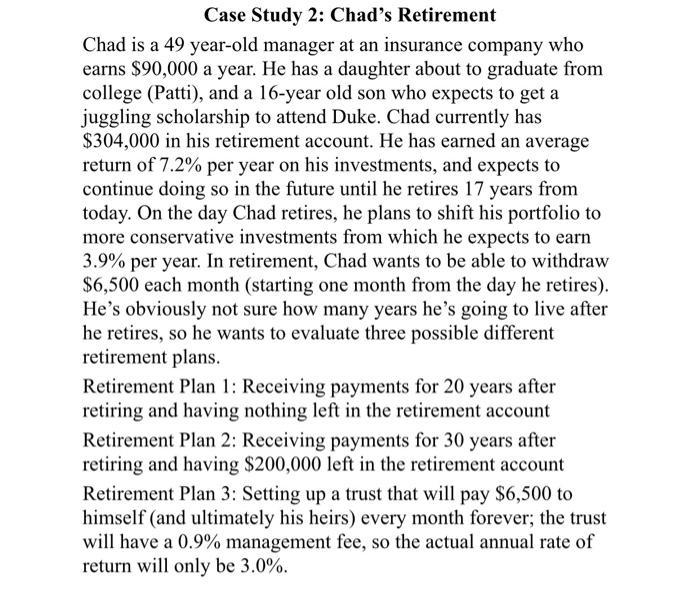
Case Study 2: Chad's Retirement Chad is a 49 year-old manager at an insurance company who earns $90,000 a year. He has a daughter about to graduate from college (Patti), and a 16-year old son who expects to get a juggling scholarship to attend Duke. Chad currently has $304,000 in his retirement account. He has earned an average return of 7.2% per year on his investments, and expects to continue doing so in the future until he retires 17 years from today. On the day Chad retires, he plans to shift his portfolio to more conservative investments from which he expects to earn 3.9% per year. In retirement, Chad wants to be able to withdraw $6,500 each month (starting one month from the day he retires). He's obviously not sure how many years he's going to live after he retires, so he wants to evaluate three possible different retirement plans. Retirement Plan 1: Receiving payments for 20 years after retiring and having nothing left in the retirement account Retirement Plan 2: Receiving payments for 30 years after retiring and having $200,000 left in the retirement account Retirement Plan 3: Setting up a trust that will pay $6,500 to himself (and ultimately his heirs) every month forever; the trust will have a 0.9% management fee, so the actual annual rate of return will only be 3.0%. Case Study 2: Chad's Retirement Chad is a 49 year-old manager at an insurance company who earns $90,000 a year. He has a daughter about to graduate from college (Patti), and a 16-year old son who expects to get a juggling scholarship to attend Duke. Chad currently has $304,000 in his retirement account. He has earned an average return of 7.2% per year on his investments, and expects to continue doing so in the future until he retires 17 years from today. On the day Chad retires, he plans to shift his portfolio to more conservative investments from which he expects to earn 3.9% per year. In retirement, Chad wants to be able to withdraw $6,500 each month (starting one month from the day he retires). He's obviously not sure how many years he's going to live after he retires, so he wants to evaluate three possible different retirement plans. Retirement Plan 1: Receiving payments for 20 years after retiring and having nothing left in the retirement account Retirement Plan 2: Receiving payments for 30 years after retiring and having $200,000 left in the retirement account Retirement Plan 3: Setting up a trust that will pay $6,500 to himself (and ultimately his heirs) every month forever; the trust will have a 0.9% management fee, so the actual annual rate of return will only be 3.0%
Step by Step Solution
There are 3 Steps involved in it

Get step-by-step solutions from verified subject matter experts