







Question: Basic Ratemaking, Loss Development. CAS E5. Actuarial Science. Show all works and steps and explanation. 4. You have the task of choosing which set of
Basic Ratemaking, Loss Development. CAS E5. Actuarial Science. Show all works and steps and explanation.
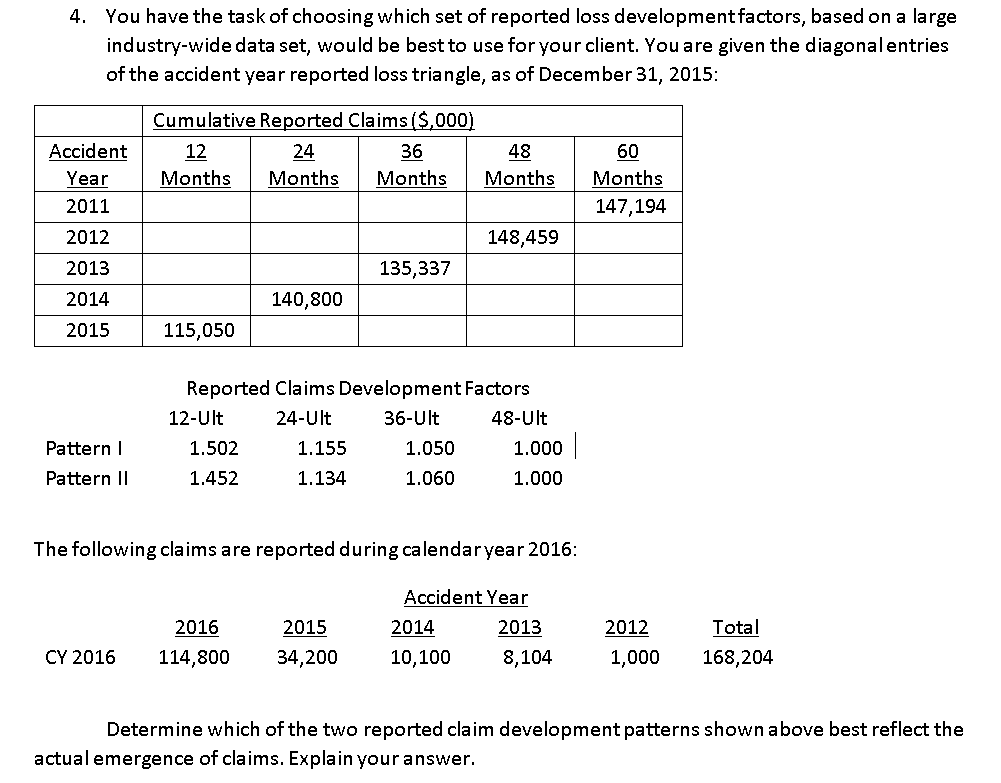
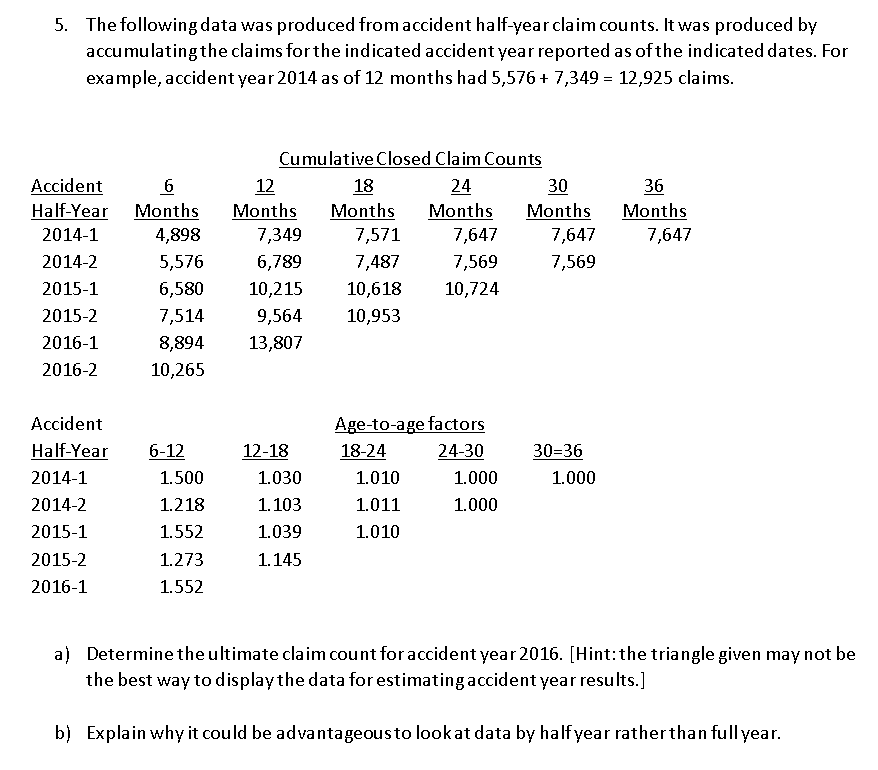
4. You have the task of choosing which set of reported loss development factors, based on a large industry-wide data set, would be best to use for your client. You are given the diagonalentries of the accident year reported loss triangle, as of December 31, 2015: Reported Claims Development Factors The following claims are reported during calendar year 2016 : Determine which of the two reported claim development patterns shown above best reflect the actual emergence of claims. Explain your answer. 5. The following data was produced from accident half-year claim counts. It was produced by accumulating the claims for the indicated accident year reported as of the indicated dates. For example, accident year 2014 as of 12 months had 5,576+7,349=12,925 claims. a) Determine the ultimate claim count for accident year 2016. [Hint: the triangle given may not be the best way to display the data for estimating accident year results.] b) Explain why it could be advantageous to look at data by half year rather than full year. 4. You have the task of choosing which set of reported loss development factors, based on a large industry-wide data set, would be best to use for your client. You are given the diagonalentries of the accident year reported loss triangle, as of December 31, 2015: Reported Claims Development Factors The following claims are reported during calendar year 2016 : Determine which of the two reported claim development patterns shown above best reflect the actual emergence of claims. Explain your answer. 5. The following data was produced from accident half-year claim counts. It was produced by accumulating the claims for the indicated accident year reported as of the indicated dates. For example, accident year 2014 as of 12 months had 5,576+7,349=12,925 claims. a) Determine the ultimate claim count for accident year 2016. [Hint: the triangle given may not be the best way to display the data for estimating accident year results.] b) Explain why it could be advantageous to look at data by half year rather than full year
Step by Step Solution
There are 3 Steps involved in it

Get step-by-step solutions from verified subject matter experts
 Study Help