







Question: - be specific about the different training methods and types which could be used for the different jobs and for the different elements - duties,
![method supplemented by another] - you should be able to explain through](https://dsd5zvtm8ll6.cloudfront.net/si.experts.images/questions/2024/10/66fb83af0d879_27866fb83aea03f3.jpg)
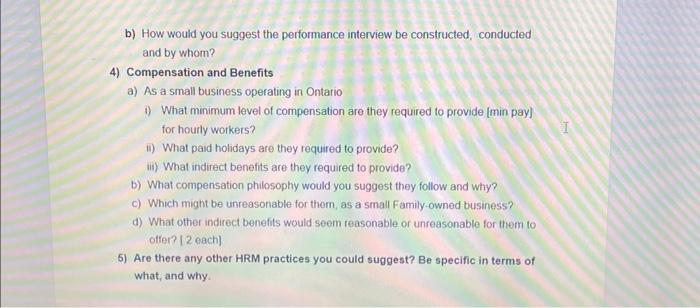
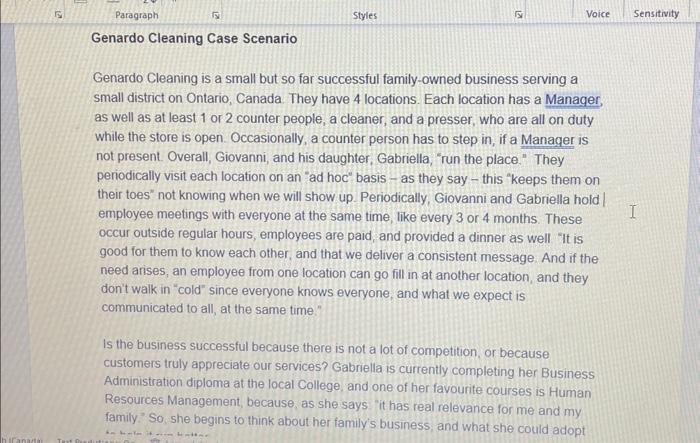
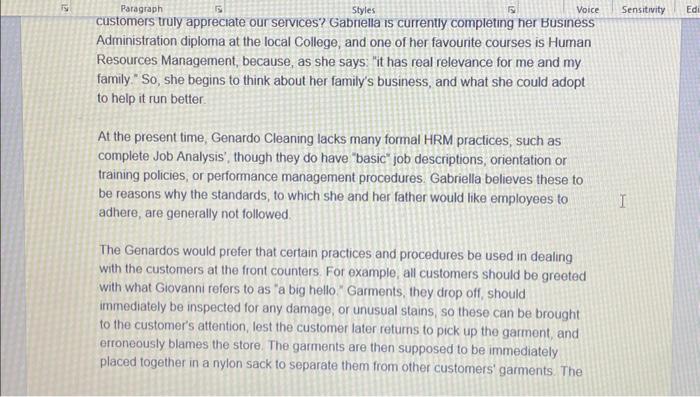
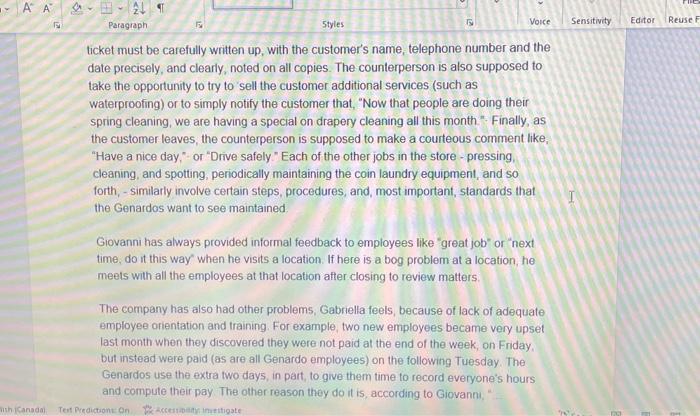
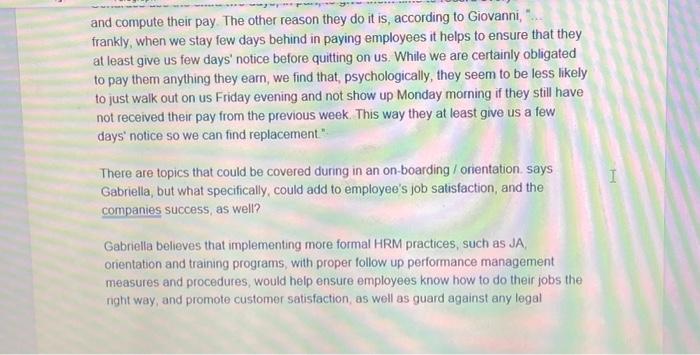
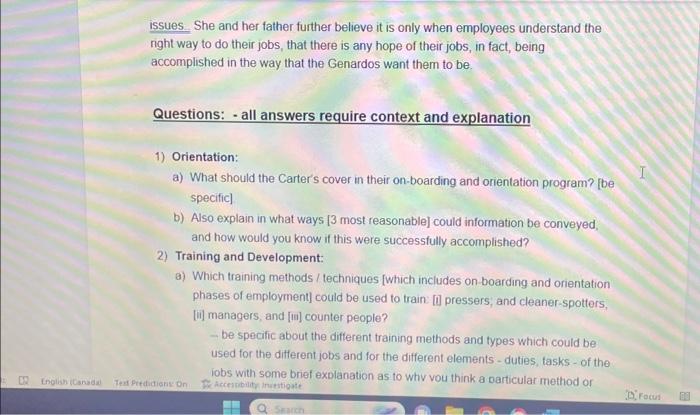
- be specific about the different training methods and types which could be used for the different jobs and for the different elements - duties, lasks - of the jobs with some brief explanation as to why you think a particular method or methods would be best. [it is possible to have more than one preferred method, or one method supplemented by another] - you should be able to explain through this question the pro's and con's and when best to use different On The Job vs Off The Job training, in general, and at least 3 specific types of each. 3) Performance Appraisal: After employees are oriented, trained and developed, and are given an opportunity to perform their job for some time, their performance would need to be evaluated a) Discuss and ILLUSTRATE/SHOW [actually create a piece of the forms for at least one job] how Critical Incidents, BARS, BOS, Graphic Rating Methods, and 2 other appraisal methods could be used to assess the employees on their job performance Genardo Cleaning is a small but so far successful family-owned business serving a small district on Ontario, Canada. They have 4 locations. Each location has a Manager, as well as at least 1 or 2 counter people, a cleaner, and a presser, who are all on duty while the store is open. Occasionally, a counter person has to step in, if a Manager is not present. Overall, Giovanni, and his daughter, Gabriella, "run the place." They periodically visit each location on an "ad hoc" basis - as they say - this "keeps them on their toes" not knowing when we will show up. Periodically, Giovanni and Gabriella hold | employee meetings with everyone at the same time, like every 3 or 4 months. These occur outside regular hours, employees are paid, and provided a dinner as well "It is good for them to know each other, and that we deliver a consistent message. And if the need arises, an employee from one location can go fill in at another location, and they don't walk in "cold" since everyone knows everyone, and what we expect is communicated to all, at the same time." Is the business successful because there is not a lot of competition, or because customers truly appreciate our services? Gabriella is currently completing her Business Administration diploma at the tocat College, and one of her favourite courses is Human Resources Management, because, as she says. "it has real relevance for me and my family. So, she begins to think about her family's business, and what she could adopt b) How would you suggest the performance interview be constructed, conducted and by whom? 4) Compensation and Benefits a) As a small business operating in Ontario 1) What minimum level of compensation are they required to provide [min pay] for hourly workers? ii) What paid holidays are they required to provide? iii) What indirect benefits are they required to provide? b) What compensation philosophy would you suggest they follow and why? c) Which might be unreasonable for them, as a small Family-owned business? d) What other indirect benefits would seem reasonable or unreasonable for them to otfer? [ 2 each] 5) Are there any other HRM practices you could suggest? Be specific in terms of what, and why. issues. She and her father further believe it is only when employees understand the right way to do their jobs, that there is any hope of their jobs, in fact, being accomplished in the way that the Genardos want them to be. Questions: - all answers require context and explanation 1) Orientation: a) What should the Carter's cover in their on-boarding and orientation program? [be specific] b) Also explain in what ways [ 3 most reasonable] could information be conveyed, and how would you know if this were successfully accomplished? 2) Training and Development: a) Which training methods / techniques [which includes on-boarding and orientation phases of employment] could be used to train: [i] pressers, and cleaner-spotters, [ii] managers, and [ii] counter people? - be specific about the different training methods and types which could be used for the different jobs and for the different elements - duties, tasks - of the iobs with some brief explanation as to whv vou think a oarticular method or customers truly appreciate our services? Gabriella is currently completing her Business Administration diploma at the local College, and one of her favourite courses is Human Resources Management, because, as she says: "it has real relevance for me and my family: "So, she begins to think about her family's business, and what she could adopt to help it run better. At the present time, Genardo Cleaning lacks many formal HRM practices, such as complete Job Analysis', though they do have 'basic job descriptions, orientation or training policies, or performance management procedures. Gabriella believes these to be reasons why the standards, to which she and her father would like employees to adhere, are generally not followed. The Genardos would prefer that certain practices and procedures be used in dealing with the customers at the front counters. For example, all customers should be greeted with what Giovanni refers to as "a big hello." Garments, they drop off, should immediately be inspected for any damage, or unusual stains, so these can be brought to the customer's attention, lest the customer later returns to pick up the garment, and erroneously blames the store. The garments are then supposed to be immediately placed together in a nylon sack to separate them from other customers' garments. The and compute their pay. The other reason they do it is, according to Giovanni, "... frankly, when we stay few days behind in paying employees it helps to ensure that they at least give us few days' notice before quitting on us. While we are certainly obligated to pay them anything they earn, we find that, psychologically, they seem to be less likely to just walk out on us Friday evening and not show up Monday morning if they still have not received their pay from the previous week. This way they at least give us a few days' notice so we can find replacement." There are topics that could be covered during in an on-boarding / orientation. says Gabriella, but what specifically, could add to employee's job satisfaction, and the companies success, as well? Gabriella believes that implementing more formal HRM practices, such as JA, orientation and training programs, with proper follow up performance management measures and procedures, would help ensure employees know how to do their jobs the right way, and promote customer satisfaction, as well as guard against any legal ticket must be carefully written up, with the customer's name, telephone number and the date precisely, and clearly, noted on all copies. The counterperson is also supposed to take the opportunity to try to sell the customer additional services (such as waterproofing) or to simply notify the customer that, "Now that people are doing their spring cleaning, we are having a special on drapery cleaning all this month.". Finally, as the customer leaves, the counterperson is supposed to make a courteous comment like, "Have a nice day,"- or "Drive safely " Each of the other jobs in the store - pressing. cleaning, and spotting, periodically maintaining the coin laundry equipment, and so forth, - similarly involve certain steps, procedures, and, most important, standards that the Genardos want to see maintained. Giovanni has always provided informal feedback to employees like "great job" or "next time, do it this way when he visits a location. If here is a bog problem at a location, he meets with all the employees at that location after closing to review matters. The company has also had other problems, Gabriella feels, because of lack of adequate employee orientation and training. For example, two new employees became very upset last month when they discovered they were not paid at the end of the week, on Friday, but instead were paid (as are all Genardo employees) on the following Tuesday. The Genardos use the extra two days, in part, to give them time to record everyone's hours and compute their pay The other reason they do it is, according to Giovann
Step by Step Solution
There are 3 Steps involved in it

Get step-by-step solutions from verified subject matter experts
 Study Help