Question: Before you began reading Chapter 2 you wrote down why you believe families are violent . Now, as you have read through the different theories
Before you began reading Chapter 2 you wrote down why you believe families are violent.
Now, as you have read through the different theories that are discussed in Chapter 2 reflect on your original thought on "why families are violent"
and see which theory(s) you may agree with.
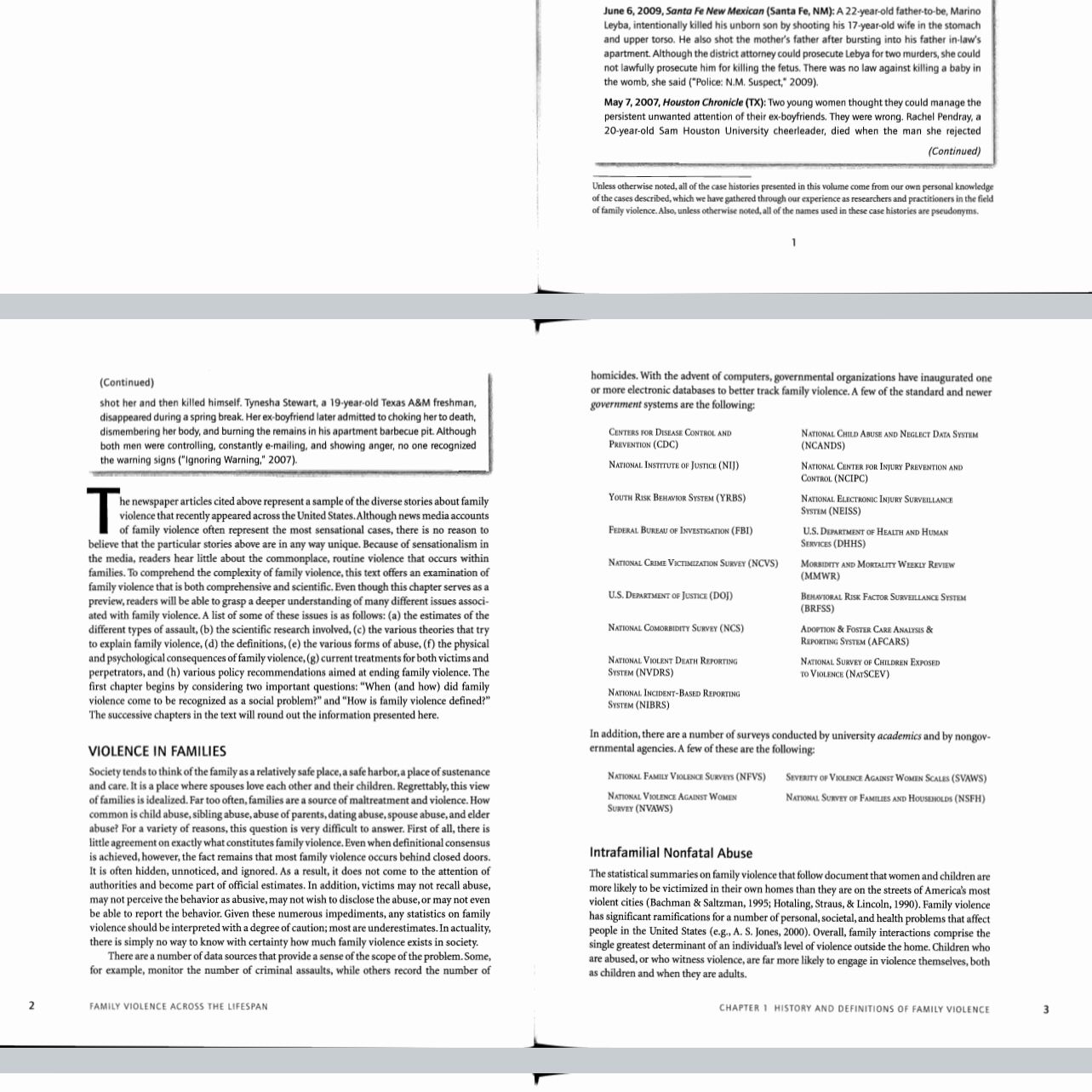
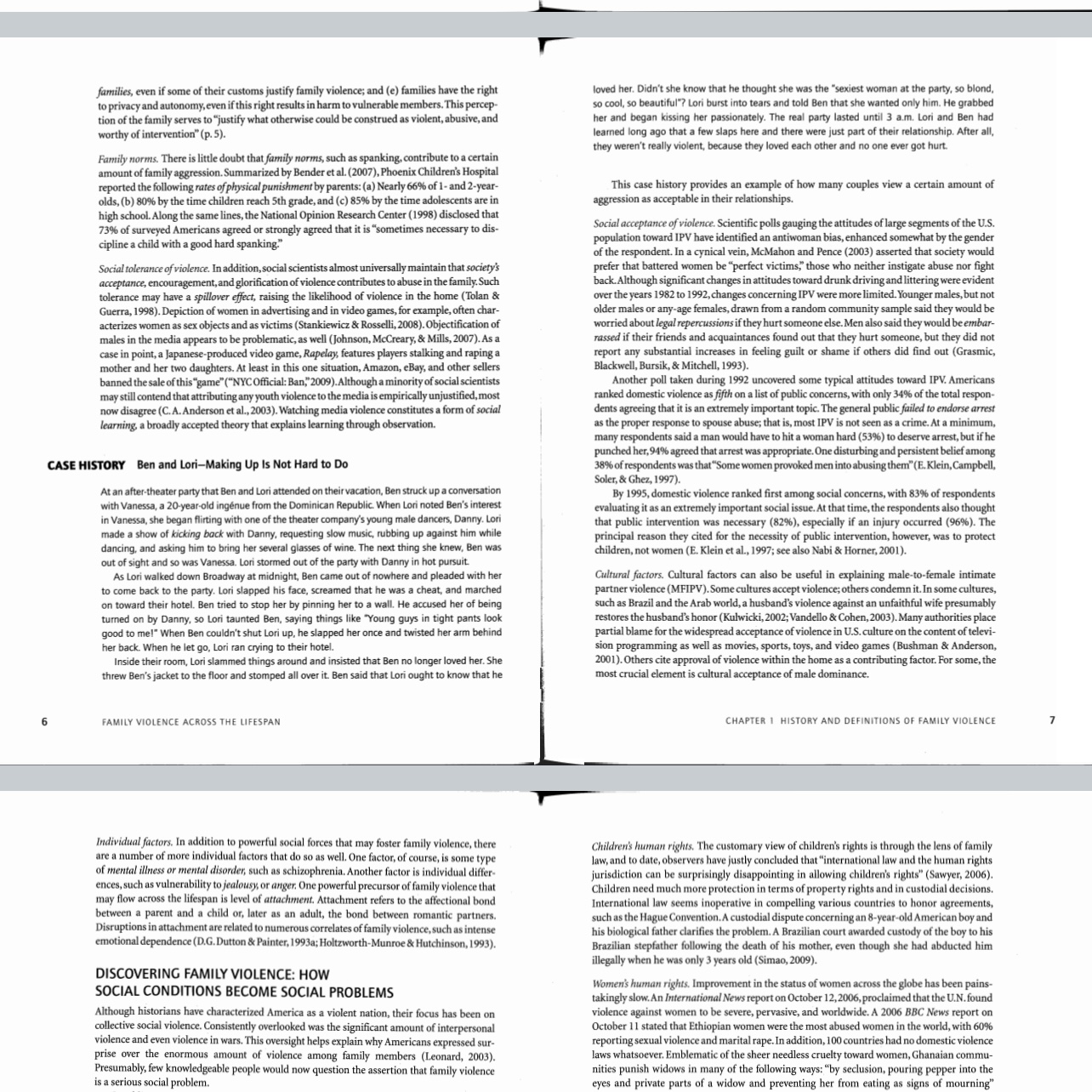
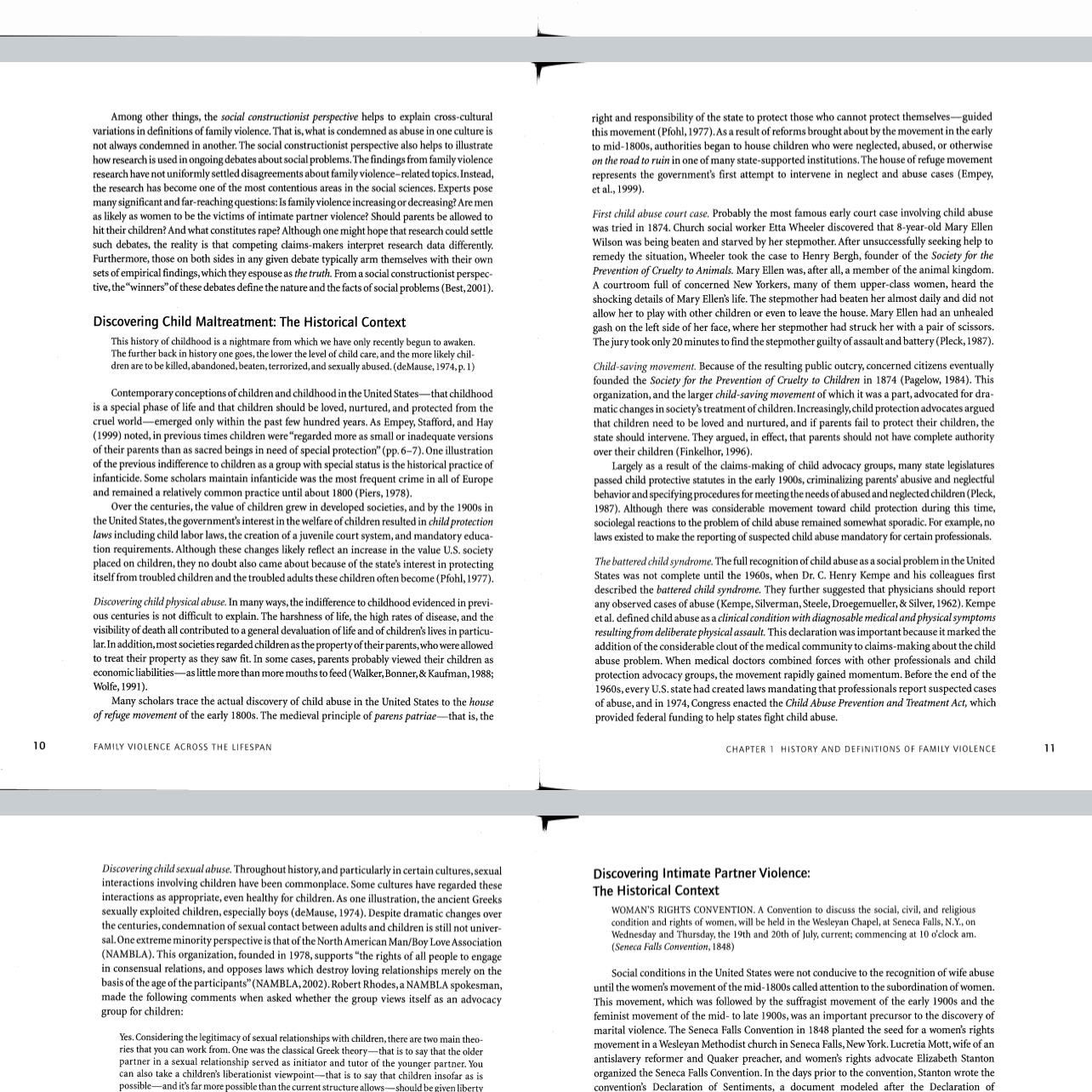
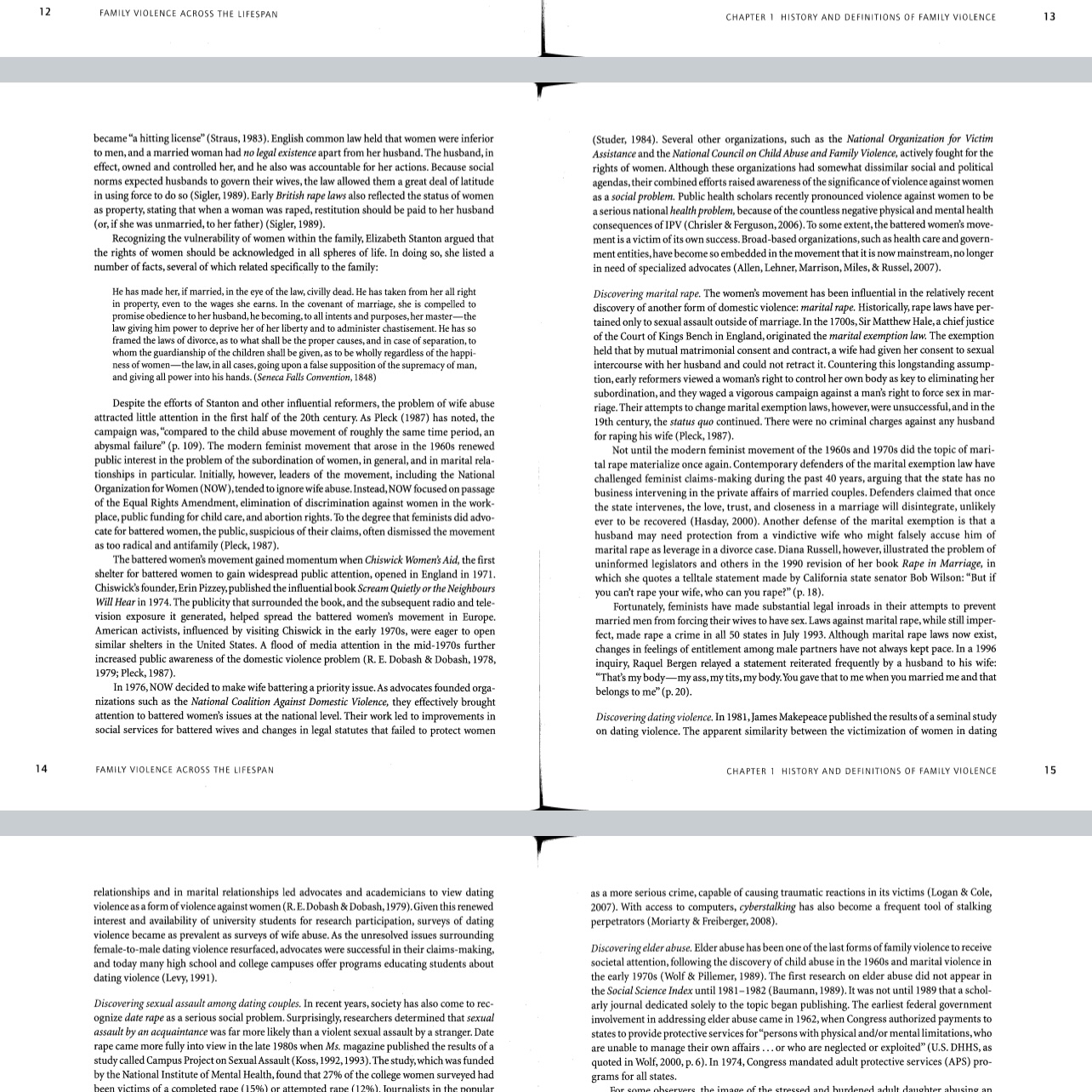
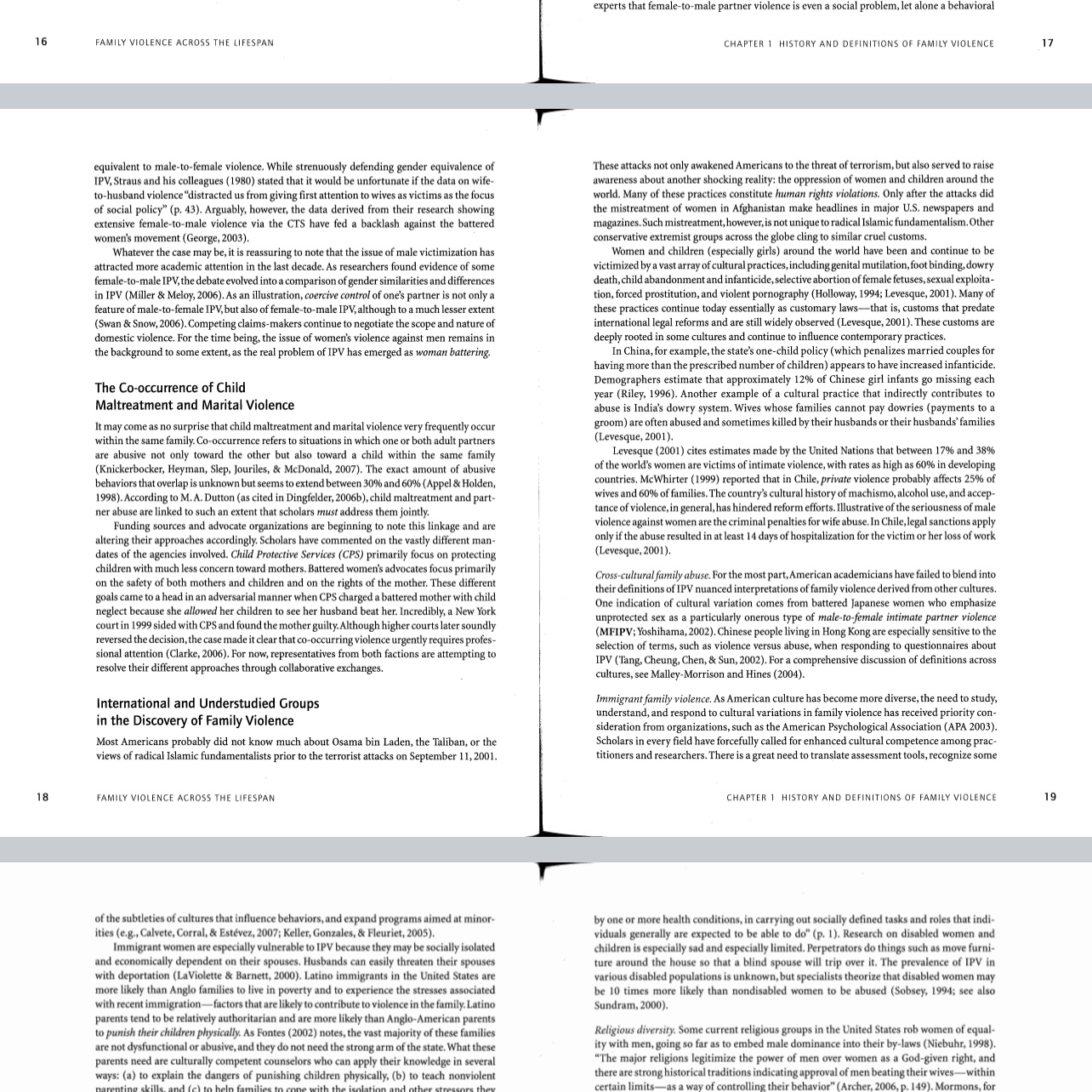
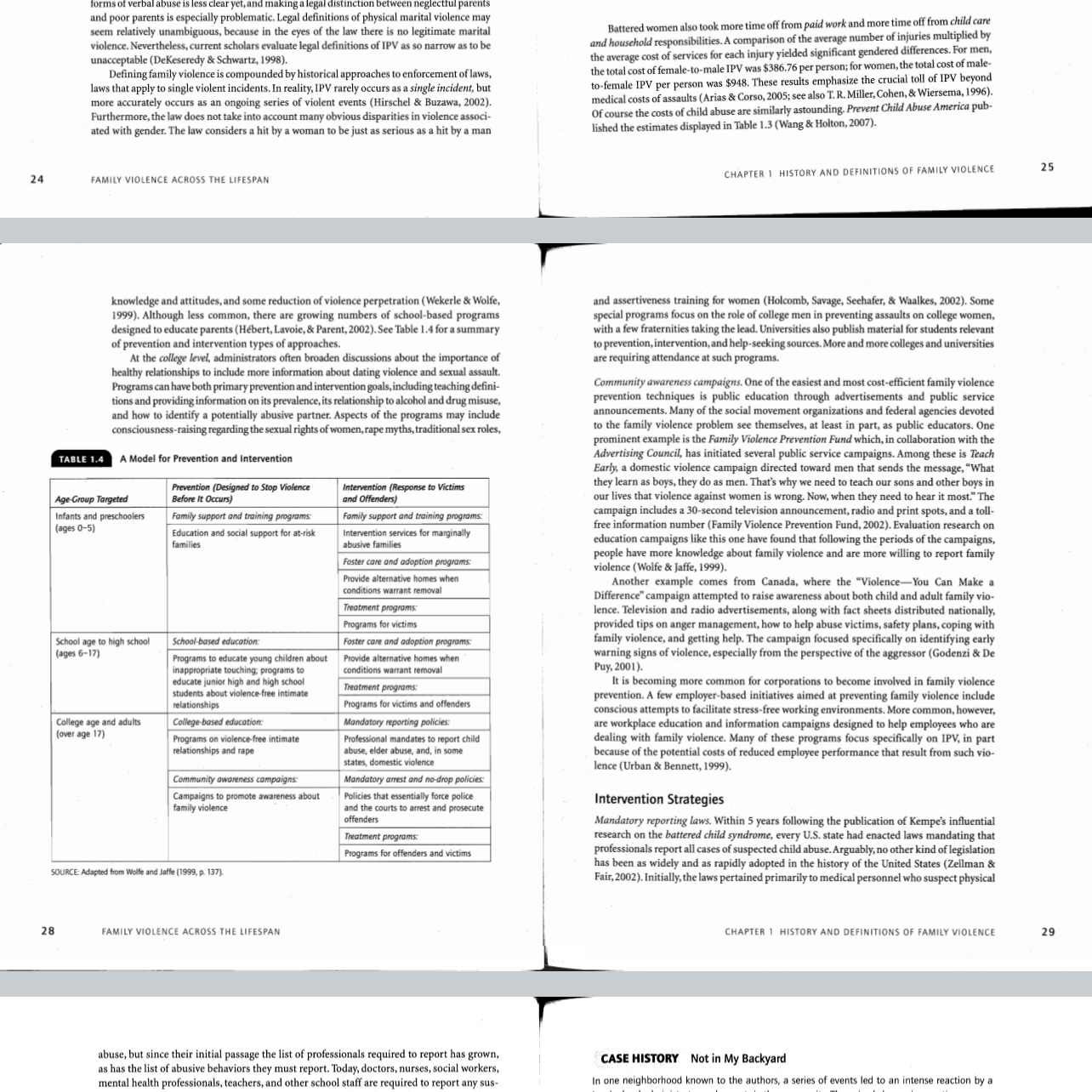
June 6, 2009, Santa Fe New Mexican (Santa Fe, NM): A 22-year-old father-to-be, Marino Leyba, intentionally killed his unborn son by shooting his 17-year-old wife in the stomach and upper torso. He also shot the mother's father after bursting into his father in-law's apartment. Although the district attorney could prosecute Lebya for two murders, she could not lawfully prosecute him for killing the fetus. There was no law against killing a baby in the womb, she said ("Police: N.M. Suspect," 2009). May 7, 2007, Houston Chronicle (TX): Two young women thought they could manage the persistent unwanted attention of their ex-boyfriends. They were wrong. Rachel Pendray, a 20-year-old Sam Houston University cheerleader, died when the man she rejected (Continued) Unless otherwise noted, all of the case histories presented in this volume come from our own personal knowledge of the cases described, which we have gathered through our experience as researchers and practitioners in the field of family violence. Also, unless otherwise noted, all of the names used in these case histories are pseudonyms. (Continued) homicides. With the advent of computers, governmental organizations have inaugurated one or more electronic databases to better track family violence. A few of the standard and newer shot her and then killed himself. Tynesha Stewart, a 19-year-old Texas A&M freshman, government systems are the following: disappeared during a spring break. Her ex-boyfriend later admitted to choking her to death, dismembering her body, and burning the remains in his apartment barbecue pit. Although CENTERS FOR DISEASE CONTROL AND NATIONAL CHILD ABUSE AND NEGLECT DATA SYSTEM both men were controlling, constantly e-mailing, and showing anger, no one recognized PREVENTION (CDC) (NCANDS) the warning signs ("Ignoring Warning," 2007). NATIONAL INSTITUTE OF JUSTICE (NI]) NATIONAL CENTER FOR INJURY PREVENTION AND CONTROL (NCIPC) he newspaper articles cited above represent a sample of the diverse stories about family YOUTH RISK BEHAVIOR SYSTEM (YRBS) NATIONAL ELECTRONIC INJURY SURVEILLANCE iolence that recently appeared across the United States. Although news media accounts SYSTEM (NEISS) of family violence often represent the most sensational cases, there is no reason to FEDERAL BUREAU OF INVESTIGATION (FBI) U.S. DEPARTMENT OF HEALTH AND HUMAN believe that the particular stories above are in SERVICES (DHHS) the media, readers hear little about the commonplace, r e violence that occurs within NATIONAL CRIME VICTIMIZAT ON SURVEY (NCVS) MORBIDITY AND MORTALITY WEEKLY REVIEW families. To comprehend the c (MMWR) family violence that is both comprehensive and scientific. Even though this chapter serves as a preview, readers will be able to g U.S. DEPARTMENT OF JUSTICE (DO]) BEHAVIORAL RISK FACTOR SURVEILLANCE SYSTEM BRFSS) ated with family violence. A list of some of these issues is as follows: (a) the estimates of the different types of assault, (b) the scientific rese theories that try NATIONAL COMORBIDITY SURVEY (NCS) ADOPTION & FOSTER CARE ANALYSIS & to explain family violence, (d) the definitions, (e) the various forms of abuse, (f) the physical REPORTING SYSTEM (AFCARS) and psychological consequences of f s for both victims and NATIONAL VIOLENT DEATH REPORTING NATIONAL SURVEY OF CHILDREN EXPOSED perpetrators, and (h) various policy recommendations aimed at ending family violence. The SYSTEM (NVDRS) TO VIOLENCE (NATSCEV) first chapter begins by considering two important questions: "When (and how) did family NATIONAL INCIDENT-BASED REPORTING violence come to be recognized as a social problem?" and "How is family violence defined?" SYSTEM (NIBRS) The successive chapters in the text will round out the information presented here. In addition, there are a number of surveys conducted by university academics and by nongov- VIOLENCE IN FAMILIES ernmental agencies. A few of these are the following: Society tends to think of the family as a relatively safe place, a safe harbor, a place of sustenance NATIONAL FAMILY VIOLENCE SURVEYS (NFVS) and care. It is a place where spouses love each other and their children. Regrettably, this view SEVERITY OF VIOLENCE AGAINST WOMEN SCALES (SVAWS) of families is idealized. Far too often, famili ource of maltreat ment and violence. How NATIONAL VIOLENCE AGAINST WOMEN NATIONAL SURVEY OF FAMILIES AND HOUSEHOLDS (NSFH) common is child abuse, sibling abuse, abuse of parents, dating abuse, spouse abuse, and elder SURVEY (NVAWS) abuse? For a variety of reasons, of all, there is little agreement on exactly what constitutes family violence. Even when definitional consensus is achieved, however, the fact remains that m s behind closed doors Intrafamilial Nonfatal Abuse It is often hidden, unnoticed, and ignored. As a result, it does not come to the attention of The statistical summaries on family violence that follow document that women and children are authorities and become part of official es tes. In addition, vi ot recall abuse, more likely to be victimized in their own homes than they are on the streets of America's most may not perceive the behavior as abusive, may not wish to disclose the abuse, or may not even violent cities (Bachman & Saltzman, 1995; Hotaling, Straus, & Lincoln, 1990). Family violence be able to report the behavior. Given these ny statistics on famil has significant ramifications for a number of personal, societal, and health problems that affect violence should be interpreted with a degree of caution; most are underestimates. In actuality, people in the United States (e.g., A. S. Jones, 2000). Overall, family interactions comprise the there is simply no way to know with certainty how much family violence exists in society. single greatest determinant of an individual's level of violence outside the home. Children who There are a number of data sources that provide a sense of the scope of the problem. Some, are abused, or who witness violence, are far more likely to engage in violence themselves, both or example, monitor the number of criminal assaults, while others record the number of as children and when they are adults. FAMILY VIOLENCE ACROSS THE LIFESPAN CHAPTER 1 HISTORY AND DEFINITIONS OF FAMILY VIOLENCEfamilies, even if some of their customs justify family violence; and (e) families have the right to privacy and autonomy, even if this right results in harm to vulnerable members. This percep- tion of the family serves to \"justify what otherwise could be construed as violent, abusive, and worthy of intervention\" (p. 5). Family norms. There is little doubt that family norms, such as spanking, contribute to a certain amount of family aggression. Summarized by Bender et al. (2007), Phoenix Children's Hospital reported the following rates of physical punishment by parents: (a) Nearly 66% of 1- and 2-year- olds, (b) 80% by the time children reach Sth grade, and (c) 85% by the time adolescents are in high school. Along the same lines, the National Opinion Research Center (1998) disclosed that 73% of surveyed Americans agreed or strongly agreed that it is \"sometimes necessary to dis- cipline a child with a good hard spanking\" Social tolerance of violence. In addition, social scientists almost universally maintain that society's acceptance, encouragement,and glorification of violence contributes to abuse in the family. Such tolerance may have a spillover effect, raising the likelihood of violence in the home (Tolan & Guerra, 1998). Depiction of women in advertising and in video games, for example, often char- acterizes women as sex objects and as victims (Stankiewicz & Rosselli, 2008). Objectification of males in the media appears two be problematic, as well (Johnson, McCreary, & Mills, 2007). As a case in point, a Japanese-produced video game, Rapelay, features players stalking and raping a mother and her two daughters. At least in this one situation, Amazon, eBay, and other sellers banned the sale of this \"game\" (\"NYC Official: Ban;"2009). Although a minority of social scientists may still contend that attributing any youth violence to the media is empirically unjustified, most now disagree (C. A. Anderson et al., 2003). Watching media violence constitutes a form of social learning, a broadly accepted theory that explains learning through observation. CASE HISTORY Ben and LoriMaking Up Is Not Hard to Do At an after-theater party that Ben and Lori attended on their vacation, Ben struck up a conversation with Vanessa, a 20-year-old ingnue from the Dominican Republic. When Lori noted Ben's interest in'Vanessa, she began flirting with one of the theater company's young male dancers, Danny. Lori made a show of kicking back with Danny, requesting slow music, rubbing up against him while dancing, and asking him to bring her several glasses of wine. The next thing she knew, Ben was out of sight and so was Vanessa. Lori stormed out of the party with Danny in hot pursuit. As Lori walked down Broadway at midnight, Ben came out of nowhere and pleaded with her to come back to the party. Lori slapped his face, screamed that he was a cheat, and marched 'on toward their hotel. Ben tried to stop her by pinning her to a wall. He accused her of being tumed on by Danny, so Lori taunted Ben, saying things like \"Young guys in tight pants look good to me!" When Ben couldn't shut Lori up, he slapped her once and twisted her arm behind her back. When he let go, Lori ran crying to their hotel. Inside their room, Lori slammed things around and insisted that Ben no longer loved her. She 'threw Ben's jacket to the floor and stomped all over it. Ben said that Lori ought to know that he FAMILY VIOLENCE ACROSS THE LIFESPAN Individual factors, In addition to powerful social forces that may foster family violence, there are a number of more individual factors that do so as well. One factor, of course, is some type of mental illness or mental disorder, such as schizophrenia, Another factor is individual differ- ences, such as vulnerability to jealousy, or anger. One powerful precursor of family violence that may flow across the lifespan is level of attachment. Attachment refers to the affectional bond between a parent and a child or, later as an adult, the bond between romantic partners, Disruptions in attachment are related to numerous correlates of family violence, such as intense emotional dependence (D.G. Dutton & Painter, 1993a; Holtzworth-Munroe & Hutchinson, 1993), DISCOVERING FAMILY VIOLENCE: HOW SOCIAL CONDITIONS BECOME SOCIAL PROBLEMS Although historians have characterized America as a violent nation, their focus has been on collective social violence. Consistently overlooked was the significant amount of interpersonal violence and even violence in wars. This oversight helps explain why Americans expressed sur- prise over the enormous amount of violence among family members (Leonard, 2003), Presumably, few knowledgeable people would now question the assertion that family violence is a serious social problem, lowed her. Didn't she know that he thought she was the \"sexiest woman at the party, so blond, 'so cool, so beautiful"? Lori burst into tears and told Ben that she wanted only him, He grabbed her and began kissing her passionately. The real party lasted until 3 a.m. Lori and Ben had learned long ago that a few slaps here and there were just part of their relationship. After all, they weren't really violent, because they loved each other and no one ever got hurt. This case history provides an example of how many couples view a certain amount of aggression as acceptable in their relationships. Social acceptance of violence. Scientific polls gauging the attitudes of large segments of the U.S. population toward IPV have identified an antiwoman bias, enhanced somewhat by the gender of the respondent. In a cynical vein, McMahon and Pence (2003) asserted that society would prefer that battered women be \"perfect victims, those who neither instigate abuse nor fight back. Although significant changes in attitudes toward drunk driving and littering were evident over the years 1982 to 1992, changes concerning IPV were more limited. Younger males, but not older males or any-age females, drawn from a random community sample said they would be worried about legal repercussions if they hurt someone else. Men also said they would be embar- rassed if their friends and acquaintances found out that they hurt someone, but they did not report any substantial increases in feeling guilt or shame if others did find out (Grasmic, Blackwell, Bursik, & Mitchell, 1993). Another poll taken during 1992 uncovered some typical attitudes toward IPV. Americans ranked domestic violence as fifth on a list of public concerns, with only 34% of the total respon- dents agreeing that it is an extremely important topic, The general public failed to endorse arrest as the proper response to spouse abuse; that is, most [PV is not seen as a crime. At a minimum, many respondents said a man would have to hit a woman hard (53%) to deserve arrest, but if he punched her, 94% agreed that arrest was appropriate. One disturbing and persistent belief among 38% of respondents was that"Some women provoked men into abusing them\" (E. Klein, Campbell, Soler, & Ghez, 1997). By 1995, domestic violence ranked first among social concerns, with 83% of respondents evaluating it as. an extremely important social issue. At that time, the respondents also thought that public intervention was necessary (82%), especially if an injury occurred (96%). The principal reason they cited for the necessity of public intervention, however, was to protect children, not women (E. Klein et al., 1997; see also Nabi & Horner, 2001). Cultural factors. Cultural factors can also be useful in explaining male-to-female intimate partner violence (MFIPV). Some cultures accept violence; others condemn it.In some cultures, such as Brazil and the Arab world, a husband's violence against an unfaithful wife presumably restores the husband's honor (Kulwicki, 2002; Vandello & Cohen, 2003). Many authorities place partial blame for the widespread acceptance of violence in U.S. culture on the content of televi- sion programming as well as movies, sports, toys, and video games (Bushman & Anderson, 2001). Others cite approval of violence within the home as a contributing factor. For some, the most crucial element is cultural acceptance of male dominance. CHAPTER | HISTORY AND DEFINITIONS OF FAMILY VIOLENCE mm Children's human rights, The customary view of children's rights is through the lens of family Jaw, and to date, observers have justly concluded that \"international law and the human rights jurisdiction can be surprisingly disappointing in allowing children's rights\" (Sawyer, 2006). Children need much more protection in terms of property rights and in custodial decisions. International law seems inoperative in compelling various countries to honor agreements, suchas the Hague Convention.A custodial dispute concerning an 8-year-old American boy and his biological father clarifies the problem. A Brazilian court awarded custody of the boy to his Brazilian stepfather following the death of his mother, even though she had abducted him illegally when he was only 3 years old (Simao, 2009). Women's human rights, Improvement in the status of women across the globe has been pains- takingly slow. An International News report on October 12,2006, proclaimed that the U.N. found violence against women to be severe, pervasive, and worldwide. A 2006 BBC News report on October 11 stated that Ethiopian women were the most abused women in the world, with 60% reporting sexual violence and marital rape. In addition, 100 countries had no domestic violence laws whatsoever, Emblematic of the sheer needless cruelty toward women, Ghanaian commu- nities punish widows in many of the following ways: \"by seclusion, pouring pepper into the eyes and private parts of a widow and preventing her from eating as signs of mourning\" 10 Among other things, the social constructionist perspective helps to explain cross-cultural variations in definitions of family violence. That is, what is condemned as abuse in one culture is not always condemned in another, The social constructionist perspective also helps to illustrate how research is used in ongoing debates about social problems. The findings from family violence research have not uniformly settled disagreements about family violencerelated topics, Instead, the research has become one of the most contentious areas in the social sciences. Experts pose many significant and far-reaching questions: Is family violence increasing or decreasing? Are men as likely as women to be the victims of intimate partner violence? Should parents be allowed to hit their children? And what constitutes rape? Although one might hope that research could settle such debates, the reality is that competing claims-makers interpret research data differently. Furthermore, those on both sides in any given debate typically arm themselves with their own sets of empirical findings, which they espouse as the truth. From asocial constructionist perspec- tive, the \"winners\" of these debates define the nature and the facts of social problems (Best, 2001). Discovering Child Maltreatment: The Historical Context This history of childhood is a nightmare from which we have only recently begun to awaken. The further back in history one goes, the lower the level of child care, and the more likely chil- dren are to be killed, abandoned, beaten, terrorized, and sexually abused, (deMause, 1974,p. 1) Contemporary conceptions of children and childhood in the United Statesthat childhood is a special phase of life and that children should be loved, nurtured, and protected from the cruel worldemerged only within the past few hundred years, As Empey, Stafford, and Hay (1999) noted, in previous times children were \"regarded more as small or inadequate versions of their parents than as sacred beings in need of special protection\" (pp. 6-7). One illustration of the previous indifference to children as a group with special status is the historical practice of infanticide, Some scholars maintain infanticide was the most frequent crime in all of Europe and remained a relatively common practice until about 1800 (Piers, 1978), Over the centuries, the value of children grew in developed societies, and by the 1900s in the United States, the government's interest in the welfare of children resulted in child protection laws including child labor laws, the creation of a juvenile court system, and mandatory educa- tion requirements. Although these changes likely reflect an increase in the value U.S. society placed on children, they no doubt also came about because of the state's interest in protecting itself from troubled children and the troubled adults these children often become (Pfohl, 1977). Discovering child physical abuse. In many ways, the indifference to childhood evidenced in previ- ous centuries is not difficult to explain. The harshness of life, the high rates of disease, and the visibility of death all contributed to a general devaluation of life and of children's lives in particu- lar.In addition, most societies regarded children as the property of their parents, who were allowed to treat their property as they saw fit. In some cases, parents probably viewed their children as economic liabilities as little more than more mouths to feed (Walker, Bonner, & Kaufman, 1988; Wolfe, 1991). Many scholars trace the actual discovery of child abuse in the United States to the house of refuge movement of the early 1800s. The medieval principle of parens patriaethat is, the FAMILY VIOLENCE ACROSS THE LIFESPAN, Discovering child sexual abuse, Throughout history, and particularly in certain cultures, sexual interactions involving children have been commonplace. Some cultures have regarded these interactions as appropriate, even healthy for children. As one illustration, the ancient Greeks sexually exploited children, especially boys (deMause, 1974). Despite dramatic changes over the centuries, condemnation of sexual contact between adults and children is still not univer- sal, One extreme minority perspective is that of the North American Man/Boy Love Association (NAMBLA), This organization, founded in 1978, supports \"the rights of all people to engage in consensual relations, and opposes laws which destroy loving relationships merely on the basis of the age of the participants\" (NAMBLA, 2002), Robert Rhodes, a NAMBLA spokesman, made the following comments when asked whether the group views itself as an advocacy group for children: Yes, Considering the legitimacy of sexual relationships with children, there are two main theo- ries that you can work from. One was the classical Greek theorythat is to say that the older partner in a sexual relationship served as initiator and tutor of the younger partner. You can also take a children's liberationist viewpointthat is to say that children insofar as is possibleand it's far more possible than the current structure allowsshould be given liberty W right and responsibility of the state to protect those who cannot protect themselvesguided this movement (Pfohl, 1977).Asa result of reforms brought about by the movement in the early to mid-1800s, authorities began to house children who were neglected, abused, or otherwise on the road to ruin inone of many state-supported institutions, The house of refuge movement represents the government's first attempt to intervene in neglect and abuse cases (Empey, etal, 1999), First child abuse court case, Probably the most famous early court case involving child abuse was tried in 1874. Church social worker Etta Wheeler discovered that 8-year-old Mary Ellen Wilson was being beaten and starved by her stepmother. After unsuccessfully seeking help to remedy the situation, Wheeler took the case to Henry Bergh, founder of the Seciety for the Prevention of Cruelty to Animals. Mary Ellen was, after all, a member of the animal kingdom. A courtroom full of concerned New Yorkers, many of them upper-class women, heard the shocking details of Mary Ellen's life. The stepmother had beaten her almost daily and did not allow her to play with other children or even to leave the house. Mary Ellen had an unhealed gash on the left side of her face, where her stepmother had struck her with a pair of scissors. The jury took only 20 minutes to find the stepmother guilty of assault and battery (Pleck, 1987). Child-saving movement. Because of the resulting public outery, concerned citizens eventually founded the Society for the Prevention of Cruelty to Children in 1874 (Pagelow, 1984). This organization, and the larger child-saving movement of which it was a part, advocated for dra- matic changes in society's treatment of children, Increasingly, child protection advocates argued that children need to be loved and nurtured, and if parents fail to protect their children, the state should intervene, They argued, in effect, that parents should not have complete authority over their children (Finkelhor, 1996), Largely as a result of the claims-making of child advocacy groups, many state legislatures passed child protective statutes in the early 1900s, criminalizing, parents' abusive and neglectful behavior and specifying procedures for meeting the needs of abused and neglected children (Pleck, 1987), Although there was considerable movement toward child protection during this time, sociolegal reactions to the problem of child abuse remained somewhat sporadic. For example, no laws existed to make the reporting of suspected child abuse mandatory for certain professionals, The battered child syndrome. The full recognition of child abuse as.a social problem inthe United States was not complete until the 1960s, when Dr, C. Henry Kempe and his colleagues first described the battered child syndrome, They further suggested that physicians should report any observed cases of abuse (Kempe, Silverman, Steele, Droegemueller, & Silver, 1962), Kempe etal. defined child abuse asa clinical condition with diagnosable medical and physical symptoms resulting from deliberate physical assault, This declaration was important because it marked the addition of the considerable clout of the medical community to claims-making about the child abuse problem. When medical doctors combined forces with other professionals and child protection advocacy groups, the movement rapidly gained momentum. Before the end of the 1960s, every U.S, state had created laws mandating that professionals report suspected cases of abuse, and in 1974, Congress enacted the Child Abuse Prevention and Treatment Act, which provided federal funding to help states fight child abuse, CHAPTER | HISTORY AND DEFINITIONS OF FAMILY VIGLENCE Discovering Intimate Partner Violence: The Historical Context WOMAN'S RIGHTS CONVENTION. A Convention to discuss the social, civil, and religious condition and rights of women, will be held in the Wesleyan Chapel, at Seneca Falls, N...on Wednesday and Thursday, the 19th and 20th of July, current; commencing at 10 o'clock am. (Seneca Falls Convention, 1848) Social conditions in the United States were not conducive to the recognition of wife abuse until the women's movement of the mid- 1800s called attention to the subordination of women. This movement, which was followed by the suffragist movement of the early 1900s and the feminist movement of the mid- to late 1900s, was an important precursor to the discovery of marital violence. The Seneca Falls Convention in 1848 planted the seed for a women's rights movement in a Wesleyan Methodist church in Seneca Falls, New York. Lucretia Mott, wife of an antislavery reformer and Quaker preacher, and women's rights advocate Elizabeth Stanton organized the Seneca Falls Convention. In the days prior to the convention, Stanton wrote the convention's Declaration of Sentiments, a document modeled after the Declaration of VW 12 FAMILY VIOLENCE ACROSS THE LIFESPAN became \"a hitting license" (Straus, 1983), English common law held that women were inferior to men, and a married woman had no legal existence apart from her husband. The husband, in effect, owned and controlled her, and he also was accountable for her actions. Because social norms expected husbands to govern their wives, the law allowed them a great deal of latitude in using force to do so (Sigler, 1989). Early British rape laws also reflected the status of women as property, stating that when a woman was raped, restitution should be paid to her husband (or, if she was unmarried, to her father) (Sigler, 1989), Recognizing the vulnerability of women within the family, Elizabeth Stanton argued that the rights of women should be acknowledged in all spheres of life. In doing so, she listed a number of facts, several of which related specifically to the family: He has made her, if married, in the eye of the law, civilly dead. He has taken from her all right in property, even to the wages she earns. In the covenant of marriage, she is compelled to promise obedience to her husband, he becoming, to all intents and purposes, her masterthe Jaw giving him power to deprive her of her liberty and to administer chastisernent. He has s0 framed the laws of divorce, as to what shall be the proper causes, and in case of separation, to whom the guardianship of the children shall be given, as to be wholly regardless of the happi- ness of womenthe law, in all cases, going upon a false supposition of the supremacy of man, and giving all power into his hands. (Seneca Falls Convention, 1848) Despite the efforts of Stanton and other influential reformers, the problem of wife abuse attracted little attention in the first half of the 20th century, As Pleck (1987) has noted, the campaign was, \"compared to the child abuse movement of roughly the same time period, an abysmal failure\" (p. 109). The modern feminist movement that arose in the 19605 renewed public interest in the problem of the subordination of women, in general, and in marital rela- tionships in particular. Initially, however, leaders of the movement, including the National Organization for Women (NOW), tended to ignore wife abuse. Instead, NOW focused on passage of the Equal Rights Amendment, elimination of discrimination against women in the work- place, public funding for child care, and abortion rights, To the degree that feminists did advo- cate for battered women, the public, suspicious of their claims, often dismissed the movement as too radical and antifamily (Pleck, 1987), The battered women's movement gained momentum when Chiswick Womens Aid, the first shelter for battered women to gain widespread public attention, opened in England in 1971. Chiswick's founder, Erin Pizzey, published the influential book Scream Quietly or the Neighbours Will Hear in 1974, The publicity that surrounded the book, and the subsequent radio and tele- vision exposure it generated, helped spread the battered women's movement in Europe. American activists, influenced by visiting Chiswick in the early 1970s, were eager to open similar shelters in the United States. A flood of media attention in the mid-1970s further increased public awareness of the domestic violence problem (R. E. Dobash & Dobash, 1978, 1979; Pleck, 1987). In 1976, NOW decided to make wife battering a priority issue. As advocates founded orga- nizations such as the National Coalition Against Domestic Violence, they effectively brought attention to battered women's issues at the national level. Their work led to improvements in social services for battered wives and changes in legal statutes that failed to protect women FAMILY VIOLENCE ACROSS THE LIFESPAN relationships and in marital relationships led advocates and academicians to view dating violence as.a form of violence against women (R. E, Dobash & Dobash, 1979). Given this renewed interest and availability of university students for research participation, surveys of dating violence became as prevalent as surveys of wife abuse. As the unresolved issues surrounding female-to-male dating violence resurfaced, advocates were successful in their claims-making, and today many high school and college campuses offer programs educating students about dating violence (Levy, 1991). Discovering sexual assault among dating couples, In recent years, society has also come to rec- ognize date rape as a serious social problem. Surprisingly, researchers determined that sexual assaull by an acquaintance was far more likely than a violent sexual assault by a stranger. Date rape came more fully into view in the late 1980s when Ms. magazine published the results of a study called Campus Project on Sexual Assault (Koss, 1992, 1993). The study, which was funded by the National Institute of Mental Health, found that 27% of the college women surveyed had been victims of a comoleted rane (159H) or attempted rane (12%). Tournalists in the nonular 7 CHAPTER | HISTORY AND DEFINITIONS OF FAMILY VIOLENCE (Studer, 1984), Several other organizations, such as the National Organization for Vietim Assistance and the National Council on Child Abuse and Family Violence, actively fought for the rights of women. Although these organizations had somewhat dissimilar social and political agendas, their combined efforts raised awareness of the significance of violence against women asa social problem, Public health scholars recently pronounced violence against women to be aserious national health problem, because of the countless negative physical and mental health consequences of IPV (Chrisler & Ferguson, 2006), To some extent, the battered women's move- ment isa victim of its own success. Broad-based organizations, such as health care and govern- mententities, have become so embedded in the movement that it is now mainstream, no longer in need of specialized advocates (Allen, Lehner, Marrison, Miles, & Russel, 2007). Discovering marital rape. The women's movement has been influential in the relatively recent discovery of another form of domestic violence: marital rape. Historically, rape laws have per- tained only to sexual assault outside of marriage. In the 1700s, Sir Matthew Hale, a chief justice of the Court of Kings Bench in England, originated the marital exemption law. The exemption held that by mutual matrimonial consent and contract,.a wife had given her consent to sexual intercourse with her husband and could not retract it. Countering this longstanding assump- tion, early reformers viewed a woman's right to control her own body as key to eliminating her subordination, and they waged a vigorous campaign against a man's right to force sex in mar- riage. Their attempts to change marital exemption laws, however, were unsuccessful, and in the 19th century, the status que continued, There were no criminal charges against any husband for raping his wife (Pleck, 1987), Not until the modern feminist movement of the 1960s and 1970s did the topic of mari- tal rape materialize once again. Contemporary defenders of the marital exemption law have challenged feminist claims-making during the past 40 years, arguing that the state has no business intervening in the private affairs of married couples. Defenders claimed that once the state intervenes, the love, trust, and closeness in a marriage will disintegrate, unlikely ever to be recovered (Hasday, 2000). Another defense of the marital exemption is that a husband may need protection from a vindictive wife who might falsely accuse him of marital rape as leverage in a divorce case, Diana Russell, however, illustrated the problem of uninformed legislators and others in the 1990 revision of her book Rape in Marriage, in which she quotes a telltale statement made by California state senator Bob Wilson: \"But if you can't rape your wife, who can you rape?\" (p. 18). Fortunately, feminists have made substantial legal inroads in their attempts to prevent married men from forcing their wives to have sex, Laws against marital rape, while still imper- fect, made rape a crime in all 50 states in July 1993. Although marital rape laws now exist, changes in feelings of entitlement among male partners have not always kept pace. In a 1996 inquiry, Raquel Bergen relayed a statement reiterated frequently by a husband to his wife: \"That's my bodymy ass, my tits, my body. You gave that to me when you married me and that belongs to me\" (p. 20). Discovering dating violence, In 1981, James Makepeace published the results of a seminal study on dating violence. The apparent similarity between the victimization of women in dating CHAPTER 1 HISTORY AND DEFINITIONS OF FAMILY VIOLENCE as a more serious crime, capable of causing traumatic reactions in its victims (Logan & Cole, 2007). With access to computers, cyberstalking has also become a frequent tool of stalking perpetrators (Moriarty & Freiberger, 2008). Discovering elder abuse. Elder abuse has been one of the last forms of family violence to receive societal attention, following the discovery of child abuse in the 1960s and marital violence in the early 1970s (Wolf & Pillemer, 1989). The first research on elder abuse did not appear in the Social Science Index until 1981-1982 (Baumann, 1989). It was not until 1989 that a schol- arly journal dedicated solely to the topic began publishing, The earliest federal government involvement in addressing elder abuse came in 1962, when Congress authorized payments to states to provide protective services for\"persons with physical and/or mental limitations, who are unable to manage their own affairs ...or who are neglected or exploited\" (U.S. DHHS, as quoted in Wolf, 2000, p. 6). In 1974, Congress mandated adult protective services (APS) pro- grams for all states. Ene came nheervers the image of the etrecced and hurdenad adult daughter ahnsing an 15 18 FAMILY VIOLENCE ACROSS THE LIFESPAN equivalent to male-to-female violence. While strenuously defending gender equivalence of IPV, Straus and his colleagues (1980) stated that it would be unfortunate if the data on wife- to-husband violence \"distracted us from giving first attention to wives as victims as the focus of social policy\" (p. 43), Arguably, however, the data derived from their research showing, extensive female-to-male violence via the CTS have fed a backlash against the battered women's movement (George, 2003), Whatever the case may be, it is reassuring to note that the issue of male victimization has attracted more academic attention in the last decade. As researchers found evidence of some ferale-to-male IPV, the debate evolved intoa comparison of gender similarities and differences in IPV (Miller & Meloy, 2006). As an illustration, coercive control of one's partner is not only a feature of male-to-female IPV, but also of female-to-male IPV, although to a much lesser extent (Swan & Snow, 2006). Competing claims-makers continue to negotiate the scope and nature of domestic violence. For the time being, the issue of women's violence against men remains in the background to some extent, as the real problem of [PV has emerged as woman battering. The Co-occurrence of Child Maltreatment and Marital Violence It may come as no surprise that child maltreatment and marital violence very frequently occur within the same family. Co-occurrence refers to situations in which one or both adult partners are abusive not only toward the other but also toward a child within the same family (Knickerbocker, Heyman, Slep, Jouriles, & McDonald, 2007). The exact amount of abusive behaviors that overlap is unknown but seems to extend between 30% and 60% (Appel & Holden, 1998), According to M, A. Dutton (as cited in Dingfelder, 2006b), child maltreatment and part- ner abuse are linked to such an extent that scholars must address them jointly, Funding sources and advocate organizations are beginning to note this linkage and are altering their approaches accordingly, Scholars have commented on the vastly different man- dates of the agencies involved. Child Protective Services (CPS) primarily focus on protecting children with much less concern toward mothers. Battered women's advocates focus primarily on the safety of both mothers and children and on the rights of the mother. These different goals came to a head in an adversarial manner when CPS charged a battered mother with child neglect because she allowed her children to see her husband beat her. Incredibly, a New York court in 1999 sided with CPS and found the mother guilty. Although higher courts later soundly reversed the decision, the case made it clear that co-occurring violence urgently requires profes- sional attention (Clarke, 2006). For now, representatives from both factions are attempting to resolve their different approaches through collaborative exchanges. International and Understudied Groups in the Discovery of Family Violence Most Americans probably did not know much about Osama bin Laden, the Taliban, or the views of radical Islamic fundamentalists prior to the terrorist attacks on September 11,2001. FAMILY VIOLENCE ACROSS THE LIFESPAN of the subtleties of cultures that influence behaviors, and expand programs aimed at minor- ities (e.g. Calvete, Corral, & Estvez, 2007; Keller, Gonzales, & Fleuriet, 2005), Immigrant women are especially vulnerable to [PV because they may be socially isolated and economically dependent on their spouses. Husbands can easily threaten their spouses with deportation (LaViolette & Barnett, 2000). Latino immigrants in the United States are more likely than Anglo families to live in poverty and to experience the stresses associated with recent immigrationfactors that are likely to contribute to violence in the family. Latino parents tend to be relatively authoritarian and are more likely than Anglo-American parents to punish their children physically, As Fontes (2002) notes, the vast majority of these families are not dysfunctional or abusive, and they do not need the strong arm of the state, What these parents need are culturally competent counselors who can apply their knowledge in several ways: (a) to explain the dangers of punishing children physically, (b) to teach nonviolent narenting skills. and fc) to helm families to cone with the isolation and other stressors thev experts that female-to-male partner violence is even a social problem, let alone a behavioral CHAPTER 1 HISTORY AND DEFINITIONS OF FAMILY VIOLENCE These attacks not only awakened Americans to the threat of terrorism, but also served to raise awareness about another shocking reality: the oppression of women and children around the world, Many of these practices constitute human rights violations. Only after the attacks did the mistreatment of women in Afghanistan make headlines in major U.S. newspapers and magazines. Such mistreatment, however, is not unique to radical Islamic fundamentalism. Other conservative extremist groups across the globe cling to similar cruel customs, Women and children (especially girls) around the world have been and continue to be victimized bya vast array of cultural practices, including genital mutilation, foot binding,dowry death, child abandonment and infanticide, selective abortion of female fetuses, sexual exploita- tion, forced prostitution, and violent pornography (Holloway, 1994; Levesque, 2001), Many of these practices continue today essentially as customary lawsthat is, customs that predate international legal reforms and are still widely observed (Levesque, 2001). These customs are deeply rooted in some cultures and continue to influence contemporary practices. In China, for example, the state's one-child policy (which penalizes married couples for having more than the prescribed number of children) appears to have increased infanticide. Demographers estimate that approximately 12% of Chinese girl infants go missing each year (Riley, 1996). Another example of a cultural practice that indirectly contributes to abuse is India's dowry system. Wives whose families cannot pay dowries (payments to a groom) are often abused and sometimes killed by their husbands or their husbands' families (Levesque, 2001). Levesque (2001) cites estimates mace by the United Nations that between 17% and 38% of the world's women are victims of intimate violence, with rates as high as 60% in developing countries. McWhirter (1999) reported that in Chile, private violence probably affects 25% of wives and 60% of families, The country's cultural history of machismo, alcohol use, and accep- tance of violence, in general, has hindered reform efforts, Illustrative of the seriousness of male violence against women are the criminal penalties for wife abuse. In Chile, legal sanctions apply only if the abuse resulted in at least 14 days of hospitalization for the victim or her loss of work (Levesque, 2001), Cross-cultural family abuse. For the most part, American academicians have failed to blend into their definitions of IPV nuanced interpretations of family violence derived from other cultures, One indication of cultural variation comes from battered Japanese women who emphasize unprotected sex as a particularly onerous type of male-to-female intimate partner violence (MFIPY; Yoshihama, 2002), Chinese people living in Hong Kong are especially sensitive to the selection of terms, such as violence versus abuse, when responding to questionnaires about IPY ('Tang, Cheung, Chen, & Sun, 2002), For a comprehensive discussion of definitions across cultures, see Malley-Morrison and Hines (2004). Immigrant family violence. As American culture has become more diverse, the need to study, understand, and respond to cultural variations in family violence has received priority con- sideration from organizations, such as the American Psychological Association (APA 2003), Scholars in every field have forcefully called for enhanced cultural competence among prac- titioners and researchers, There is a great need to translate assessment tools, recognize some CHAPTER 1 HISTORY AND DEFINITIONS OF FAMILY VIOLENCE by one or more health conditions, in carrying out socially defined tasks and roles that indi- viduals generally are expected to be able to do\" (p, 1), Research on disabled women and children is especially sad and especially limited. Perpetrators do things such as move furni- ture around the house so that a blind spouse will trip over it. The prevalence of IPV in various disabled populations is unknown, but specialists theorize that disabled women may be 10 times more likely than nondisabled women to be abused (Sobsey, 1994; see also Sundram, 2000), Religious diversity, Some current religious groups in the United States rob women of equal- ity with men, going so far as to embed male dominance into their by-laws (Niebuhr, 1998), \"The major religions legitimize the power of men over women as a God-given right, and there are strong historical traditions indicating approval of men beating their wiveswithin certain limitsas a way of controlling their behavior\" (Archer, 2006, p. 149). Mormons, for 19 24 forms of verbal abuse is less clear yet, and making legal distinction between neglecttul parents and poor parents is especially problematic. Legal definitions of physical marital violence may seem relatively unambiguous, because in the eyes of the law there is no legitimate marital violence, Nevertheless, current scholars evaluate legal definitions of IPV as so narrow as to be unacceptable (DeKeseredy & Schwartz, 1998). Defining family violence is compounded by historical approaches to enforcement of laws, laws that apply to single violent incidents, In reality, IPV rarely occurs as a single incident, but more accurately occurs as an ongoing series of violent events (Hirschel & Buzawa, 2002). Furthermore, the law does not take into account many obvious disparities in violence associ- ated with gender. The law considers a hit by a woman to be just as serious as a hit by a man FAMILY VIOLENCE ACROSS THE LIFESPAN knowledge and attitudes, and some reduction of violence perpetration (Wekerle & Wolfe, 1999). Although less common, there are growing numbers of school-based programs designed to educate parents (Hbert, Lavoie, & Parent, 2002). See Table |.4 for a summary of prevention and intervention types of approaches. At the college level, administrators often broaden discussions about the importance of healthy relationships to include more information about dating violence and sexual assault. tions and providing information on its prevalence, its relationship to alcohol and drug misuse, and how to identify a potentially abusive partner. Aspects of the programs may include 'A Model for Prevention and Intervention | SE | Prevention (Designed to Stop Violence | Intervention (Response to Victims Age-Group Targeted Before it Occurs) 'ond Offenders) Infants and preschoolers Fomily support and training programs: Family support and training programs: feges 0-5) Education and social support for at-risk families Intervention services for marginally abusive families foster care and adoption programs: Provide alternative homes when conditions warrant removal Treatment programs: 'College age and adults (over age 17) t Programs on violence-free intimate pow Programs to educate young children about inappropriate touching. programs to educate junior high and high school students about violence-free intimate telationships College-based education: at relationships and rape Community awareness compaigns: Campaigns to promote awareness about family violence SOURCE Adapted from Welle and Jaffe (1999, 6. 137) 28 FAMILY VIOLENCE ACROSS THE LIFESPAN Provide alternative homes when conditions wartant removal Treatment programs: | Programs for victims and offenders 'Mandatory reporting policies: | Professional mandates to report child abuse, elder abuse, and, in some states, domestic violence Policies that essentially force police and the courts to anest and prosecute Battered women also took more time off from paid work and more time off from child care and household responsibilities. A comparison of the average number of injuries multiplied by the average cost of services for each injury yielded significant gendered differences. For men, the total cost of female-to-male IPV was $386.76 per person; for women, the total cost of male- to-female IPV per person was $948, These results emphasize the crucial toll of IPV beyond medical costs of assaults (Arias & Corso, 2005; see also T. R. Miller, Cohen, & Wiersema, 1996). Of course the costs of child abuse are similarly astounding. Prevent Child Abuse America pub- lished the estimates displayed in Table 1.3 (Wang & Holton, 2007). CHAPTER 1 HISTORY AND DEFINITIONS OF FAMILY VIOLENCE and assertiveness training for women (Holcomb, Savage, Seehafer, & Waalkes, 2002). Some special programs focus on the role of college men in preventing assaults on college women, with a few fraternities taking the lead. Universities also publish material for students relevant to prevention, intervention, and help-seeking sources. More and more colleges and universities are requiring attendance at such programs. Community awareness campaigns. One of the easiest and most cost-efficient family violence prevention techniques is public education through advertisements and public service announcements. Many of the social movement organizations and federal agencies devoted to the family violence problem see themselves, at least in part, as public educators. One prominent example is the Family Violence Prevention Fund which, in collaboration with the Advertising Council, has initiated several public service campaigns. Among these is Teach Early, a domestic violence campaign directed toward men that sends the message, \"What they learn as boys, they do as men. That's why we need to teach our sons and other boys in our lives that violence against women is wrong. Now, when they need to hear it most.\" The campaign includes a 30-second television announcement, radio and print spots, and a toll- free information number (Family Violence Prevention Fund, 2002). Evaluation research on education campaigns like this one have found that following the periods of the campaigns, people have more knowledge about family violence and are more willing to report family violence (Wolfe & Jaffe, 1999). Another example comes from Canada, where the \"ViolenceYou Can Make a Difference\" campaign attempted to raise awareness about both child and adult family vio- lence. Television and radio advertisements, along with fact sheets distributed nationally, provided tips on anger management, how to help abuse victims, safety plans, coping with family violence, and getting help. The campaign focused specifically on identifying early warning signs of violence, especially from the perspective of the aggressor (Godenzi & De Puy, 2001). It is becoming more common for corporations to become involved in family violence prevention. A few employer-based initiatives aimed at preventing family violence include conscious attempts to facilitate stress-free working environments. More common, however, are workplace education and information campaigns designed to help employees who are dealing with family violence. Many of these programs focus specifically on IPV, in part because of the potential costs of reduced employee performance that result from such vio- lence (Urban & Bennett, 1999). Intervention Strategies Mandatory reporting laws. Within 5 years following the publication of Kempe's influential research on the battered child syndrome, every U.S. state had enacted laws mandating that Professionals report all cases of suspected child abuse. Arguably, no other kind of legislation has been as widely and as rapidly adopted in the history of the United States (Zellman & Fair, 2002), Initially, the laws pertained primarily to medical personnel who suspect physical 25 a, CHAPTER | HISTORY AND DEFINITIONS OF FAMILY VIOLENCE 29 abuse, but since their initial passage the list of professionals required to report has grown, as has the list of abusive behaviors they must report. Today, doctors, nurses, social workers, mental health professionals, teachers, and other school staff are required to report any sus- CASE HISTORY Not in My Backyard In one neighborhood known to the authors, a series of events led to an intense reaction by a
Step by Step Solution
There are 3 Steps involved in it
1 Expert Approved Answer
Step: 1 Unlock
Question Has Been Solved by an Expert!
Get step-by-step solutions from verified subject matter experts
Step: 2 Unlock
Step: 3 Unlock
Students Have Also Explored These Related Sociology Questions!









 Study Help