Question: Below is a table summarizing an analysis of Nice Spice (recall that firm and industry from Module 2, case 3). This table provides the main
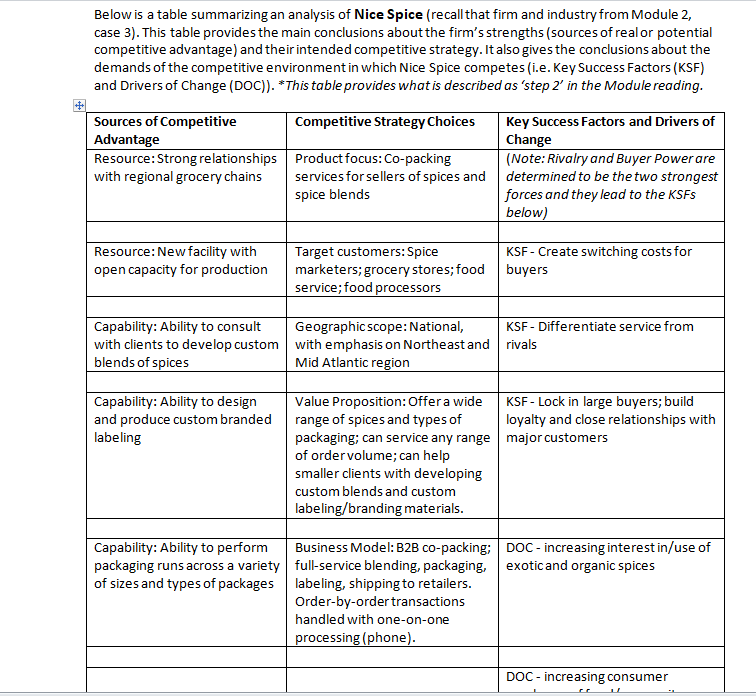
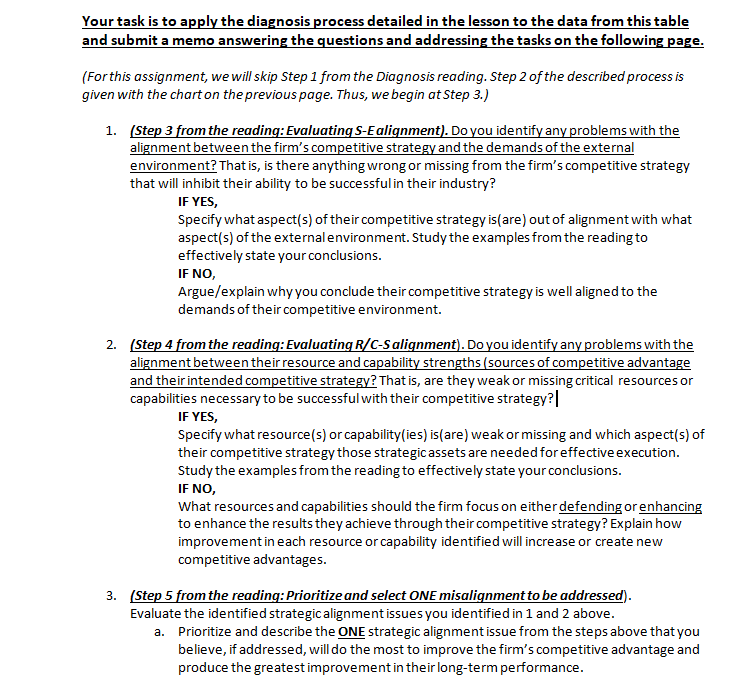
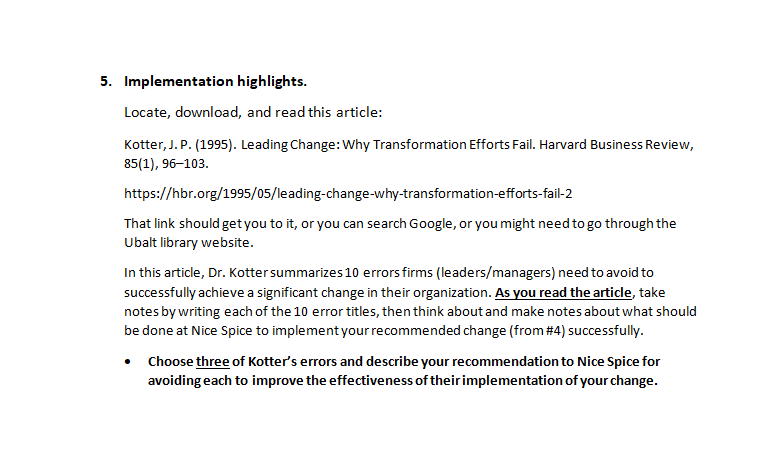
Below is a table summarizing an analysis of Nice Spice (recall that firm and industry from Module 2, case 3). This table provides the main conclusions about the firm's strengths (sources of real or potential competitive advantage) and their intended competitive strategy. It also gives the conclusions about the demands of the competitive environment in which Nice Spice competes (i.e. Key Success Factors (KSF) For this assignment, we will skip Step 1 from the Diagnosis reading. Step 2 of the described process is iven with the chart on the previous page. Thus, we begin at Step 3.) 1. (Step 3 from the reading: Evaluating S-Ealignment). Do you identify any problems with the alignment between the firm's competitive strategy and the demands of the external environment? That is, is there anything wrong or missing from the firm's competitive strategy that will inhibit their ability to be successful in their industry? IF YES, Specify what aspect(s) of their competitive strategy is(are) out of alignment with what aspect(s) of the external environment. Study the examples from the reading to effectively state your conclusions. IF NO, Argue/explain why you conclude their competitive strategy is well aligned to the demands of their competitive environment. 2. (Step 4 from the reading: Evaluating R/C-S alignment). Do you identify any problems with the alignment between their resource and capability strengths (sources of competitive advantage and their intended competitive strategy? That is, are they weak or missing critical resources or capabilities necessary to be successful with their competitive strategy?| IF YES, Specify what resource(s) or capability(ies) is(are) weak or missing and which aspect(s) of their competitive strategy those strategic assets are needed for effective execution. Study the examples from the reading to effectively state your conclusions. IF NO, What resources and capabilities should the firm focus on either defending or enhancing to enhance the results they achieve through their competitive strategy? Explain how improvement in each resource or capability identified will increase or create new competitive advantages. 3. (Step 5 from the reading: Prioritize and select ONE misalignment to be addressed). Evaluate the identified strategic alignment issues you identified in 1 and 2 above. a. Prioritize and describe the ONE strategic alignment issue from the steps above that you believe, if addressed, will do the most to improve the firm's competitive advantage and produce the greatest improvement in their long-term performance. Implementation highlights. Locate, download, and read this article: Kotter, J. P. (1995). Leading Change: Why Transformation Efforts Fail. Harvard Business Review, 85(1), 96-103. https://hbr.org/1995/05/leading-change-why-transformation-efforts-fail-2 That link should get you to it, or you can search Google, or you might need to go through the Ubalt library website. In this article, Dr. Kotter summarizes 10 errors firms (leaders/managers) need to avoid to successfully achieve a significant change in their organization. As you read the article, take notes by writing each of the 10 error titles, then think about and make notes about what should be done at Nice Spice to implement your recommended change (from \#4) successfully. - Choose three of Kotter's errors and describe your recommendation to Nice Spice for avoiding each to improve the effectiveness of their implementation of your change. Implementation highlights. Locate, download, and read this article: Kotter, J. P. (1995). Leading Change: Why Transformation Efforts Fail. Harvard Business Review, 85(1), 96-103. https://hbr.org/1995/05/leading-change-why-transformation-efforts-fail-2 That link should get you to it, or you can search Google, or you might need to go through the Ubalt library website. In this article, Dr. Kotter summarizes 10 errors firms (leaders/managers) need to avoid to successfully achieve a significant change in their organization. As you read the article, take notes by writing each of the 10 error titles, then think about and make notes about what should be done at Nice Spice to implement your recommended change (from \#4) successfully. - Choose three of Kotter's errors and describe your recommendation to Nice Spice for avoiding each to improve the effectiveness of their implementation of your change. 4. (Step 6 from the reading: Recommend HOW that change should be executed): a. Describe three different alternatives available to the firm to remedy the alignment issue you selected in \#3. b. Using the criteria from the lesson reading, evaluate the three alternatives and select the one alternative the firm should pursue to remedy the alignment issue. Show (via a table or chart) or argue how the criteria were applied to justify your recommendation. c. State your final recommendation. Look at the example in the reading for more help in how to best present your recommendation. continued) Below is a table summarizing an analysis of Nice Spice (recall that firm and industry from Module 2, case 3). This table provides the main conclusions about the firm's strengths (sources of real or potential competitive advantage) and their intended competitive strategy. It also gives the conclusions about the demands of the competitive environment in which Nice Spice competes (i.e. Key Success Factors (KSF) For this assignment, we will skip Step 1 from the Diagnosis reading. Step 2 of the described process is iven with the chart on the previous page. Thus, we begin at Step 3.) 1. (Step 3 from the reading: Evaluating S-Ealignment). Do you identify any problems with the alignment between the firm's competitive strategy and the demands of the external environment? That is, is there anything wrong or missing from the firm's competitive strategy that will inhibit their ability to be successful in their industry? IF YES, Specify what aspect(s) of their competitive strategy is(are) out of alignment with what aspect(s) of the external environment. Study the examples from the reading to effectively state your conclusions. IF NO, Argue/explain why you conclude their competitive strategy is well aligned to the demands of their competitive environment. 2. (Step 4 from the reading: Evaluating R/C-S alignment). Do you identify any problems with the alignment between their resource and capability strengths (sources of competitive advantage and their intended competitive strategy? That is, are they weak or missing critical resources or capabilities necessary to be successful with their competitive strategy?| IF YES, Specify what resource(s) or capability(ies) is(are) weak or missing and which aspect(s) of their competitive strategy those strategic assets are needed for effective execution. Study the examples from the reading to effectively state your conclusions. IF NO, What resources and capabilities should the firm focus on either defending or enhancing to enhance the results they achieve through their competitive strategy? Explain how improvement in each resource or capability identified will increase or create new competitive advantages. 3. (Step 5 from the reading: Prioritize and select ONE misalignment to be addressed). Evaluate the identified strategic alignment issues you identified in 1 and 2 above. a. Prioritize and describe the ONE strategic alignment issue from the steps above that you believe, if addressed, will do the most to improve the firm's competitive advantage and produce the greatest improvement in their long-term performance. Implementation highlights. Locate, download, and read this article: Kotter, J. P. (1995). Leading Change: Why Transformation Efforts Fail. Harvard Business Review, 85(1), 96-103. https://hbr.org/1995/05/leading-change-why-transformation-efforts-fail-2 That link should get you to it, or you can search Google, or you might need to go through the Ubalt library website. In this article, Dr. Kotter summarizes 10 errors firms (leaders/managers) need to avoid to successfully achieve a significant change in their organization. As you read the article, take notes by writing each of the 10 error titles, then think about and make notes about what should be done at Nice Spice to implement your recommended change (from \#4) successfully. - Choose three of Kotter's errors and describe your recommendation to Nice Spice for avoiding each to improve the effectiveness of their implementation of your change. Implementation highlights. Locate, download, and read this article: Kotter, J. P. (1995). Leading Change: Why Transformation Efforts Fail. Harvard Business Review, 85(1), 96-103. https://hbr.org/1995/05/leading-change-why-transformation-efforts-fail-2 That link should get you to it, or you can search Google, or you might need to go through the Ubalt library website. In this article, Dr. Kotter summarizes 10 errors firms (leaders/managers) need to avoid to successfully achieve a significant change in their organization. As you read the article, take notes by writing each of the 10 error titles, then think about and make notes about what should be done at Nice Spice to implement your recommended change (from \#4) successfully. - Choose three of Kotter's errors and describe your recommendation to Nice Spice for avoiding each to improve the effectiveness of their implementation of your change. 4. (Step 6 from the reading: Recommend HOW that change should be executed): a. Describe three different alternatives available to the firm to remedy the alignment issue you selected in \#3. b. Using the criteria from the lesson reading, evaluate the three alternatives and select the one alternative the firm should pursue to remedy the alignment issue. Show (via a table or chart) or argue how the criteria were applied to justify your recommendation. c. State your final recommendation. Look at the example in the reading for more help in how to best present your recommendation. continued)




