







Question: Biomedical Engineering 2. (2 pts) In Example 7.1 in the textbook, the forearm (radius) is held at an angle of 15 from the horizontal, and
Biomedical Engineering
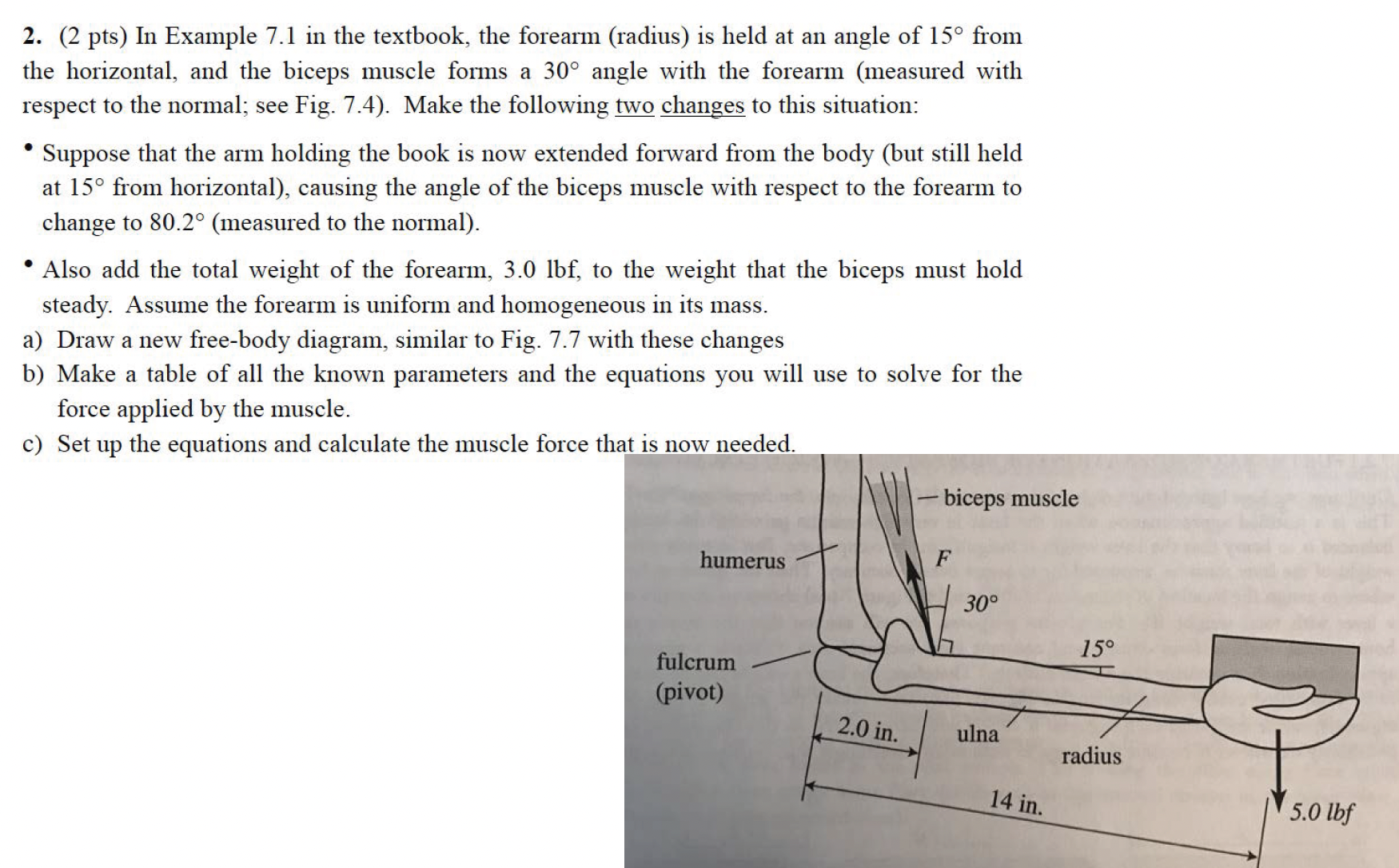
2. (2 pts) In Example 7.1 in the textbook, the forearm (radius) is held at an angle of 15 from the horizontal, and the biceps muscle forms a 30 angle with the forearm (measured with respect to the normal; see Fig. 7.4). Make the following m changes to this situation: ' Suppose that the arm holding the book is now extended forward from the body (but still held at 15 from horizontal), causing the angle of the biceps muscle with respect to the forearm to change to 802 (measured to the normal). ' Also add the total weight of the forearm, 3.0 lbf, to the weight that the biceps must hold steady. Assume the forearm is uniform and homogeneous in its mass. a) Draw a new free-body diagram, similar to Fig. 7.7 with these changes b) Make a table of all the known parameters and the equations you will use to solve for the force applied by the muscle. 6) Set up the equations and calculate the muscle force that is now needed
Step by Step Solution
There are 3 Steps involved in it

Get step-by-step solutions from verified subject matter experts
 Study Help