Question: Blank Options: 1.less 2.more Performance Reviews by the Numbers When Maria Giraldo began her job as a nurse at Long Island Jewish Medical Center (L.I.J.M.C.)
 Blank Options:
1.less
2.more
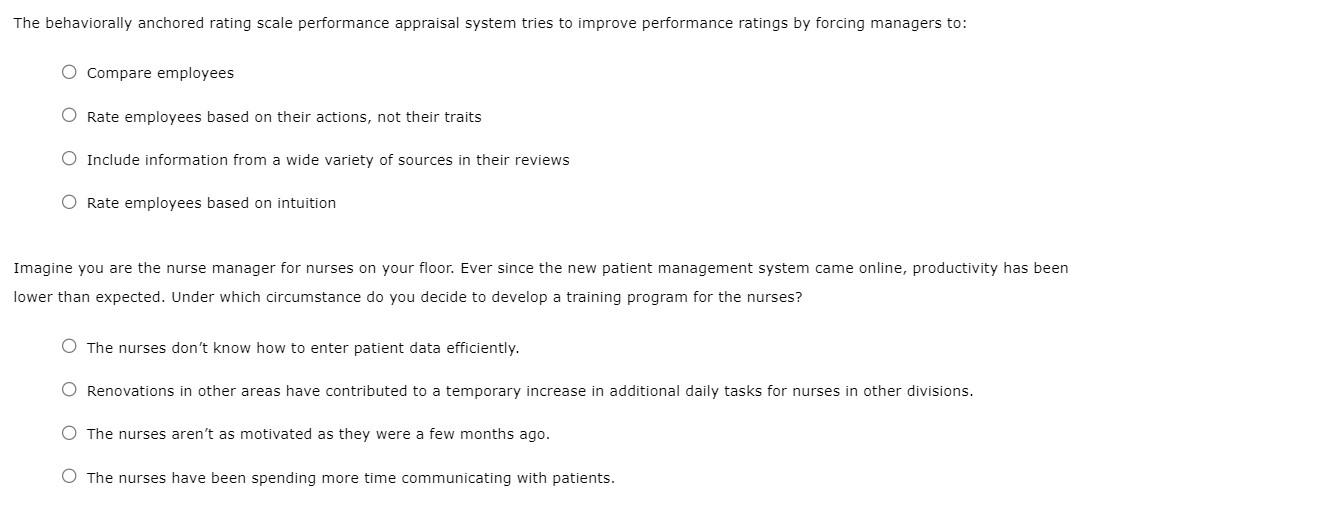
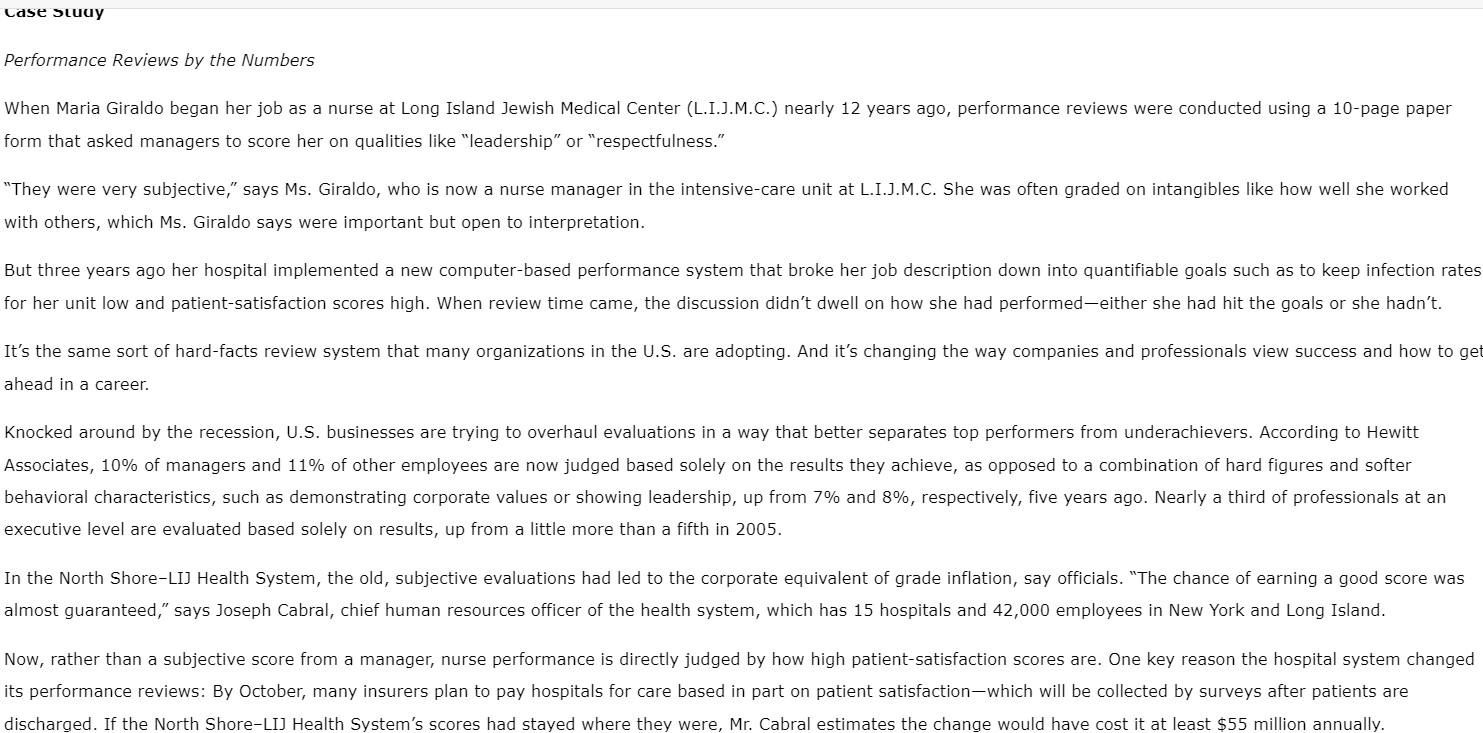
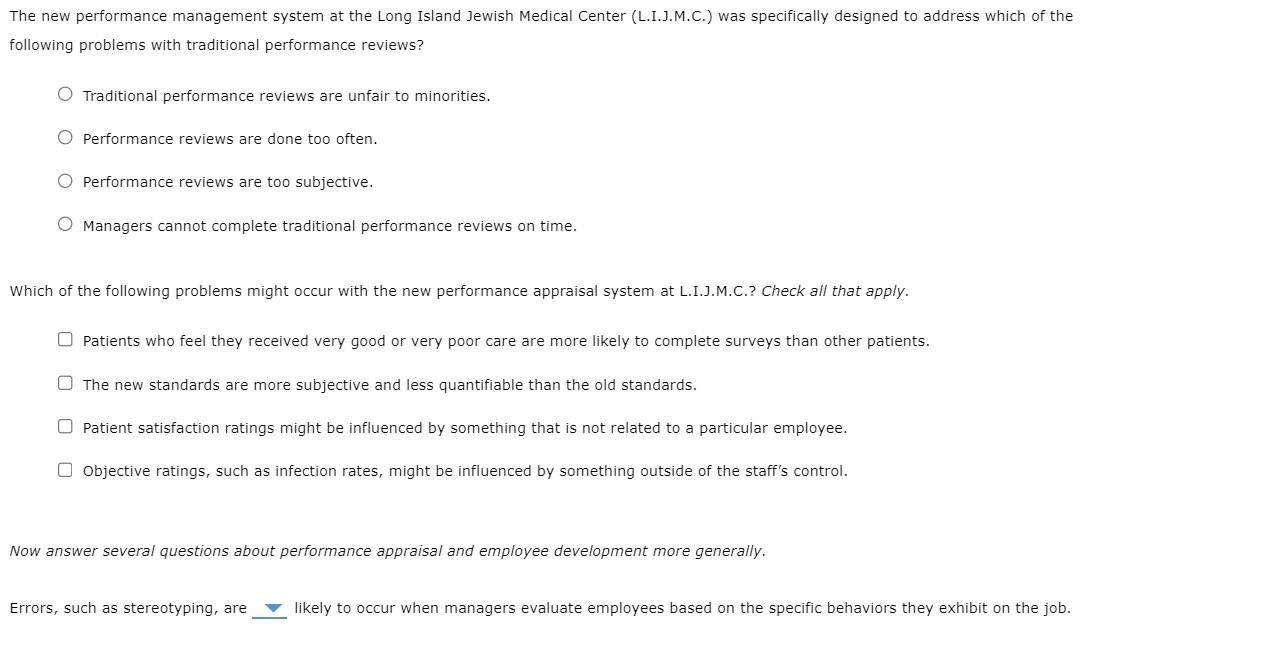
Performance Reviews by the Numbers When Maria Giraldo began her job as a nurse at Long Island Jewish Medical Center (L.I.J.M.C.) nearly 12 years ago, performance reviews were conducted using a 10-page paper form that asked managers to score her on qualities like "leadership" or "respectfulness." "They were very subjective," says Ms. Giraldo, who is now a nurse manager in the intensive-care unit at L.I.J.M.C. She was often graded on intangibles like how well she worked with others, which Ms. Giraldo says were important but open to interpretation. But three years ago her hospital implemented a new computer-based performance system that broke her job description down into quantifiable goals such as to keep infection rates for her unit low and patient-satisfaction scores high. When review time came, the discussion didn't dwell on how she had performed-either she had hit the goals or she hadn't. It's the same sort of hard-facts review system that many organizations in the U.S. are adopting. And it's changing the way companies and professionals view success and how to ge ahead in a career. Knocked around by the recession, U.S. businesses are trying to overhaul evaluations in a way that better separates top performers from underachievers. According to Hewitt Associates, 10% of managers and 11% of other employees are now judged based solely on the results they achieve, as opposed to a combination of hard figures and softer behavioral characteristics, such as demonstrating corporate values or showing leadership, up from 7% and 8%, respectively, five years ago. Nearly a third of professionals at an executive level are evaluated based solely on results, up from a little more than a fifth in 2005. In the North Shore-LIJ Health System, the old, subjective evaluations had led to the corporate equivalent of grade inflation, say officials. "The chance of earning a good score was almost guaranteed," says Joseph Cabral, chief human resources officer of the health system, which has 15 hospitals and 42,000 employees in New York and Long Island. Now, rather than a subjective score from a manager, nurse performance is directly judged by how high patient-satisfaction scores are. One key reason the hospital system changed its performance reviews: By October, many insurers plan to pay hospitals for care based in part on patient satisfaction-which will be collected by surveys after patients are discharged. If the North Shore-LIJ Health System's scores had stayed where they were, Mr. Cabral estimates the change would have cost it at least $55 million annually. The new performance management system at the Long Island Jewish Medical Center (L.I.J.M.C.) was specifically designed to address which of the following problems with traditional performance reviews? Traditional performance reviews are unfair to minorities. Performance reviews are done too often. Performance reviews are too subjective. Managers cannot complete traditional performance reviews on time. Which of the following problems might occur with the new performance appraisal system at L.I.J.M.C.? Check all that apply. Patients who feel they received very good or very poor care are more likely to complete surveys than other patients. The new standards are more subjective and less quantifiable than the old standards. Patient satisfaction ratings might be influenced by something that is not related to a particular employee. Objective ratings, such as infection rates, might be influenced by something outside of the staff's control. Now answer several questions about performance appraisal and employee development more generally. Errors, such as stereotyping, are likely to occur when managers evaluate employees based on the specific behaviors they exhibit on the job. The behaviorally anchored rating scale performance appraisal system tries to improve performance ratings by forcing managers to: Compare employees Rate employees based on their actions, not their traits Include information from a wide variety of sources in their reviews Rate employees based on intuition Imagine you are the nurse manager for nurses on your floor. Ever since the new patient management system came online, productivity lower than expected. Under which circumstance do you decide to develop a training program for the nurses? The nurses don't know how to enter patient data efficiently. Renovations in other areas have contributed to a temporary increase in additional daily tasks for nurses in other divisions. The nurses aren't as motivated as they were a few months ago. The nurses have been spending more time communicating with patients









 Study Help