







Question: Blocking in the Randomizing Subjects applet In Exploration 4.2 you used the Randomizing Subjects applet to randomly assign subjects to two groups. At the end
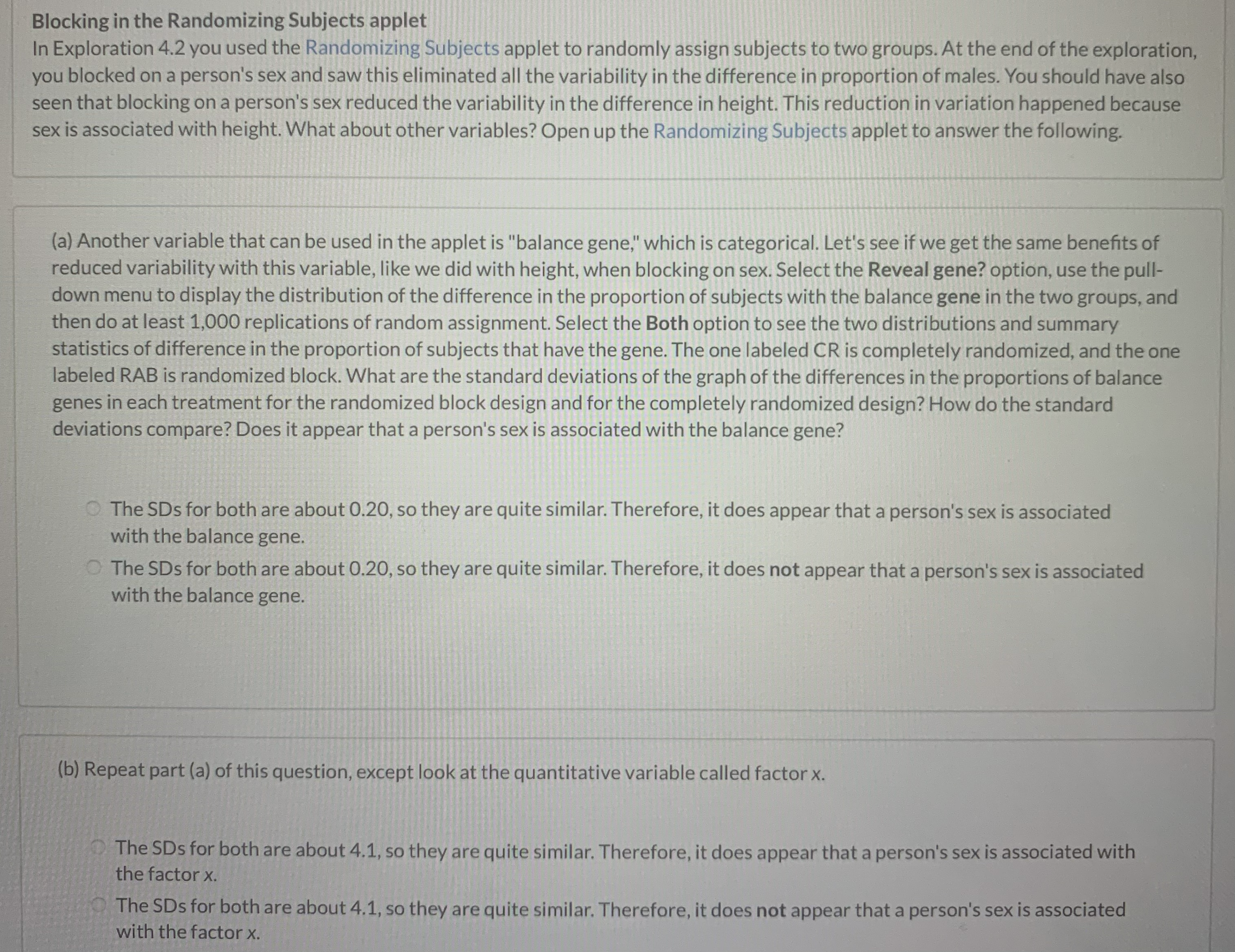
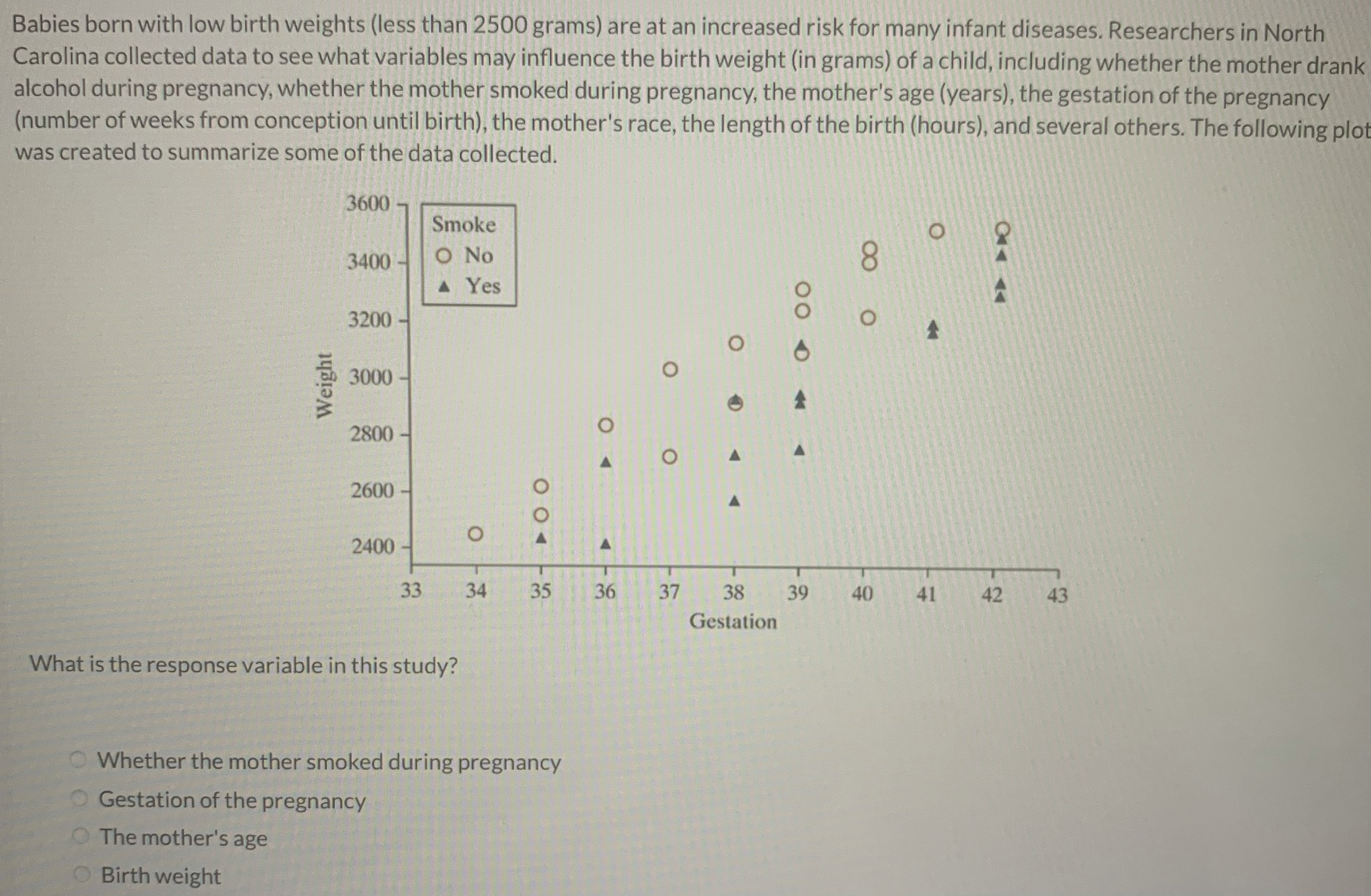
Blocking in the Randomizing Subjects applet In Exploration 4.2 you used the Randomizing Subjects applet to randomly assign subjects to two groups. At the end of the exploration, you blocked on a person's sex and saw this eliminated all the variability in the difference in proportion of males. You should have also seen that blocking on a person's sex reduced the variability in the difference in height. This reduction in variation happened because sex is associated with height. What about other variables? Open up the Randomizing Subjects applet to answer the following. (a) Another variable that can be used in the applet is "balance gene," which is categorical. Let's see if we get the same benefits of reduced variability with this variable, like we did with height, when blocking on sex. Select the Reveal gene? option, use the pull- down menu to display the distribution of the difference in the proportion of subjects with the balance gene in the two groups, and then do at least 1,000 replications of random assignment. Select the Both option to see the two distributions and summary statistics of difference in the proportion of subjects that have the gene. The one labeled CR is completely randomized, and the one labeled RAB is randomized block. What are the standard deviations of the graph of the differences in the proportions of balance genes in each treatment for the randomized block design and for the completely randomized design? How do the standard deviations compare? Does it appear that a person's sex is associated with the balance gene? The SDs for both are about 0.20, so they are quite similar. Therefore, it does appear that a person's sex is associated with the balance gene. The SDs for both are about 0.20, so they are quite similar. Therefore, it does not appear that a person's sex is associated with the balance gene. (b) Repeat part (a) of this question, except look at the quantitative variable called factor x. The SDs for both are about 4.1, so they are quite similar. Therefore, it does appear that a person's sex is associated with the factor x. The SDs for both are about 4.1, so they are quite similar. Therefore, it does not appear that a person's sex is associated with the factor x.Babies born with low birth weights (less than 2500 grams) are at an increased risk for many infant diseases. Researchers in North Carolina collected data to see what variables may influence the birth weight (in grams) of a child, including whether the mother drank alcohol during pregnancy, whether the mother smoked during pregnancy, the mother's age (years), the gestation of the pregnancy (number of weeks from conception until birth), the mother's race, the length of the birth (hours), and several others. The following plo was created to summarize some of the data collected. 3600 Smoke O 3400 O No A Yes 3200 O O 3000 Weight 2800 - O 2600 2400 - O 33 34 35 36 37 38 39 40 41 42 43 Gestation What is the response variable in this study? Whether the mother smoked during pregnancy Gestation of the pregnancy The mother's age O Birth weight
Step by Step Solution
There are 3 Steps involved in it

Get step-by-step solutions from verified subject matter experts
 Study Help