



Question: Bond Conversion Expense Bonds Payable Cash Compensation Expense Common Stock Convertible Preferred Stock Debt Conversion Expense Discount on Bonds Payable Income Summary Incremental Cash Insurance

Bond Conversion Expense Bonds Payable Cash Compensation Expense Common Stock Convertible Preferred Stock Debt Conversion Expense Discount on Bonds Payable Income Summary Incremental Cash Insurance Expense Interest Expense Interest Payable Interest Receivable Liability under Stock Appreciation Plan No Entry Paid-in Capital in Excess of Par - Common Stock Paid-in Capital in Excess of Par - Preferred Stock Paid-in Capital-Expired Stock Options Paid-in Capital-Stock Options Paid-in Capital-Stock Warrants Premium on Bonds Payable Preferred Stock Retained Earnings Unamortized Bond Issue Costs Unearned Compensation
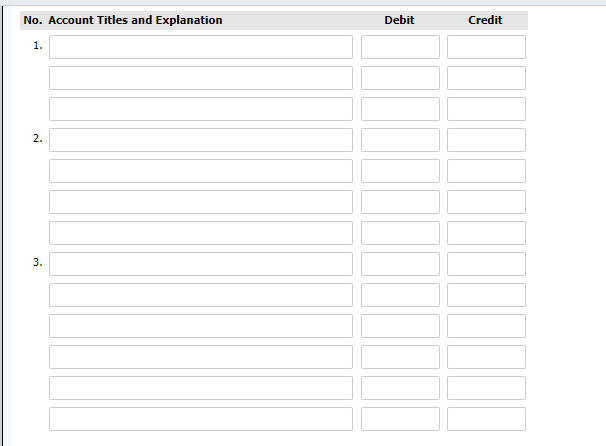
For each of the unrelated transactions described below, present the entries required to record each transaction. 1. Sage Corp. issued $21,800,000 par value 10% convertible bonds at 99. If the bonds had not been convertible, the company's investment banker estimates they would have been sold at 95 2. Pronghorn Company issued $21,800,000 par value 10% bonds at 98. One detachable stock purchase warrant was issued with each $100 par value bond. At the time of issuance, the warrants were selling for $4. 3. Suppose Sepracor, Inc. called its convertible debt in 2017. Assume the following related to the transaction. The 11%, $10,200,000 par value bonds were converted into 1,020,000 shares of $1 par value common stock on July 1, 2017. On July 1, there was $60,000 of unamortized discount applicable to the bonds, and the company paid an additional $74,000 to the bondholders to induce conversion of all the bonds. The company records the conversion using the book value method. (Credit account titles are automatically indented when amount is entered. Do not indent manually. If no entry is required, select "No Entry" for the account titles and enter o for the amounts.) No. Account Titles and Explanation Debit Credit
Step by Step Solution
There are 3 Steps involved in it

Get step-by-step solutions from verified subject matter experts