



Question: Bond valuations and yields: What do they mean, and how do you derive their values? Consider the following case of investment-grade bonds issued by Procter
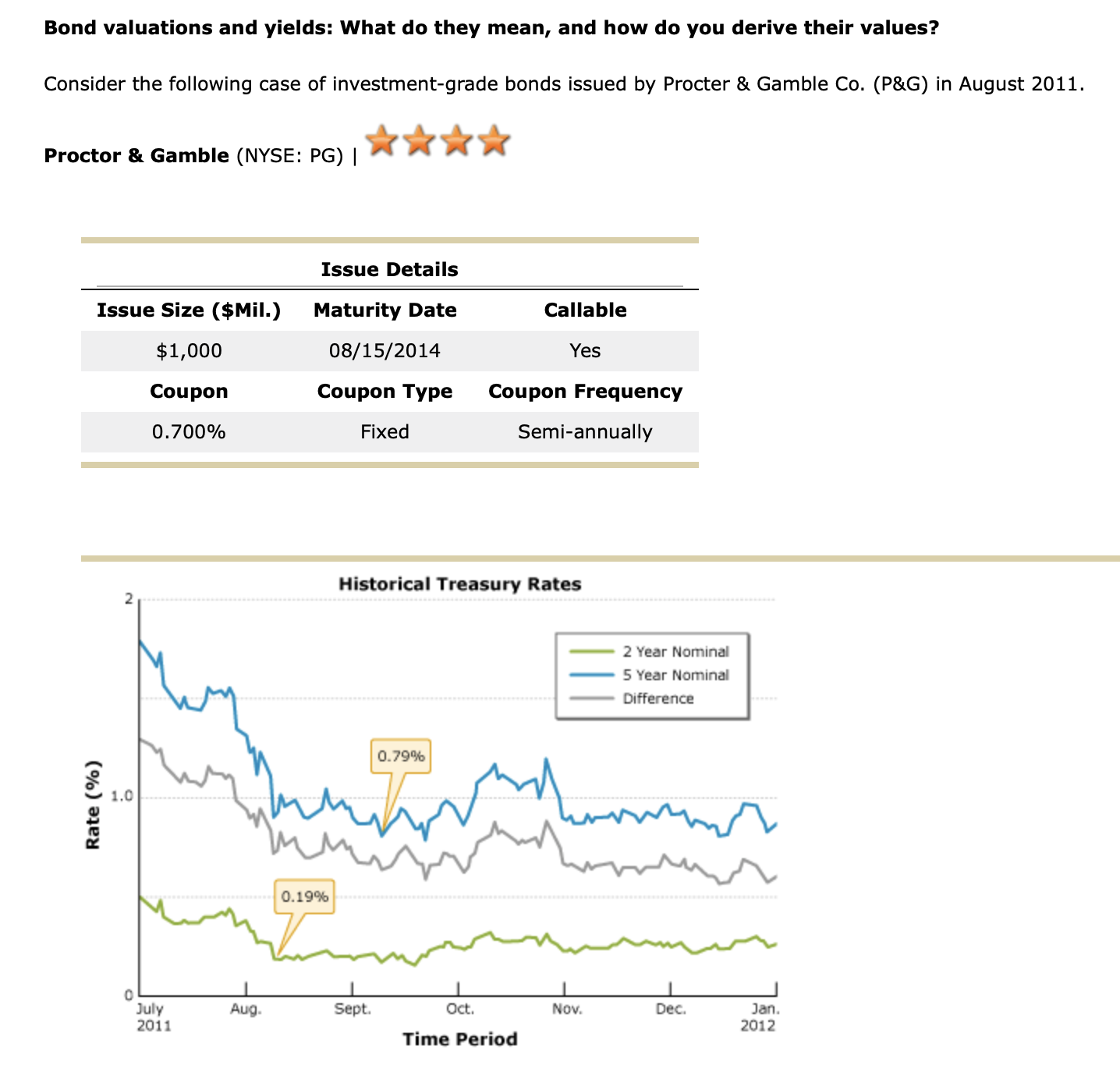
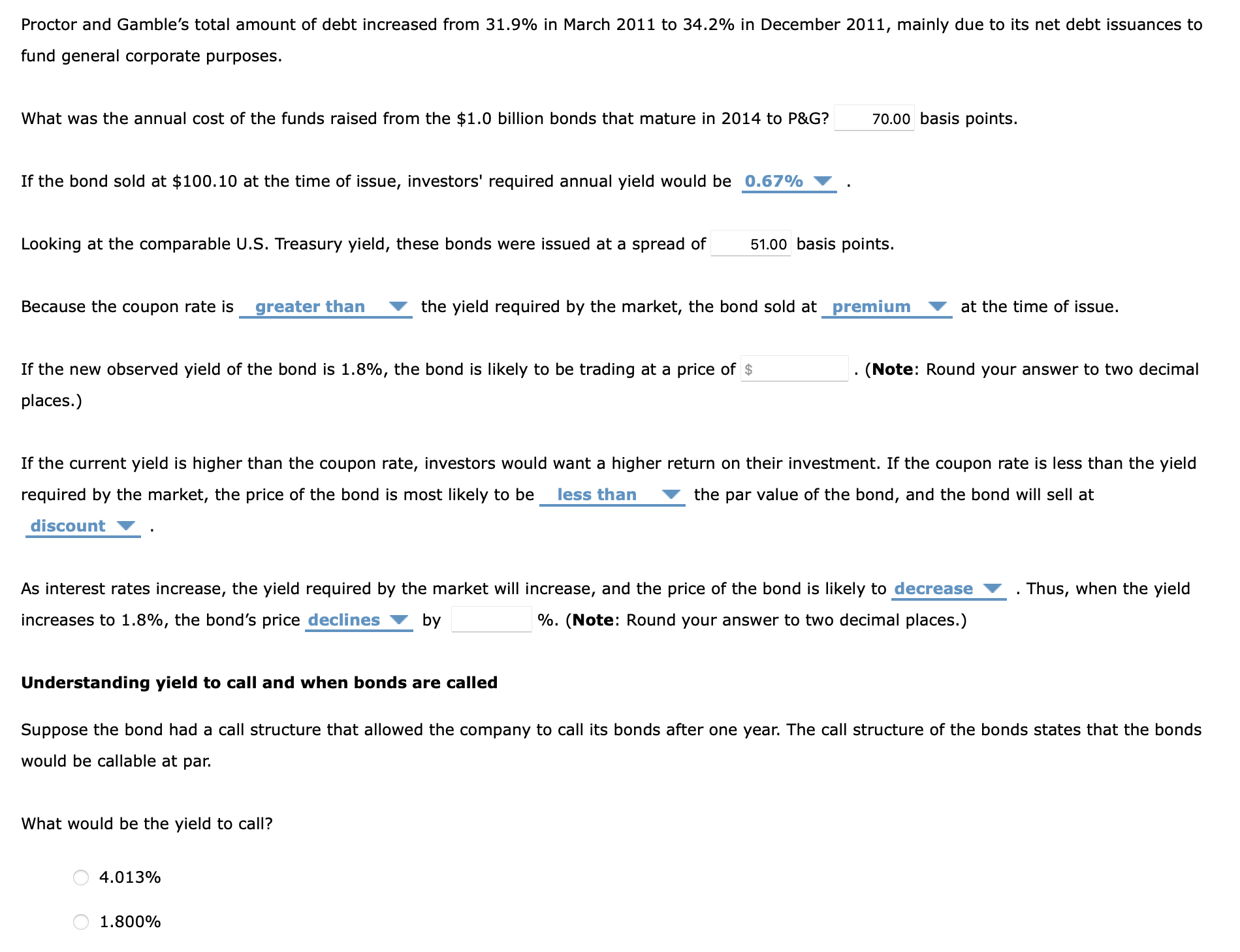
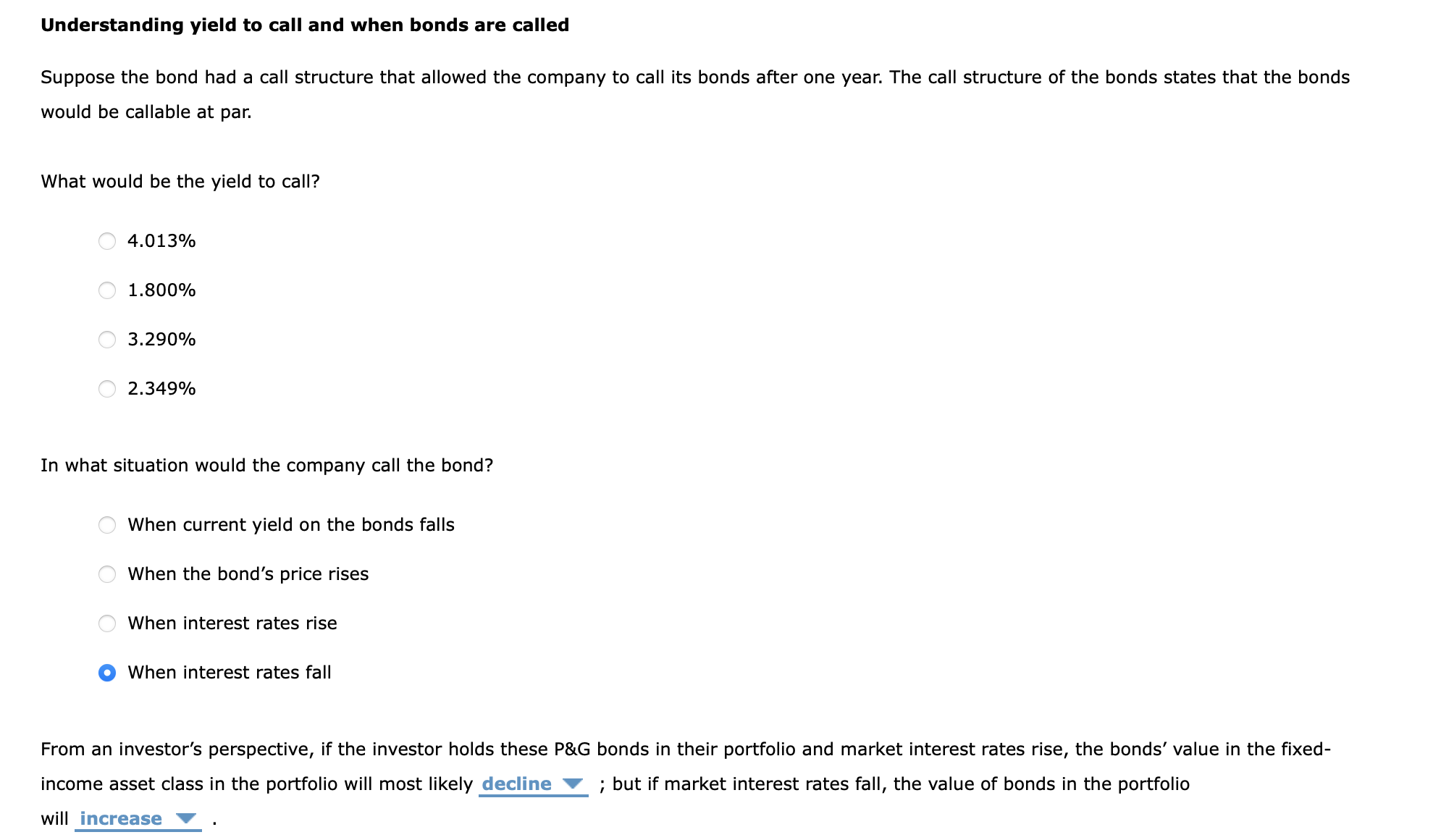
Bond valuations and yields: What do they mean, and how do you derive their values? Consider the following case of investment-grade bonds issued by Procter \& Gamble Co. (P\&G) in August 2011. Proctor \& Gamble (NYSE: PG) | Proctor and Gamble's total amount of debt increased from 31.9% in March 2011 to 34.2% in December 2011, mainly due to its net debt issuances to fund general corporate purposes. What was the annual cost of the funds raised from the $1.0 billion bonds that mature in 2014 to P&G ? basis points. If the bond sold at $100.10 at the time of issue, investors' required annual yield would be Looking at the comparable U.S. Treasury yield, these bonds were issued at a spread of basis points. Because the coupon rate is the yield required by the market, the bond sold at If the new observed yield of the bond is 1.8%, the bond is likely to be trading at a price of places.) (Note: Round your answer to two decimal If the current yield is higher than the coupon rate, investors would want a higher return on their investment. If the coupon rate is less than the yield required by the market, the price of the bond is most likely to be the par value of the bond, and the bond will sell at As interest rates increase, the yield required by the market will increase, and the price of the bond is likely to increases to 1.8%, the bond's price by \%. (Note: Round your answer to two decimal places.) . Thus, when the yield Understanding yield to call and when bonds are called Suppose the bond had a call structure that allowed the company to call its bonds after one year. The call structure of the bonds states that the bonds would be callable at par. What would be the yield to call? 4.013% 1.800% Understanding yield to call and when bonds are called Suppose the bond had a call structure that allowed the company to call its bonds after one year. The call structure of the bonds states that the bonds would be callable at par. What would be the yield to call? 4.013% 1.800% 3.290% 2.349% In what situation would the company call the bond? When current yield on the bonds falls When the bond's price rises When interest rates rise When interest rates fall From an investor's perspective, if the investor holds these P\&G bonds in their portfolio and market interest rates rise, the bonds' value in the fixedincome asset class in the portfolio will most likely _ ; but if market interest rates fall, the value of bonds in the portfolio will
Step by Step Solution
There are 3 Steps involved in it

Get step-by-step solutions from verified subject matter experts