



Question: Bonds.13 (2 ) Convertible bonds do not pay coupon payments and instead are issued at a discount to their par value that will generate a
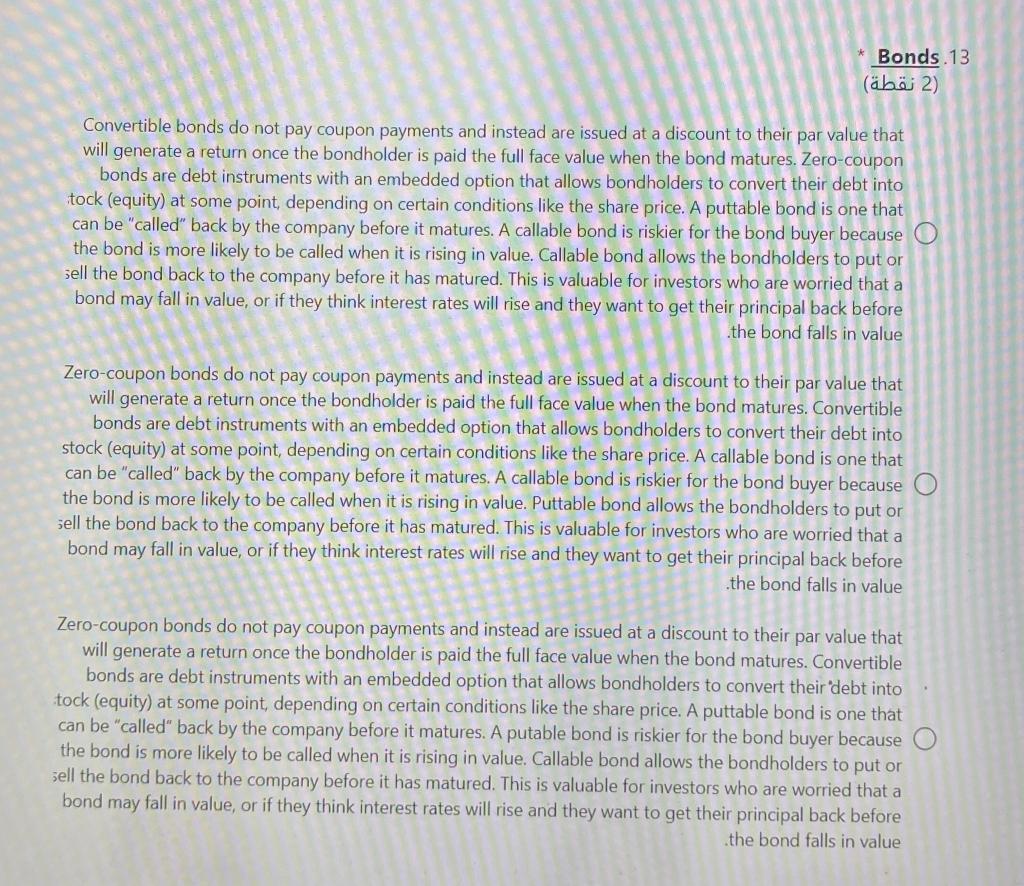
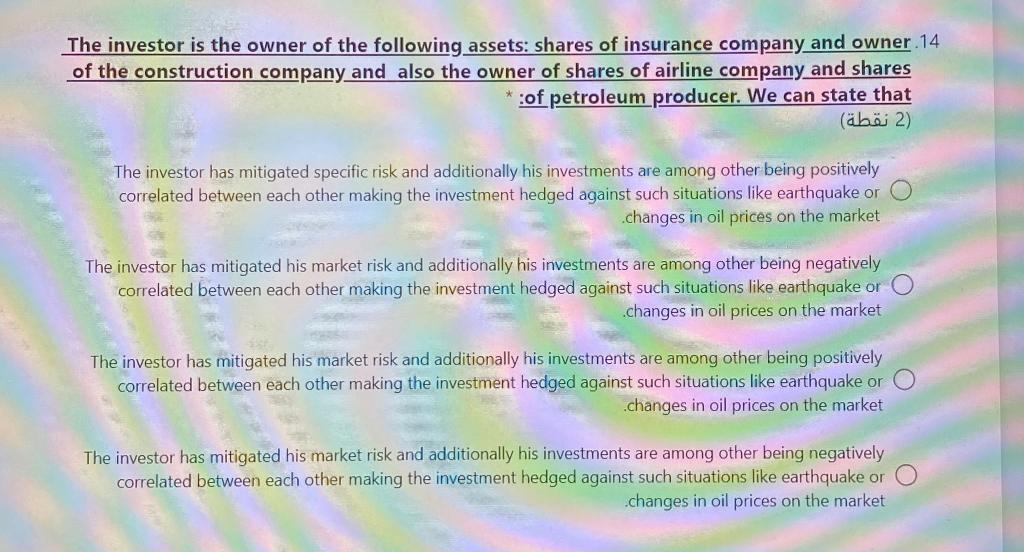
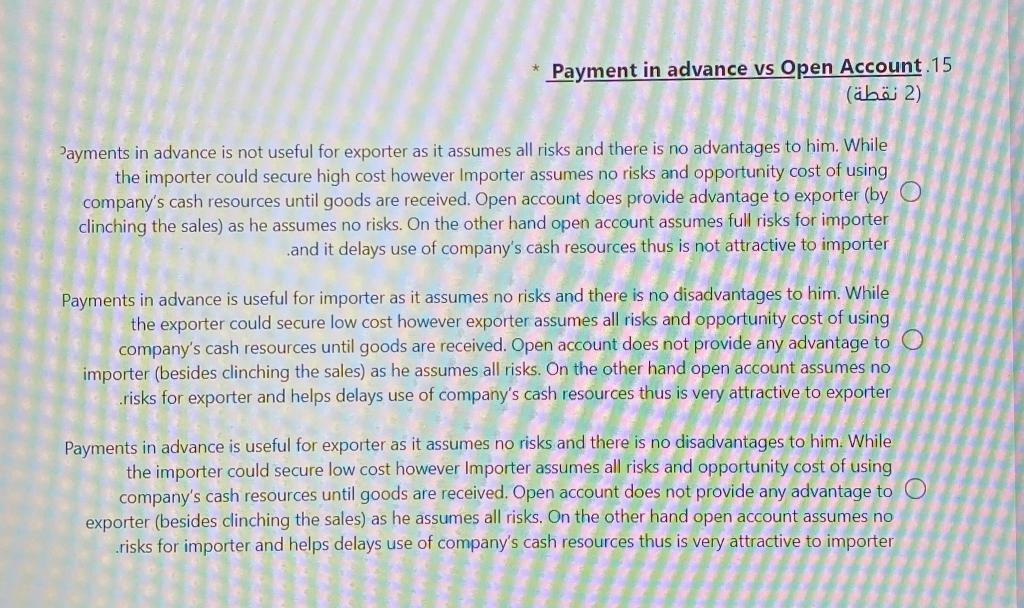
Bonds.13 (2 ) Convertible bonds do not pay coupon payments and instead are issued at a discount to their par value that will generate a return once the bondholder is paid the full face value when the bond matures. Zero-coupon bonds are debt instruments with an embedded option that allows bondholders to convert their debt into tock (equity) at some point depending on certain conditions like the share price. A puttable bond is one that can be "called" back by the company before it matures. A callable bond is riskier for the bond buyer because the bond is more likely to be called when it is rising in value. Callable bond allows the bondholders to put or sell the bond back to the company before it has matured. This is valuable for investors who are worried that a bond may fall in value, or if they think interest rates will rise and they want to get their principal back before the bond falls in value Zero-coupon bonds do not pay coupon payments and instead are issued at a discount to their par value that will generate a return once the bondholder is paid the full face value when the bond matures. Convertible bonds are debt instruments with an embedded option that allows bondholders to convert their debt into stock (equity) at some point, depending on certain conditions like the share price. A callable bond is one that can be "called" back by the company before it matures. A callable bond is riskier for the bond buyer because the bond is more likely to be called when it is rising in value. Puttable bond allows the bondholders to put or sell the bond back to the company before it has matured. This is valuable for investors who are worried that a bond may fall in value, or if they think interest rates will rise and they want to get their principal back before the bond falls in value Zero-coupon bonds do not pay coupon payments and instead are issued at a discount to their par value that will generate a return once the bondholder is paid the full face value when the bond matures. Convertible bonds are debt instruments with an embedded option that allows bondholders to convert their debt into tock (equity) at some point, depending on certain conditions like the share price. A puttable bond is one that can be "called" back by the company before it matures. A putable bond is riskier for the bond buyer because the bond is more likely to be called when it is rising in value. Callable bond allows the bondholders to put or sell the bond back to the company before it has matured. This is valuable for investors who are worried that a bond may fall in value, or if they think interest rates will rise and they want to get their principal back before the bond falls in value The investor is the owner of the following assets: shares of insurance company and owner 14 of the construction company and also the owner of shares of airline company and shares :of petroleum producer. We can state that (2 ) The investor has mitigated specific risk and additionally his investments are among other being positively correlated between each other making the investment hedged against such situations like earthquake or changes in oil prices on the market The investor has mitigated his market risk and additionally his investments are among other being negatively correlated between each other making the investment hedged against such situations like earthquake or .changes in oil prices on the market The investor has mitigated his market risk and additionally his investments are among other being positively correlated between each other making the investment hedged against such situations like earthquake or changes in oil prices on the market The investor has mitigated his market risk and additionally his investments are among other being negatively correlated between each other making the investment hedged against such situations like earthquake on changes in oil prices on the market Payment in advance vs Open Account.15 (2 ) Payments in advance is not useful for exporter as it assumes all risks and there is no advantages to him. While the importer could secure high cost however Importer assumes no risks and opportunity cost of using company's cash resources until goods are received. Open account does provide advantage to exporter (by O clinching the sales) as he assumes no risks. On the other hand open account assumes full risks for importer and it delays use of company's cash resources thus is not attractive to importer Payments in advance is useful for importer as it assumes no risks and there is no disadvantages to him. While the exporter could secure low cost however exporter assumes all risks and opportunity cost of using company's cash resources until goods are received. Open account does not provide any advantage to O importer (besides clinching the sales) as he assumes all risks. On the other hand open account assumes no risks for exporter and helps delays use of company's cash resources thus is very attractive to exporter Payments in advance is useful for exporter as it assumes no risks and there is no disadvantages to him. While the importer could secure low cost however Importer assumes all risks and opportunity cost of using company's cash resources until goods are received. Open account does not provide any advantage to exporter (besides clinching the sales) as he assumes all risks. On the other hand open account assumes no risks for importer and helps delays use of company's cash resources thus is very attractive to importer Bonds.13 (2 ) Convertible bonds do not pay coupon payments and instead are issued at a discount to their par value that will generate a return once the bondholder is paid the full face value when the bond matures. Zero-coupon bonds are debt instruments with an embedded option that allows bondholders to convert their debt into tock (equity) at some point depending on certain conditions like the share price. A puttable bond is one that can be "called" back by the company before it matures. A callable bond is riskier for the bond buyer because the bond is more likely to be called when it is rising in value. Callable bond allows the bondholders to put or sell the bond back to the company before it has matured. This is valuable for investors who are worried that a bond may fall in value, or if they think interest rates will rise and they want to get their principal back before the bond falls in value Zero-coupon bonds do not pay coupon payments and instead are issued at a discount to their par value that will generate a return once the bondholder is paid the full face value when the bond matures. Convertible bonds are debt instruments with an embedded option that allows bondholders to convert their debt into stock (equity) at some point, depending on certain conditions like the share price. A callable bond is one that can be "called" back by the company before it matures. A callable bond is riskier for the bond buyer because the bond is more likely to be called when it is rising in value. Puttable bond allows the bondholders to put or sell the bond back to the company before it has matured. This is valuable for investors who are worried that a bond may fall in value, or if they think interest rates will rise and they want to get their principal back before the bond falls in value Zero-coupon bonds do not pay coupon payments and instead are issued at a discount to their par value that will generate a return once the bondholder is paid the full face value when the bond matures. Convertible bonds are debt instruments with an embedded option that allows bondholders to convert their debt into tock (equity) at some point, depending on certain conditions like the share price. A puttable bond is one that can be "called" back by the company before it matures. A putable bond is riskier for the bond buyer because the bond is more likely to be called when it is rising in value. Callable bond allows the bondholders to put or sell the bond back to the company before it has matured. This is valuable for investors who are worried that a bond may fall in value, or if they think interest rates will rise and they want to get their principal back before the bond falls in value The investor is the owner of the following assets: shares of insurance company and owner 14 of the construction company and also the owner of shares of airline company and shares :of petroleum producer. We can state that (2 ) The investor has mitigated specific risk and additionally his investments are among other being positively correlated between each other making the investment hedged against such situations like earthquake or changes in oil prices on the market The investor has mitigated his market risk and additionally his investments are among other being negatively correlated between each other making the investment hedged against such situations like earthquake or .changes in oil prices on the market The investor has mitigated his market risk and additionally his investments are among other being positively correlated between each other making the investment hedged against such situations like earthquake or changes in oil prices on the market The investor has mitigated his market risk and additionally his investments are among other being negatively correlated between each other making the investment hedged against such situations like earthquake on changes in oil prices on the market Payment in advance vs Open Account.15 (2 ) Payments in advance is not useful for exporter as it assumes all risks and there is no advantages to him. While the importer could secure high cost however Importer assumes no risks and opportunity cost of using company's cash resources until goods are received. Open account does provide advantage to exporter (by O clinching the sales) as he assumes no risks. On the other hand open account assumes full risks for importer and it delays use of company's cash resources thus is not attractive to importer Payments in advance is useful for importer as it assumes no risks and there is no disadvantages to him. While the exporter could secure low cost however exporter assumes all risks and opportunity cost of using company's cash resources until goods are received. Open account does not provide any advantage to O importer (besides clinching the sales) as he assumes all risks. On the other hand open account assumes no risks for exporter and helps delays use of company's cash resources thus is very attractive to exporter Payments in advance is useful for exporter as it assumes no risks and there is no disadvantages to him. While the importer could secure low cost however Importer assumes all risks and opportunity cost of using company's cash resources until goods are received. Open account does not provide any advantage to exporter (besides clinching the sales) as he assumes all risks. On the other hand open account assumes no risks for importer and helps delays use of company's cash resources thus is very attractive to importer
Step by Step Solution
There are 3 Steps involved in it

Get step-by-step solutions from verified subject matter experts