







Question: Briefly explain the differences between the IFRS and GAAP after FASB issued ASU 2017-04 to simplify the accounting for goodwill impairment) regarding the following: Assignment/allocation
Briefly explain the differences between the IFRS and GAAP after FASB issued ASU 2017-04 to simplify the accounting for goodwill impairment) regarding the following:
- Assignment/allocation of goodwill. (i.e. The levels at which goodwill is assigned /allocated.
- Impairment of goodwill, test(s) applied, how impairment loss is recognized and allocated (In case the impairment loss exceeds [or does not exceed] the carrying value of goodwill), and reversal of impairment.
- Amortization and impairment of intangible assets other than goodwill
- Non-Controlling interest.
Answer this question in a tabular format, like the following one:
|
| IFRS | GAAP | |
| Assignment/allocation of Goodwill |
|
| |
| Impairment of goodwill |
| ||
| Reversal of impairment |
|
| |
| Amortization and impairment of intangible assets other than goodwill |
|
| |
|
|
|
| |
| Non-Controlling interest |
|
|
(You must support your answer in this question with quality references.)
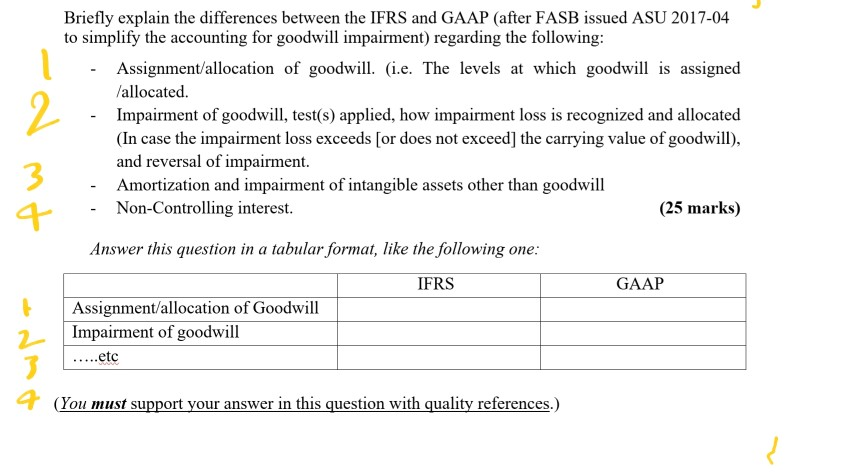
Briefly explain the differences between the IFRS and GAAP (after FASB issued ASU 2017-04 to simplify the accounting for goodwill impairment) regarding the following: - Assignment/allocation of goodwill. (i.e. The levels at which goodwill is assigned /allocated. Impairment of goodwill, test(s) applied, how impairment loss is recognized and allocated (In case the impairment loss exceeds for does not exceed] the carrying value of goodwill), and reversal of impairment. Amortization and impairment of intangible assets other than goodwill - Non-Controlling interest. (25 marks) Answer this question in a tabular format, like the following one: IFRS GAAP Assignment/allocation of Goodwill Impairment of goodwill .....etc 4 (You must support your answer in this question with quality references.)
Step by Step Solution
There are 3 Steps involved in it

Get step-by-step solutions from verified subject matter experts
 Study Help