







Question: Budgeted overhead: $ 1 , 2 0 0 , 0 0 0 ( 5 0 % fixed ) Practical volume ( direct labor hours )
Budgeted overhead: $ fixed Practical volume direct labor hours: hours Actual overhead: $ fixed Actual hours worked: Grade Weaving and Pattern Coloring and Bolting Total Fabric FB Fabric FB Fabric FB Total Departmental data on Fabric FBactual costs and actual outcomes: Weaving and Pattern Coloring and Bolting Beginning inventories Units Costs: Transferred in $ $ Materials $ $ Labor $ $ Overhead $ $ Current production: Units started Units transferred out Costs: Transferred in $ Materials $ $ Labor $ $ Overhead Percentage completion: Beginning inventory Ending inventory Units are measured in yards for the Weaving and Pattern Department and in bolts for the Coloring and Bolting Department. Note: With the exception of the cardboard bolt rods, materials are added at the beginning of each process. The cost of the rods is relatively insignificant and is included in overhead.
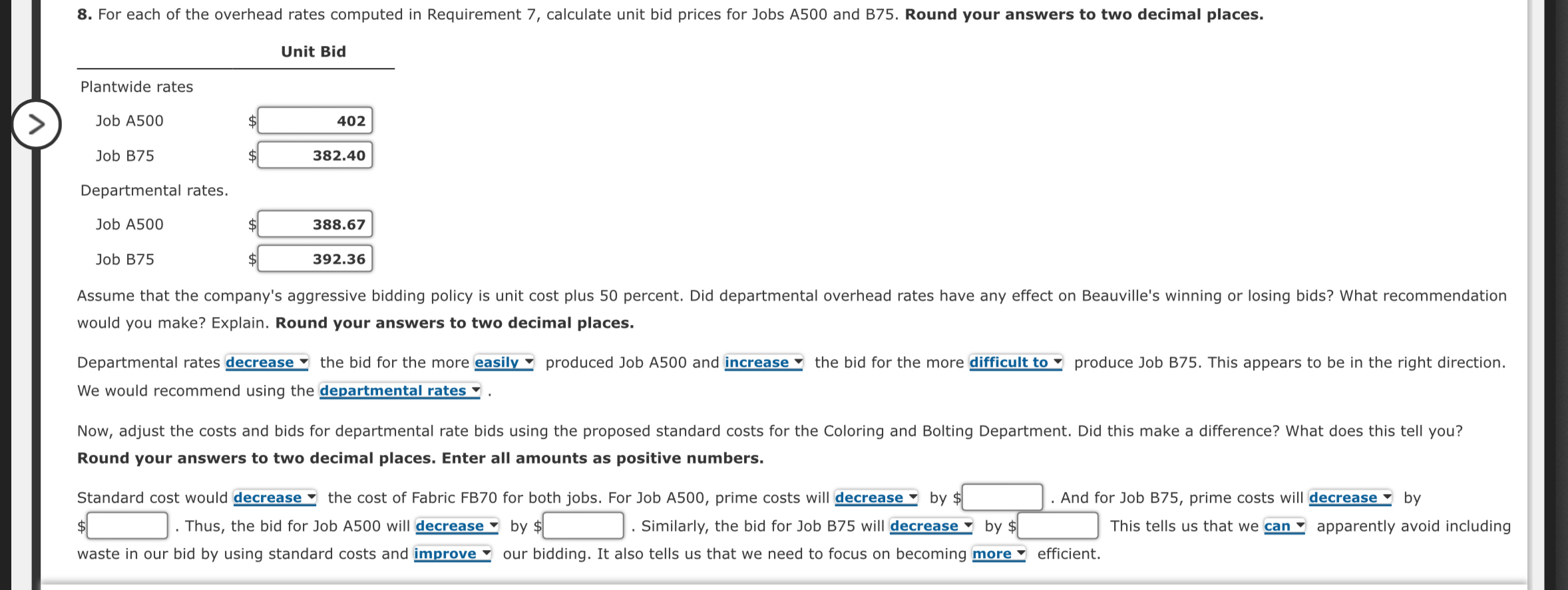
For each of the overhead rates computed in Requirement calculate unit bid prices for Jobs and Round your answers to two decimal places.
Unit Bidwould you make? Explain. Round your answers to two decimal places.
Departmental rates : the bid for the more produced Job A and the bid for the more difficult to produce Job B This appears to be in the right direction.
We would recommend using the
Round your answers to two decimal places. Enter all amounts as positive numbers.
Standard cost would the cost of Fabric FB for both jobs. For Job A prime costs will by $
$ Thus, the bid for Job A will decrease by $ Similarly, the bid for Job B will decrease by And for Job B prime costs will by I
This tells us that we can apparently avoid including waste in our bid by using standard costs and our bidding. It also tells us that we need to focus on becoming more efficient.
Step by Step Solution
There are 3 Steps involved in it
1 Expert Approved Answer
Step: 1 Unlock

Question Has Been Solved by an Expert!
Get step-by-step solutions from verified subject matter experts
Step: 2 Unlock
Step: 3 Unlock
 Study Help