







Question: Buffer Overflow Summary Buffer overflow occurs when data is input or written beyond the allocated bounds of an object, such as an array, causing a
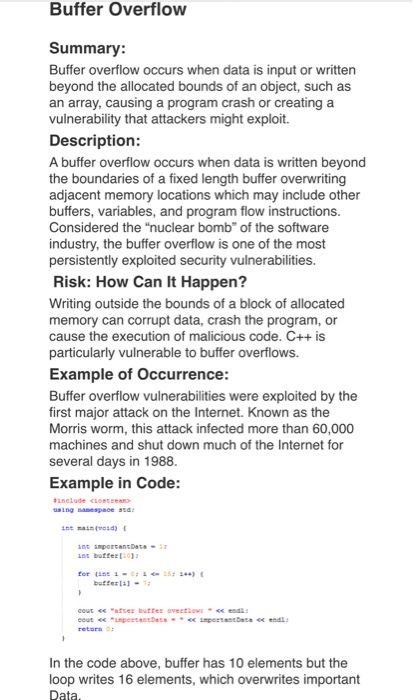
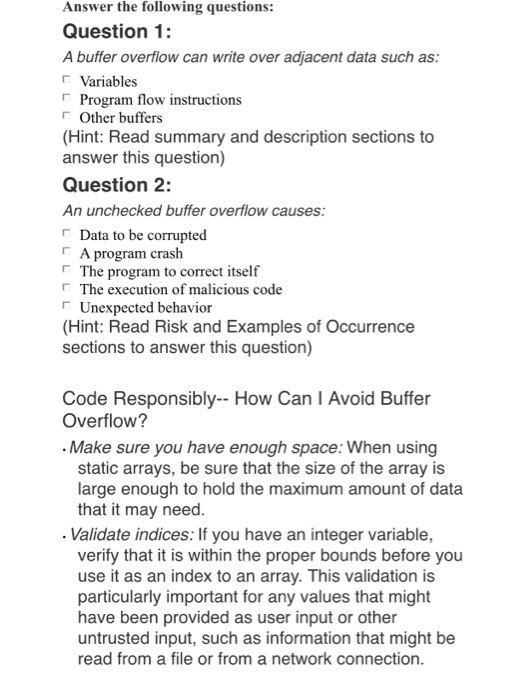
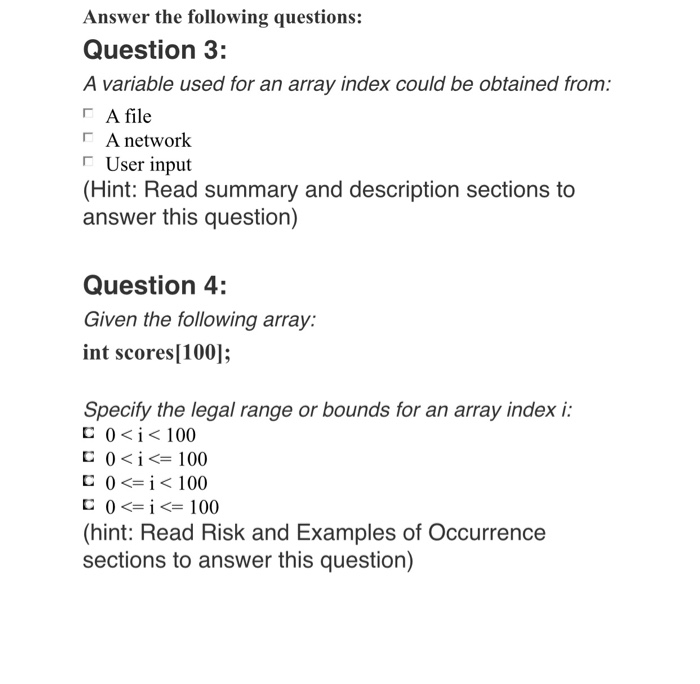
Buffer Overflow Summary Buffer overflow occurs when data is input or written beyond the allocated bounds of an object, such as an array, causing a program crash or creating a vulnerability that attackers might exploit. Description A buffer overflow occurs when data is written beyond the boundaries of a fixed length buffer overwriting adjacent memory locations which may include other buffers, variables, and program flow instructions Considered the "nuclear bomb" of the software industry, the buffer overflow is one of the most persistently exploited security vulnerabilities. Risk: How Can It Happen? Writing outside the bounds of a block of allocated memory can corrupt data, crash the program, or cause the execution of malicious code. C++ is particularly vulnerable to buffer overflows. Example of Occurrence: Buffer overflow vulnerabilities were exploited by the first major attack on the Internet. Known as the Morris worm, this attack infected more than 60,000 machines and shut down much of the Internet for several days in 1988 Example in Code: at buttez[101 In the code above, buffer has 10 elements but the loop writes 16 elements, which overwrites important
Step by Step Solution
There are 3 Steps involved in it

Get step-by-step solutions from verified subject matter experts
 Study Help