







Question: BUSINESS CASE ANALYSIS 4 There was no question about Mark's genius. Seven years ago he decided to enter the competitive nightmare that the personal computer
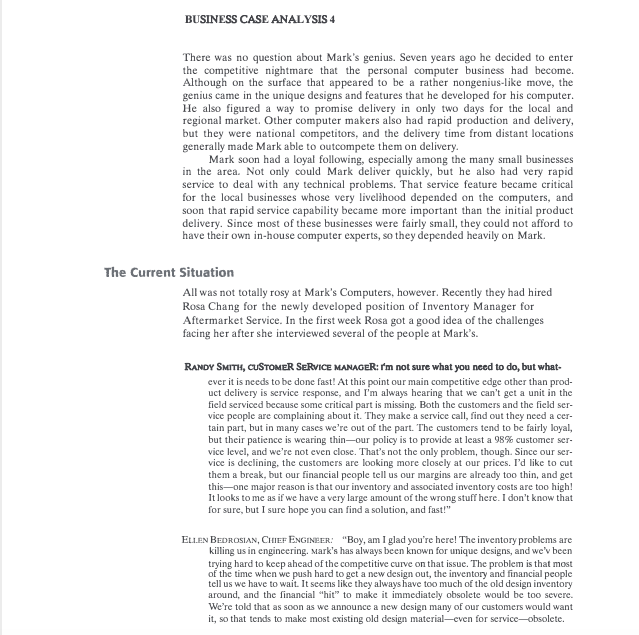
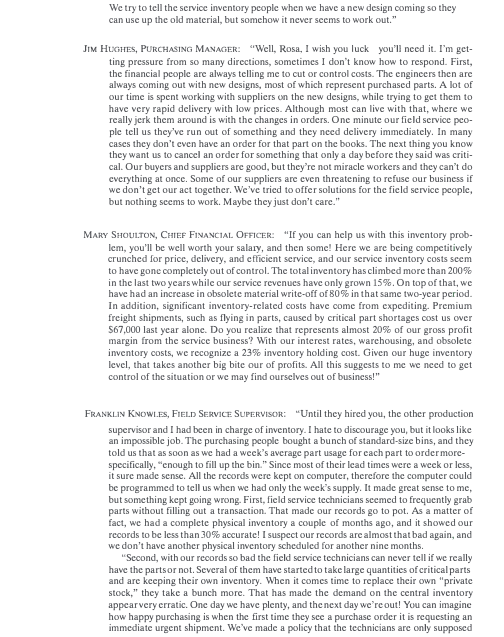
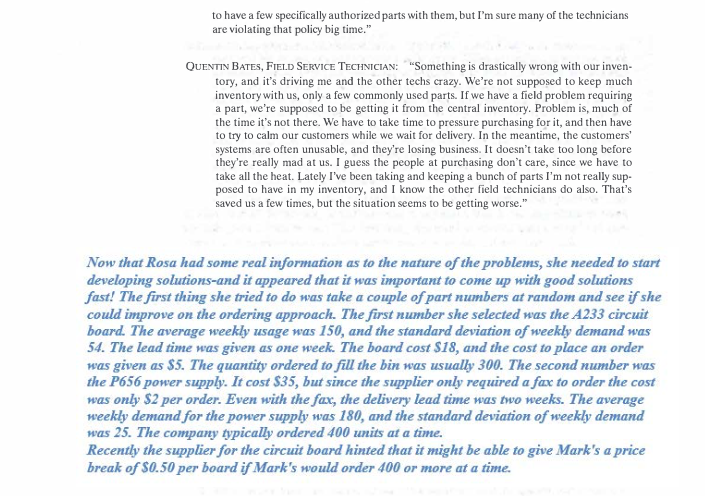
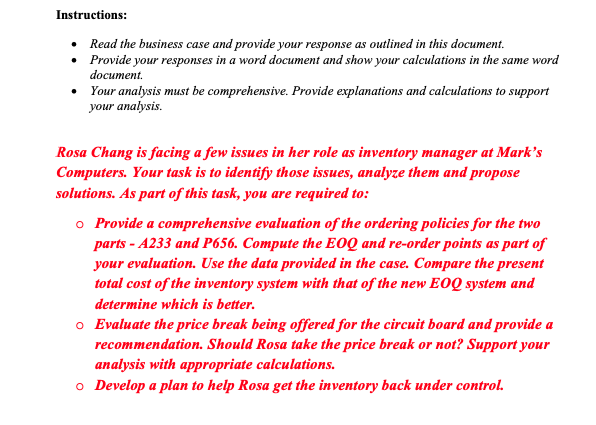
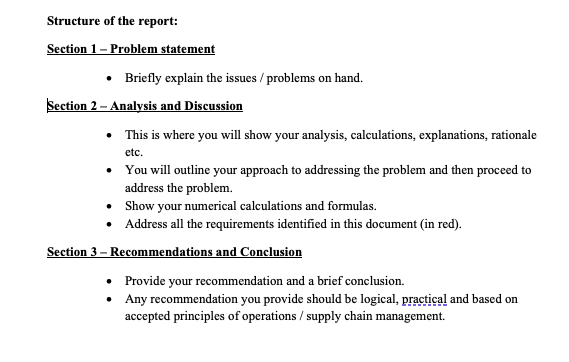
BUSINESS CASE ANALYSIS 4 There was no question about Mark's genius. Seven years ago he decided to enter the competitive nightmare that the personal computer business had become. Although on the surface that appeared to be a rather nongenius-like move, the genius came in the unique designs and features that he developed for his computer. He also figured a way to promise delivery in only two days for the local and regional market. Other computer makers also had rapid production and delivery, but they were national competitors, and the delivery time from distant locations generally made Mark able to outcompete them on delivery. Mark soon had a loyal following, especially among the many small businesses in the area. Not only could Mark deliver quickly, but he also had very rapid service to deal with any technical problems. That service feature became critical for the local businesses whose very livelihood depended on the computers, and soon that rapid service capability became more important than the initial product delivery. Since most of these businesses were fairly small, they could not afford to have their own in-house computer experts, so they depended heavily on Mark. Current Situation All was not totally rosy at Mark's Computers, however. Recently they had hired Rosa Chang for the newly developed position of Inventory Manager for Aftermarket Service. In the first week Rosa got a good idea of the challenges facing her after she interviewed several of the people at Mark's. RAMOY SMITH, CUSTOMER SERvICE MANAOER: rm not sure what you need to do, but whatever it is needs to be done fast! At this point our main competitive edge other than product delivery is service response, and I'm always hearing that we can't get a unit in the field servioed because some critical part is missing. Both the customers and the field service people are complaining about it. They make a service call, find out they need a certain part, but in many cases we're out of the part. The customers tend to be fairly loyal, but their patience is wearing thin-our policy is to provide at least a 98% customer service level, and we're not even close. That's not the only problem, though. Since our service is declining, the customers are looking more closely at our prices. I'd like to cut them a break, but our financial people tell us our margins are already too thin, and get this-one major reason is that our inventory and associated inventory costs are too high! It looks to me as if we have a very large amount of the wrong stuff here. I don't know that for sure, but I sure hope you can find a solution, and fast!" Etu.en BedrosiAn, CHIEF Engrneer:' "Boy, am I glad you're here! The inventory problems are killing us in engineering. Mark's has always been known for unique designs, and we'v been trying hard to keep ahead of the competitive curve on that issue. The problem is that most of the time when we push hard to get a new design out, the inventory and financial people tell us we have to wait. It seems like they alwayshave too much of the old design inventory around, and the financial "hit" to make it immediately obsolete would be too severe. We're told that as soon as we announce a new design many of our customers would want it, so that tends to make most existing old design material-even for serviceobsolete. We try to tell the service inventory people when we have a new design coming so they can use up the old material, but somehow it never seems to work out." Jim Htires, PUrchasing Manager: "Well, Rosa, I wish you luck you'll need it. I'm getting pressure from so many directions, sometimes I don't know how to respond. First, the financial people are always telling me to cut or control costs. The engineers then are always coming out with new designs, most of which represent purchased parts. A lot of our time is spent working with suppliers on the new designs, while trying to get them to have very rapid delivery with low prices. Although most can live with that, where we really jerk them around is with the changes in orders. One minute our field service people tell us they've run out of something and they need delivery immediately. In many cases they don't even have an order for that part on the books. The next thing you know they want us to cancel an order for something that only a day before they said was critical. Our buyers and suppliers are good, but they're not miracle workers and they can't do everything at once. Some of our suppliers are even threatening to refuse our business if we don't get our act together. We've tried to offer solutions for the field service people, but nothing seems to work. Maybe they just don't care." MAKY SHoUtTON, ChIEF FINANC1AL. Officer: "If you can help us with this inventory problem, you'll be well worth your salary, and then some! Here we are being competitively crunched for price, delivery, and efticient service, and our service inventory costs secm to have gone completely out of control. The total inventory has climbed more than 200% in the last two years while our service revenues have only grown 15%. On top of that, we have had an increase in obsolete material write-off of 80% in that same two-year period. In addition, significant inventory-related costs have come from expediting. Premium freight shipments, such as flying in parts, caused by critical part shortages cost us over $67,000 last year alone. Do you realize that represents almost 20% of our gross profit margin from the service business? With our interest rates, warehousing, and obsolete inventory costs, we recognize a 23% inventory holding cost. Given our huge inventory level, that takes another big bite our of profits. All this suggests to me we need to get control of the situation or we may find ourselves out of business!" FRANKLIN KNOwL.ES, FIELd SERvice SUPEkvisor: "Until they hired you, the other production supervisor and 1 had been in charge of inventory. I hate to discourage you, but it looks like an impossible job. The purchasing people bought a bunch of standard-size bins, and they told us that as soon as we had a week's average part usage for each part to ordermorespecifically, "enough to fill up the bin." Since most of their lead times were a week or less, it sure made sense. All the records were kept on computer, therefore the computer could be programmed to tell us when we had only the week's supply. It made great sense to me, but something kept going wrong. First, field service technicians seemed to frequently grab parts without filling out a transaction. That made our records go to pot. As a matter of fact, we had a complete physical inventory a couple of months ago, and it showed our records to be less than 30% accurate! I suspect our records are almost that bad again, and we don't have another physical inventory scheduled for another nine months. "Second, with our records so bad the field service technicians can never tell if we really have the parts or not. Several of them have started to take large quantities of critical parts and are keeping their own inventory. When it comes time to replace their own "private stock," they take a bunch more. That has made the demand on the central inventory appearvery erratic. One day we have plenty, and thenext day we're out! You can imagine how happy purchasing is when the first time they see a purchase order it is requesting an immediate urgent shipment. We've made a policy that the technicians are only supposed to have a few specifically authorized parts with them, but I'm sure many of the technicians are violating that policy big time." Quentin Bates, Fret.d Service Technician: "Something is drastically wrong with our inventory, and it's driving me and the other techs crazy. We're not supposed to keep much inventory with us, only a few commonly used parts. If we have a field problem requiring a part, we're supposed to be getting it from the central inventory. Problem is, much of the time it's not there. We have to take time to pressure purchasing for it, and then have to try to calm our customers while we wait for delivery. In the meantime, the customers' systems are often unusable, and they're losing business. It doesn't take too long before they're really mad at us. I guess the people at purchasing don't care, since we have to take all the heat. Lately I've been taking and keeping a bunch of parts I'm not really supposed to have in my inventory, and I know the other field technicians do also. That's saved us a few times, but the situation seems to be getting worse." Now that Rosa had some real information as to the nature of the problems, she needed to start developing solutions-and it appeared that it was important to come up with good solutions fast! The first thing she tried to do was take a couple of part numbers at random and see if she could improve on the ordering approach. The first number she selected was the A233 circuit board. The average weekly usage was 150 , and the standard deviation of weekly demand was 54. The lead time was given as one week. The board cost $18, and the cost to place an order was given as \$5. The quantity ordered to fill the bin was usually 300. The second number was the P656 power supply. It cost $35, but since the supplier only required a fax to order the cost was only $2 per order. Even with the fax, the delivery lead time was two weeks. The average weekly demand for the power supply was 180 , and the standard deviation of weekly demand was 25. The company typically ordered 400 units at a time. Recently the supplier for the circuit board hinted that it might be able to give Mark's a price break of $0.50 per board if Mark's would order 400 or more at a time. Instructions: - Read the business case and provide your response as outlined in this document. - Provide your responses in a word document and show your calculations in the same word document. - Your analysis must be comprehensive. Provide explanations and calculations to support your analysis. Rosa Chang is facing a few issues in her role as inventory manager at Mark's Computers. Your task is to identify those issues, analyze them and propose solutions. As part of this task, you are required to: Provide a comprehensive evaluation of the ordering policies for the two parts - A233 and P656. Compute the EOQ and re-order points as part of your evaluation. Use the data provided in the case. Compare the present total cost of the inventory system with that of the new EOQ system and determine which is better. Evaluate the price break being offered for the circuit board and provide a recommendation. Should Rosa take the price break or not? Support your analysis with appropriate calculations. Develop a plan to help Rosa get the inventory back under control. Section 1 -Problem statement - Briefly explain the issues / problems on hand. Section 2 - Analysis and Discussion - This is where you will show your analysis, calculations, explanations, rationale etc. - You will outline your approach to addressing the problem and then proceed to address the problem. - Show your numerical calculations and formulas. - Address all the requirements identified in this document (in red). Section 3 - Recommendations and Conclusion - Provide your recommendation and a brief conclusion. - Any recommendation you provide should be logical, practical and based on accepted principles of operations / supply chain management
Step by Step Solution
There are 3 Steps involved in it

Get step-by-step solutions from verified subject matter experts
 Study Help