







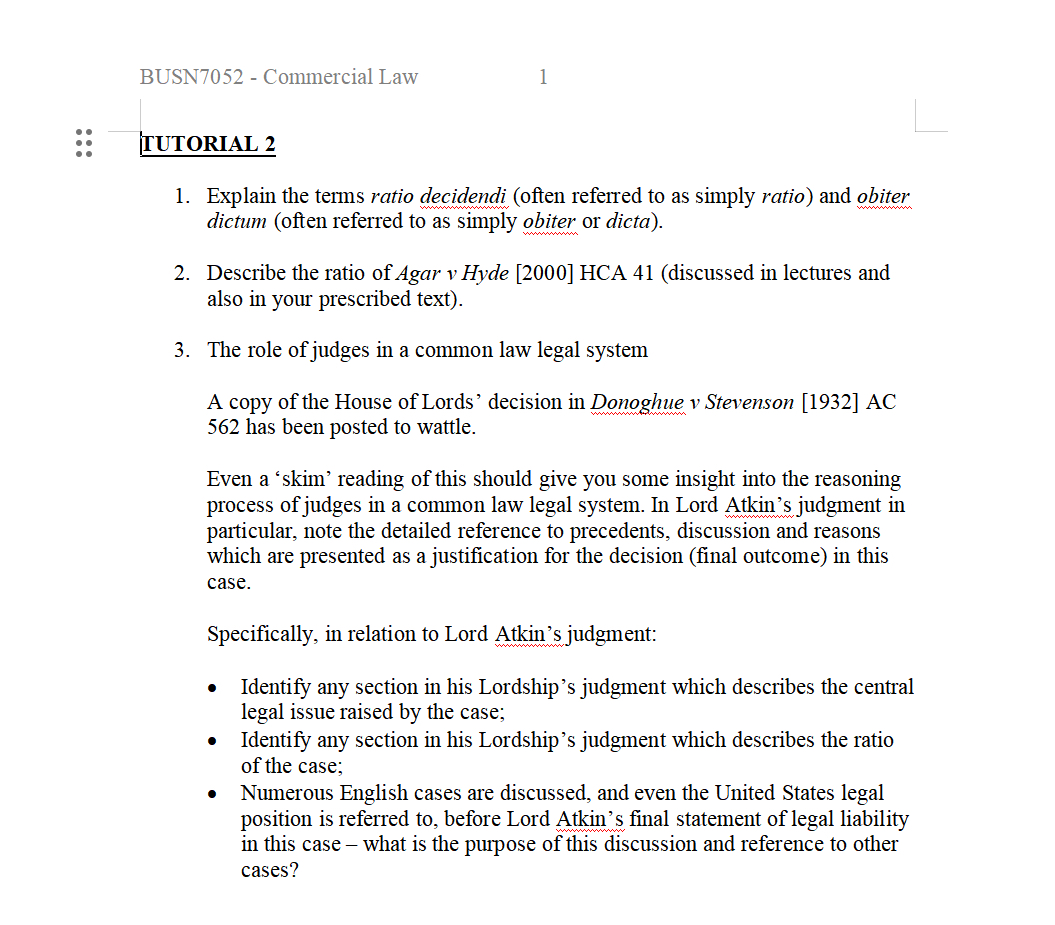
Question: BUSN 7 0 5 2 - Commercial Law 1 TUTORIAL 2 Explain the terms ratio decidendi ( often referred to as simply ratio ) and
BUSN Commercial Law
TUTORIAL
Explain the terms ratio decidendi often referred to as simply ratio and obiter dictum often referred to as simply obiter or dicta
Describe the ratio of Agar Hyde HCA discussed in lectures and also in your prescribed text
The role of judges in a common law legal system
A copy of the House of Lords' decision in Donoghue Stevenson AC has been posted to wattle.
Even a 'skim' reading of this should give you some insight into the reasoning process of judges in a common law legal system. In Lord Atkin's judgment in particular, note the detailed reference to precedents, discussion and reasons which are presented as a justification for the decision final outcome in this case.
Specifically, in relation to Lord Atkin's judgment:
Identify any section in his Lordship's judgment which describes the central legal issue raised by the case;
Identify any section in his Lordship's judgment which describes the ratio of the case;
Numerous English cases are discussed, and even the United States legal position is referred to before Lord Atkin's final statement of legal liability in this case what is the purpose of this discussion and reference to other cases?
Step by Step Solution
There are 3 Steps involved in it
1 Expert Approved Answer
Step: 1 Unlock

Question Has Been Solved by an Expert!
Get step-by-step solutions from verified subject matter experts
Step: 2 Unlock
Step: 3 Unlock
 Study Help