







Question: by using this formula solve the question please provide the answer Al Hansen, the newly appointed vice president of finance of Berkshire Instruments, was eager
by using this formula solve the question
please provide the answer
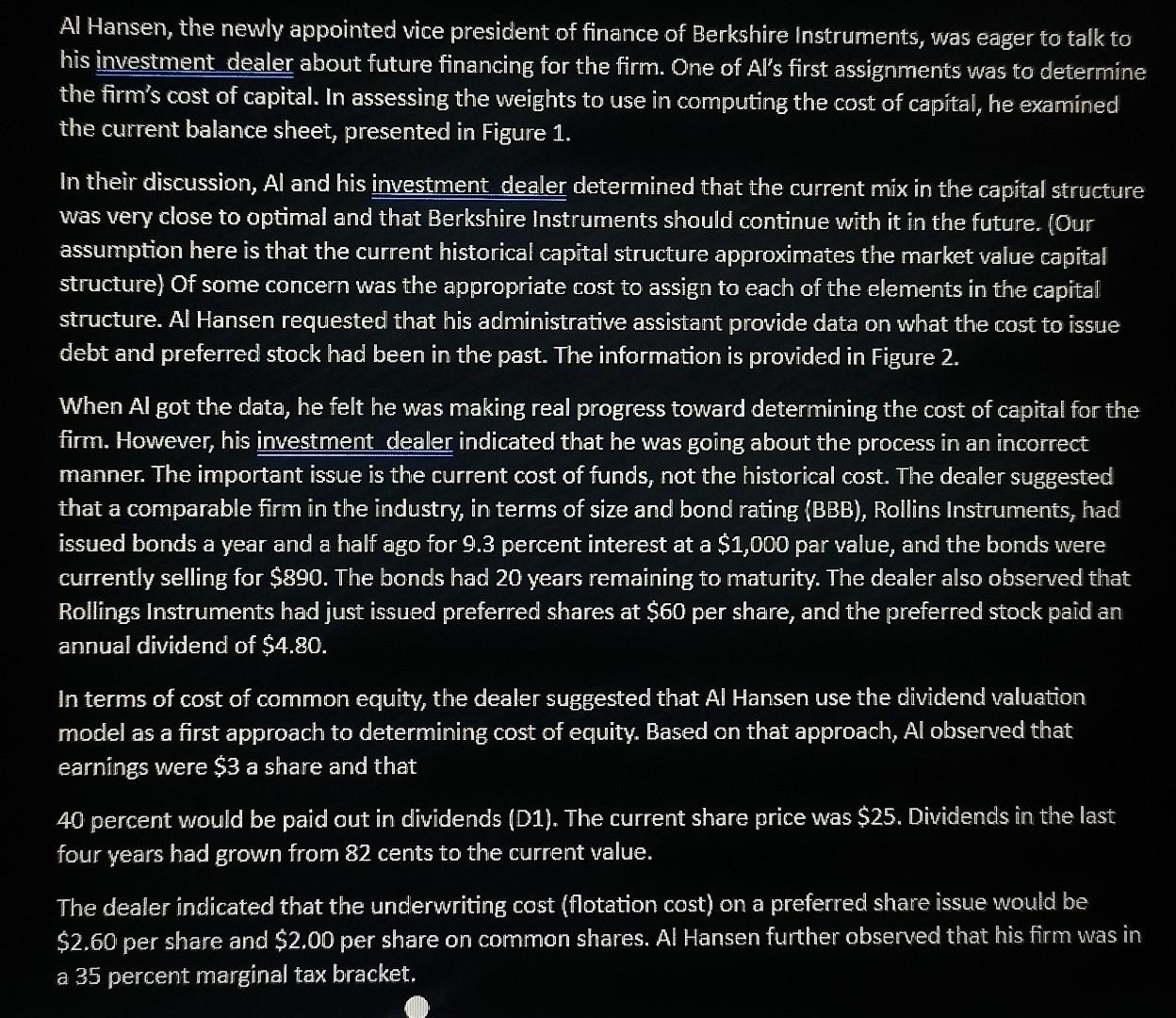
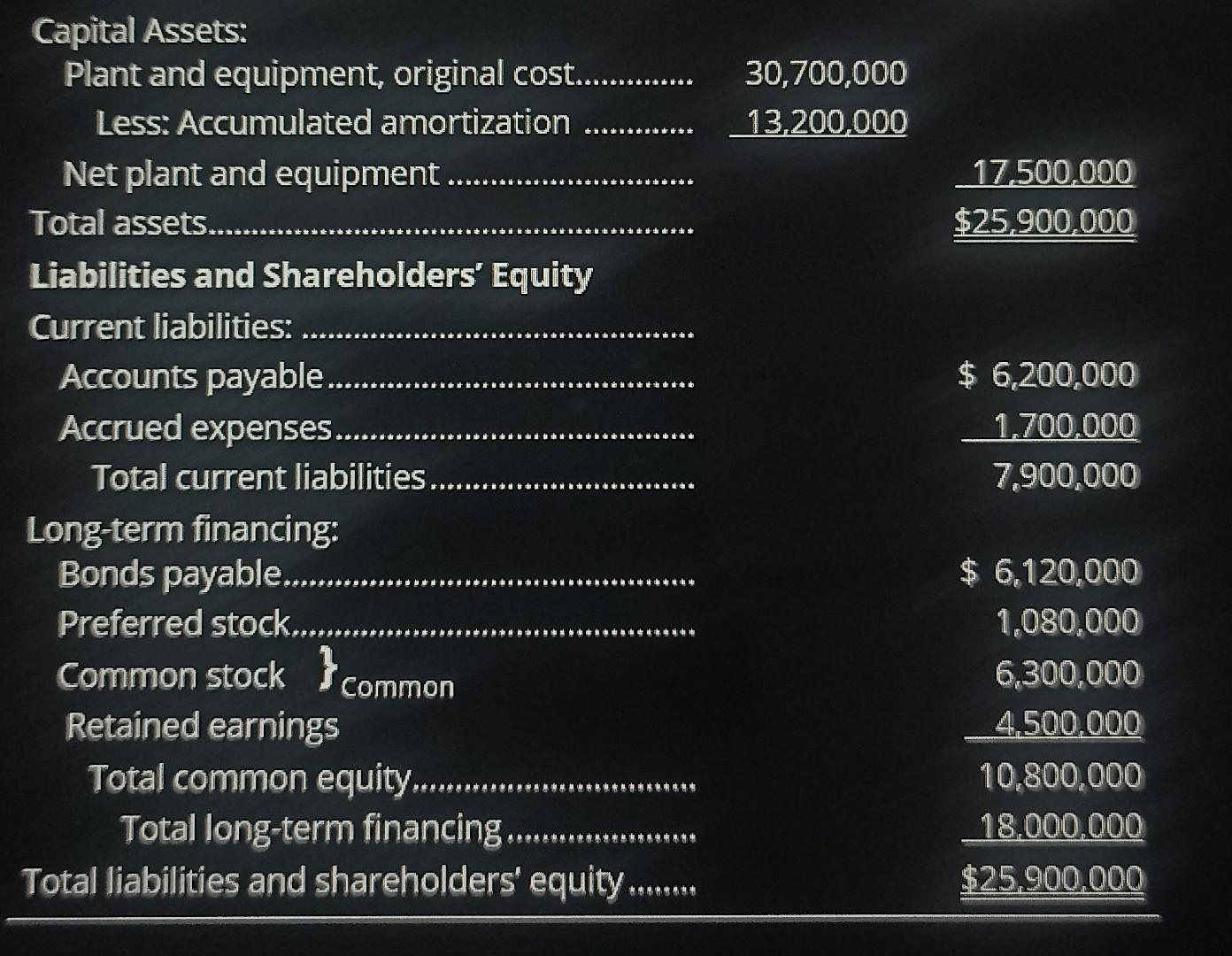
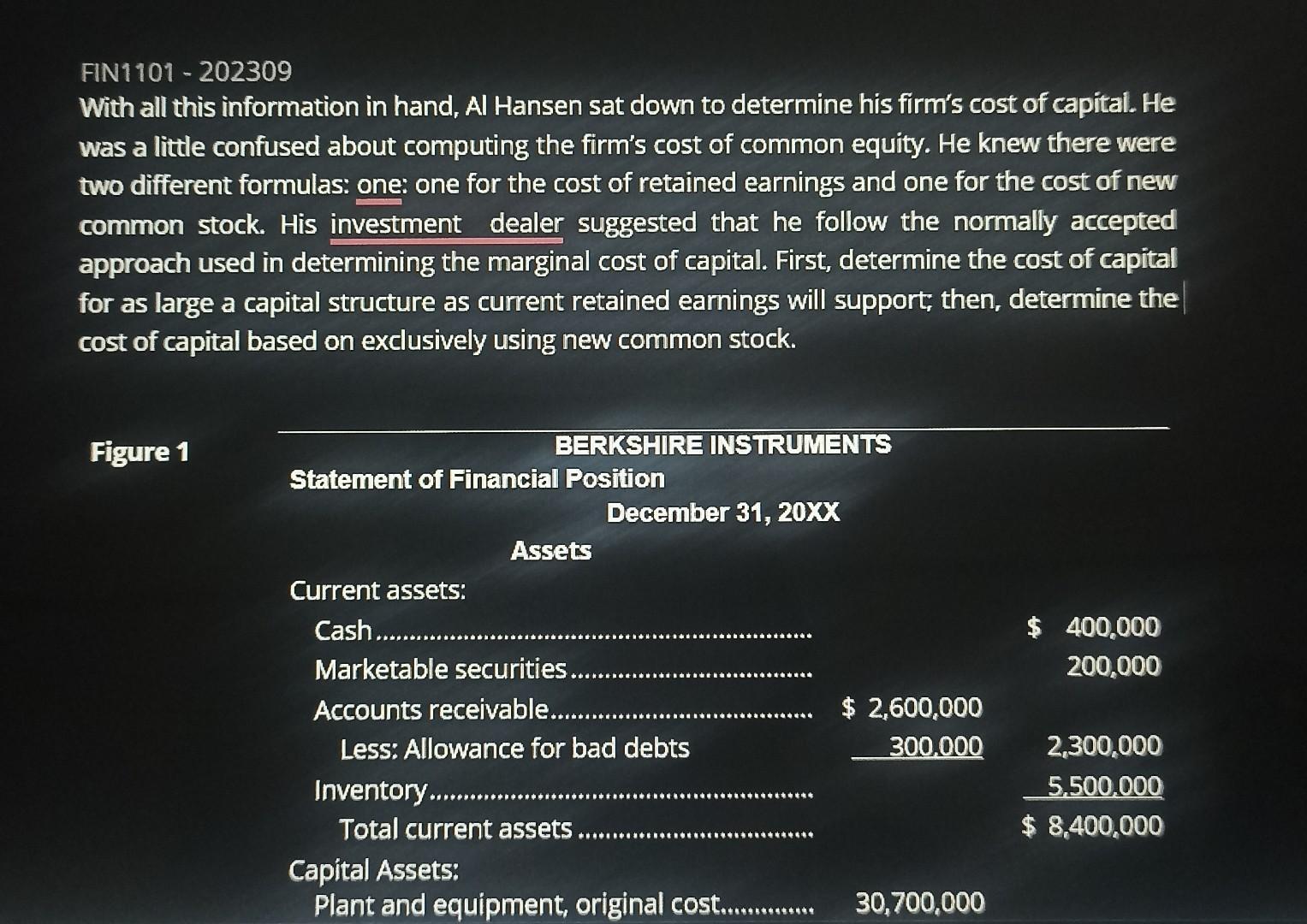
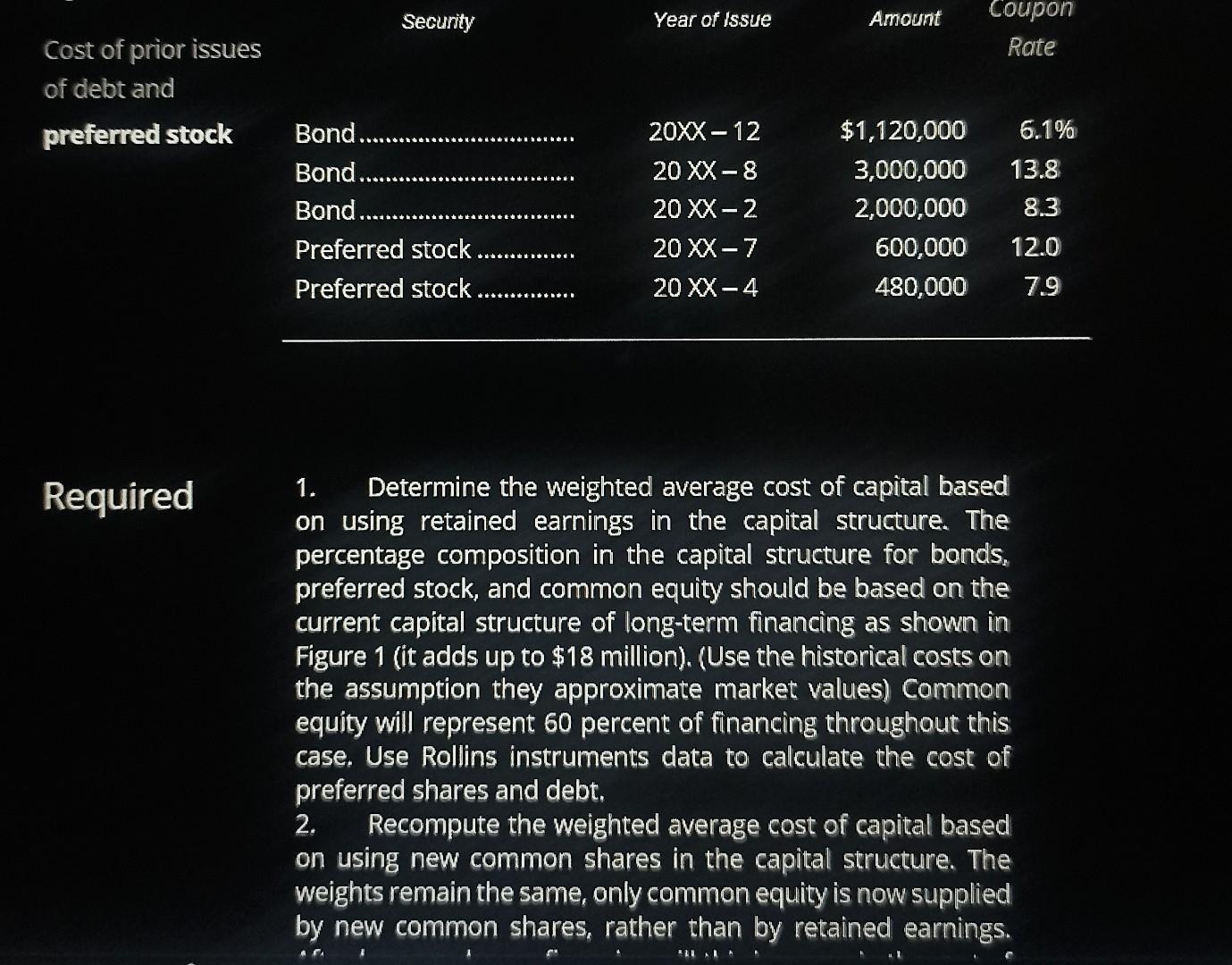
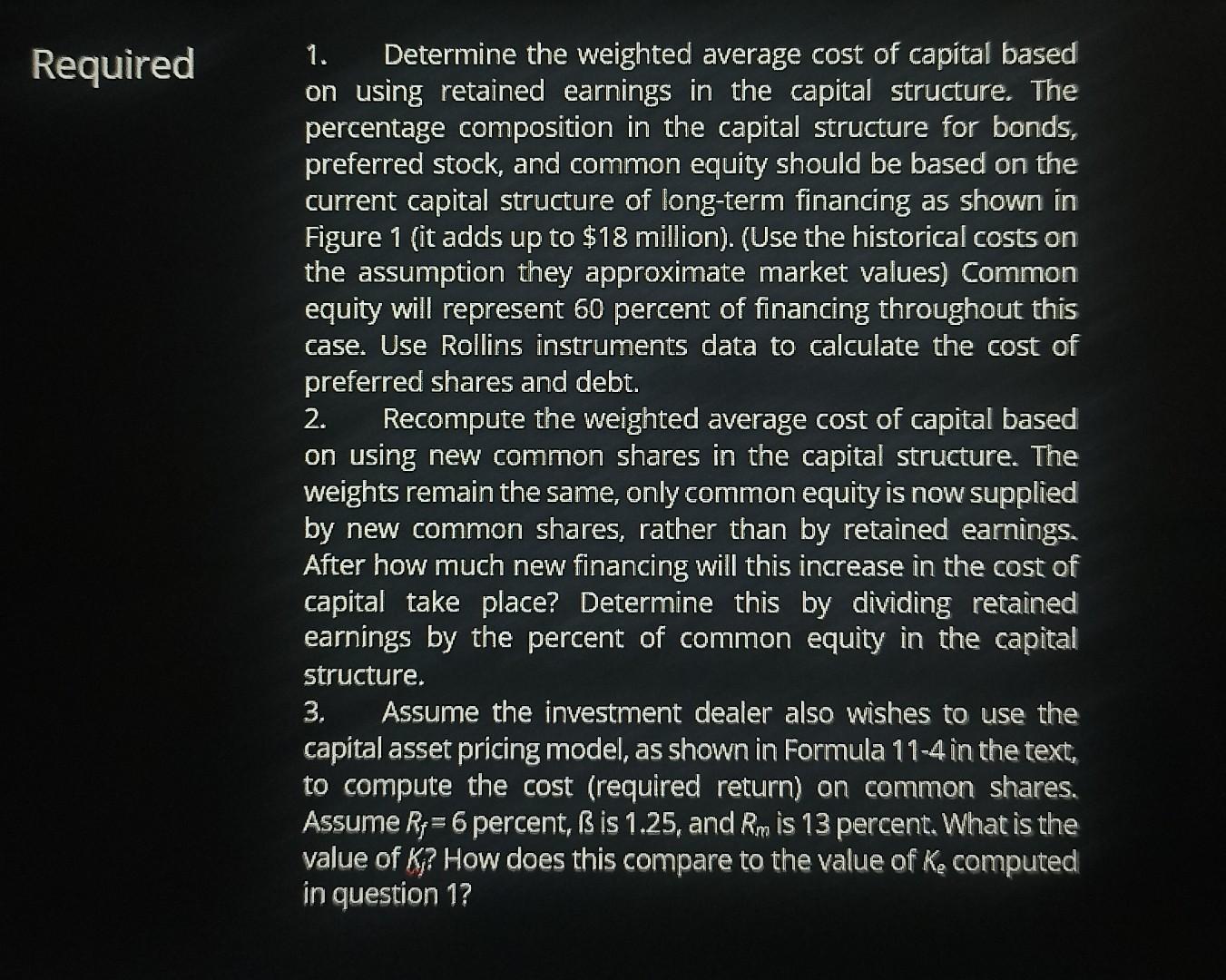
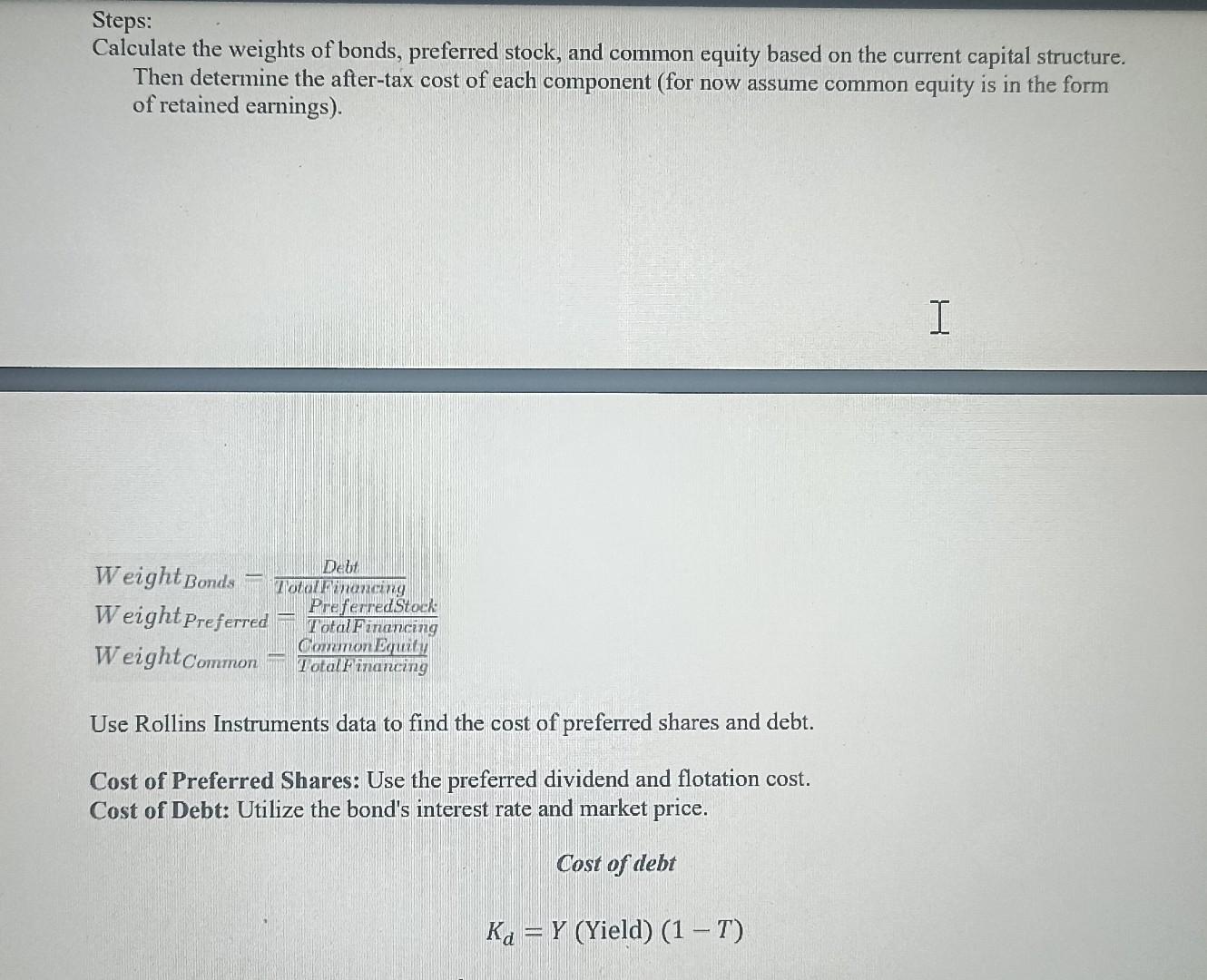
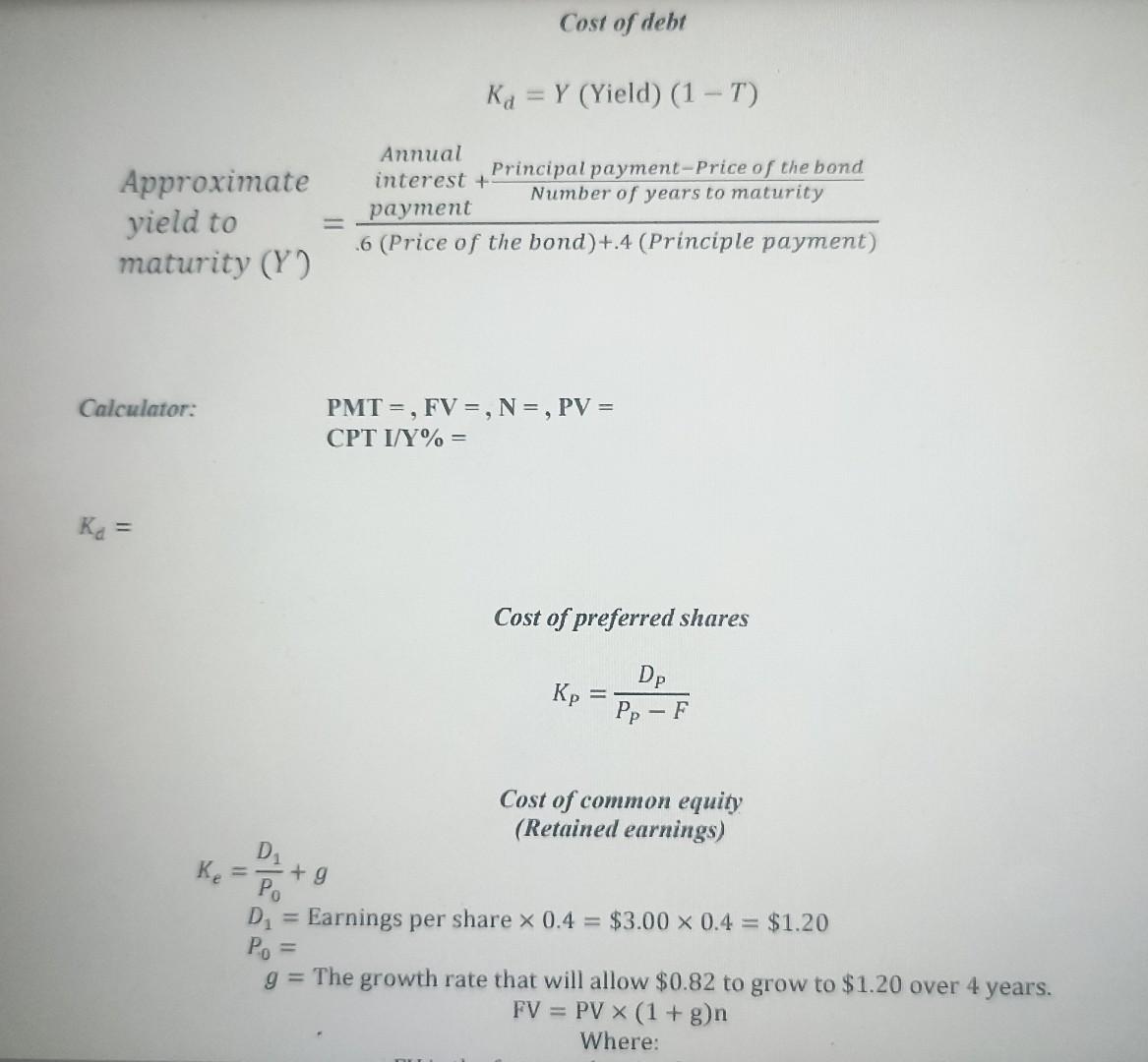
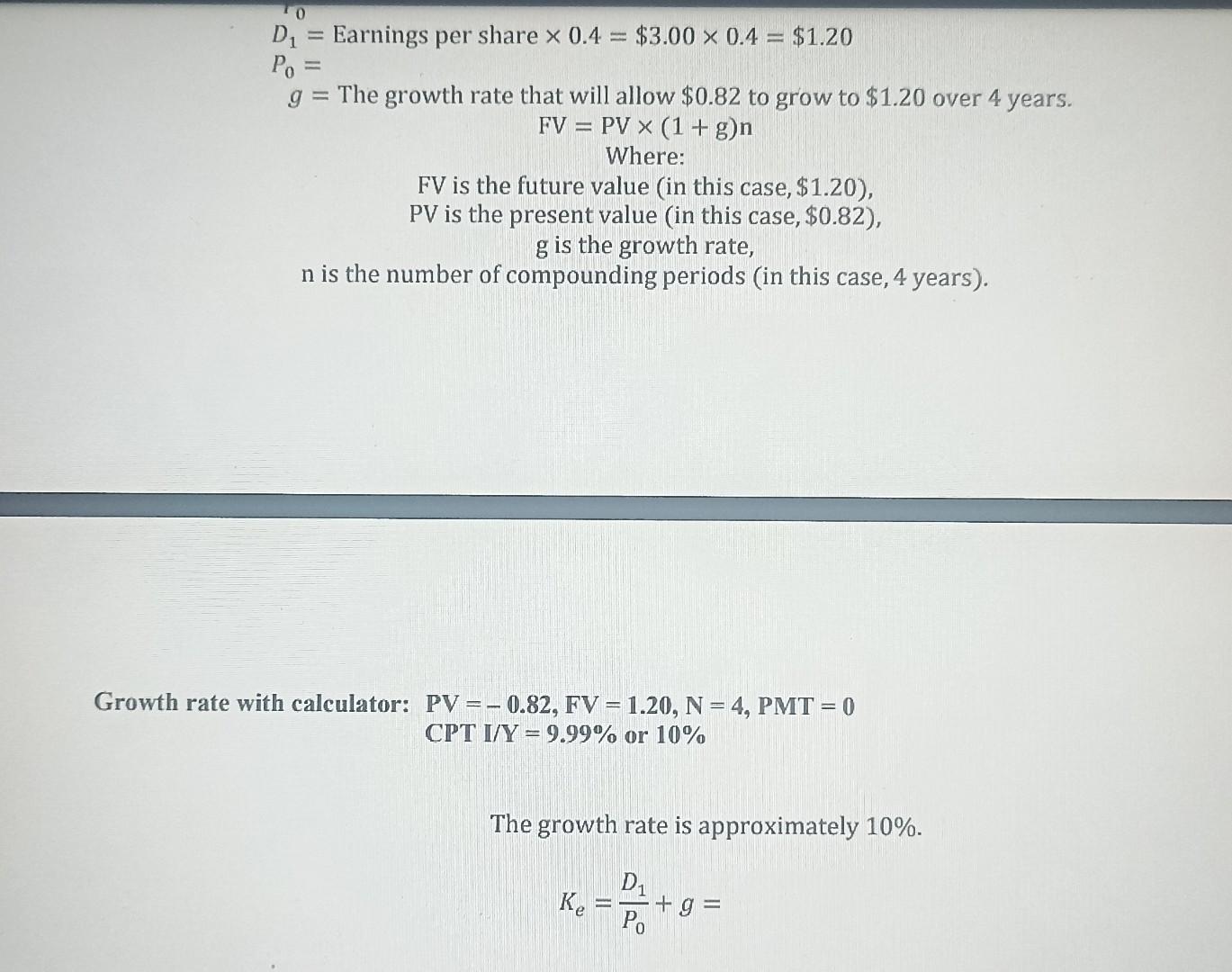
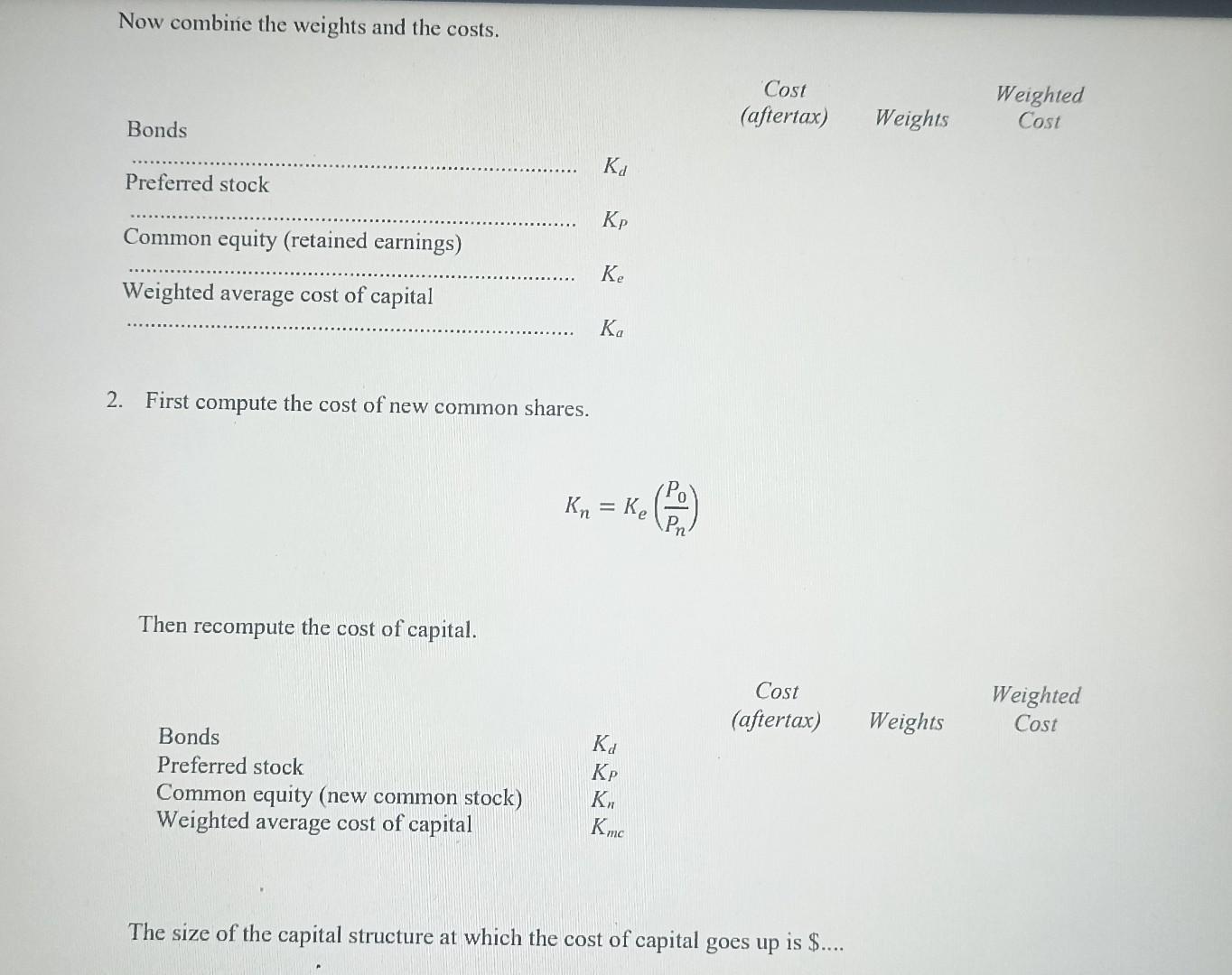
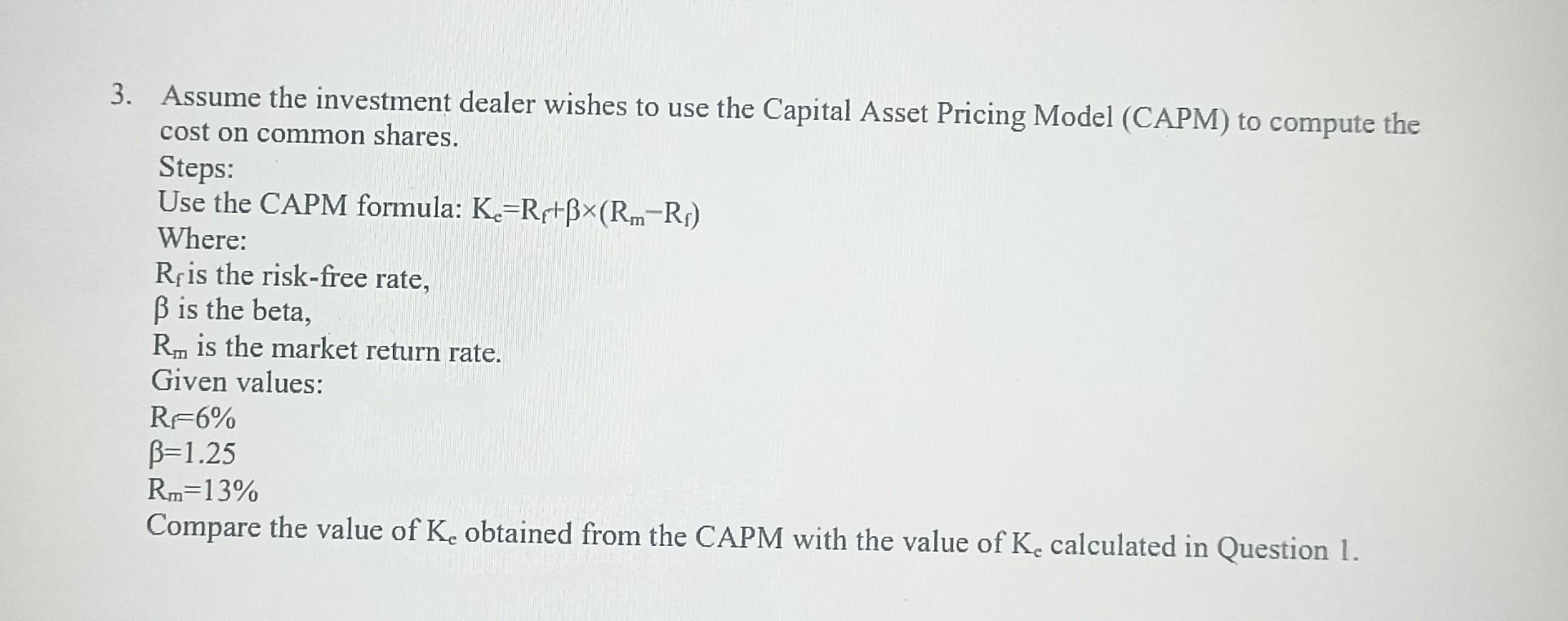
Al Hansen, the newly appointed vice president of finance of Berkshire Instruments, was eager to talk to his investment dealer about future financing for the firm. One of Al's first assignments was to determine the firm's cost of capital. In assessing the weights to use in computing the cost of capital, he examined the current balance sheet, presented in Figure 1. In their discussion, Al and his investment dealer determined that the current mix in the capital structure was very close to optimal and that Berkshire Instruments should continue with it in the future. (Our assumption here is that the current historical capital structure approximates the market value capital structure) Of some concern was the appropriate cost to assign to each of the elements in the capital structure. Al Hansen requested that his administrative assistant provide data on what the cost to issue debt and preferred stock had been in the past. The information is provided in Figure 2. When Al got the data, he felt he was making real progress toward determining the cost of capital for the firm. However, his investment dealer indicated that he was going about the process in an incorrect manner. The important issue is the current cost of funds, not the historical cost. The dealer suggested that a comparable firm in the industry, in terms of size and bond rating (BBB), Rollins Instruments sr had issued bonds a year and a half ago for 9.3 percent interest at a $1,000 par value, and the bonds were currently selling for $890. The bonds had 20 years remaining to maturity. The dealer also observed that Rollings Instruments had just issued preferred shares at $60 per share, and the preferred stock paid an annual dividend of $4.80. In terms of cost of common equity, the dealer suggested that Al Hansen use the dividend valuation model as a first approach to determining cost of equity. Based on that approach, Al observed that earnings were $3 a share and that 40 percent would be paid out in dividends (D1). The current share price was $25. Dividends in the last four years had grown from 82 cents to the current value. The dealer indicated that the underwriting cost (flotation cost) on a preferred share issue would be $2.60 per share and $2.00 per share on common shares. Al Hansen further observed that his firm was in a 35 percent marginal tax bracket. \begin{tabular}{|c|c|c|} \hline \multicolumn{3}{|l|}{ Capital Assets: } \\ \hline Plant and equipment, original cost.. & 30,700,000 & \\ \hline Less: Accumulated amortization ............... & 13,200,000 & \\ \hline Net plant and equipment ........................... & & 17,500,000 \\ \hline & & $25,900,000 \\ \hline \multicolumn{3}{|l|}{ Liabilities and Shareholders' Equity } \\ \hline \\ \hline Accounts payable & & $6,200,000 \\ \hline Accrued expenses & & 1,700,000 \\ \hline Total current liabilities............................... & & 7,900,000 \\ \hline \multicolumn{3}{|l|}{ Long-term financing: } \\ \hline & & $6,120,000 \\ \hline & & 1,080,000 \\ \hline Common stock }Common & & 6,300,000 \\ \hline Retained earnings & & 4,500,000 \\ \hline & & 10,800,000 \\ \hline Total long-term financing ................... & & 18,000,000 \\ \hline Total liabilities and shareholders' equity........ & & $25,900,000 \\ \hline \end{tabular} FIN1101 - 202309 With all this information in hand, Al Hansen sat down to determine his firm's cost of capital. He was a little confused about computing the firm's cost of common equity. He knew there were two different formulas: one: one for the cost of retained earnings and one for the cost of new common stock. His investment dealer suggested that he follow the normally accepted approach used in determining the marginal cost of capital. First, determine the cost of capital for as large a capital structure as current retained earnings will support; then, determine the cost of capital based on exclusively using new common stock. 1. Determine the weighted average cost of capital based on using retained earnings in the capital structure. The percentage composition in the capital structure for bonds, preferred stock, and common equity should be based on the current capital structure of long-term financing as shown in Figure 1 (it adds up to $18 million). (Use the historical costs on the assumption they approximate market values) Common equity will represent 60 percent of financing throughout this case. Use Rollins instruments data to calculate the cost of preferred shares and debt. 2. Recompute the weighted average cost of capital based on using new common shares in the capital structure. The weights remain the same, only common equity is now supplied by new common shares, rather than by retained earnings. 1. Determine the weighted average cost of capital based on using retained earnings in the capital structure. The percentage composition in the capital structure for bonds, preferred stock, and common equity should be based on the current capital structure of long-term financing as shown in Figure 1 (it adds up to $18 million). (Use the historical costs on the assumption they approximate market values) Common equity will represent 60 percent of financing throughout this case. Use Rollins instruments data to calculate the cost of preferred shares and debt. 2. Recompute the weighted average cost of capital based on using new common shares in the capital structure. The weights remain the same, only common equity is now supplied by new common shares, rather than by retained earnings. After how much new financing will this increase in the cost of capital take place? Determine this by dividing retained earnings by the percent of common equity in the capital structure. 3. Assume the investment dealer also wishes to use the capital asset pricing model, as shown in Formula 11-4 in the text, to compute the cost (required return) on common shares. Assume Rf=6 percent, is 1.25 , and Rm is 13 percent. What is the value of K ? How does this compare to the value of Ke computed in question 1? Calculate the weights of bonds, preferred stock, and common equity based on the current capital structure. Then determine the after-tax cost of each component (for now assume common equity is in the form of retained earnings). Weight Bonds =TotollFinancingDebt Weight Preferred =TotalFinancingPreferredStock Weight Common =CommonEquityTotalFinancing Use Rollins Instruments data to find the cost of preferred shares and debt. Cost of Preferred Shares: Use the preferred dividend and flotation cost. Cost of Debt: Utilize the bond's interest rate and market price. Cost of debt Kd=Y( Yield )(1T) Cost of debt Kd=Y(Yield)(1T) Calculator: PMT=,FV=,N=,PV= CPT I/Y%= Kd= Cost of preferred shares KP=PPFDP Cost of common equity (Retained earnings) Ke=P0D1+gD1=Earningspershare0.4=$3.000.4=$1.20P0= g= The growth rate that will allow $0.82 to grow to $1.20 FV=PV(1+g)n D1=Earningspershare0.4=$3.000.4=$1.20P0= g=Thegrowthratethatwillallow$0.82togrowto$1.20over4years.FV=PV(1+g)n Where: FV is the future value (in this case, $1.20 ), PV is the present value (in this case, $0.82 ), g is the growth rate, n is the number of compounding periods (in this case, 4 years). Growth rate with calculator: PV=0.82,FV=1.20,N=4,PMT=0 CPTI/Y=9.99% or 10% The growth rate is approximately 10%. Ke=P0D1+g= Now combine the weights and the costs. Cost (aftertax) 2. First compute the cost of new common shares. Kn=Ke(PnP0) Then recompute the cost of capital. The size of the capital structure at which the cost of capital goes up is $.. 3. Assume the investment dealer wishes to use the Capital Asset Pricing Model (CAPM) to compute the cost on common shares. Steps: Use the CAPM formula: Kc=Rf+(RmRf) Where: Rf is the risk-free rate, is the beta, Rm is the market return rate. Given values: RF=6%=1.25Rm=13% Compare the value of Kc obtained from the CAPM with the value of Ke calculated in Question 1
Step by Step Solution
There are 3 Steps involved in it

Get step-by-step solutions from verified subject matter experts
 Study Help