Question: ByteDance: TikTok and Douyin in Online Streaming Wars By: Sunghan Ryu Publisher: SAGE Publications: SAGE Business Cases Originals . Series: Digital Entertainment o Publication year:
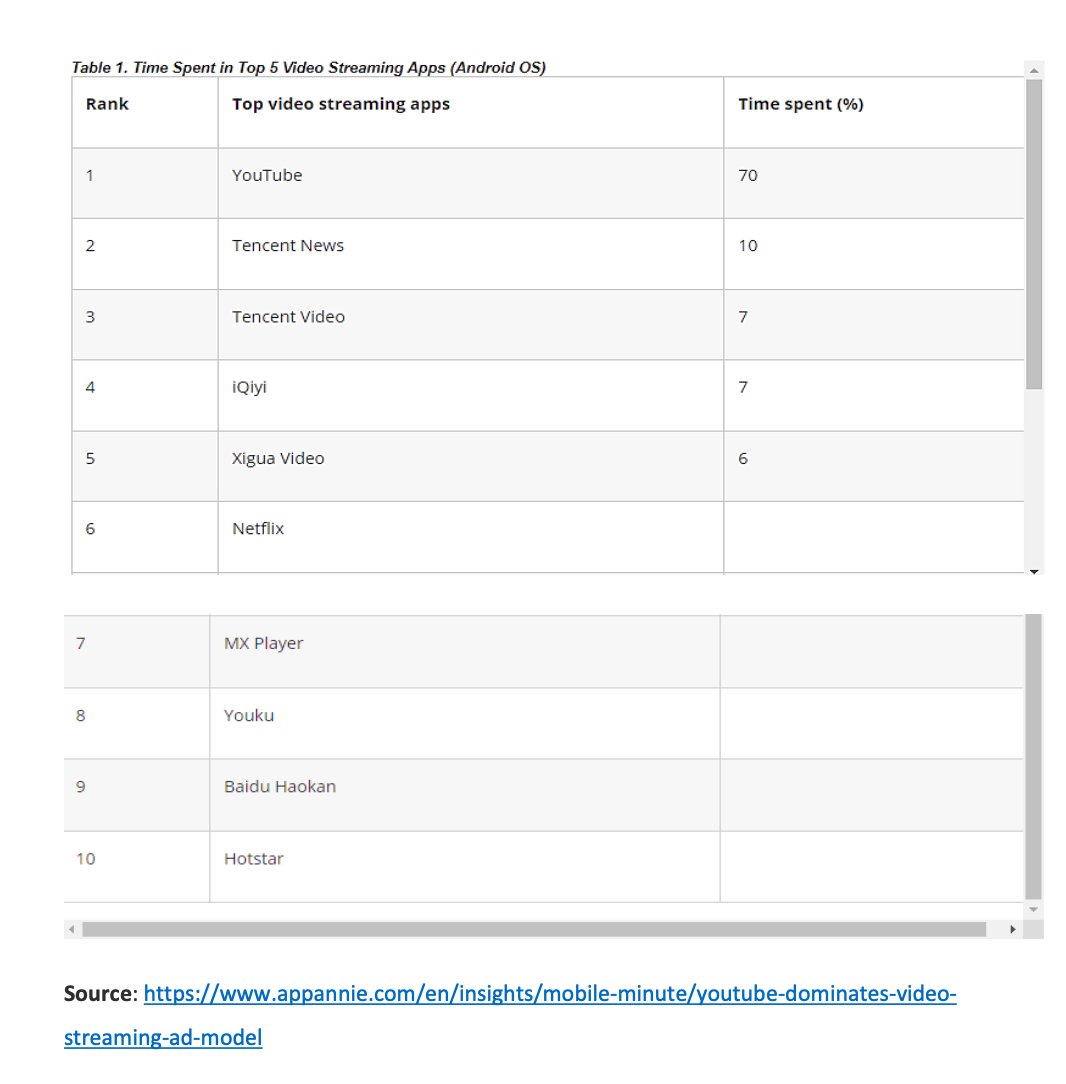
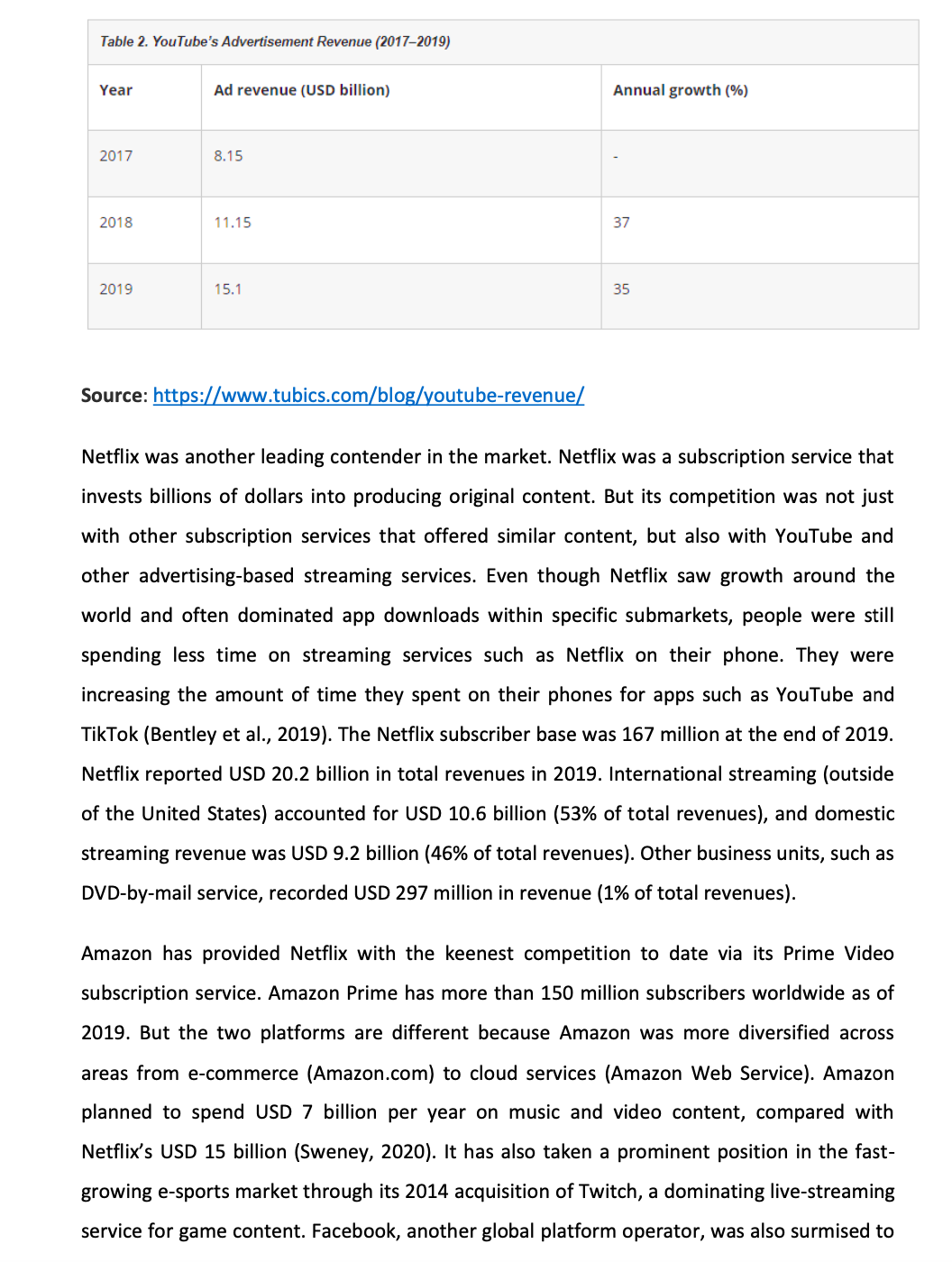
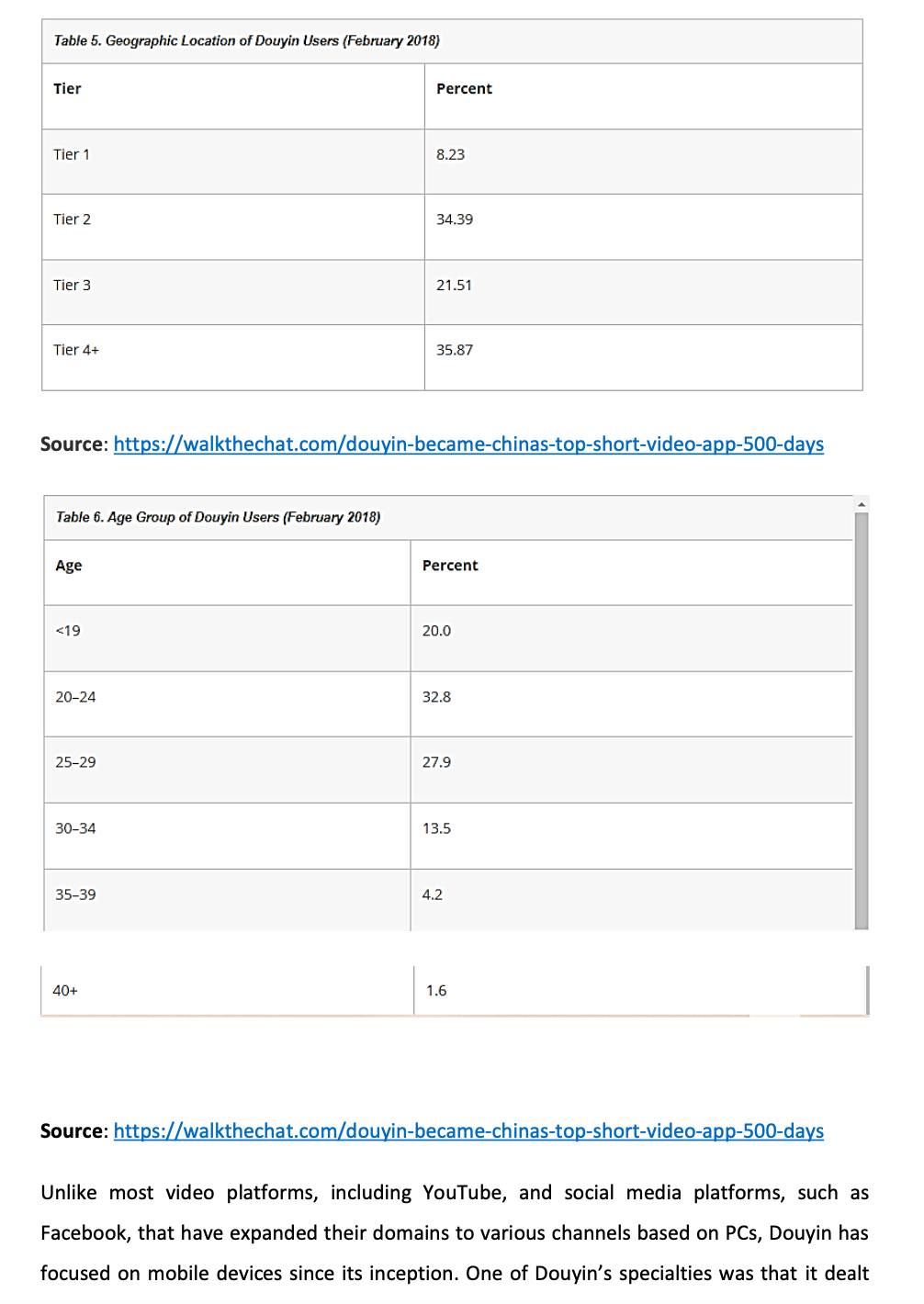
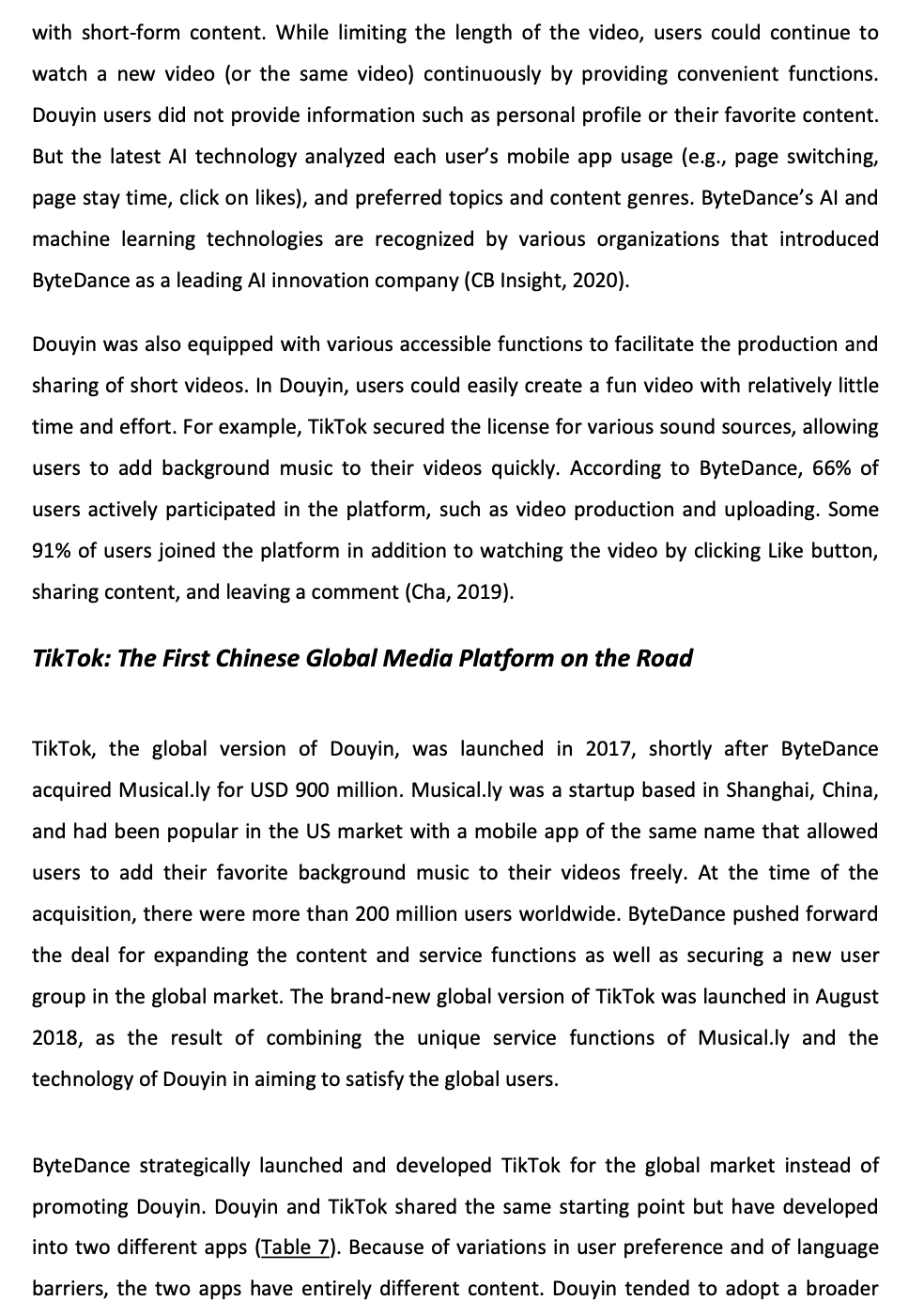
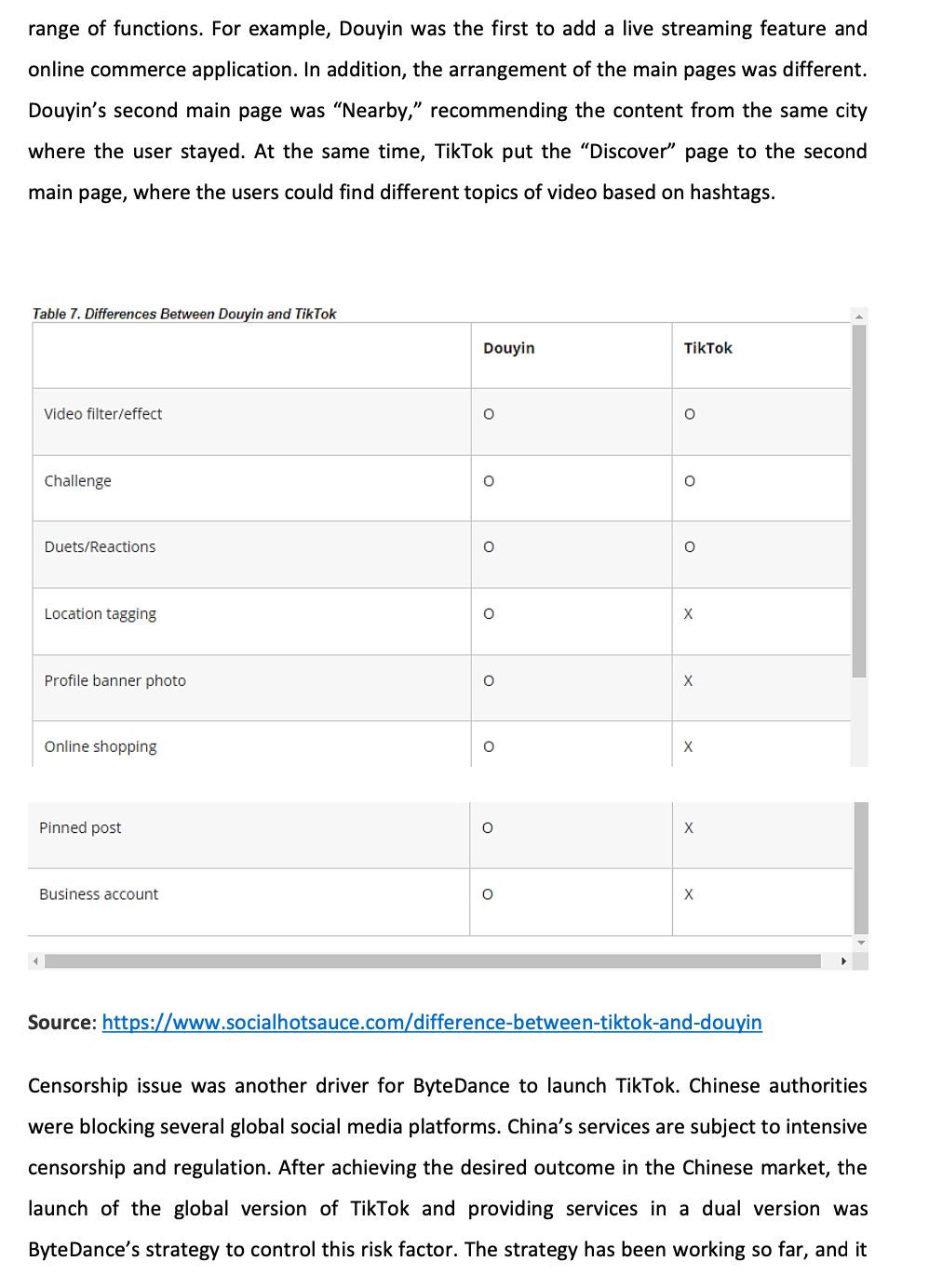
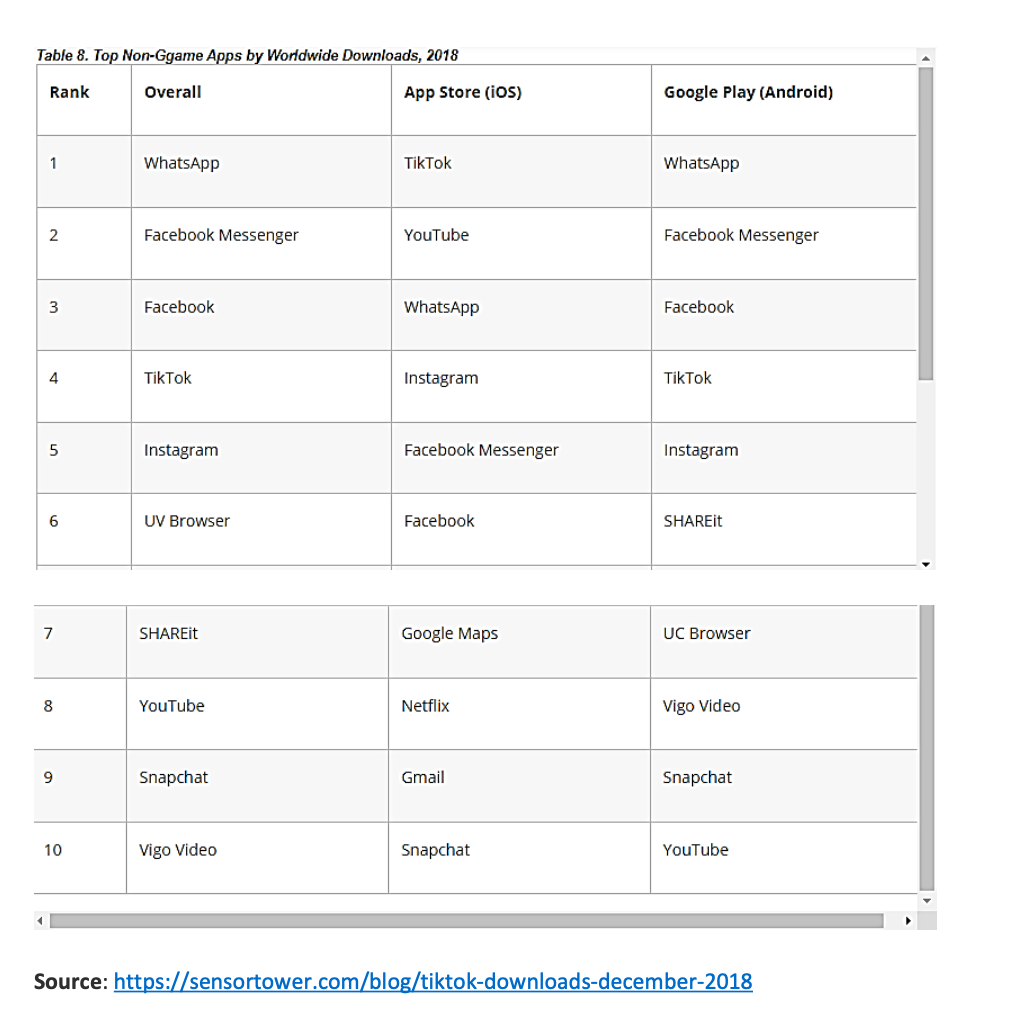
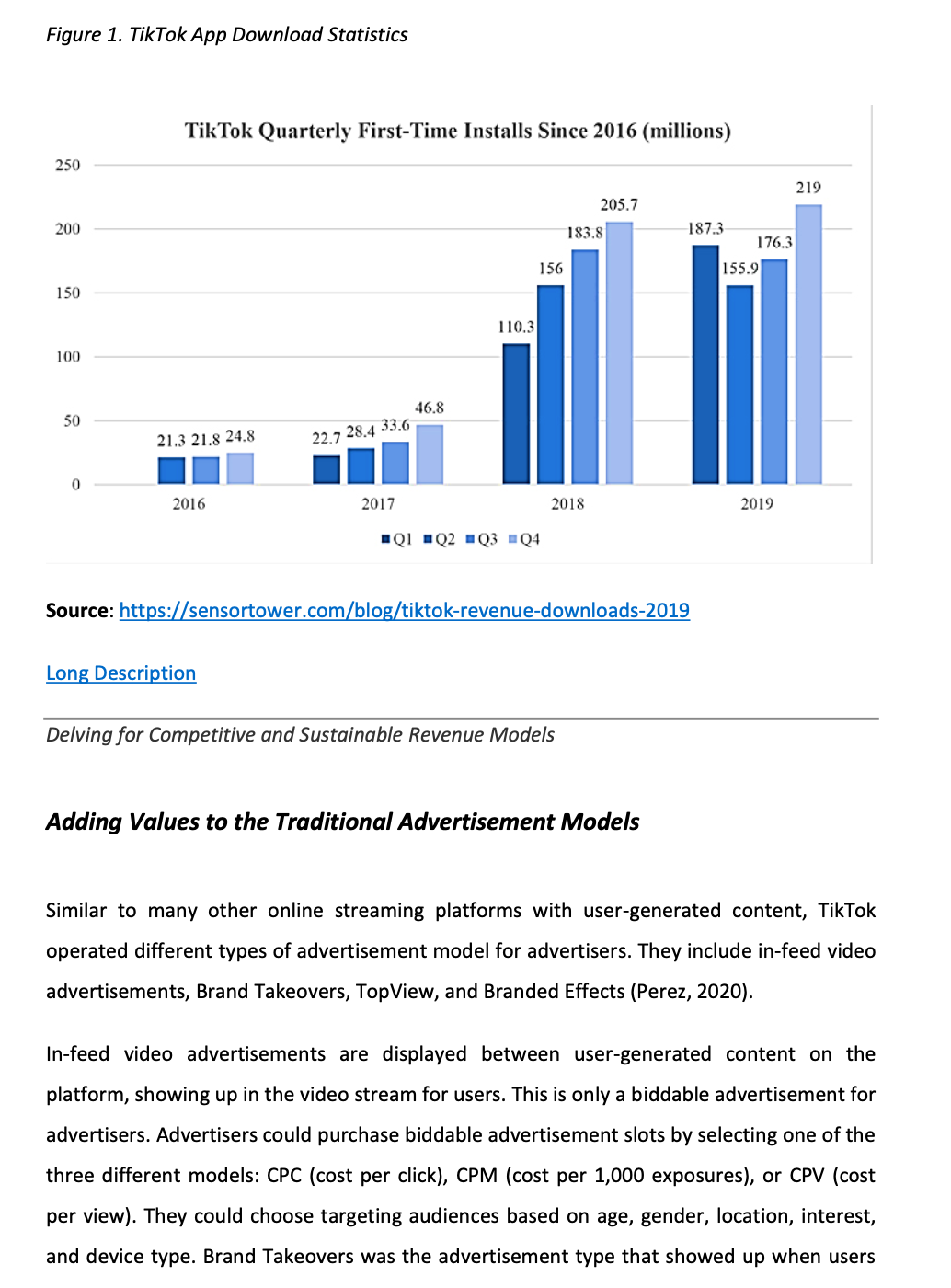
ByteDance: TikTok and Douyin in Online Streaming Wars By: Sunghan Ryu Publisher: SAGE Publications: SAGE Business Cases Originals . Series: Digital Entertainment o Publication year: 2022 o Online pub date: January 03, 2022 Discipline: Electronic Marketing, E-Commerce . Contains: Teaching Notes Length: 8,069 words . DOI: https://dx.doi.org/10.4135/9781529795905 . Keywords: branding, China, commerce, Facebook, global market, social media, success, videos, war, YouTube Abstract ByteDance, an emerging Internet venture headquartered in Beijing, China, faces fierce competition in online streaming wars in both China and global markets. In September 2016, ByteDance introduced Douyin, a short video mobile app, to the Chinese market based on the success of artificial intelligence (Al) technology-based news recommendation app Toutiao. It achieved massive success, surpassing 100 million users within one year. With success in the Chinese market, ByteDance launched TikTok-the global version of Douyin- in September 2017. Douyin and TikTok shared the same starting point, but have developed into two different apps. Because of the difference in user preference and language barriers, the two apps have entirely different content. While both apps provided the same core features, such as the Hashtag Challenges (HC), Douyin tended to adopt a broader range of functions, including live streaming and online commerce service.In the Chinese market, ByteDance (or Douyin) has competed with the three Internet giants, Baidu, Aliba ha, and Tencentthe socalled BAT companiesand other short video apps. In the global market, ByteDance (or TikTok) has closely competed against global platforms, such as YouTube, Facebook, and Netflix. Students will be asked to analyze the competitive environment, various revenue models, and how to develop and operate these models in China and in the global market. Case Learning Outcomes By the end of this case study, students should be Obie to: . analyze and compare the evolving competitive landscapes of the Chinese and global online streaming markets; - explore the concept of short video platforms, how they appeared and developed for serving young generations, and their business potential and value in the mobile economy; - learn how artificial intelligence technology and machine learning method could be applied to real business practices and create value for consumers and businesses; . discern the advantages and challenges of trying to launch and manage two or more versions of the product for serving divided markets with different competitive landscapes; . explore alternatives for delving into creative business models and new revenue sources in the mobile-first streaming era, where the subscription model and advertising model are blended. introduction TikTok, or Douyin in China, is a mobile app that allows users to easily create and share short videos of around 15 seconds. Beginning in 2017, it occupied the smartphones of young people around the world. TikTok is produced by ByteDance, headquartered in Beijing, China. With TikTok, users can directly record videos in a long vertical form, according to the shape of the smartphone screen, and then insert various genres of background music or sound effects. In addition to background music, users could apply various special effects such as screen vibration, hair dyeing, 3D stereoscopic stickers, and augmented reality (AR) stickers. Through this process, users could complete their unique videos. These functions and features are available for free. The content, once uploaded to the TikTok platform, was available around the world and spread through artificial intelligence (Al)-based recommendation systems. TikTok users can continuously watch the addictive videos of various creators by flipping the smartphone screen up and down. The fun and handy functions of TikTok have driven the emergence of new content creators by engaging with the self-expression needs of young people, named Generation Z (those born in 1997 or afterwards). In September 2016, ByteDance introduced Douyin, the predecessor and the domestic version of TikTok. It achieved massive success in surpassing 100 million users within one year. Subsequently, with success in the Chinese market, in September 2017, the global version of Douyin, TikTok, was launched and hit the global market. As of January 2019, it was serviced in more than 150 countries in 75 languages, with a monthly active user count of 1 billion (Pham, 2019). Recognized for its potential through the rapid growth of TikTok, ByteDance attracted investments from leading global investors such as Sequoia Capital and Softbank Vision Fund. At the end of 2018, Masayoshi Son, the Softbank chairman, invested about USD 3 billion in ByteDance, and the valuation of ByteDance at that time amounted to USD 75 billion (Byford, 2018). Beyond the value of major Silicon Valley unicorn companies such as Uber, it has begun to appear to the global media as the world's most "expensive" startup. ByteDance was founded in the summer of 2012 by Yiming Zhang, a former engineer from Microsoft China. As part of the Balinghou (post-80) generation, I he was influenced by the first generation of entrepreneurs who have been writing the new history of Chinese technology companies since the 1990s, such as Robin Li of Baidu, Jack Ma of Alibaba, and Pony Ma of Tencent. Zhang had a vision for the global market from the beginning of ByteDance. He predicted the importance of Al technology in the global technological competition and that the future of information and content consumption would be mobile-oriented. Zhang combined those two components to launch Toutiao (formerly Jinri Toutiao, meaning today's headline), the first mobile app of ByteDance that provided a news recommendation service (Wells et al., 2019). Most investors expected this new news app to have little success against existing news services, but the results indicated that these investors were incorrect in their prognosis. As of the end of 2017, 1.2 billion daily active users (DAU) of Toutiao consume 1.3 billion articles per day. The average time per user per day was 73 minutes, overwhelming other competitive services (Xiao, 2017). After the success of Toutiao, ByteDance started launching services targeting different sectors and using the algorithmic recommendation method for information and content. Douyin and TikTok were the next blockbusters. With the rapid growth in both domestic and global markets, Bloomberg reported that ByteDance generated more than USD 17 billion in revenue and more than USD 3 billon in net profit in 2019 (Bloomberg, 2020). It was a dramatic growth from USD 7.4 billion in revenue and 3 USD 1.2 billion net loss in 2018 (Kharpal, 2019). Yet, it was still costly to launch and promote TikTok in the global market. In addition, competition from domestic and global companies was intensifying. Another difficulty was that the primary user base consisted of people in their teens and early 205, who relatively lack robust purchasing power. As with other video services that focus on user-generated content, TikTok was generating revenue through different types of advertisement as its main model. Meanwhile it continuously experimented with other revenue models, including the Hashtag Challenges (HC) and live-streaming commerce (Barrett, 2019). One of the investors' main questions about TikTok was whether TikTok had the potential of promising revenue models from the outset. Looking to the future, ByteDance must build competitive advantages for TikTok and Douyin to generate sustainable revenue streams. Zha ng would need to decide to choose and then concentrate onthe most effective revenue models to take advantage of an increase in the user base. The revenue models should be aligned to ByteDance's resources and capabilities as well as competitive market landscape and distinctive characteristics of its users across the world. Oniine Streaming Market Global Online Streaming Market Overview The global online streaming market was valued at USD 42.5 billion in 2019 and was projected to expand at a com pound annual growth rate (CAGR) of 20.4% from 2020 to 2027 (Grand View Research, 2021). YouTube, an Alphabet (formerly Google) subsidiary, is the frontrunner in the online streaming wars (Alexander, 2020). The data from a report of AppAnnie, a mobile analytics company, showed how far ahead of competitors YouTube was, especially among teenagers and young adults (Sydow, 2020). In 2019, YouTube accounted for 70% of the total time people spent on their mobile devices using the top five entertainment apps, among Android devices, that dominated 75% of mobile phone usage worldwide (Table 1). Sandvine, a networking equipment firm, also reported in its 2019 report that YouTube constitutes 37% of all global downstreaming of the mobile Internet (Cullen, 2019). Notably, YouTube offered a hybrid of long- and short-form content. With the advertising model as a primary revenue source, YouTube has kept its content free and available to all types of users. It started to offer the paid membership models to remove advertisements for users who are willing to pay for the purpose. In recent years, YouTube has revealed its advertising revenue for the first time. The company earned more than USD 15.1 billion from advertisements in 2019an increase of 35% from 2018 and 86% com pared with 2017 (Table 2) (Funk, 2020). Also, as of the end of 2019, it had 20 million subscribers to YouTube Music, generating about USD 3 billion in annual revenue. Table 1. Time Spent in Top 5 Video Streaming Apps (Android OS) Rank Top video streaming apps Time spent (%) YouTube 70 2 Tencent News 10 3 Tencent Video 7 4 Qiyi 7 5 Xigua Video 6 6 Netflix 7 MX Player 8 Youku 9 Baidu Haokan 10 Hotstar Source: https://www.appannie.com/en/insights/mobile-minute/youtube-dominates-video- streaming-ad-modelTable 2. YouTube's Advertisement Revenue (2017-2019) Year Ad revenue (USD billion) Annual growth (%) 2017 8.15 2018 11.15 37 2019 15.1 35 Source: https://www.tubics.com/blog/youtube-revenue/ Netflix was another leading contender in the market. Netflix was a subscription service that invests billions of dollars into producing original content. But its competition was not just with other subscription services that offered similar content, but also with YouTube and other advertising-based streaming services. Even though Netflix saw growth around the world and often dominated app downloads within specific submarkets, people were still spending less time on streaming services such as Netflix on their phone. They were increasing the amount of time they spent on their phones for apps such as YouTube and TikTok (Bentley et al., 2019). The Netflix subscriber base was 167 million at the end of 2019. Netflix reported USD 20.2 billion in total revenues in 2019. International streaming (outside of the United States) accounted for USD 10.6 billion (53% of total revenues), and domestic streaming revenue was USD 9.2 billion (46% of total revenues). Other business units, such as DVD-by-mail service, recorded USD 297 million in revenue (1% of total revenues). Amazon has provided Netflix with the keenest competition to date via its Prime Video subscription service. Amazon Prime has more than 150 million subscribers worldwide as of 2019. But the two platforms are different because Amazon was more diversified across areas from e-commerce (Amazon.com) to cloud services (Amazon Web Service). Amazon planned to spend USD 7 billion per year on music and video content, compared with Netflix's USD 15 billion (Sweney, 2020). It has also taken a prominent position in the fast- growing e-sports market through its 2014 acquisition of Twitch, a dominating live-streaming service for game content. Facebook, another global platform operator, was also surmised tobe spending USD 12 billion per year on content, but so far has not actively competed in the domain. The new players, such as Hollywood studios and other short video platforms, entered the streaming market (MIP Markets, 2019). For example, the Walt Disney Company launched a new streaming service called Disney+, which presented its media franchises, including Marvel, Star Wars, and the Disney animation classics. With a monthly subscription fee of approximately USD 7, Disney+ also offered the many films and TV content that it secured when it acquired the entertainment arm of 215t Century Fox for USD 71.3 billon. Within 24 hours after its global launch in November 2019, the eagerly awaited new platform reached 10 million subscribers, including those who had signed up pre-release (Iqbal, 2020). Competition in the global streaming market has been intensified not only by traditional production companies launching independent streaming services but also by social media platforms delving into new mobile consumption trends. Those global players also face competition from regional challenges, such as iFlix in Asia and Showmax in Africa. Moreover, there are also vast territories in which those global players have been unable to gain any traction. The most obvious one is the 1.4 billion Chinese market, where powerful domestic platforms have been dominating the streaming market, including Baidu, Alibaba, Tencent, and ByteDance. China's Oniine Streaming Market: From Piracy to Paid Membership Modeis According to the China Internet Network Information Center's (Statistics Report on Internet Development in China), the number of Internet users in China exceeded 822 million in 2018 (Pham, 2019). The number of mobile Internet users was 780 million in the same year, accounting for 98.3% of the total number of Internet users. But China's Internet penetration rate (the number of mobile internet users divided by total population) was only 57.7%, and it was still considered to have growth potential. Baidu, Alibaba, and Tencent (BAT, hereafter) were the three companies that dominate China's Internet economy. That is, it is not an exaggeration to characterize the significance of these three companies as dominating China's technological environment and the lives of its people. Baidu, often referred to as Google in China, provides search engines and portal services while maintaining a dominant share of the market share in the Chinese online search market. Alibaba, famous for its online commerce services such as Taobao, accounted for 58.2% share of China's Internet commerce in 2018 (Blazyte, 2018). Tencent provides a variety of online services centered on WeChat, a mobile messenger with 1.1 billion monthly active users as of 2019 (Thomala, 2020). Tencent has also occupied the Chinese online game market. One of the key reasons the three companies have proliferated over the past two decades and has been able to build their kingdoms was because the Chinese government has blocked services from global Internet companies, such as Google, Facebook, and Twitter. Another aspect is that these three companies have effectively expanded their business areas by focusing on their respective areas without seriously challenging other companies' core areas. However, as each of BAT expands its influence, competition between the three companies was no longer avoidable. One of the markets in which fierce competitions was ongoing between them was the online streaming market. YouTube, the world's largest online video platform, has not entered the market again since the Chinese government blocked its service in 2009. The situation of other global players was not very different. Instead, the blockade provided new opportunities for companies and BAT did not miss the opportunities. In the Chinese online video market, three platformsBaidu's iQiyi, Alibaba's Youku, and Tencent Videowere recording rapid growth and are competing with each other. In the past, online video platforms in China have been a hotbed of pirated movies and TV shows. The protection and enforcement of intellectual property rights were vulnerable, and there was no culture of paying for intangible content. After YouTube was blocked in China, Youku and Tudou were the most popular online streaming services for Chinese users. In 2012 the Chinese online streaming market began to grow. At the time, Tudou, founded in 2005, was merged into Youku, founded in 2006, and Youku became the largest online video platform in China. At the beginning of the two platforms, user-generated content, like ones on YouTube, became the mainstream of the platforms. In particular, Youku was once notorious as an illegal distribution channel for Hollywood blockbusters and Korean content (Reuters, 2013). However, with the introduction of the high-speed mobile Internet, the user's video consumption behavior was dramatically changed. It was no longer necessary to put effort into nding low-quality content in conditions that can easily search for and enjoy high-quality content. China's online streaming services have recently increased the barriers to entry by adopting an original production strategy and a licensing model for high-quality content beyond the traditional user-generated content. At the time of IPO in 2010, for example, Youku was providing about two-thirds of the content through licensing agreements (Schonfeld, 2010). The competition to monopolize high-quality content was getting fierce in order to gain an edge in the fast-growing online streaming market. The annual licensing fee was paid at a high price for profit. Amid such changes, all three platforms were trying to reduce the proportion of the advertising revenue and user-generated content. Instead, they aimed to expand the paid membership revenue model by recruiting more paid members through exclusive content offerings. Chinese consumers were also ready to pay for the content and signing up for paid membership to save the most time on searching and easily enjoy high-quality content. In particular, Generation 2 began to understand the value of the paid content. Convenient payment processes such as mobile payment systems were accelerating the growth of paid membership models. The leading platforms for competition were iQiyi and Tencent Video. 2 Baidu discovered the opportunity of the online streaming market and launched iQiyi with its partners in 2010. After two years, it took over the entire stake and acquired it. iQiyi secured the license agreements with global content companies such as Lionsgate, Paramount, and Netflix to strengthen its content competitiveness. It has also acquired rights to many Korean movies and dramas and has also partnered with Fuji TV in Japan to produce online dramas. Top Table 5. Geographic Location of Douyin Users (February 2018) Tier Percent Tier 1 8.23 Tier 2 34.39 Tier 3 21.51 Tier 4+ 35.87 Source: https://walkthechat.com/douyin-became-chinas-top-short-video-app-500-days Table 6. Age Group of Douyin Users (February 2018) Age Percent
Step by Step Solution
There are 3 Steps involved in it
1 Expert Approved Answer
Step: 1 Unlock
Question Has Been Solved by an Expert!
Get step-by-step solutions from verified subject matter experts
Step: 2 Unlock
Step: 3 Unlock
Students Have Also Explored These Related Accounting Questions!









 Study Help