







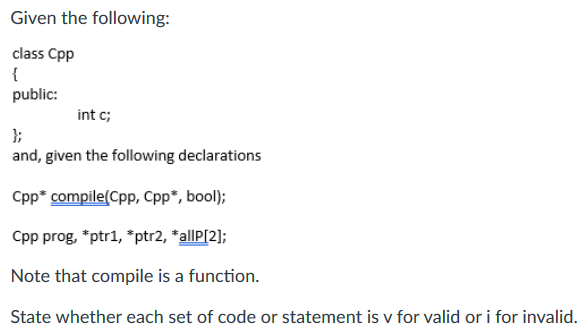
Question: C++ 1. ptr1=compile(prog, ptr1, false); 2. ptr1=compile(*ptr1, ptr1, ptr1==nullptr); 3. ptr2=compile(prog, ptr1, prog->c == 4); 4. ptr2=compile(prog.c, ptr1, ptr1 != ptr2); 5. ptr2=compile(*ptr2,ptr1, ptr1 !=
C++
1. ptr1=compile(prog, ptr1, false);
2. ptr1=compile(*ptr1, ptr1, ptr1==nullptr);
3. ptr2=compile(prog, ptr1, prog->c == 4);
4. ptr2=compile(prog.c, ptr1, ptr1 != ptr2);
5. ptr2=compile(*ptr2,ptr1, ptr1 != ptr2);
6. ptr2 = compile(prog, ptr2, prog.c == 4);
7. ptr1 = ptr2;
8. *ptr1 = *ptr2;
9. &prog=ptr2;
10. ptr1 = *prog;
11. ptr1=&prog;
12. ptr2->c=372;
13. ptr1[ ptr2->c]=ptr2->c;
14. ptr1 = allP;
15 ptr2 = *allP;
16 allP[ 0]=ptr2;
17 allP[ 1]=&prog;
18 allP[ allP[ 1]->c]->c=9;
19 ptr2 = allP+4;
20 allP[ 0]=compile(*ptr1, allP[ 1 ], ptr1==ptr2);
Given the following: class Cpp { public: intc; }; and, given the following declarations Cpp* compile(Cpp, Cpp*, bool); Cpp prog, *ptr1, *ptr2, *allP[2]; Note that compile is a function. State whether each set of code or statement is v for valid or i for invalid
Step by Step Solution
There are 3 Steps involved in it

Get step-by-step solutions from verified subject matter experts
 Study Help