







Question: c. 20 d. 25 e 40 PART IT: Concept Questions - Answer all 14 questions (total 21 points). 21. During the course, we discussed and
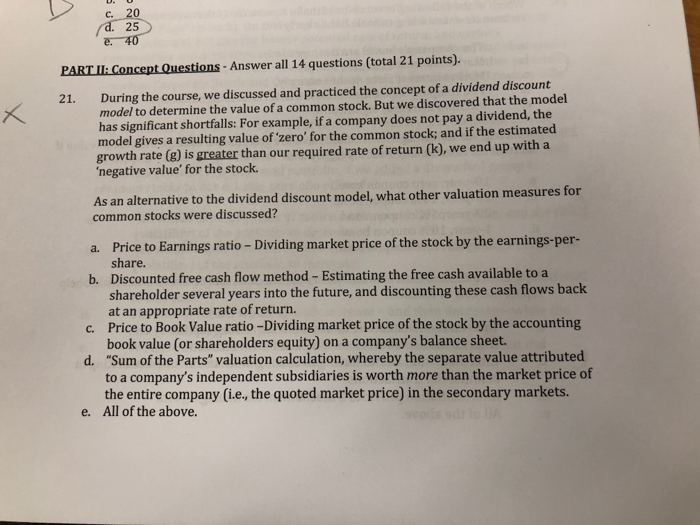
c. 20 d. 25 e 40 PART IT: Concept Questions - Answer all 14 questions (total 21 points). 21. During the course, we discussed and practiced the concept of a dividend discount model to determine the value of a common stock. But we discovered that the model has significant shortfalls: For example, if a company does not pay a dividend, the model gives a resulting value of 'zero' for the common stock; and if the estimated growth rate (g) is greater than our required rate of return (k), we end up with a 'negative value' for the stock. As an alternative to the dividend discount model, what other valuation measures for common stocks were discussed? a. Price to Earnings ratio - Dividing market price of the stock by the earnings-per- share. b. Discounted free cash flow method - Estimating the free cash available to a shareholder several years into the future, and discounting these cash flows back at an appropriate rate of return. c. Price to Book Value ratio -Dividing market price of the stock by the accounting book value (or shareholders equity) on a company's balance sheet. d. "Sum of the Parts" valuation calculation, whereby the separate value attributed to a company's independent subsidiaries is worth more than the market price of the entire company (i.e., the quoted market price) in the secondary markets. e. All of the above
Step by Step Solution
There are 3 Steps involved in it

Get step-by-step solutions from verified subject matter experts
 Study Help