







Question: Let Us Study In the previous lesson, you have learned Newton's laws of motion which provided the framework for the understanding of how forces
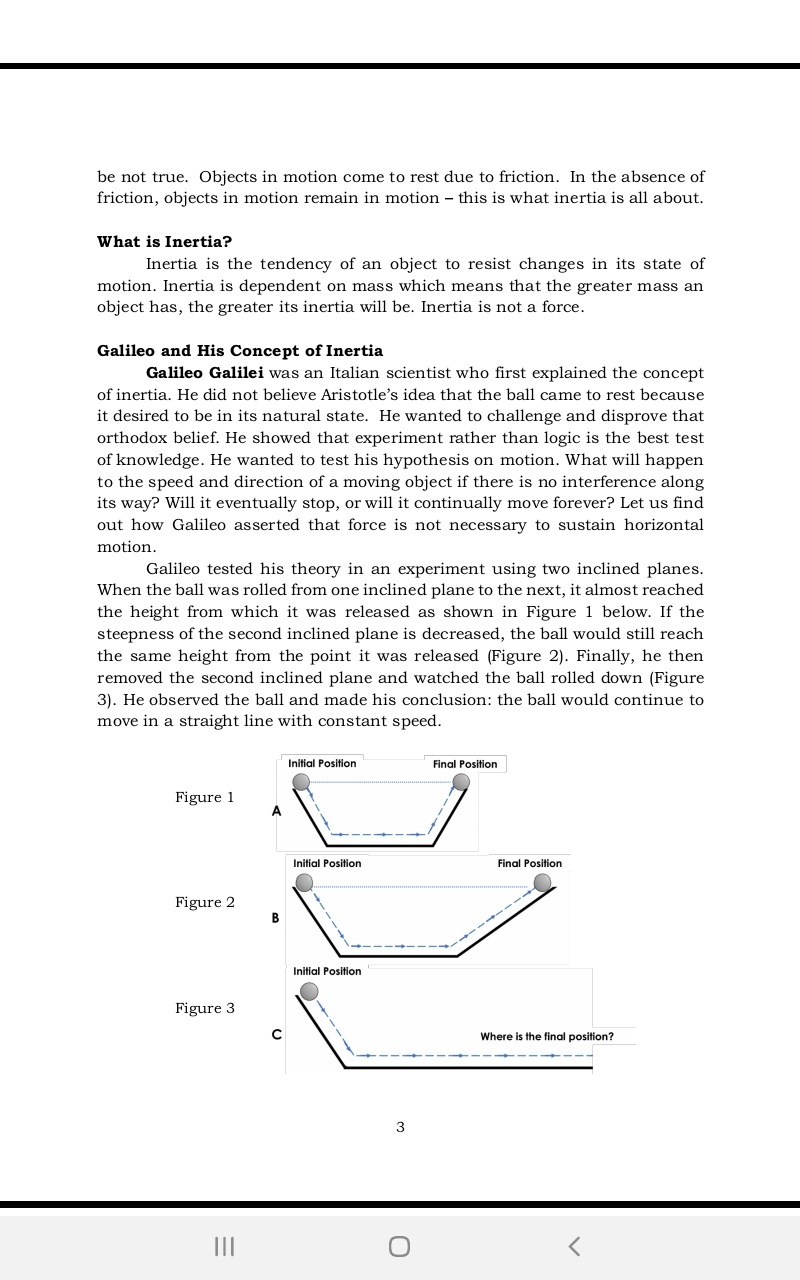
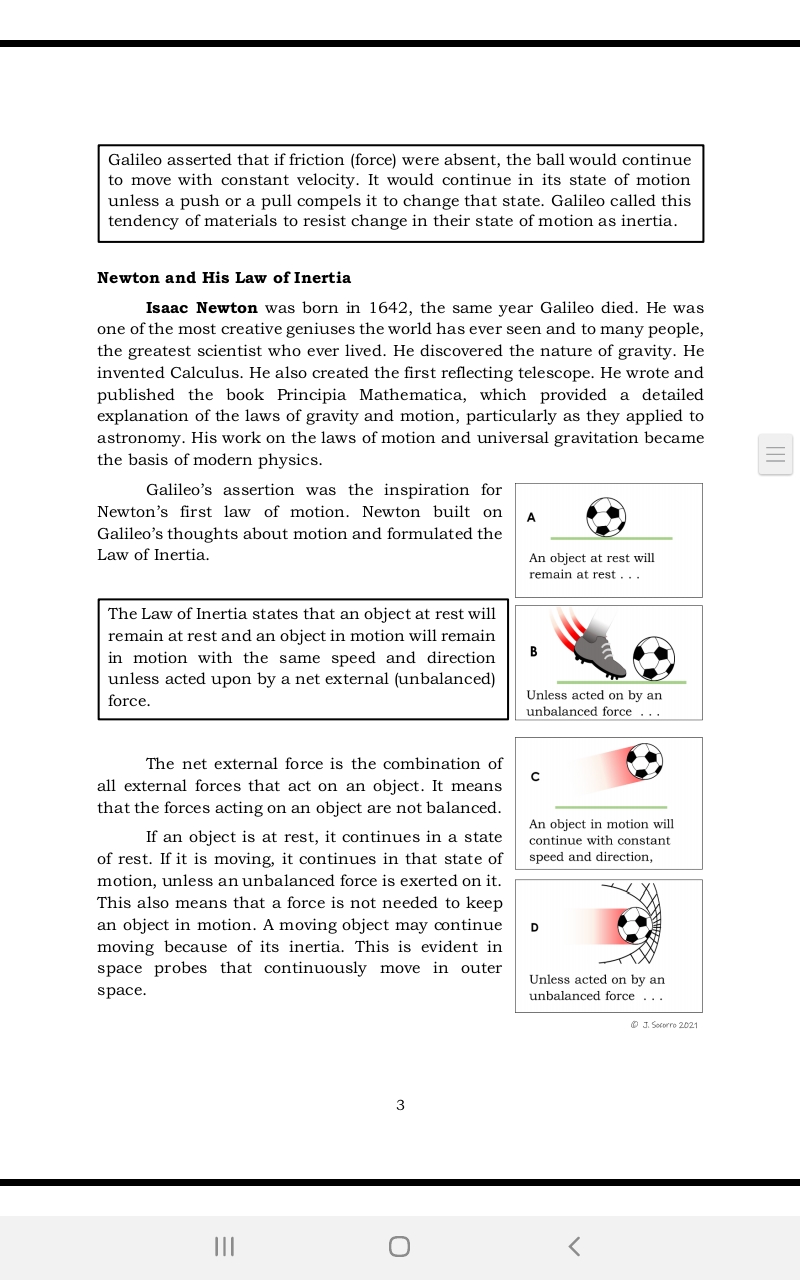
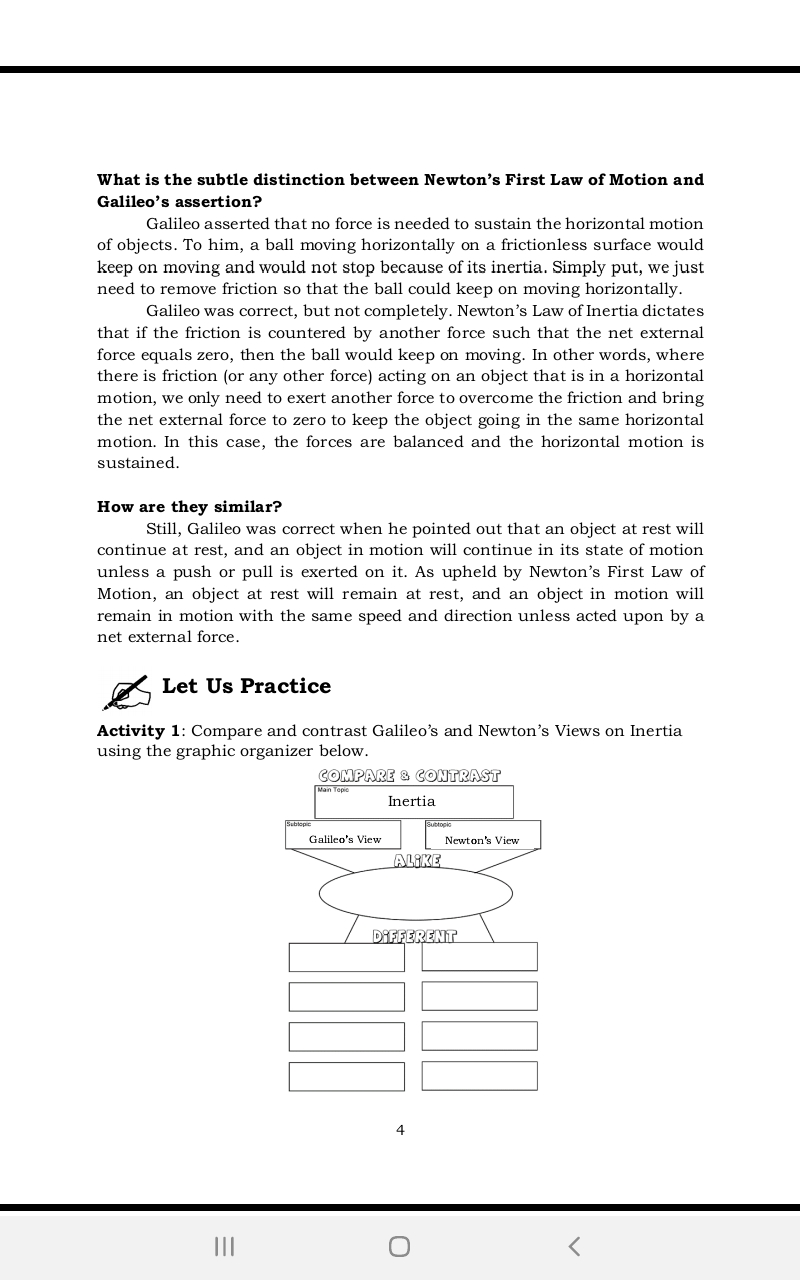
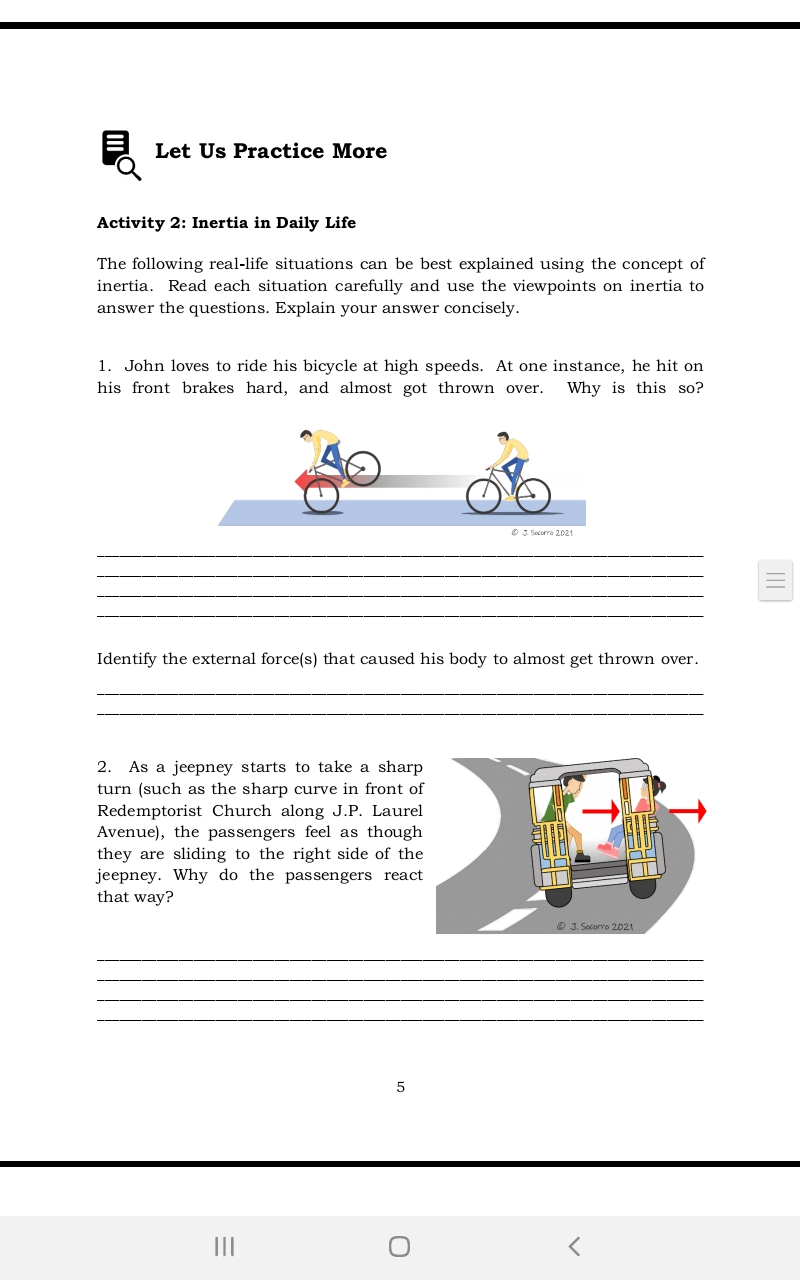
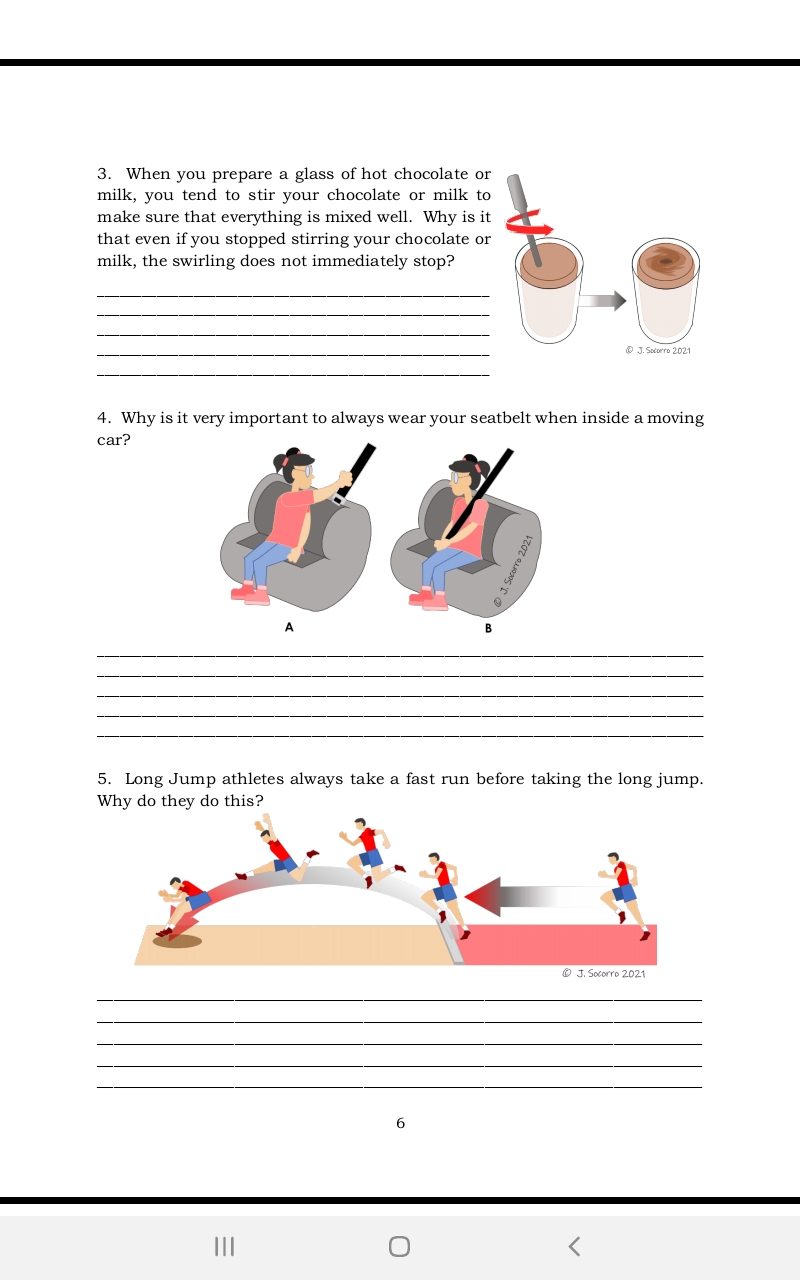
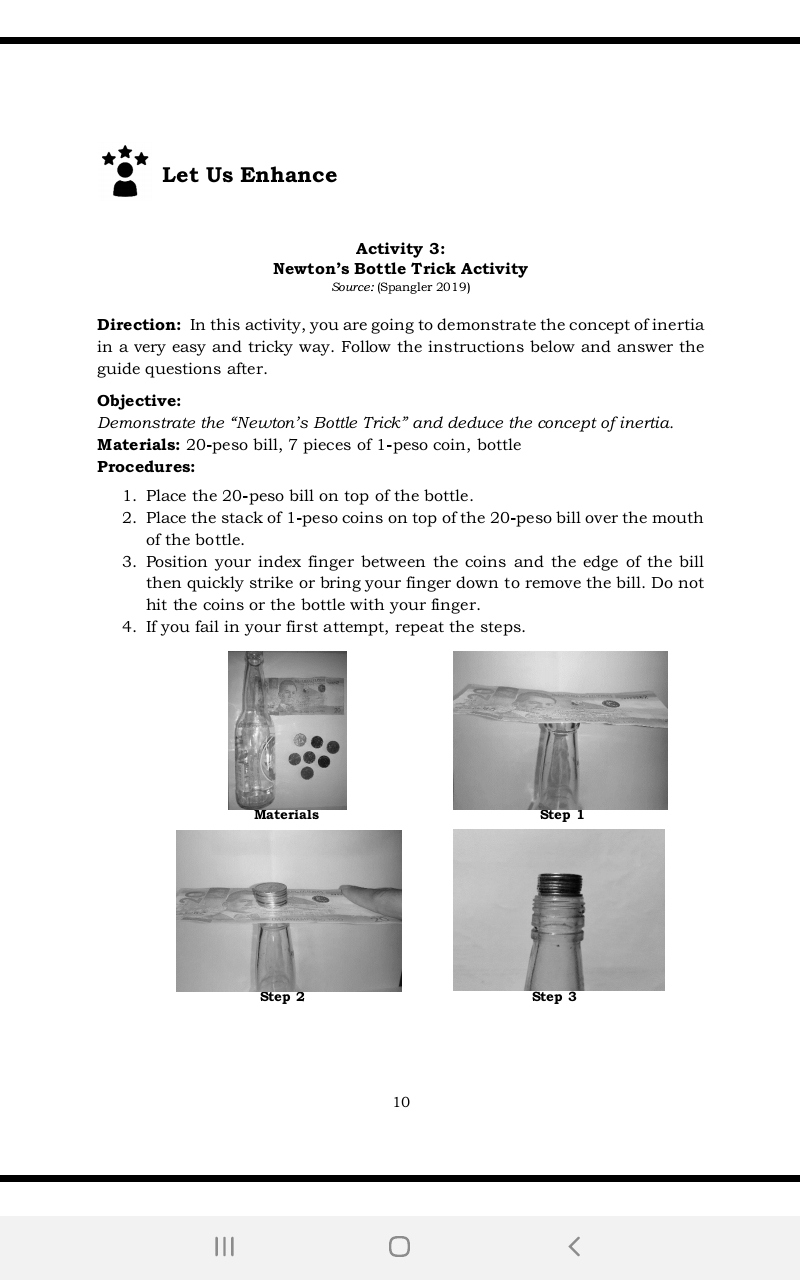
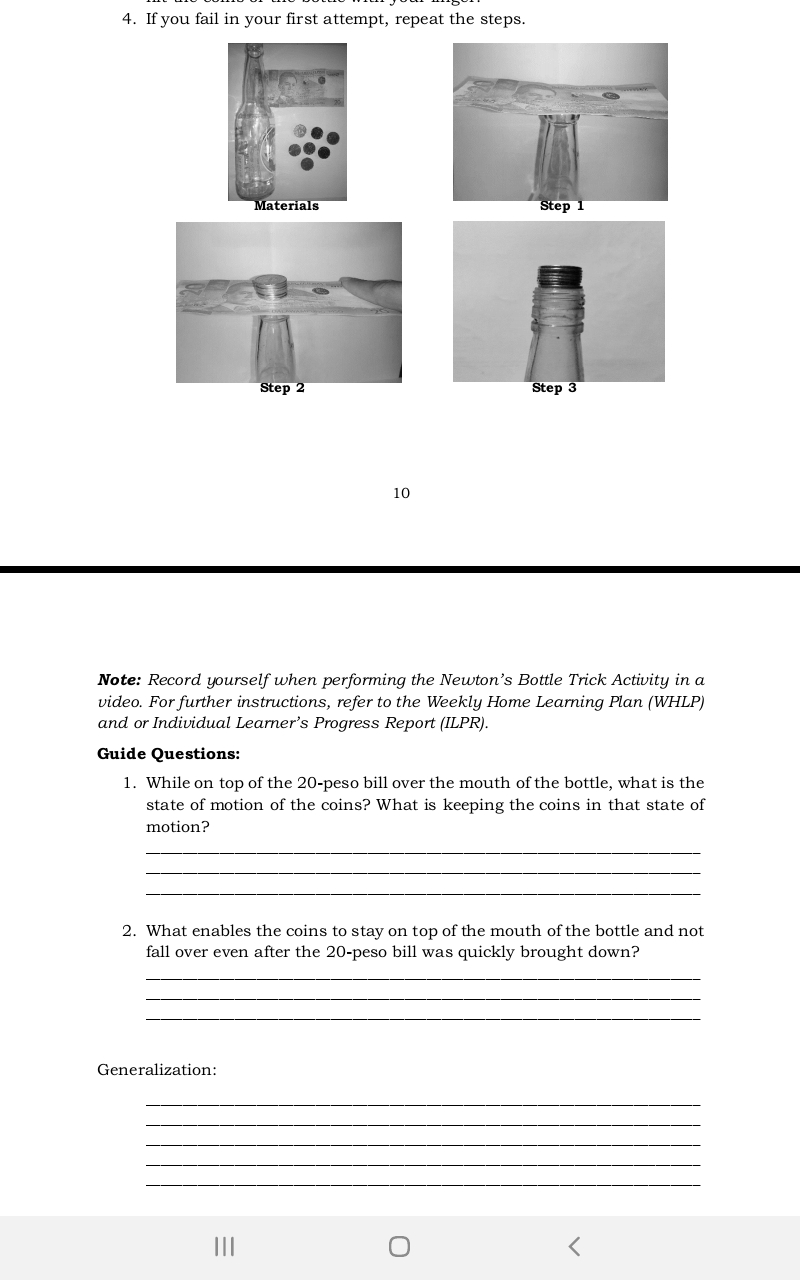
Let Us Study In the previous lesson, you have learned Newton's laws of motion which provided the framework for the understanding of how forces and motion are related. Recall that motion is the change in position relative to a frame of reference. Before Isaac Newton came up with his laws of motion, a lot of great thinkers have already laid the foundation for the study of force and motion. One of them was the Greek philosopher Aristotle. In his great text Physica, Aristotle explained that objects have a natural place which they seek. For instance, objects made of wood, rock, and metal tend to seek out the Earth as that is their natural place to be. This is natural motion. But when a stone is lifted or thrown, it goes against its natural motion and so he called it violent motion. Violent motion just means an external force is applied to move objects. Consider a ball rolling across the ground. It eventually comes to rest. Aristotle would have said that since we are no longer rolling the ball, we are no longer exerting a violent action on it. Thus, its natural place is to come to rest. This however was proven to 3. Score 2021 2 be not true. Objects in motion come to rest due to friction. In the absence of friction, objects in motion remain in motion - this is what inertia is all about. What is Inertia? Inertia is the tendency of an object to resist changes in its state of motion. Inertia is dependent on mass which means that the greater mass an object has, the greater its inertia will be. Inertia is not a force. Galileo and His Concept of Inertia Galileo Galilei was an Italian scientist who first explained the concept of inertia. He did not believe Aristotle's idea that the ball came to rest because it desired to be in its natural state. He wanted to challenge and disprove that orthodox belief. He showed that experiment rather than logic is the best test of knowledge. He wanted to test his hypothesis on motion. What will happen to the speed and direction of a moving object if there is no interference along its way? Will it eventually stop, or will it continually move forever? Let us find out how Galileo asserted that force is not necessary to sustain horizontal motion. Galileo tested his theory in an experiment using two inclined planes. When the ball was rolled from one inclined plane to the next, it almost reached the height from which it was released as shown in Figure 1 below. If the steepness of the second inclined plane is decreased, the ball would still reach the same height from the point it was released (Figure 2). Finally, he then noored the cond inclined alone and watched the ball walled down i ||| be not true. Objects in motion come to rest due to friction. In the absence of friction, objects in motion remain in motion - this is what inertia is all about. What is Inertia? Inertia is the tendency of an object to resist changes in its state of motion. Inertia is dependent on mass which means that the greater mass an object has, the greater its inertia will be. Inertia is not a force. Galileo and His Concept of Inertia Galileo Galilei was an Italian scientist who first explained the concept of inertia. He did not believe Aristotle's idea that the ball came to rest because it desired to be in its natural state. He wanted to challenge and disprove that orthodox belief. He showed that experiment rather than logic is the best test of knowledge. He wanted to test his hypothesis on motion. What will happen to the speed and direction of a moving object if there is no interference along its way? Will it eventually stop, or will it continually move forever? Let us find out how Galileo asserted that force is not necessary to sustain horizontal motion. Galileo tested his theory in an experiment using two inclined planes. When the ball was rolled from one inclined plane to the next, it almost reached the height from which it was released as shown in Figure 1 below. If the steepness of the second inclined plane is decreased, the ball would still reach the same height from the point it was released (Figure 2). Finally, he then removed the second inclined plane and watched the ball rolled down (Figure 3). He observed the ball and made his conclusion: the ball would continue to move in a straight line with constant speed. Figure 1 A Figure 2 B Initial Position Final Position Initial Position Final Position Initial Position Figure 3 C ||| = 3 Where is the final position? > Galileo asserted that if friction (force) were absent, the ball would continue to move with constant velocity. It would continue in its state of motion unless a push or a pull compels it to change that state. Galileo called this tendency of materials to resist change in their state of motion as inertia. Newton and His Law of Inertia Isaac Newton was born in 1642, the same year Galileo died. He was one of the most creative geniuses the world has ever seen and to many people, the greatest scientist who ever lived. He discovered the nature of gravity. He invented Calculus. He also created the first reflecting telescope. He wrote and published the book Principia Mathematica, which provided a detailed explanation of the laws of gravity and motion, particularly as they applied to astronomy. His work on the laws of motion and universal gravitation became the basis of modern physics. Galileo's assertion was the inspiration for Newton's first law of motion. Newton built on Galileo's thoughts about motion and formulated the Law of Inertia. The Law of Inertia states that an object at rest will remain at rest and an object in motion will remain in motion with the same speed and direction unless acted upon by a net external (unbalanced) force. A An object at rest will remain at rest... B Unless acted on by an unbalanced force... The net external force is the combination of all external forces that act on an object. It means that the forces acting on an object are not balanced. If an object is at rest, it continues in a state of rest. If it is moving, it continues in that state of motion, unless an unbalanced force is exerted on it. This also means that a force is not needed to keep an object in motion. A moving object may continue moving because of its inertia. This is evident in space probes that continuously move in outer space. An object in motion will continue with constant speed and direction, Unless acted on by an unbalanced force ... J. Socorro 2021 = ||| 3 What is the subtle distinction between Newton's First Law of Motion and Galileo's assertion? Galileo asserted that no force is needed to sustain the horizontal motion of objects. To him, a ball moving horizontally on a frictionless surface would keep on moving and would not stop because of its inertia. Simply put, we just need to remove friction so that the ball could keep on moving horizontally. Galileo was correct, but not completely. Newton's Law of Inertia dictates that if the friction is countered by another force such that the net external force equals zero, then the ball would keep on moving. In other words, where there is friction (or any other force) acting on an object that is in a horizontal motion, we only need to exert another force to overcome the friction and bring the net external force to zero to keep the object going in the same horizontal motion. In this case, the forces are balanced and the horizontal motion is sustained. How are they similar? Still, Galileo was correct when he pointed out that an object at rest will continue at rest, and an object in motion will continue in its state of motion unless a push or pull is exerted on it. As upheld by Newton's First Law of Motion, an object at rest will remain at rest, and an object in motion will remain in motion with the same speed and direction unless acted upon by a net external force. Let Us Practice Activity 1: Compare and contrast Galileo's and Newton's Views on Inertia using the graphic organizer below. Subtopic COMPARE & CONTRAST Main Topic Galileo's View Inertia Subtopic ALIKE Newton's View ||| DIFFERENT > Let Us Practice More Activity 2: Inertia in Daily Life The following real-life situations can be best explained using the concept of inertia. Read each situation carefully and use the viewpoints on inertia to answer the questions. Explain your answer concisely. 1. John loves to ride his bicycle at high speeds. At one instance, he hit on his front brakes hard, and almost got thrown over. Why is this so? J. Socorro 2021 Identify the external force(s) that caused his body to almost get thrown over. 2. As a jeepney starts to take a sharp turn (such as the sharp curve in front of Redemptorist Church along J.P. Laurel Avenue), the passengers feel as though they are sliding to the right side of the jeepney. Why do the passengers react that way? = ||| 5 J. Socorro 2021 3. When you prepare a glass of hot chocolate or milk, you tend to stir your chocolate or milk to make sure that everything is mixed well. Why is it that even if you stopped stirring your chocolate or milk, the swirling does not immediately stop? J. Socorro 2021 4. Why is it very important to always wear your seatbelt when inside a moving car? A 5. Long Jump athletes always take a fast run before taking the long jump. Why do they do this? ||| = 6 > J. Socorro 2021 Let Us Enhance Activity 3: Newton's Bottle Trick Activity Source: (Spangler 2019) Direction: In this activity, you are going to demonstrate the concept of inertia in a very easy and tricky way. Follow the instructions below and answer the guide questions after. Objective: Demonstrate the "Newton's Bottle Trick" and deduce the concept of inertia. Materials: 20-peso bill, 7 pieces of 1-peso coin, bottle Procedures: 1. Place the 20-peso bill on top of the bottle. 2. Place the stack of 1-peso coins on top of the 20-peso bill over the mouth of the bottle. 3. Position your index finger between the coins and the edge of the bill then quickly strike or bring your finger down to remove the bill. Do not hit the coins or the bottle with your finger. 4. If you fail in your first attempt, repeat the steps. ||| = Materials Step 1 Step 2 10 Step 3 > 4. If you fail in your first attempt, repeat the steps. Materials Step 1 Step 2 10 Step 3 Note: Record yourself when performing the Newton's Bottle Trick Activity in a video. For further instructions, refer to the Weekly Home Learning Plan (WHLP) and or Individual Learner's Progress Report (ILPR). Guide Questions: 1. While on top of the 20-peso bill over the mouth of the bottle, what is the state of motion of the coins? What is keeping the coins in that state of motion? 2. What enables the coins to stay on top of the mouth of the bottle and not fall over even after the 20-peso bill was quickly brought down? Generalization: |||
Step by Step Solution
There are 3 Steps involved in it
The passage in the images focuses on explaining historical concepts of motion and inertia particularly the differences between Aristotles Galileos and Newtons views as well as the practical applicatio... View full answer

Get step-by-step solutions from verified subject matter experts
 Study Help