



Question: C ASE 2 . 1 : Grimshaw v . Ford Motor Company, 1 1 9 Cal. App. 3 d 7 5 7 , 1 7
C
ASE : Grimshaw v Ford Motor Company, Cal. App. d Cal. Rptr
FACT SUMMARY
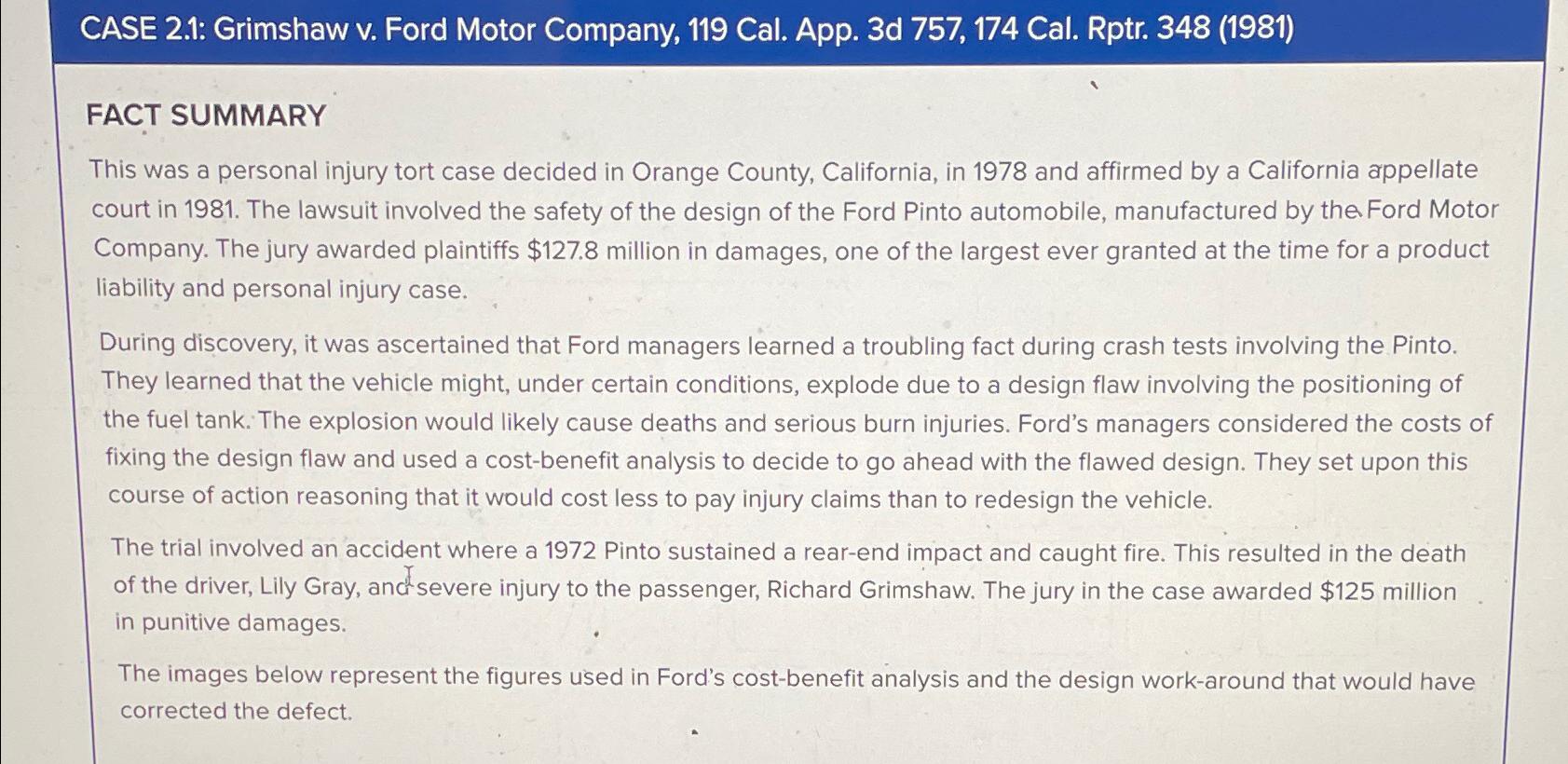
This was a personal injury tort case decided in Orange County, California, in and affirmed by a California appellate court in The lawsuit involved the safety of the design of the Ford Pinto automobile, manufactured by the Ford Motor Company. The jury awarded plaintiffs $ million in damages, one of the largest ever granted at the time for a product liability and personal injury case.
During discovery, it was ascertained that Ford managers learned a troubling fact during crash tests involving the Pinto. They learned that the vehicle might, under certain conditions, explode due to a design flaw involving the positioning of the fuel tank. The explosion would likely cause deaths and serious burn injuries. Ford's managers considered the costs of fixing the design flaw and used a costbenefit analysis to decide to go ahead with the flawed design. They set upon this course of action reasoning that it would cost less to pay injury claims than to redesign the vehicle.
The trial involved an accident where a Pinto sustained a rearend impact and caught fire. This resulted in the death of the driver, Lily Gray, and severe injury to the passenger, Richard Grimshaw. The jury in the case awarded $ million in punitive damages.
The images below represent the figures used in Ford's costbenefit analysis and the design workaround that would have corrected the defect.
Step by Step Solution
There are 3 Steps involved in it
1 Expert Approved Answer
Step: 1 Unlock

Question Has Been Solved by an Expert!
Get step-by-step solutions from verified subject matter experts
Step: 2 Unlock
Step: 3 Unlock