







Question: c) Exercise 2: What is the Total Cost per Unit for Dept M (dollars and cents)? See circle on the printed exercise-Last page. d) Exercise
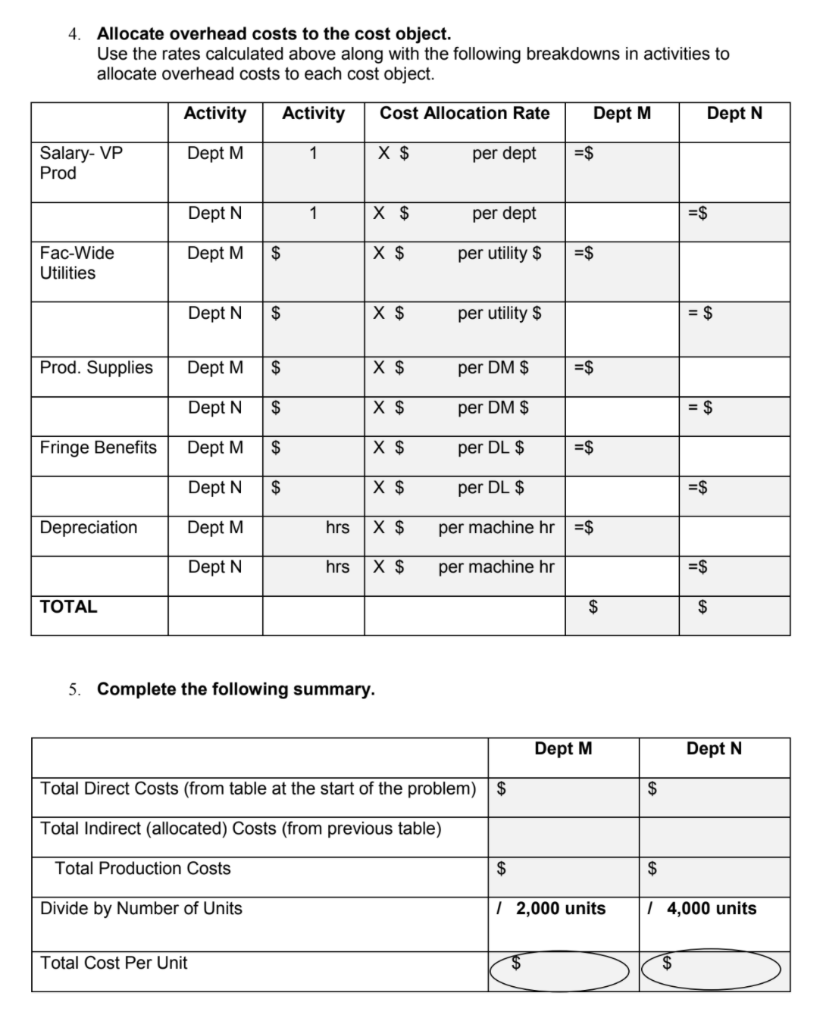
c) Exercise 2: What is the Total Cost per Unit for Dept M (dollars and cents)? See circle on the printed exercise-Last page.
d) Exercise 2: What is the Total Cost per Unit for Dept N (dollars and cents)? See circle on the printed exercise-Last page.
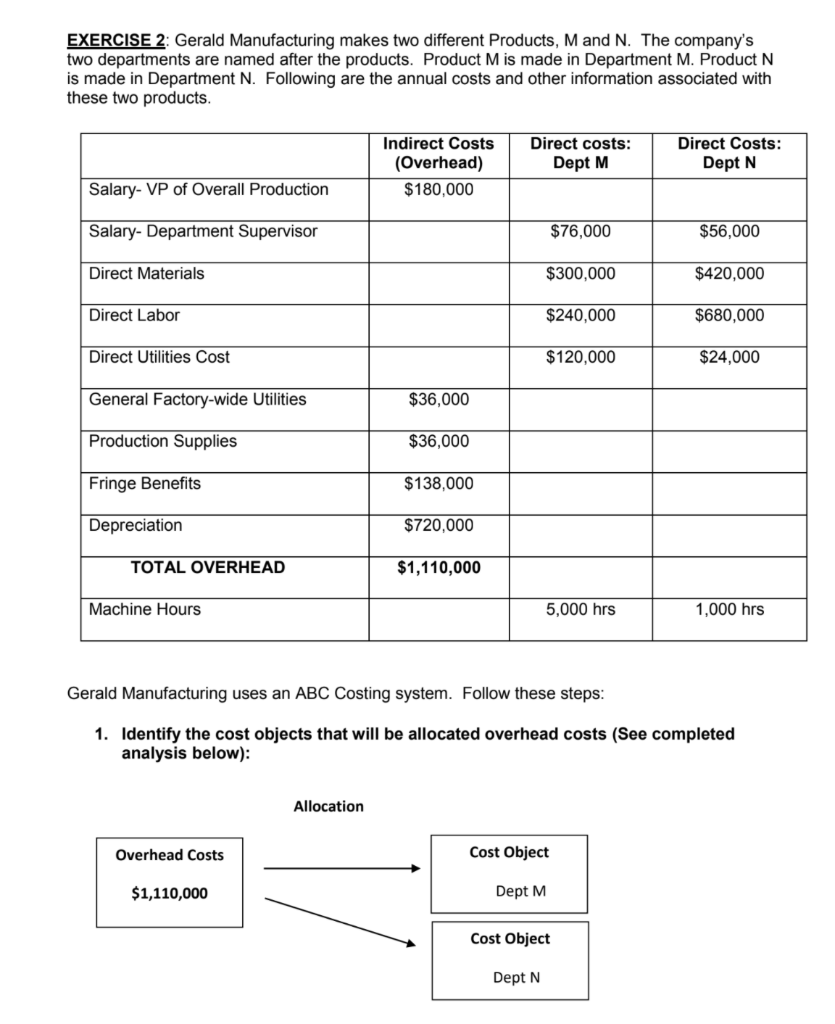
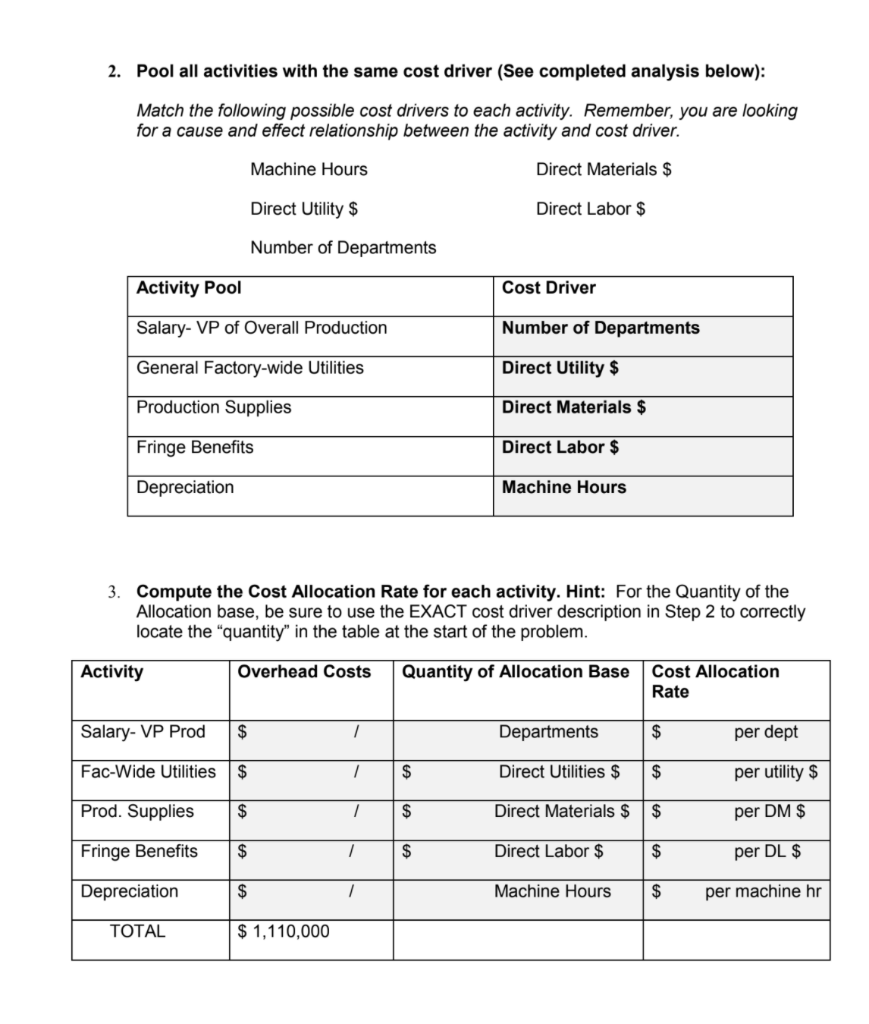
EXERCISE 2: Gerald Manufacturing makes two different Products, M and N. The company's two departments are named after the products. Product M is made in Department M. Product N is made in Department N. Following are the annual costs and other information associated with these two products. Indirect Costs (Overhead) $180,000 Direct costs: Dept M Direct Costs: Dept N Salary- VP of Overall Production Salary-Department Supervisor $76,000 $56,000 Direct Materials $300,000 $420,000 Direct Labor $240,000 $680,000 Direct Utilities Cost $120,000 $24,000 General Factory-wide Utilities $36,000 Production Supplies $36,000 Fringe Benefits $138,000 Depreciation $720,000 TOTAL OVERHEAD $1,110,000 Machine Hours 5,000 hrs 1,000 hrs Gerald Manufacturing uses an ABC Costing system. Follow these steps: 1. Identify the cost objects that will be allocated overhead costs (See completed analysis below): Allocation Overhead Costs Cost Object $1,110,000 Dept M Cost Object Dept N 2. Pool all activities with the same cost driver (See completed analysis below): Match the following possible cost drivers to each activity. Remember, you are looking for a cause and effect relationship between the activity and cost driver. Machine Hours Direct Materials $ Direct Utility $ Direct Labor $ Number of Departments Activity Pool Cost Driver Salary- VP of Overall Production Number of Departments General Factory-wide Utilities Direct Utility $ Production Supplies Direct Materials $ Fringe Benefits Direct Labor $ Depreciation Machine Hours 3. Compute the Cost Allocation Rate for each activity. Hint: For the Quantity of the Allocation base, be sure to use the EXACT cost driver description in Step 2 to correctly locate the "quantity" in the table at the start of the problem. Activity Overhead Costs Quantity of Allocation Base Cost Allocation Rate Salary-VP Prod $ 1 Departments $ per dept Fac-Wide Utilities $ 1 $ Direct Utilities $ $ per utility $ Prod. Supplies $ / $ Direct Materials $ $ per DM $ Fringe Benefits $ / $ Direct Labor $ $ per DL $ Depreciation $ / Machine Hours $ per machine hr TOTAL $ 1,110,000 4. Allocate overhead costs to the cost object. Use the rates calculated above along with the following breakdowns in activities to allocate overhead costs to each cost object. Activity Activity Cost Allocation Rate Dept M Dept N Dept M 1 X $ Salary-VP Prod per dept =$ Dept N 1 X $ per dept =$ Dept M $ X $ Fac-Wide Utilities per utility $ =$ Dept N $ X $ per utility $ = $ Prod. Supplies Dept M $ X $ per DM $ =$ Dept N $ X $ per DM $ = $ Fringe Benefits Dept M $ X $ per DL $ =$ Dept N $ X $ per DL $ =$ Depreciation Dept M hrs X $ per machine hr =$ Dept N hrs X $ per machine hr =$ TOTAL $ $ 5. Complete the following summary. Dept M Dept N Total Direct Costs (from table at the start of the problem) $ $ Total Indirect (allocated) Costs (from previous table) Total Production Costs $ $ Divide by Number of Units | 2,000 units | 4,000 units Total Cost Per Unit $ $
Step by Step Solution
There are 3 Steps involved in it

Get step-by-step solutions from verified subject matter experts
 Study Help