







Question: (C++) #ifndef LIST_HPP #define LIST_HPP template class List { protected: // the current number of elements in the list int length; public: // default constructor
(C++)
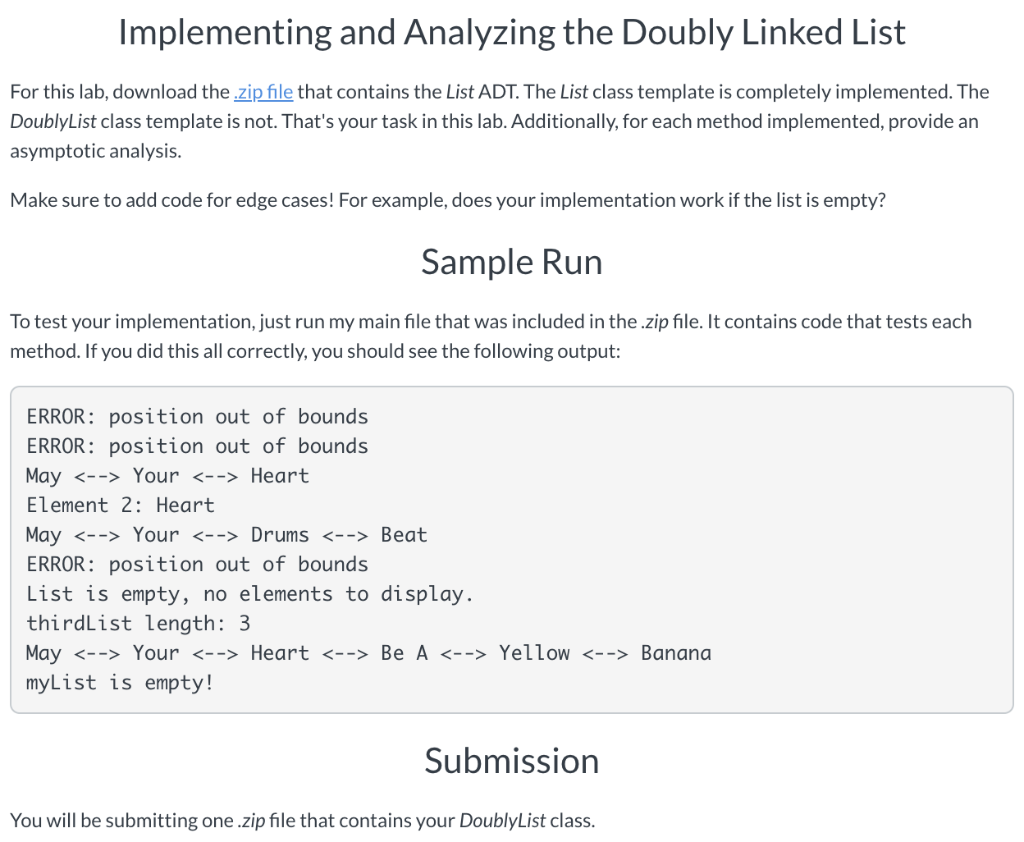
#ifndef LIST_HPP #define LIST_HPP
template
public: // default constructor List() { }
// destructor virtual ~List() { }
// add the argument to the end of the list virtual void append(const T&) = 0;
// remove all elements in the list virtual void clear() = 0;
// return the element at the given position (argument) virtual T getElement(int) const = 0;
// return the current length of the list virtual int getLength() const = 0;
// insert the given element (argument 2) at // the given position (argument 1) virtual void insert(int, const T&) = 0;
// determine if the list currently empty virtual bool isEmpty() const = 0;
// remove the element at the given position (argument) virtual void remove(int) = 0;
// replace the element at the given position (argument 1) with // the value given (argument 2) virtual void replace(int, const T&) = 0; };
#endif
#include "DoublyList.hpp"
int main() { // create a doubly linked list DoublyList
myList.append("Heart"); myList.insert(0, "Your"); myList.insert(0, "May"); myList.replace(-3, "?"); // should display error myList.append("Citrus"); myList.insert(5, "kweh"); // should display error myList.remove(3);
cout
string word = myList.getElement(2); cout
DoublyList
cout
secondList.remove(4); // should display error
DoublyList cout thirdList.append("Be A"); thirdList.append("Yellow"); thirdList.append("Banana"); cout myList.clear(); if (myList.isEmpty()) { cout // terminate return 0; } #ifndef DOUBLY_LIST_HPP #define DOUBLY_LIST_HPP #include "List.hpp" #include template Node(T v, Node* n = nullptr, Node* p = nullptr) : value(v), next(n), prev(p) { } }; // a pointer to the front of the list Node* head; public: // default constructor DoublyList(); // copy constructor DoublyList(const DoublyList // overloaded assignment operator DoublyList // destructor virtual ~DoublyList(); // add the argument to the end of the list virtual void append(const T&) override; // remove all elements in the list virtual void clear() override; // return the element at the given position (argument) virtual T getElement(int) const override; // return the current length of the list virtual int getLength() const override; // insert the given element (argument 2) at // the given position (argument 1) virtual void insert(int, const T&) override; // determine if the list currently empty virtual bool isEmpty() const override; // remove the element at the given position (argument) virtual void remove(int) override; // replace the element at the given position (argument 1) with // the value given (argument 2) virtual void replace(int, const T&) override; // overloaded stream insertion operator /*********************************************************************** * Analyzing the number of output operations. * Input size n is the length of the list. * * Scenario #1, the if block executes: * T(n) = 1 * * Scenario #2, the else block executes: * T(n) = n + (n - 1) + 1 * = 2n * * Asymptotic analysis: * T(n) = O(n) ***********************************************************************/ friend ostream& operator& myObj) { if (myObj.isEmpty()) { outStream while (curr != nullptr) { outStream value; if (curr->next != nullptr) { outStream "; } curr = curr->next; } outStream return outStream; } }; /******************************************************************************* * Analyzing the number of assignment operations. * Input size n is the length of the list. * * Asymptotic analysis: * T(n) = ? *******************************************************************************/ template /******************************************************************************* * Analyzing the number of assignment operations. * Input size n is the length of the list. * * Asymptotic analysis: * T(n) = ? *******************************************************************************/ template /******************************************************************************* * Analyzing the number of assignment operations. * Input size n is the length of the list. * * Asymptotic analysis: * T(n) = ? *******************************************************************************/ template /******************************************************************************* * Analyzing the number of delete operations. * Input size n is the length of the list. * * Asymptotic analysis: * T(n) = ? *******************************************************************************/ template /******************************************************************************* * Analyzing the number of assignment operations. * Input size n is the length of the list. * * Asymptotic analysis: * T(n) = ? *******************************************************************************/ template /******************************************************************************* * Analyzing the number of assignment operations. * Input size n is the length of the list. * * Asymptotic analysis: * T(n) = ? *******************************************************************************/ template /******************************************************************************* * Analyzing the number of links accessed. * Input size n is the length of the list. * * Asymptotic analysis: * T(n) = ? *******************************************************************************/ template /******************************************************************************* * Analyzing the number of accesses to class attributes. * Input size n is the length of the list. * * Asymptotic analysis: * T(n) = ? *******************************************************************************/ template /******************************************************************************* * Analyzing the number of assignment operations. * Input size n is the length of the list. * * Asymptotic analysis: * T(n) = ? *******************************************************************************/ template /******************************************************************************* * Analyzing the number of comparison operations. * Input size n is the length of the list. * * Asymptotic analysis: * T(n) = ? *******************************************************************************/ template /******************************************************************************* * Analyzing the number of assignment operations. * Input size n is the length of the list. * * Asymptotic analysis: * T(n) = ? *******************************************************************************/ template /******************************************************************************* * Analyzing the number of assignment operations. * Input size n is the length of the list. * * Asymptotic analysis: * T(n) = ? *******************************************************************************/ template #endif
Step by Step Solution
There are 3 Steps involved in it

Get step-by-step solutions from verified subject matter experts
 Study Help