







Question: C Language please Create a structure type called address t with components for the four integers of an IPv4 address along with a fifth component
C Language please
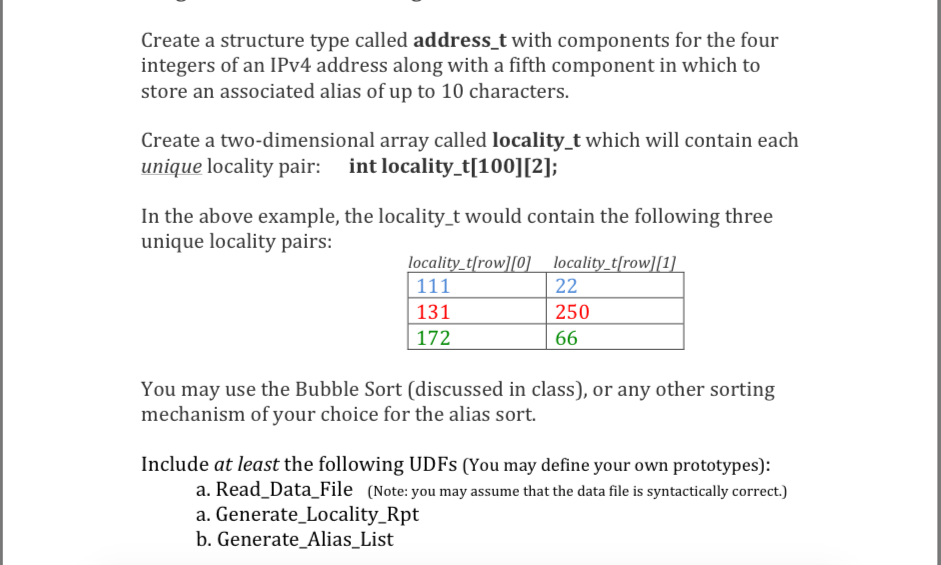
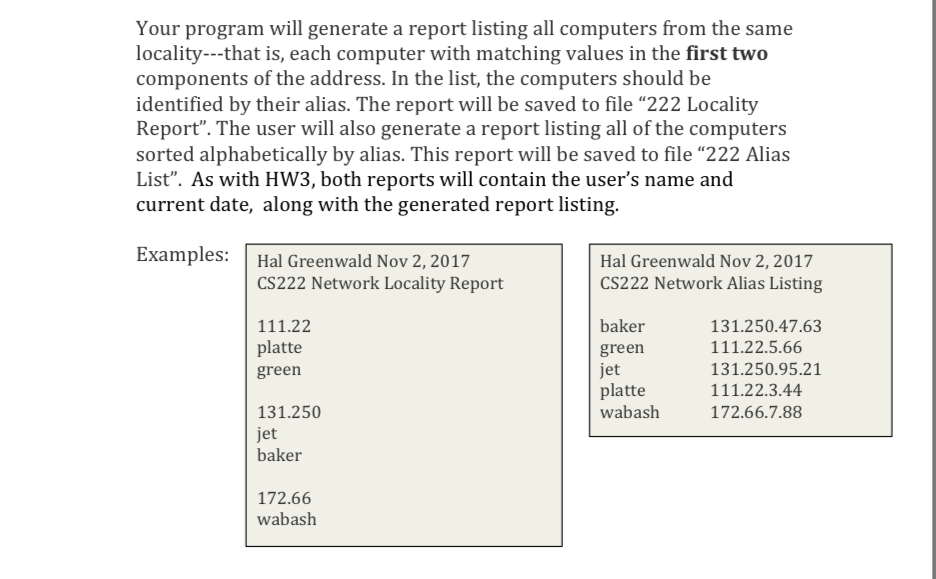
Create a structure type called address t with components for the four integers of an IPv4 address along with a fifth component in which to store an associated alias of up to 10 characters. Create a two-dimensional array called locality t which will contain each unique locality pair: int locality_t[1001[2]; In the above example, the locality t would contain the following three unique locality pairs locality tlrowllO locality trowl[1 131 172 250 You may use the Bubble Sort (discussed in class), or any other sorting mechanism of your choice for the alias sort. Include at least the following UDFs (You may define your own prototypes): a. Read_Data File (Note: you may assume that the data file is syntactically correct.) a. Generate_Locality_Rpt b. Generate_Alias_List Create a structure type called address t with components for the four integers of an IPv4 address along with a fifth component in which to store an associated alias of up to 10 characters. Create a two-dimensional array called locality t which will contain each unique locality pair: int locality_t[1001[2]; In the above example, the locality t would contain the following three unique locality pairs locality tlrowllO locality trowl[1 131 172 250 You may use the Bubble Sort (discussed in class), or any other sorting mechanism of your choice for the alias sort. Include at least the following UDFs (You may define your own prototypes): a. Read_Data File (Note: you may assume that the data file is syntactically correct.) a. Generate_Locality_Rpt b. Generate_Alias_List
Step by Step Solution
There are 3 Steps involved in it

Get step-by-step solutions from verified subject matter experts
 Study Help