







Question: c or c++ or Java or python 2. Dam Design Your company is designing a dam to be built across a stream to create a
c or c++ or Java or python
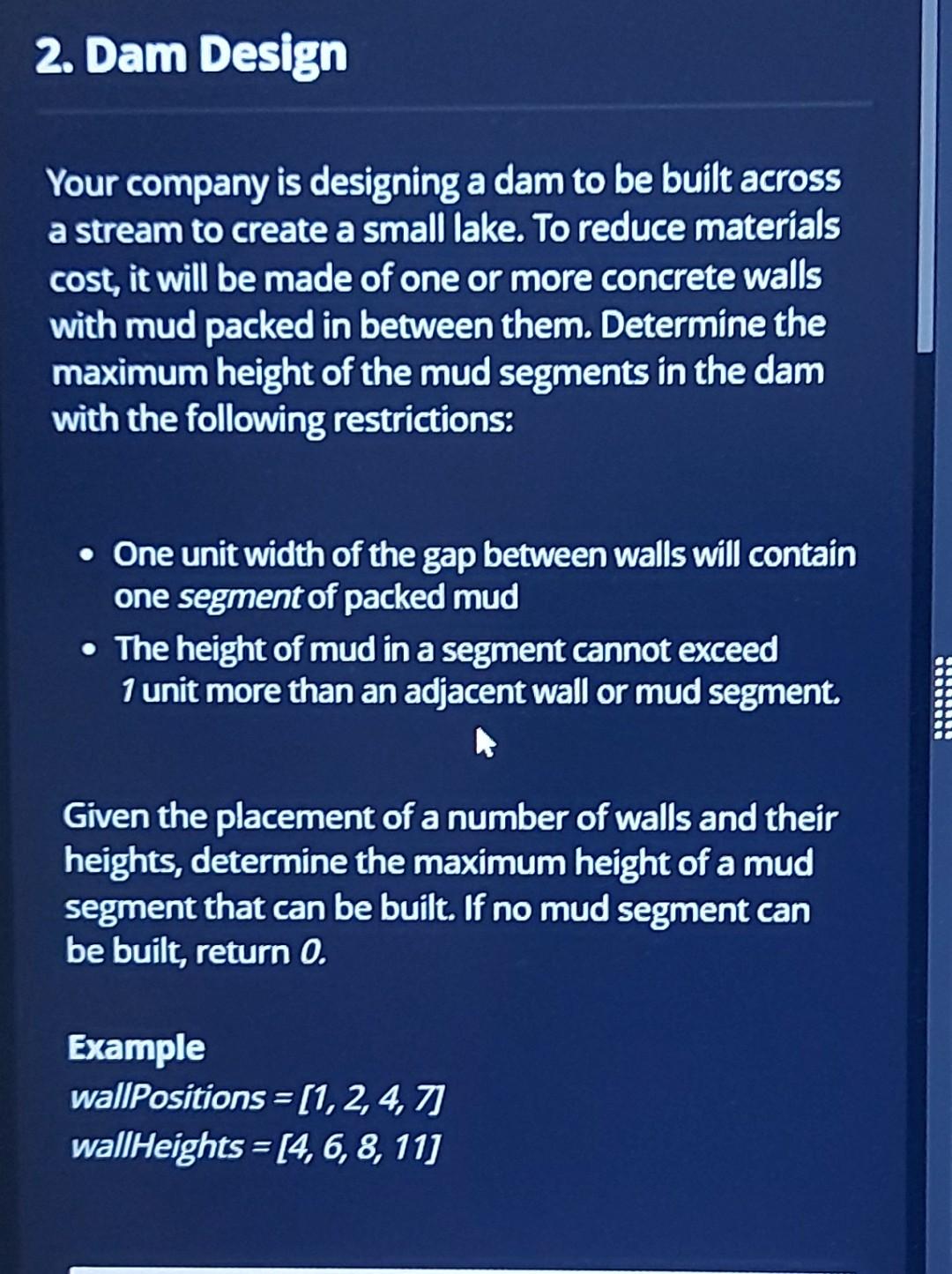
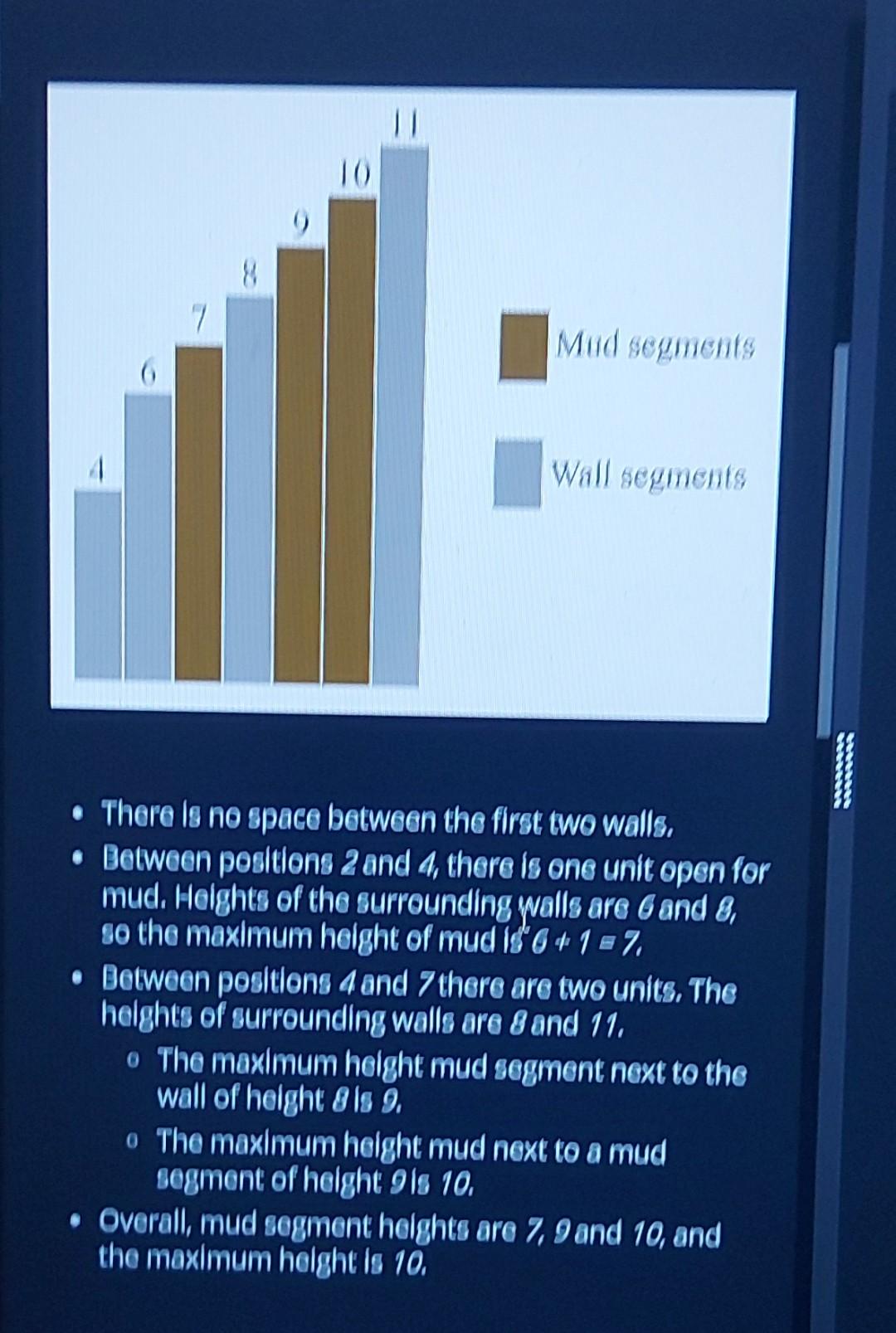
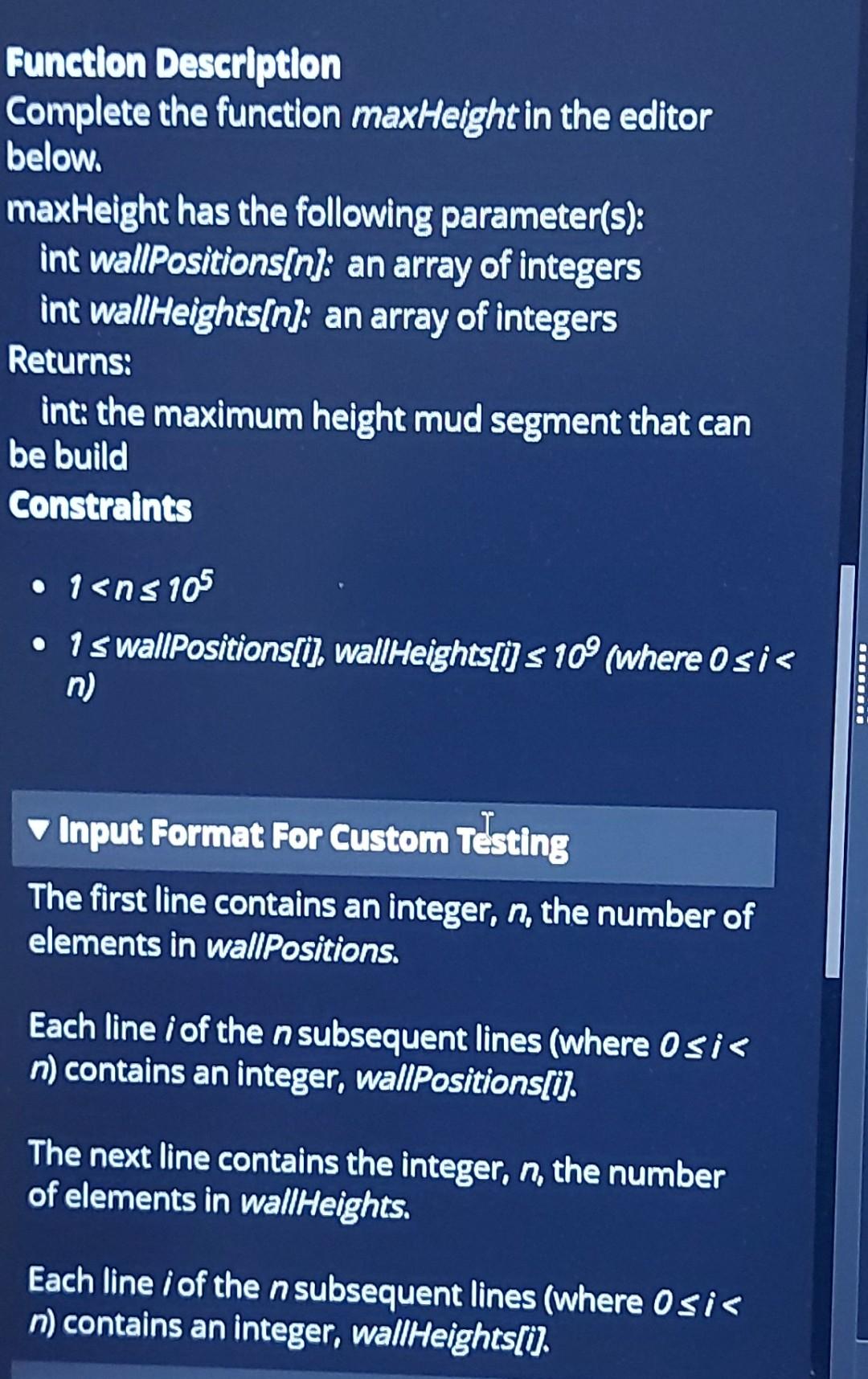
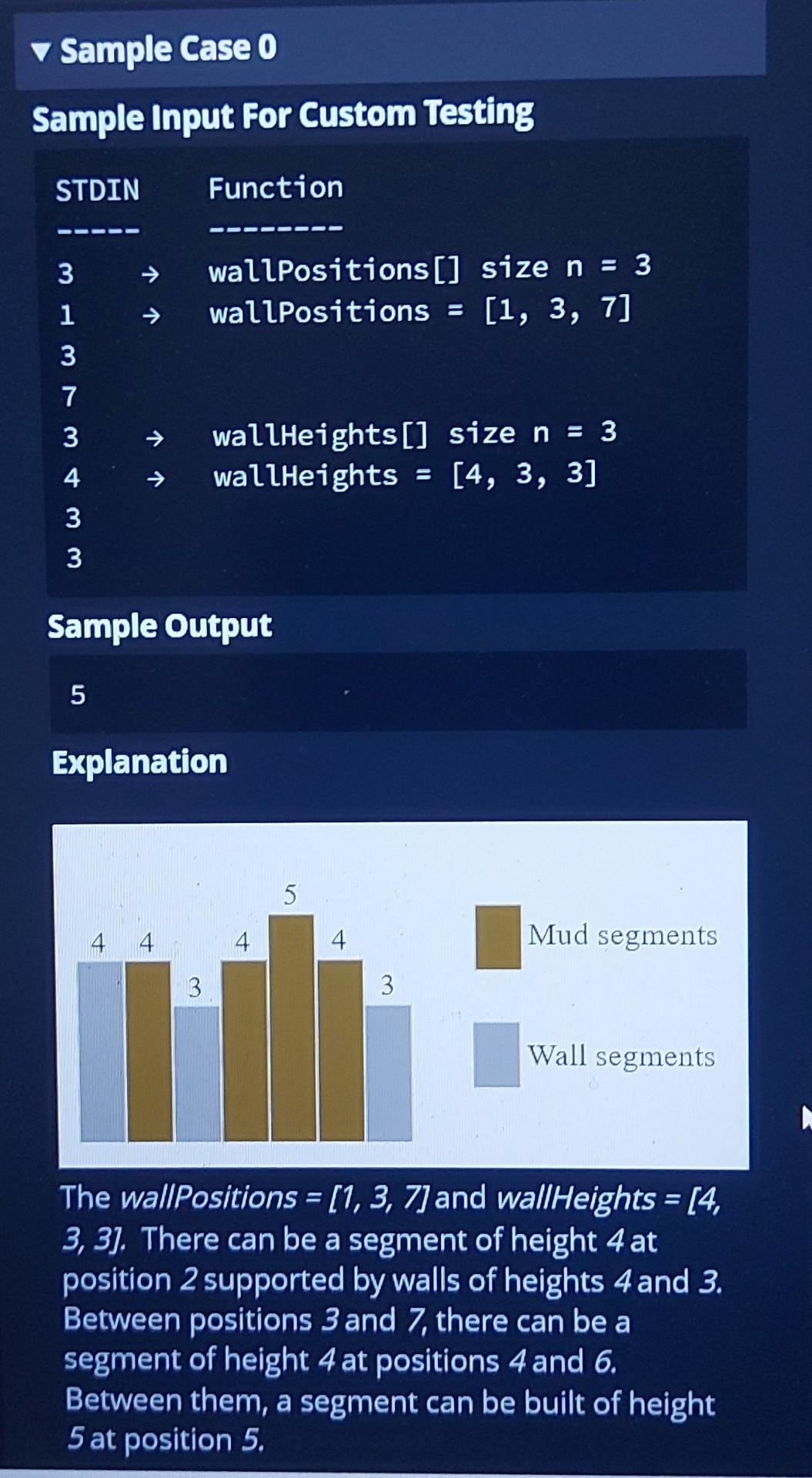
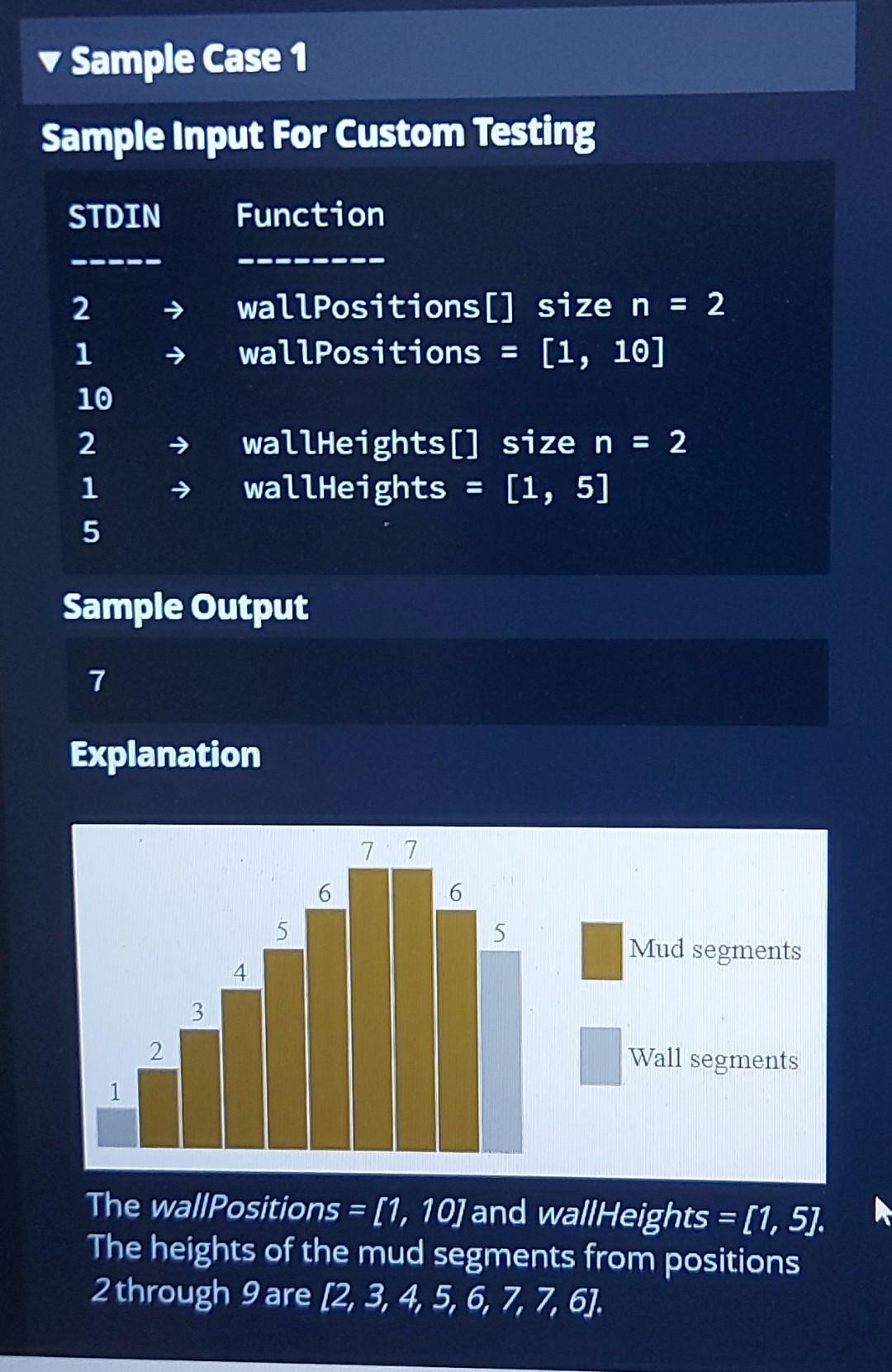
2. Dam Design Your company is designing a dam to be built across a stream to create a small lake. To reduce materials cost, it will be made of one or more concrete walls with mud packed in between them. Determine the maximum height of the mud segments in the dam with the following restrictions: One unit width of the gap between walls will contain one segment of packed mud The height of mud in a segment cannot exceed 1 unit more than an adjacent wall or mud segment. the placement of a number of walls and their heights, determine the maximum height of a mud segment that can be built. If no mud segment can be built, return 0. Example wallPositions = [1, 2, 4, 7] wallHeights = [4, 6, 8, 11] 10 Mud segments Wall segments There is no space between the first two walls. Between positions 2 and 4, there is one unit open for mud. Heights of the surrounding walls are 6 and 8, so the maximum height of mud is 6+1=7 Between positions 4 and 7 there are two units. The heights of surrounding walls are 8 and 11. o The maximum height mud segment next to the wall of height 8 is 9. o The maximum height mud next to a mud segment of height 9 is 10. Overall, mud segment heights are 7, 9 and 10, and the maximum height is 10. HANN 44444 Function Description Complete the function maxHeight in the editor below. maxHeight has the following parameter(s): int wallPositions[n]: an array of integers int wallHeights[n]: an array of integers Returns: int: the maximum height mud segment that can be build Constraints 1 Sample Case 0 Sample Input For Custom Testing STDIN Function 3 1 3 73 433 5 wallPositions [] size n = 3 wallPositions = [1, 3, 7] wallHeights [] size n = 3 wallHeights = [4, 3, 3] Sample Output Explanation 3 4 5 4 3 Mud segments Wall segments The wallPositions = [1, 3, 7] and wallHeights = [4, 3,3]. There can be a segment of height 4 at position 2 supported by walls of heights 4 and 3. Between positions 3 and 7, there can be a segment of height 4 at positions 4 and 6. Between them, a segment can be built of height 5 at position 5. Sample Case 1 Sample Input For Custom Testing STDIN Function 2 1 10 2 1 5 7 Sample Output wallPositions [] size n = 2 wallPositions = [1, 10] 2 wallHeights [] size n = 2 wallHeights = [1, 5] Explanation 3 4 5 7 7 Mud segments Wall segments The wallPositions = [1, 10] and wallHeights = [1, 5]. The heights of the mud segments from positions 2 through 9 are [2, 3, 4, 5, 6, 7, 7, 6].
Step by Step Solution
There are 3 Steps involved in it
Dynamic process modeling is a type of process modeling that captures timedependent behaviors meaning it takes into account how the process changes ove... View full answer

Get step-by-step solutions from verified subject matter experts
 Study Help