







Question: C PROGRAMMING LANGUAGE: C TABLE MUST LOOK LIKE BIN, OCT, DEC, HEX,CHAR. AS SHOWN IN THE PROBLEM. THANKS!! Program #1 Creation of an ASCII Table
C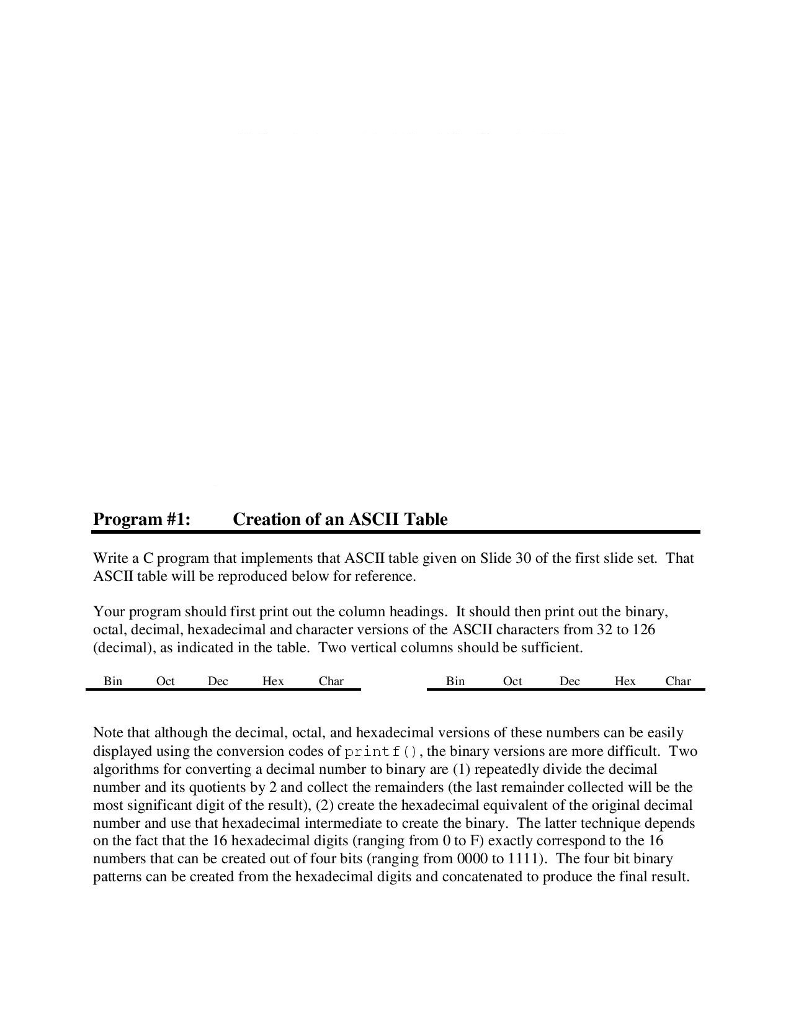
PROGRAMMING LANGUAGE: C
TABLE MUST LOOK LIKE BIN, OCT, DEC, HEX,CHAR. AS SHOWN IN THE PROBLEM. THANKS!!
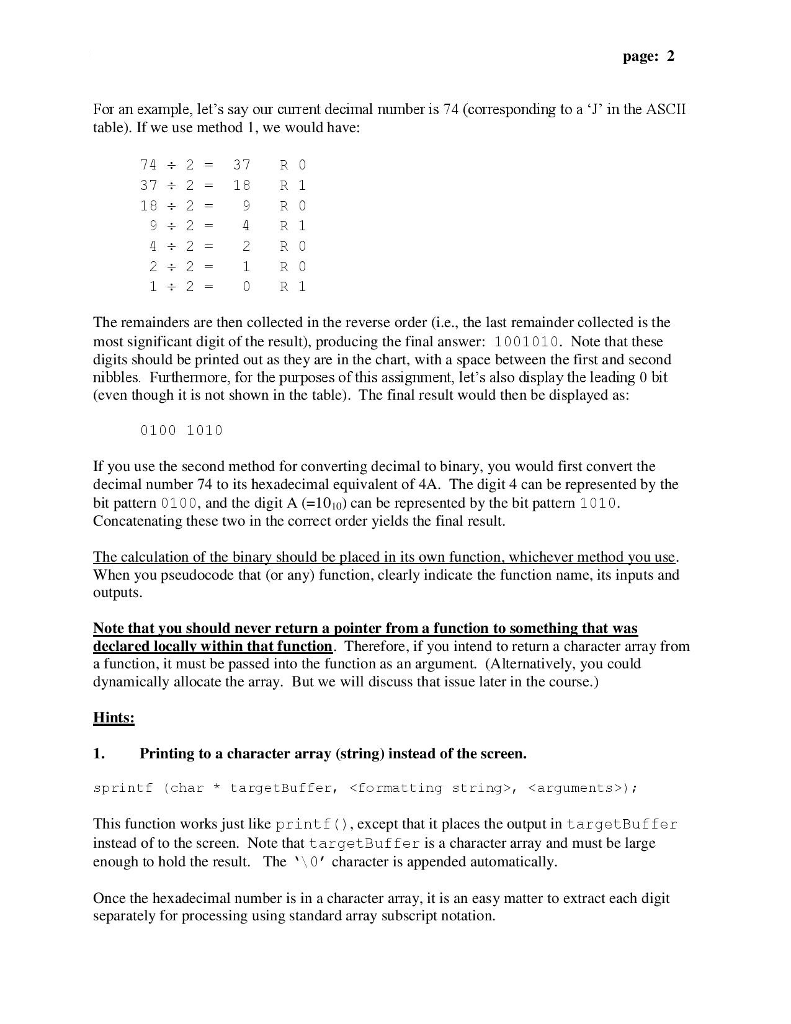
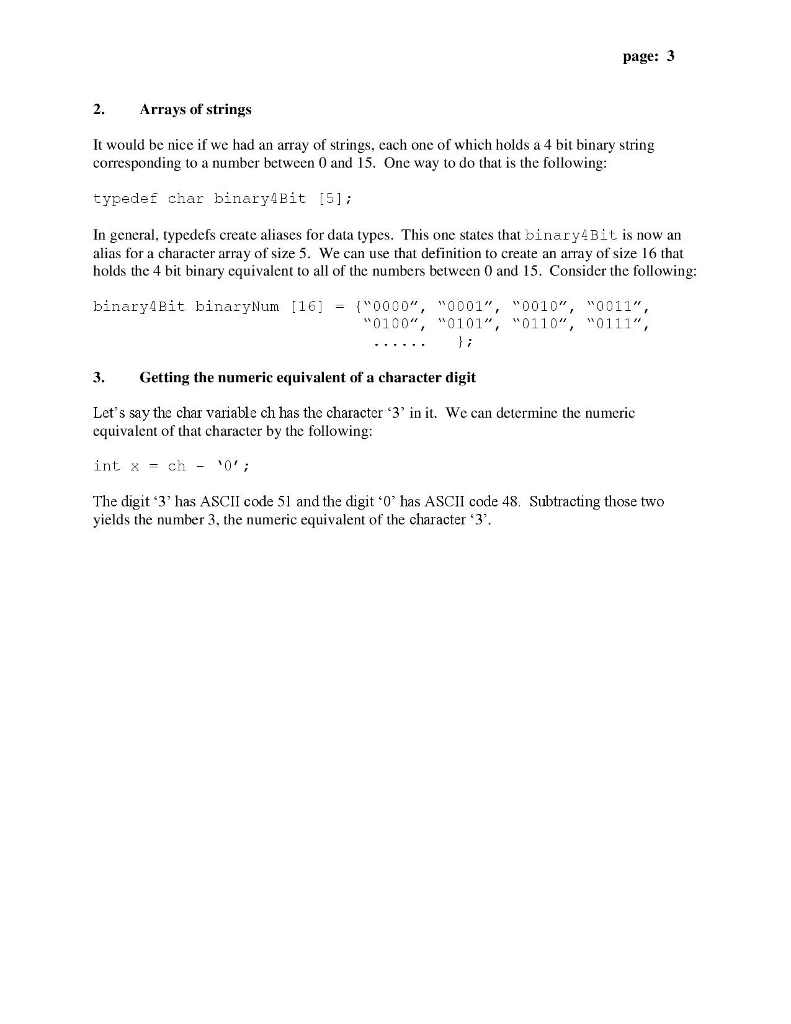
Program #1 Creation of an ASCII Table Write a C program that implements that ASCII table given on Slide 30 of the first slide set. That ASCII table will be reproduced below for reference Your program should first print out the column headings It should then print out the binary octal, decimal, hexadecimal and character versions of the ASCII characters from 32 to 126 (decimal), as indicated in the table. Two vertical columns should be sufficient. Bin Oc Hex Char Bin Oct Dec Hex Char Note that although the decimal, octal, and hexadecimal versions of these numbers can be easily displayed using the conversion codes of print f the binary versions are more difficult. Two algorithms for converting a decimal number to binary are (1) repeatedly divide the decimal number and its quotients by 2 and collect the remainders (the last remainder collected will be the most significant digit of the result), (2) create the hexadecimal equivalent of the original decimal number and use that hexadecimal intermediate to create the binary. The latter technique depends on the fact that the 16 hexadecimal digits (ranging from 0 to F) exactly correspond to the 16 numbers that can be created out of four bits (ranging from 0000 to 1111). The four bit binary patterns can be created from the hexadecimal digits a nd concatenated to produce the final result
Step by Step Solution
There are 3 Steps involved in it

Get step-by-step solutions from verified subject matter experts
 Study Help