







Question: c++ programming language Consider the following class definitions: (2, 8) class smart {public: void print() const; void set (int, int); int sum(); smart(); smart(int, int);
c++ programming language
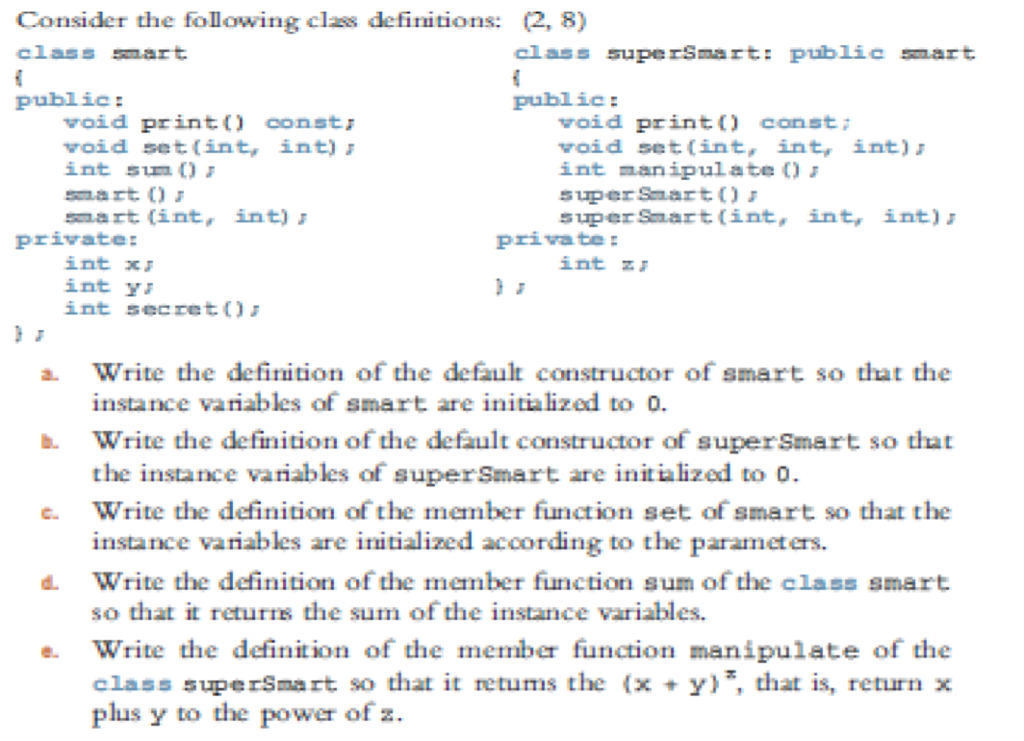
Consider the following class definitions: (2, 8) class smart {public: void print() const; void set (int, int); int sum(); smart(); smart(int, int); private: int x; int y; int secret();}; class superSmart: public smart {public: void print() const; void set (int, int, int); int manipulate (); superSmart(); superSmart (int, int, int); private: int z;}; a. Write die definition of die default constructor of smart so that the instance variables of smart are to 0. b. Write die definition of the default constructor of superSmart so that the instance variables of superSmart are to 0. c. Write die definition of the member function set of smart so that the instance variables are according to the parameters. d. Write die definition of die member function sum of die class smart so that it returns the sum of die instance variables. e. Write the definition of die member function manipulate of the class superSmart so that it returns the (x + y)^x, that is, return x plus y to die power of z
Step by Step Solution
There are 3 Steps involved in it

Get step-by-step solutions from verified subject matter experts
 Study Help