







Question: Can anyone help with this project? I attached the instructions and procedures so that it'll be easier. I could really use some help. I've been
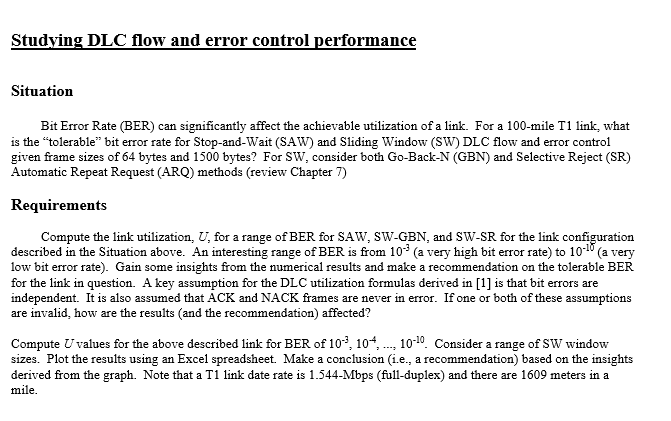
Can anyone help with this project? I attached the instructions and procedures so that it'll be easier. I could really use some help. I've been struggling with this. I have to do this in C using visual studio
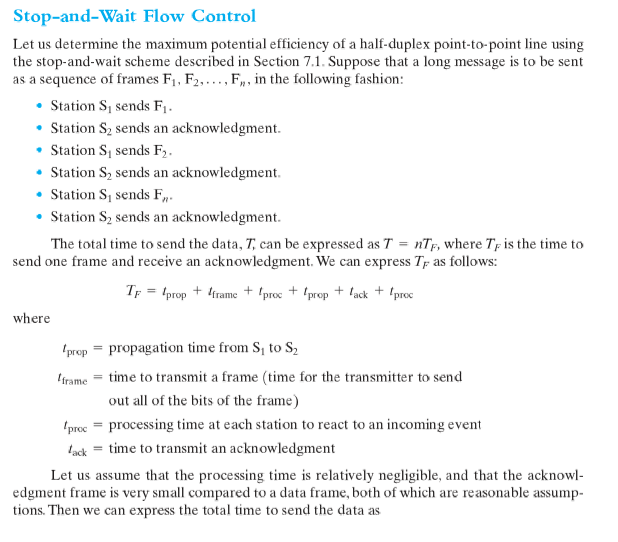
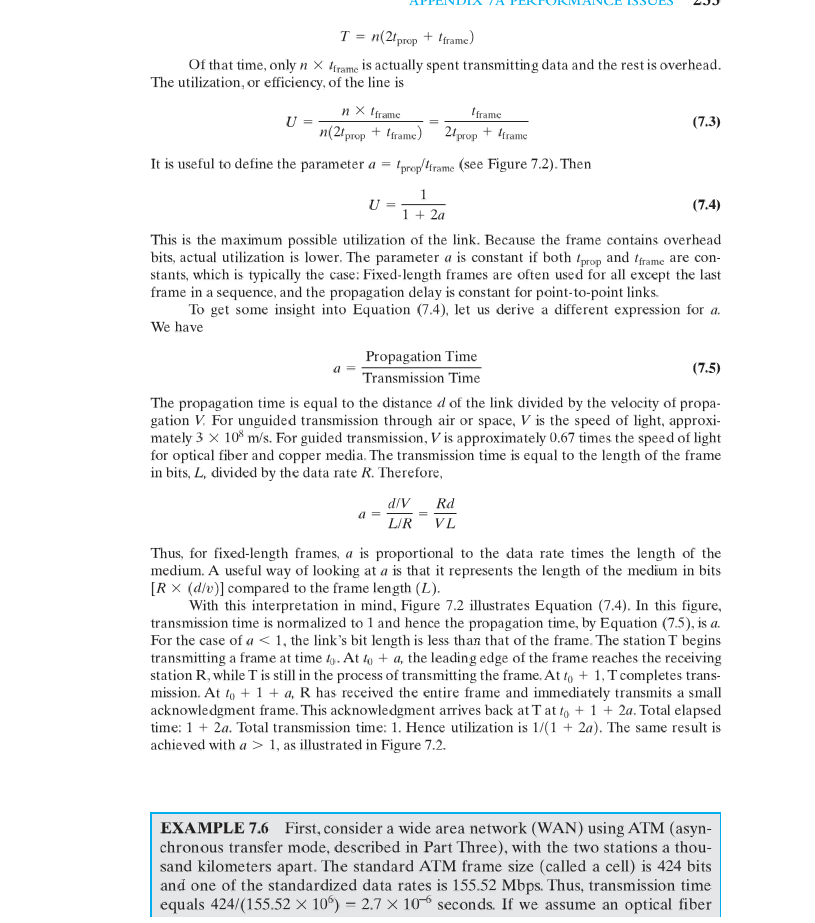
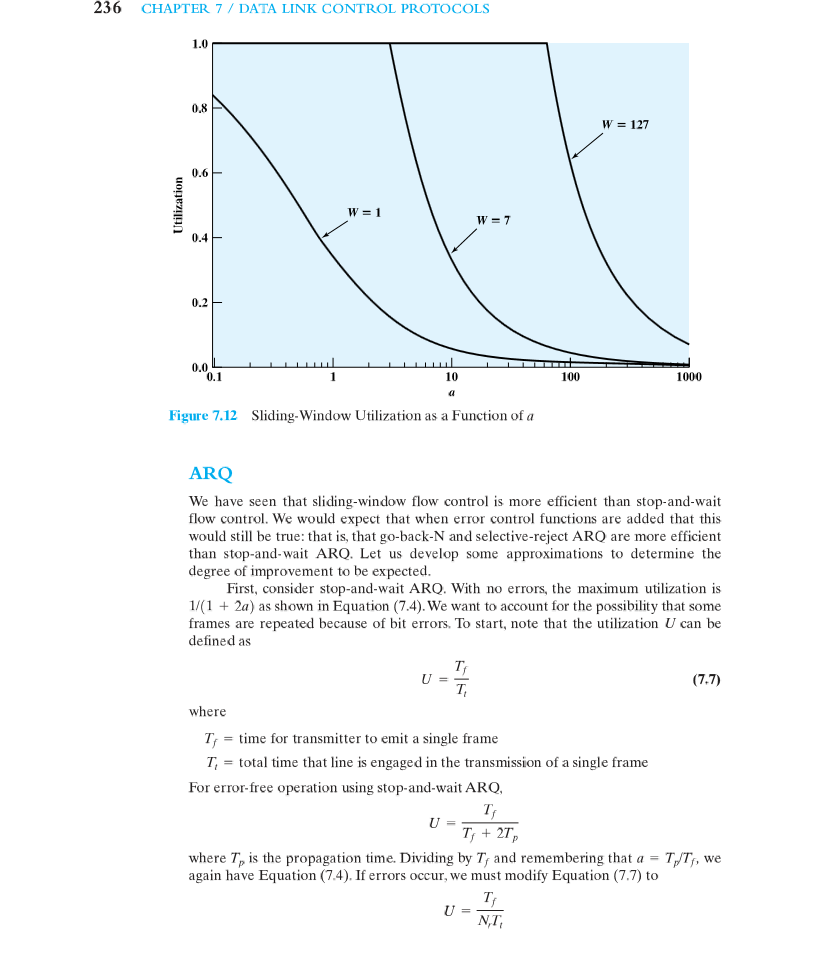
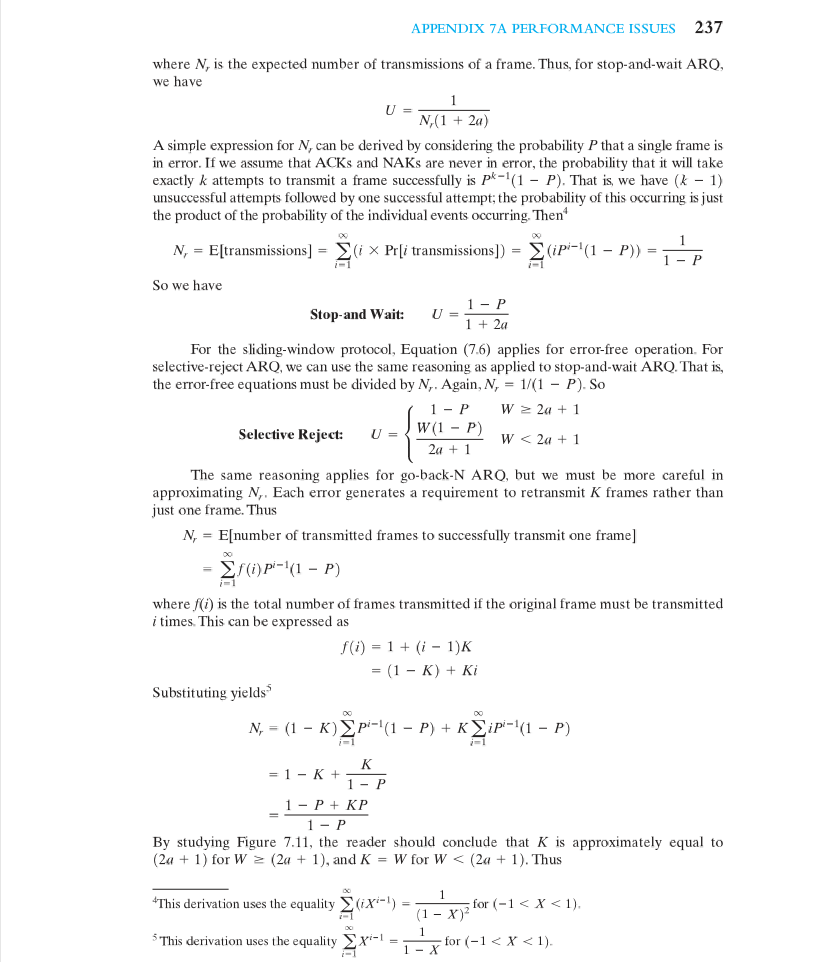
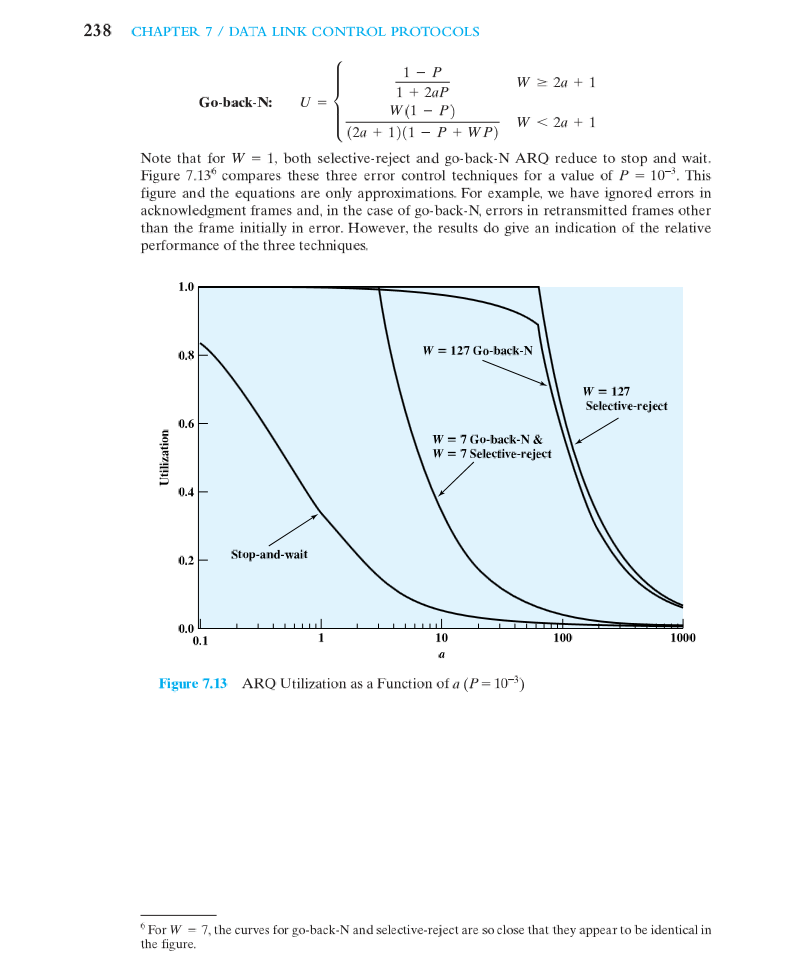
Stop-and-Wait Flow Control Let us determine the maximum potential efficiency of a half-duplex point-to-point line using the stop-and-wait scheme described in Section 7.1. as a sequence of frames F1, F2-, F," in the following fashion: Suppose that a long message is to be sent .Station S1 sends F1 .Station S2 sends an acknowledgment .Station Si sends F Station S2 sends an acknowledgment Station Si sends F . Station S2 sends an acknowledgment The total time to send the data, T, can be expressed as T = nTF, where Tr is the time to send one frame and receive an acknowledgment. We can express TF as follows: Tr = tprop + Iframe + tpro, t tprop + lack + tproo where proppropagation time from Si to S frametime to transmit a frame (time for the transmitter to send out all of the bits of the frame) prcprocessing time at each station to react to an ncoming event acktime to transmit an acknowledgment Let us assume that the processing time is relatively negligible, and that the acknowl edgment frame is very small compared to a data frame, both of which are reasonable assump- tions. Then we can express the total time to send the data as Stop-and-Wait Flow Control Let us determine the maximum potential efficiency of a half-duplex point-to-point line using the stop-and-wait scheme described in Section 7.1. as a sequence of frames F1, F2-, F," in the following fashion: Suppose that a long message is to be sent .Station S1 sends F1 .Station S2 sends an acknowledgment .Station Si sends F Station S2 sends an acknowledgment Station Si sends F . Station S2 sends an acknowledgment The total time to send the data, T, can be expressed as T = nTF, where Tr is the time to send one frame and receive an acknowledgment. We can express TF as follows: Tr = tprop + Iframe + tpro, t tprop + lack + tproo where proppropagation time from Si to S frametime to transmit a frame (time for the transmitter to send out all of the bits of the frame) prcprocessing time at each station to react to an ncoming event acktime to transmit an acknowledgment Let us assume that the processing time is relatively negligible, and that the acknowl edgment frame is very small compared to a data frame, both of which are reasonable assump- tions. Then we can express the total time to send the data as
Step by Step Solution
There are 3 Steps involved in it

Get step-by-step solutions from verified subject matter experts
 Study Help