



Question: can some one please help me withis report! i ahve attched the result data. i dont know how to estimate tge workability! 5. RESULTS Table
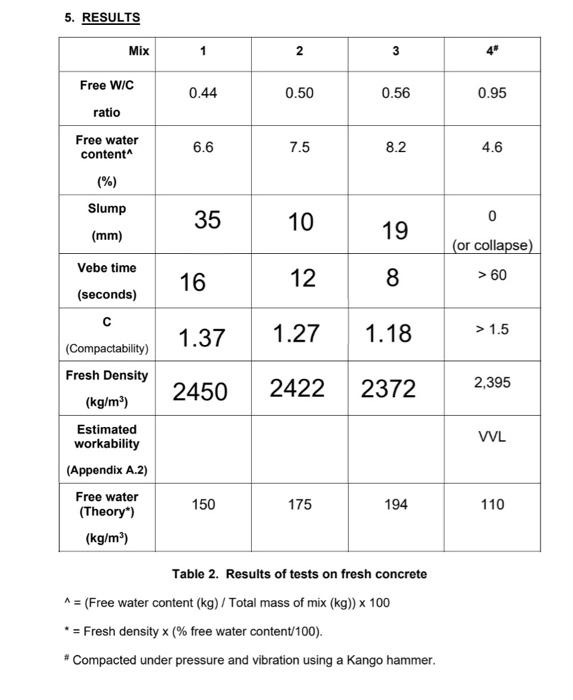
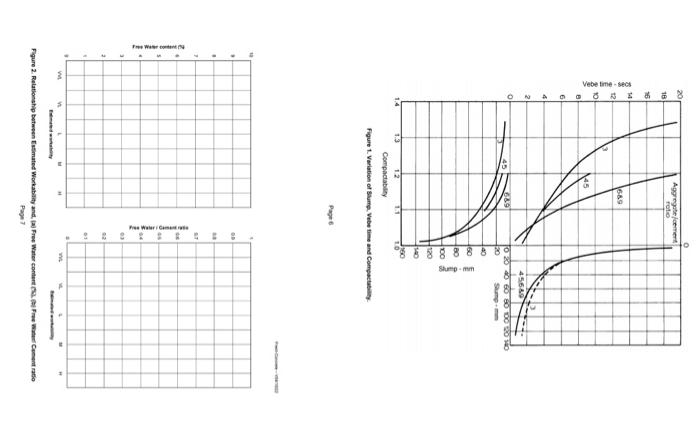

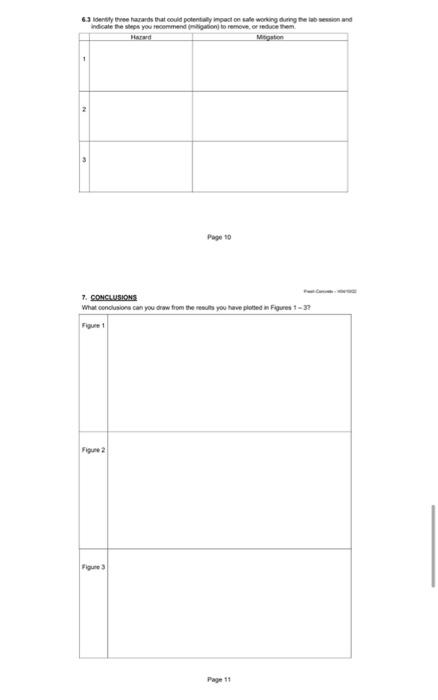
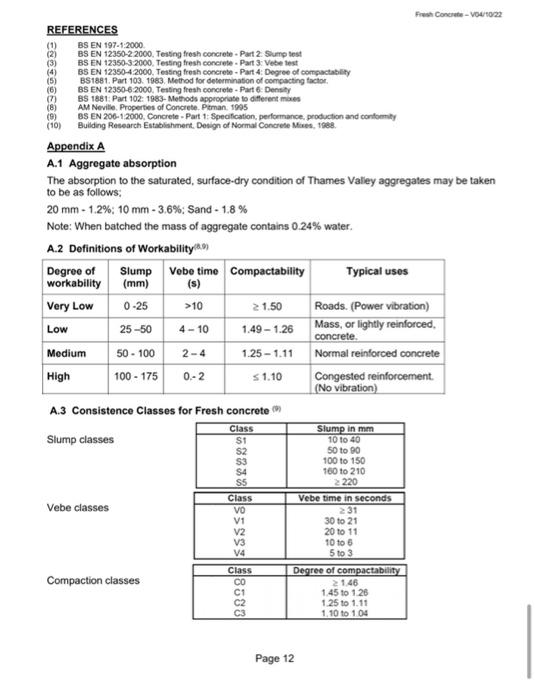
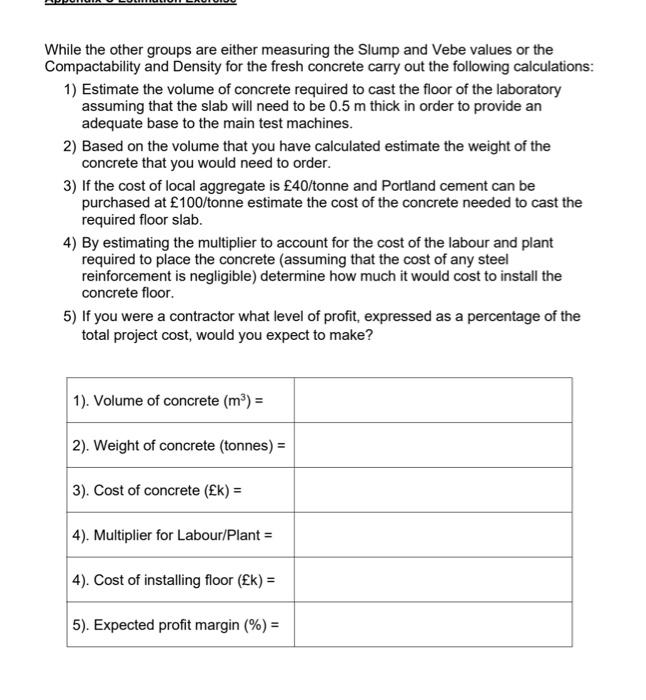
5. RESULTS Table 2. Results of tests on fresh concrete =( Free water content (kg)/ Total mass of mix (kg))100 * = Fresh density (% free water content/100). "Compacted under pressure and vibration using a Kango hammer. 6. DISCUSSION 6.1 Show, by suitable calculation, that the difference between the "free water" and "total water" in a fresh concrete mix is a function of the absorption characteristics of the aggregates. (N.B. Total water * Free Water + Water held in 550 aggregate. Soe Appendax A.1.) Comment on the role of free water on the workability of the conciete mixes 14. indecale fre slecs you tecommend (rikgaton) to remove, or ieduce then. Pages to 7. ecacicussess Paje 11 REFERENCES (1) BS EN 197-1:2000 (2) BS EN 12350-20000. Testing fresh concrete - Part 2. 5uurp test (3) BS EN 12350-3:2000, Testing fresh concrete - Part 3: Vebe lest (4) BS EN 12350-4 2000. Tesing fresh concrete - Part 4: Degree of compactablity (5) BS1881. Part 103. 1983. Method for determination of compacting tactor. (6) BS EN 1235062000. Testing fresh concrete-Part 6. Densty (7) BS 1881: Part 102: 1983- Methods appeopriate to difterent maes (8) AM Neville. Properties of Concrete. Petman. 1995 (9) BS EN 206-1:2000, Concrete - Part 1: Specifcation, performance, production and confomity (10) Bulding Research Establiahment. Design of Normal Concrese Mives, 19es. Appondix A A.1 Aggregate absorption The absorption to the saturated, surface-dry condition of Thames Valiey aggregates may be taken to be as follows: 20mm1.2%;10mm3.6% : Sand - 1.8% Note: When batched the mass of aggregate contains 0.24% water. A.2 Definitions of Workabilityiam A.3 Consistence Classes for Fresh concrete Page 12 While the other groups are either measuring the Slump and Vebe values or the Compactability and Density for the fresh concrete carry out the following calculations: 1) Estimate the volume of concrete required to cast the floor of the laboratory assuming that the slab will need to be 0.5m thick in order to provide an adequate base to the main test machines. 2) Based on the volume that you have calculated estimate the weight of the concrete that you would need to order. 3) If the cost of local aggregate is 40 /tonne and Portland cement can be purchased at 100/ tonne estimate the cost of the concrete needed to cast the required floor slab. 4) By estimating the multiplier to account for the cost of the labour and plant required to place the concrete (assuming that the cost of any steel reinforcement is negligible) determine how much it would cost to install the concrete floor. 5) If you were a contractor what level of profit, expressed as a percentage of the total project cost, would you expect to make? 5. RESULTS Table 2. Results of tests on fresh concrete =( Free water content (kg)/ Total mass of mix (kg))100 * = Fresh density (% free water content/100). "Compacted under pressure and vibration using a Kango hammer. 6. DISCUSSION 6.1 Show, by suitable calculation, that the difference between the "free water" and "total water" in a fresh concrete mix is a function of the absorption characteristics of the aggregates. (N.B. Total water * Free Water + Water held in 550 aggregate. Soe Appendax A.1.) Comment on the role of free water on the workability of the conciete mixes 14. indecale fre slecs you tecommend (rikgaton) to remove, or ieduce then. Pages to 7. ecacicussess Paje 11 REFERENCES (1) BS EN 197-1:2000 (2) BS EN 12350-20000. Testing fresh concrete - Part 2. 5uurp test (3) BS EN 12350-3:2000, Testing fresh concrete - Part 3: Vebe lest (4) BS EN 12350-4 2000. Tesing fresh concrete - Part 4: Degree of compactablity (5) BS1881. Part 103. 1983. Method for determination of compacting tactor. (6) BS EN 1235062000. Testing fresh concrete-Part 6. Densty (7) BS 1881: Part 102: 1983- Methods appeopriate to difterent maes (8) AM Neville. Properties of Concrete. Petman. 1995 (9) BS EN 206-1:2000, Concrete - Part 1: Specifcation, performance, production and confomity (10) Bulding Research Establiahment. Design of Normal Concrese Mives, 19es. Appondix A A.1 Aggregate absorption The absorption to the saturated, surface-dry condition of Thames Valiey aggregates may be taken to be as follows: 20mm1.2%;10mm3.6% : Sand - 1.8% Note: When batched the mass of aggregate contains 0.24% water. A.2 Definitions of Workabilityiam A.3 Consistence Classes for Fresh concrete Page 12 While the other groups are either measuring the Slump and Vebe values or the Compactability and Density for the fresh concrete carry out the following calculations: 1) Estimate the volume of concrete required to cast the floor of the laboratory assuming that the slab will need to be 0.5m thick in order to provide an adequate base to the main test machines. 2) Based on the volume that you have calculated estimate the weight of the concrete that you would need to order. 3) If the cost of local aggregate is 40 /tonne and Portland cement can be purchased at 100/ tonne estimate the cost of the concrete needed to cast the required floor slab. 4) By estimating the multiplier to account for the cost of the labour and plant required to place the concrete (assuming that the cost of any steel reinforcement is negligible) determine how much it would cost to install the concrete floor. 5) If you were a contractor what level of profit, expressed as a percentage of the total project cost, would you expect to make
Step by Step Solution
There are 3 Steps involved in it

Get step-by-step solutions from verified subject matter experts