



Question: Can someone explain to me why the answers are wrong and why the time complexities in red are correct for each case Determine the time
Can someone explain to me why the answers are wrong and why the time complexities in red are correct for each case
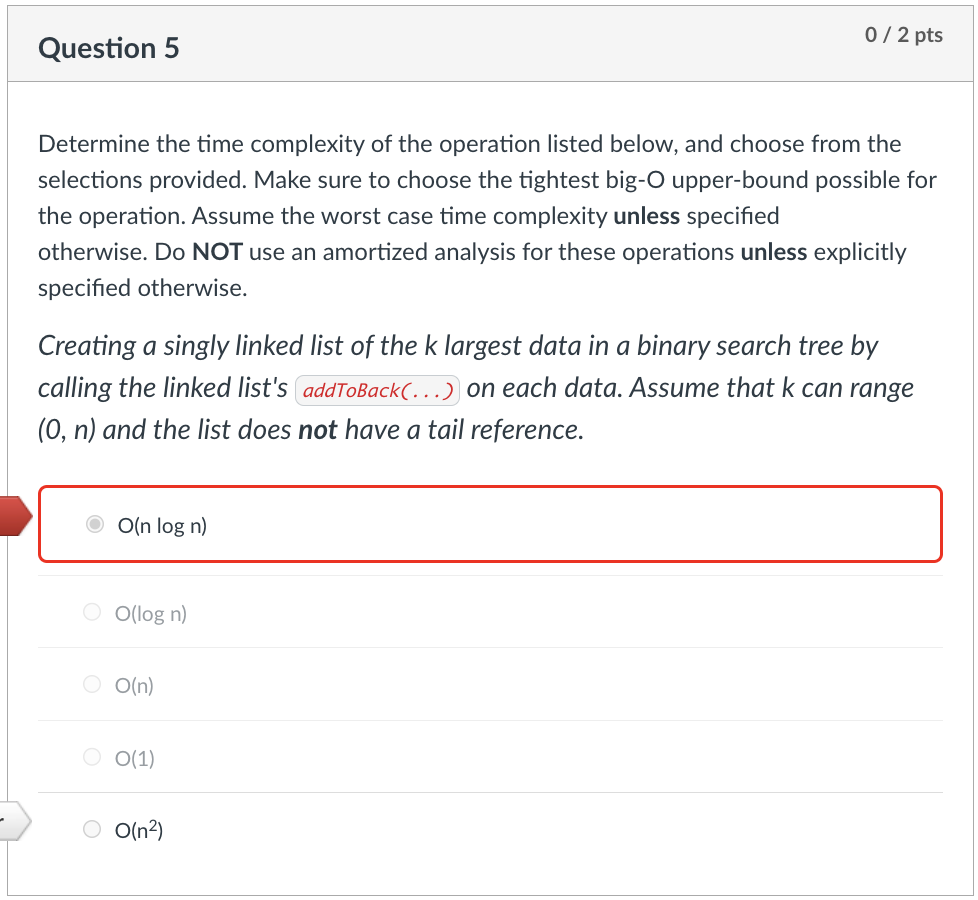
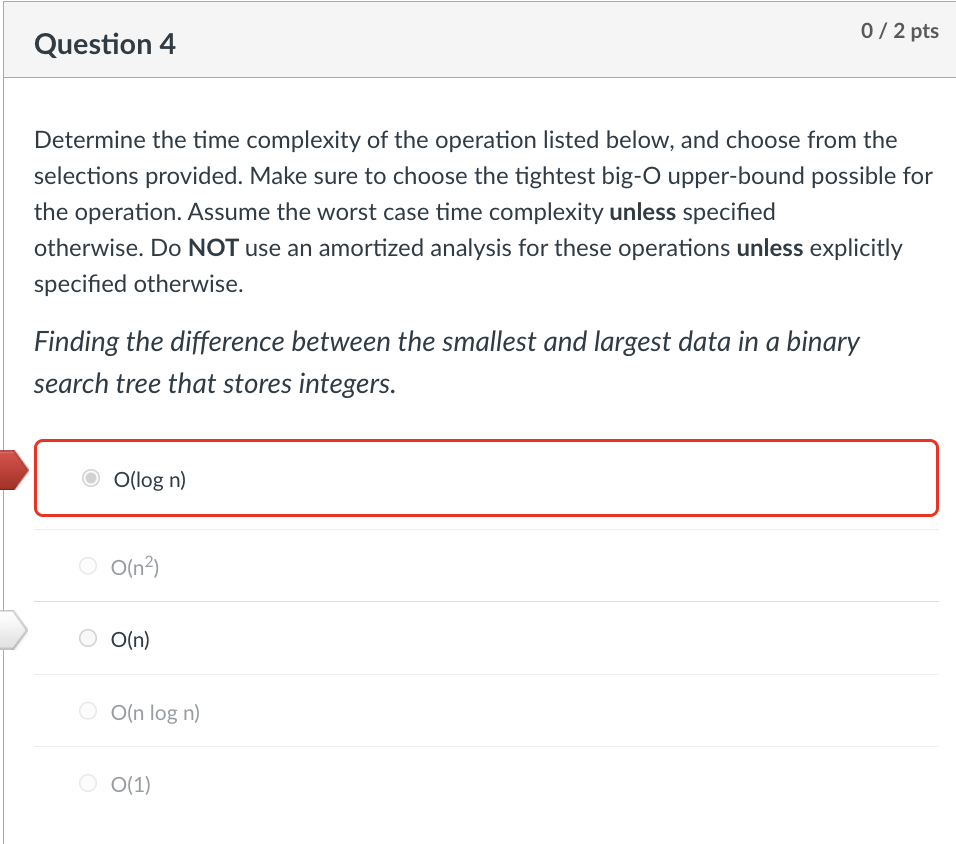
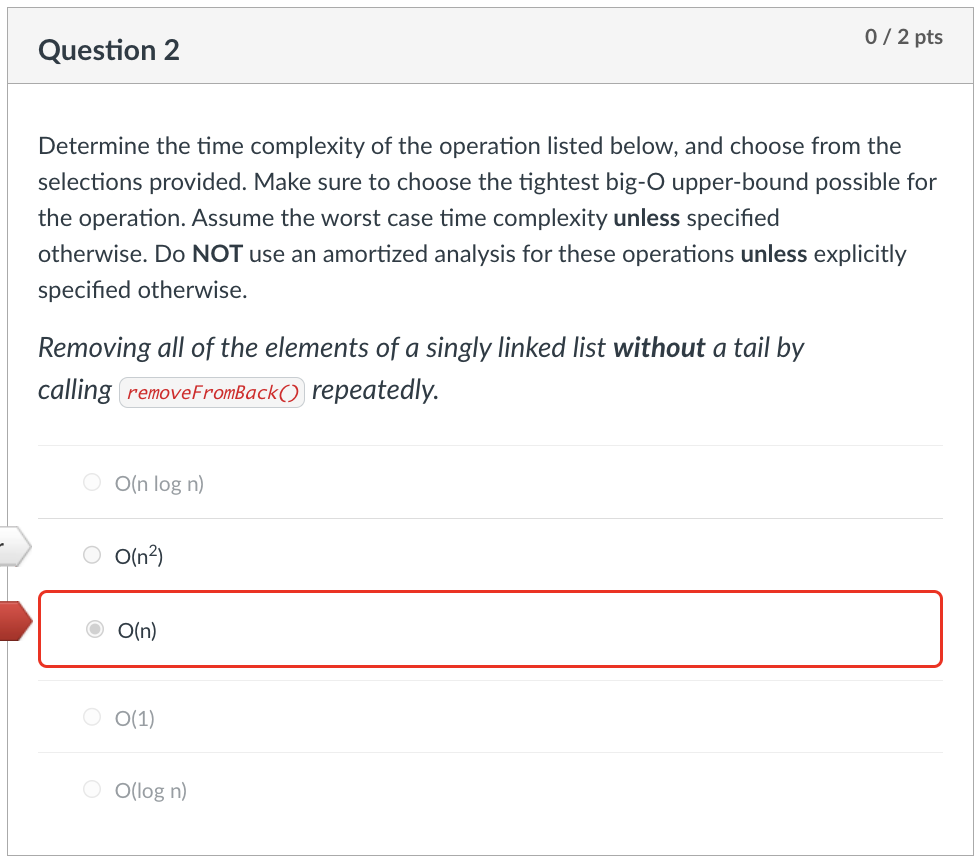
Determine the time complexity of the operation listed below, and choose from the selections provided. Make sure to choose the tightest big-O upper-bound possible for the operation. Assume the worst case time complexity unless specified otherwise. Do NOT use an amortized analysis for these operations unless explicitly specified otherwise. Creating a singly linked list of the k largest data in a binary search tree by calling the linked list's on each data. Assume that k can range (0,n) and the list does not have a tail reference. O(nlogn) O(logn) O(n) O(1) O(n2) Determine the time complexity of the operation listed below, and choose from the selections provided. Make sure to choose the tightest big-O upper-bound possible for the operation. Assume the worst case time complexity unless specified otherwise. Do NOT use an amortized analysis for these operations unless explicitly specified otherwise. Finding the difference between the smallest and largest data in a binary search tree that stores integers. O(logn) O(n2) O(n) O(nlogn) O(1) Determine the time complexity of the operation listed below, and choose from the selections provided. Make sure to choose the tightest big-O upper-bound possible for the operation. Assume the worst case time complexity unless specified otherwise. Do NOT use an amortized analysis for these operations unless explicitly specified otherwise. Removing all of the elements of a singly linked list without a tail by calling repeatedly. O(nlogn) O(n2) O(n) O(1) O(logn)
Step by Step Solution
There are 3 Steps involved in it

Get step-by-step solutions from verified subject matter experts