







Question: Can someone please complete this problem in excel for me? I really need help. thanks. Basic Business Model For both store concepts, the structure is
Can someone please complete this problem in excel for me? I really need help. thanks.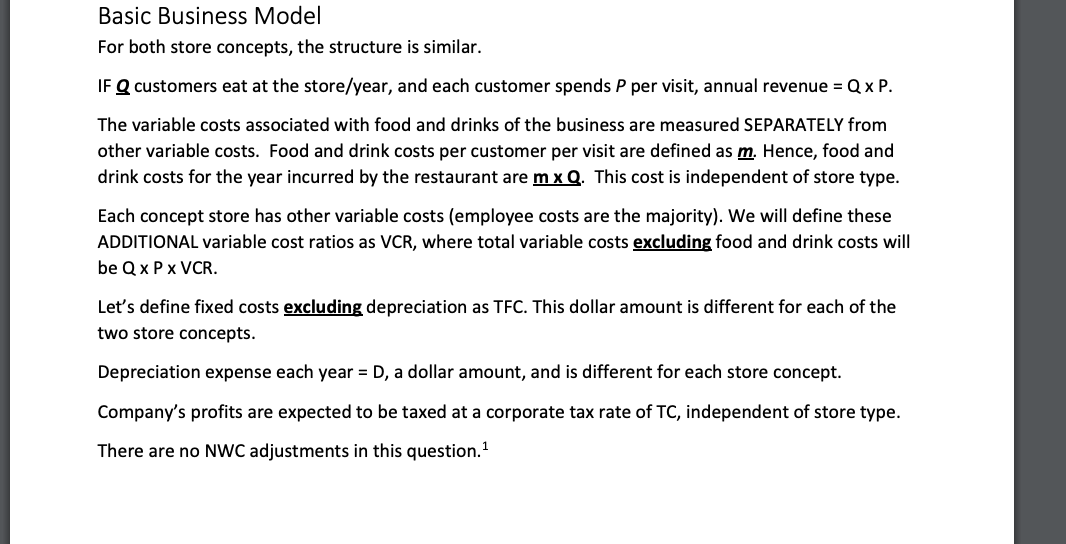
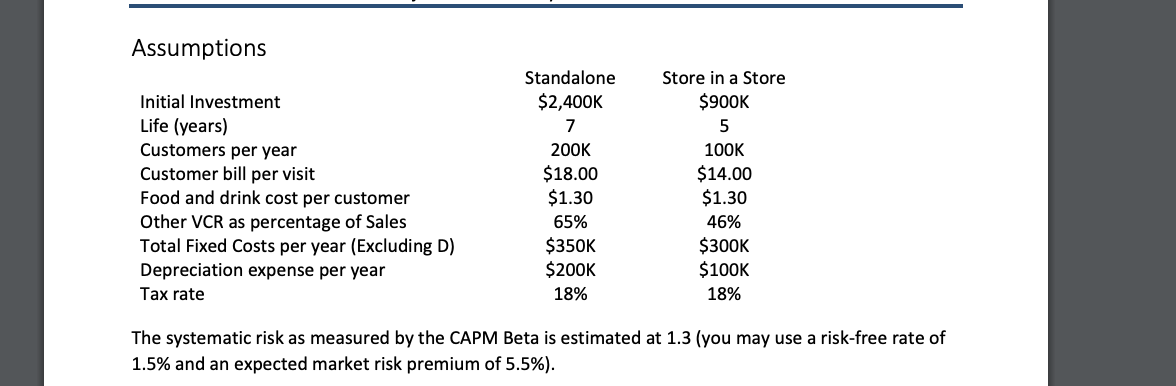
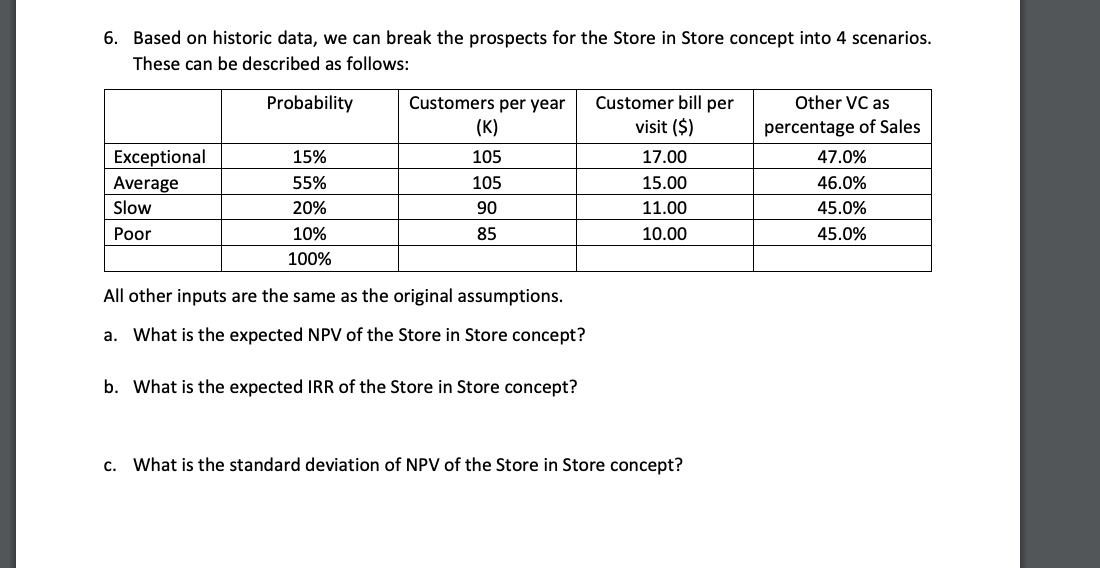
Basic Business Model For both store concepts, the structure is similar. IF Q customers eat at the store/year, and each customer spends P per visit, annual revenue =QP. The variable costs associated with food and drinks of the business are measured SEPARATELY from other variable costs. Food and drink costs per customer per visit are defined as m. Hence, food and drink costs for the year incurred by the restaurant are mQ. This cost is independent of store type. Each concept store has other variable costs (employee costs are the majority). We will define these ADDITIONAL variable cost ratios as VCR, where total variable costs excluding food and drink costs will be QPVCR. Let's define fixed costs excluding depreciation as TFC. This dollar amount is different for each of the two store concepts. Depreciation expense each year = D, a dollar amount, and is different for each store concept. Company's profits are expected to be taxed at a corporate tax rate of TC, independent of store type. There are no NWC adjustments in this question. 1 The systematic risk as measured by the CAPM Beta is estimated at 1.3 (you may use a risk-free rate of 1.5% and an expected market risk premium of 5.5%) 6. Based on historic data, we can break the prospects for the Store in Store concept into 4 scenarios. These can be described as follows: All other inputs are the same as the original assumptions. a. What is the expected NPV of the Store in Store concept? b. What is the expected IRR of the Store in Store concept? c. What is the standard deviation of NPV of the Store in Store concept? Basic Business Model For both store concepts, the structure is similar. IF Q customers eat at the store/year, and each customer spends P per visit, annual revenue =QP. The variable costs associated with food and drinks of the business are measured SEPARATELY from other variable costs. Food and drink costs per customer per visit are defined as m. Hence, food and drink costs for the year incurred by the restaurant are mQ. This cost is independent of store type. Each concept store has other variable costs (employee costs are the majority). We will define these ADDITIONAL variable cost ratios as VCR, where total variable costs excluding food and drink costs will be QPVCR. Let's define fixed costs excluding depreciation as TFC. This dollar amount is different for each of the two store concepts. Depreciation expense each year = D, a dollar amount, and is different for each store concept. Company's profits are expected to be taxed at a corporate tax rate of TC, independent of store type. There are no NWC adjustments in this question. 1 The systematic risk as measured by the CAPM Beta is estimated at 1.3 (you may use a risk-free rate of 1.5% and an expected market risk premium of 5.5%) 6. Based on historic data, we can break the prospects for the Store in Store concept into 4 scenarios. These can be described as follows: All other inputs are the same as the original assumptions. a. What is the expected NPV of the Store in Store concept? b. What is the expected IRR of the Store in Store concept? c. What is the standard deviation of NPV of the Store in Store concept
Step by Step Solution
There are 3 Steps involved in it

Get step-by-step solutions from verified subject matter experts
 Study Help