Question: Can someone PLEASE help me turn these papers into a Presentation! This is my FINAL grade! Use your assignments from previous weeks to refine and
Can someone PLEASE help me turn these papers into a Presentation!
This is my FINAL grade!
Use your assignments from previous weeks to refine and assemble the information you want to present at the professional conference. Take a creative, dynamic approach to telling your story. This might involve reordering some of the bullet points listed below; however, you must cover all the information listed in the bullet points.
10-12 slide presentation in which you:
Present your investigative article or report title and your name.
Include the name of your magazine or newspaper or explain that you work for the DOJ.
Describe the who, what, when, and where of your investigative article or report.
For example, when did you begin your investigative work? If you focused on a specific community, where is it? What are the demographics? What are the issues facing that community or group? Who did you interview or consult?
Outline the major points and findings of your investigative work.
Use your completed article or report to recap this information.
Describe 2-3 changes that have been proposed or implemented as solutions to the topic issue or problem.
Include the pros and cons of those changes.
Use this section as a "what's next" or "looking to the future" conclusion.
Create a Source list identifying primary resources you used to support your work.
Use the Strayer Library's Citing Sources page for formatting guidelines. speaker notes within the PowerPoint document to accompany your presentation.
Include SWS formatted citations for any direct quotes or statistics used in your speaker notes.
Can someone just help me and point me in the right direction! I hate PowerPoints. I cant ever figure out if I am putting too much info or not enough and speaker notes is pretty much the talking points and bullet points are on the powerpoints.
I am so confused! These are my papers for week 2, 4, and 7. I just cannot figure out how to make them a powerpoint!
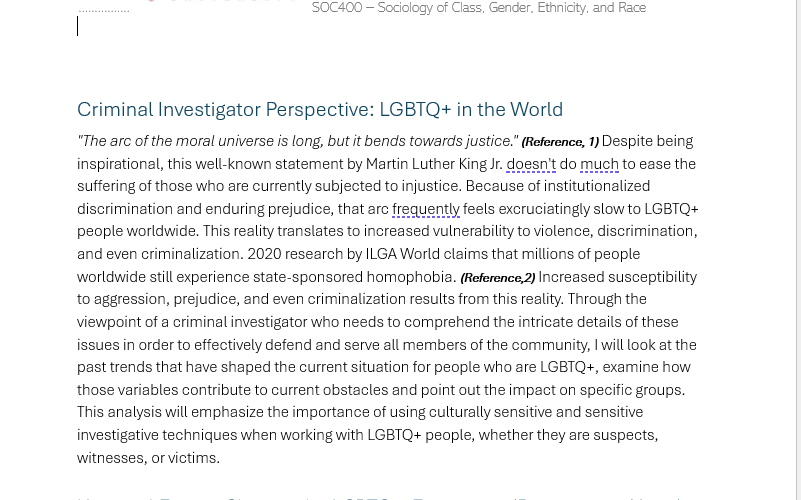
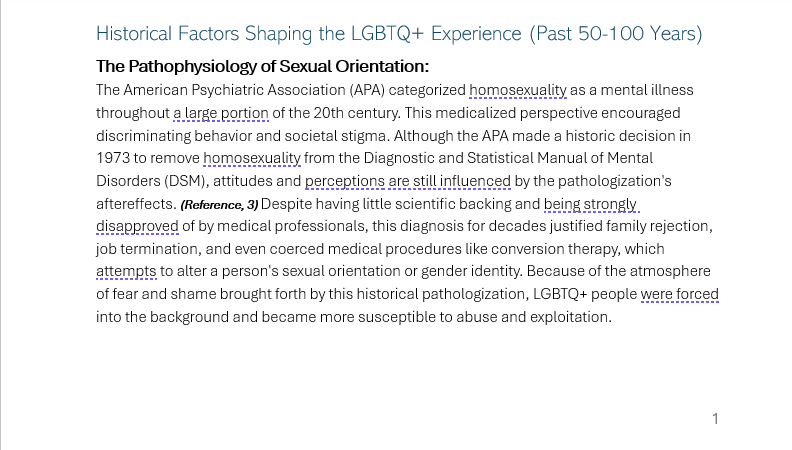
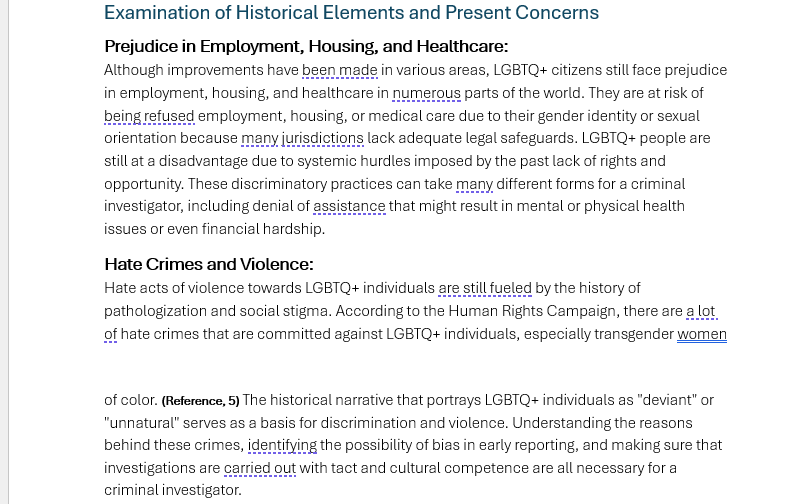
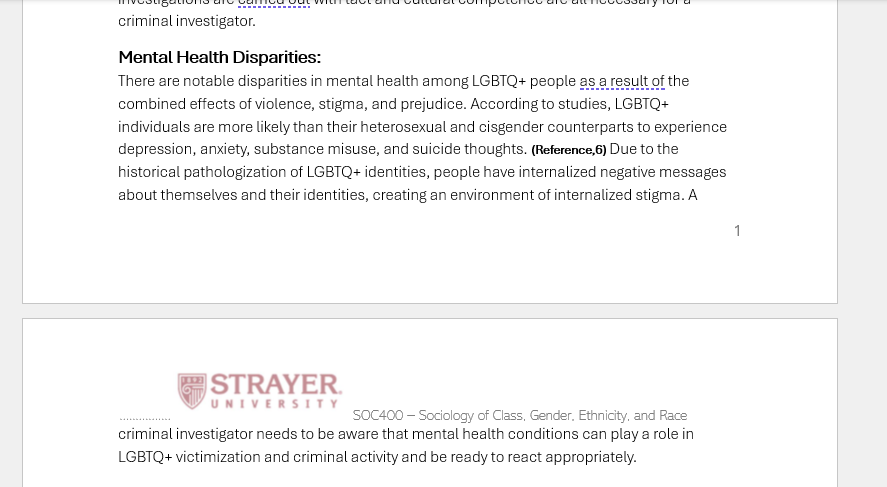
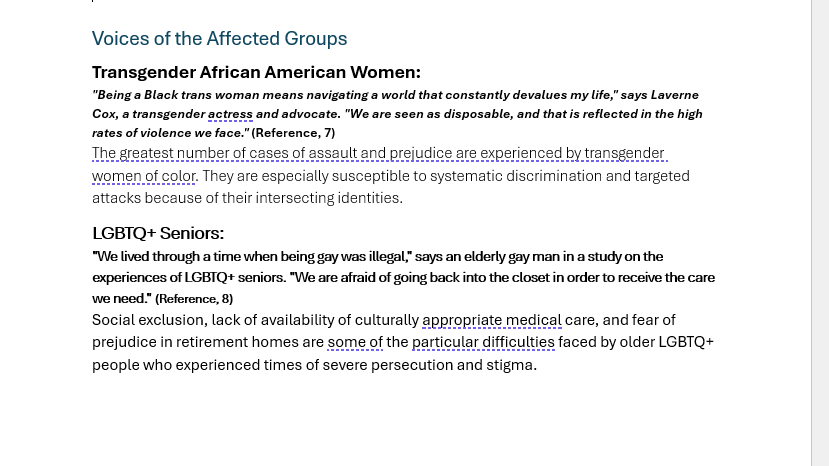
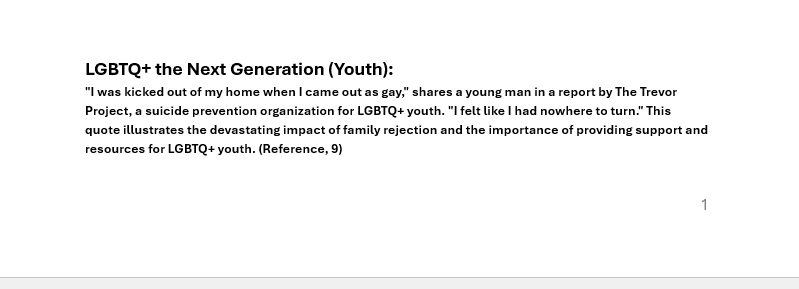
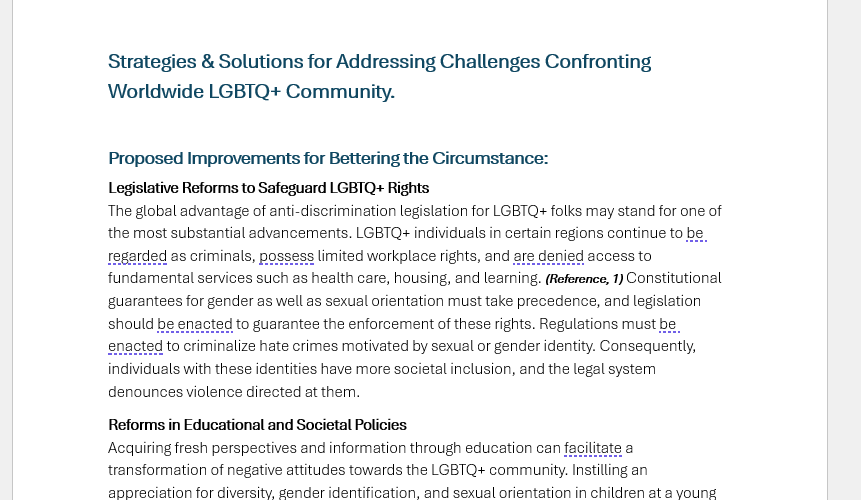
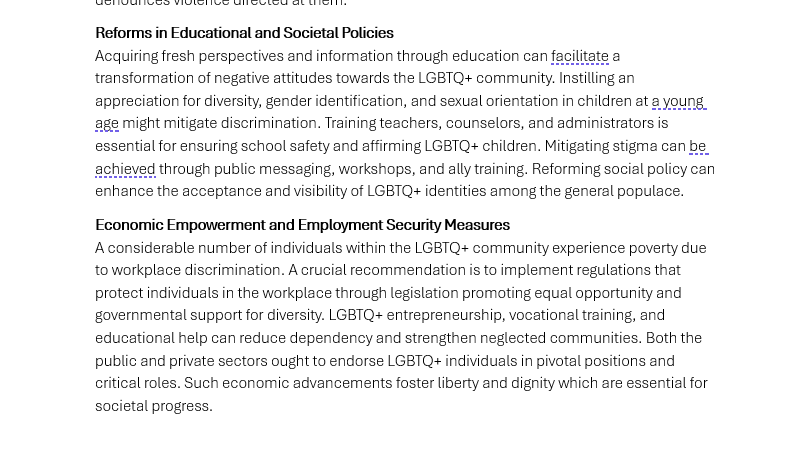
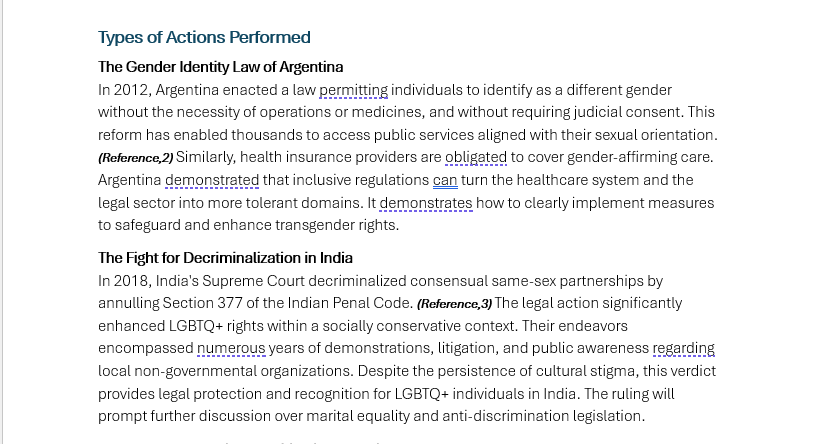
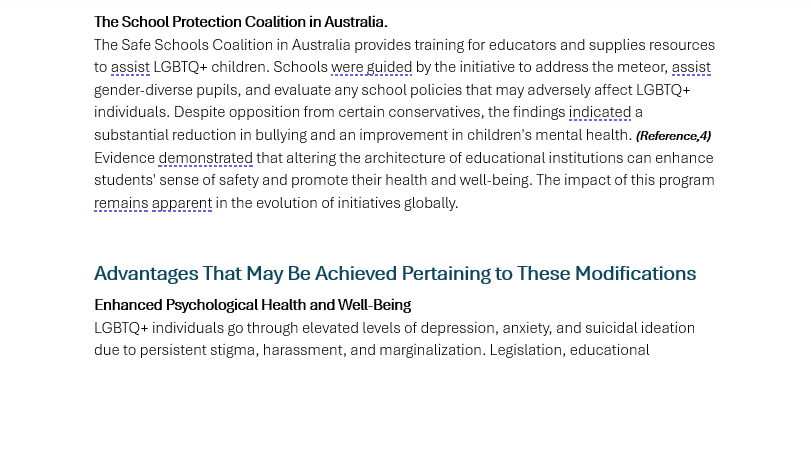
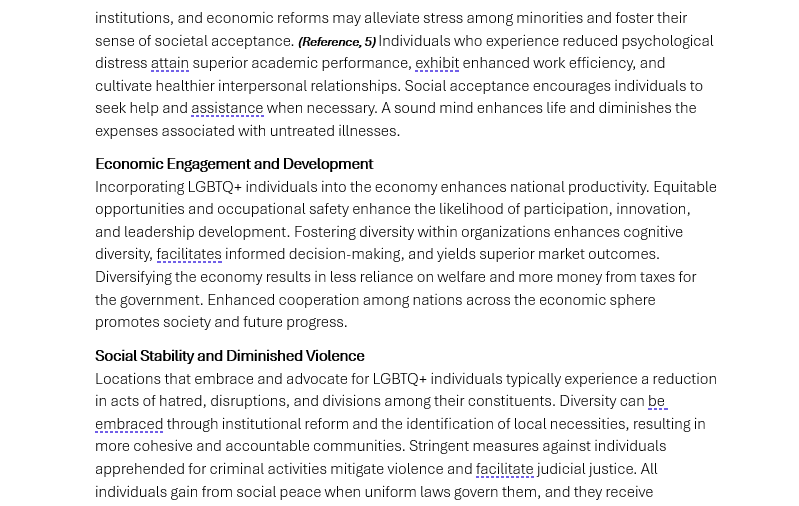
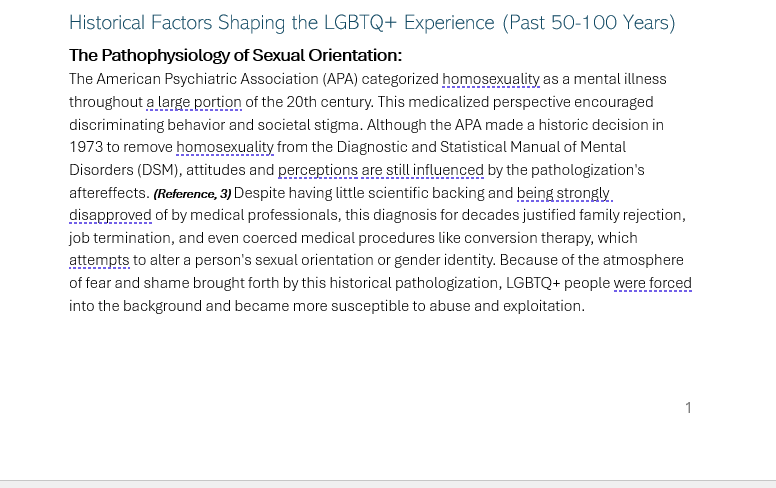
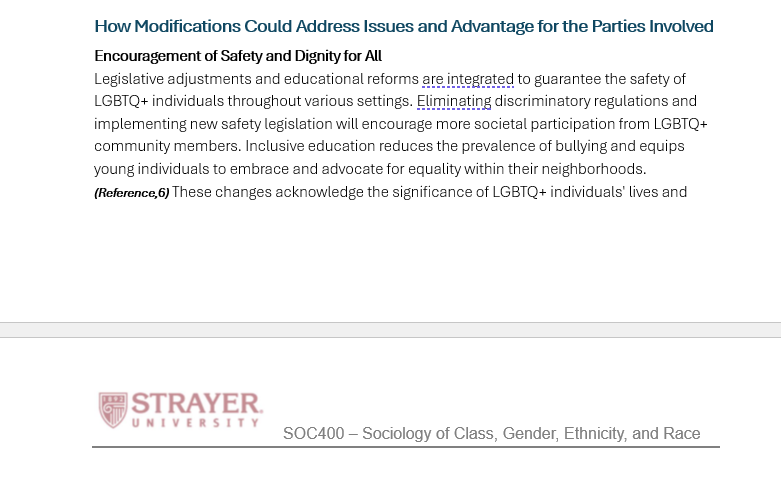
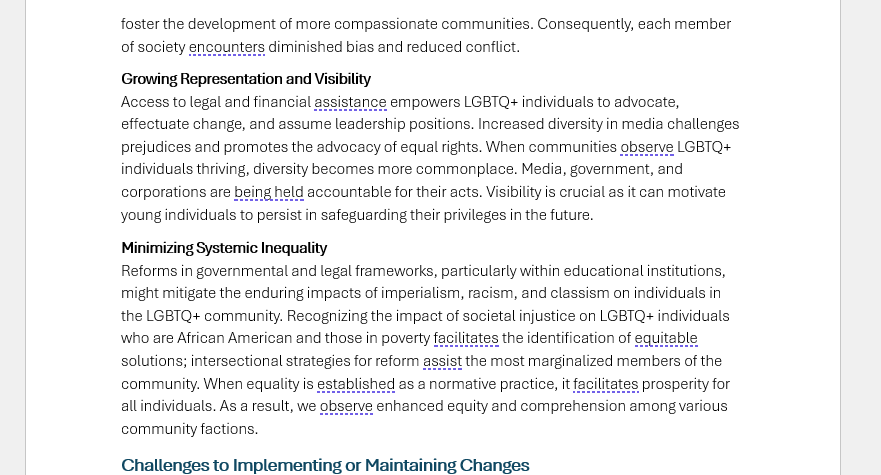
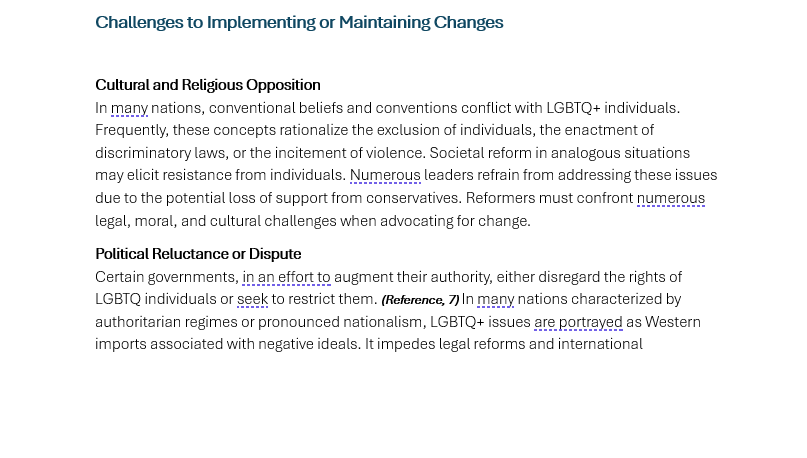
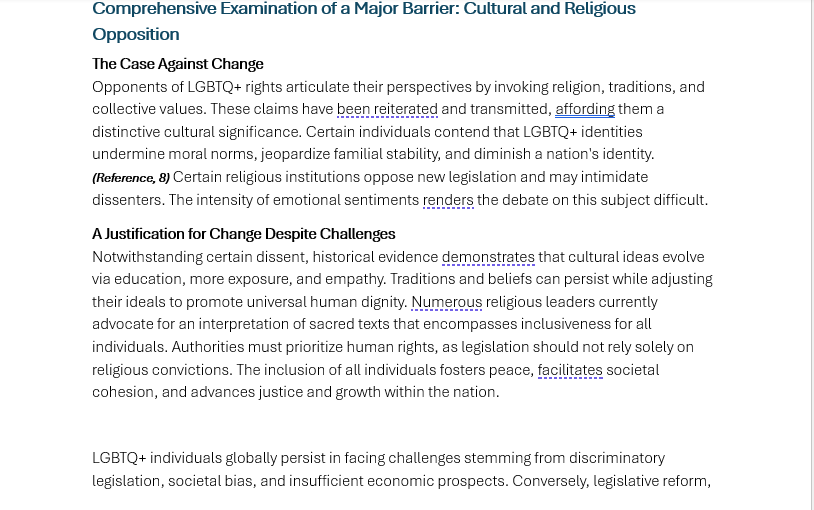
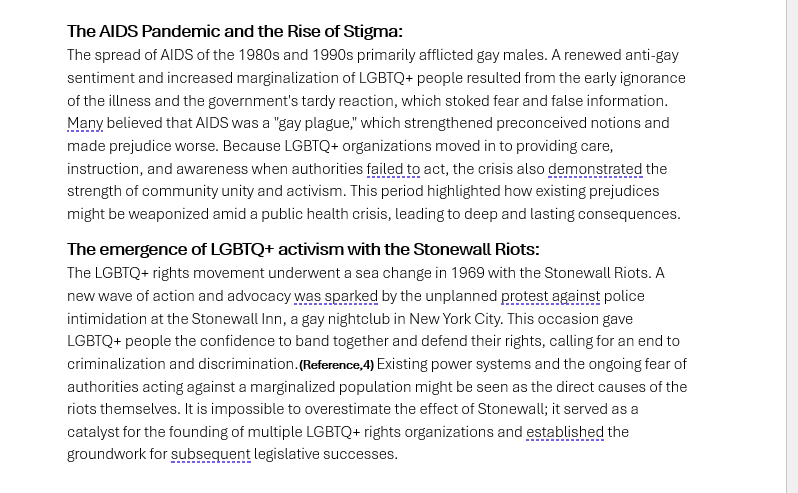
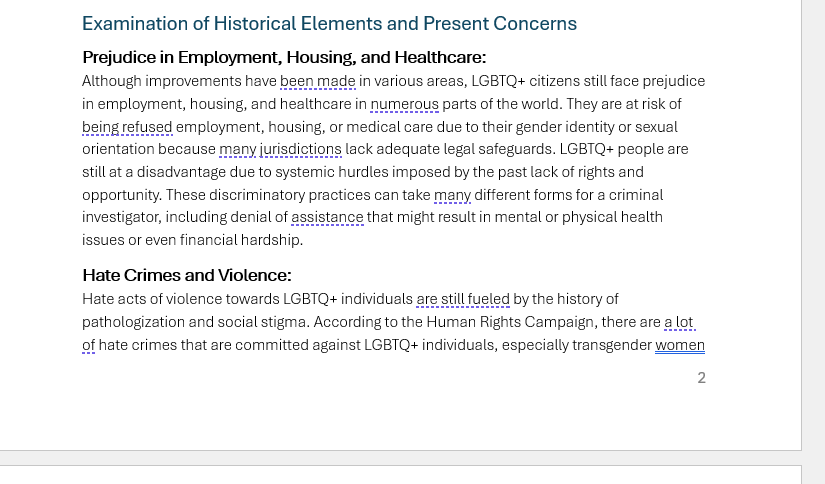
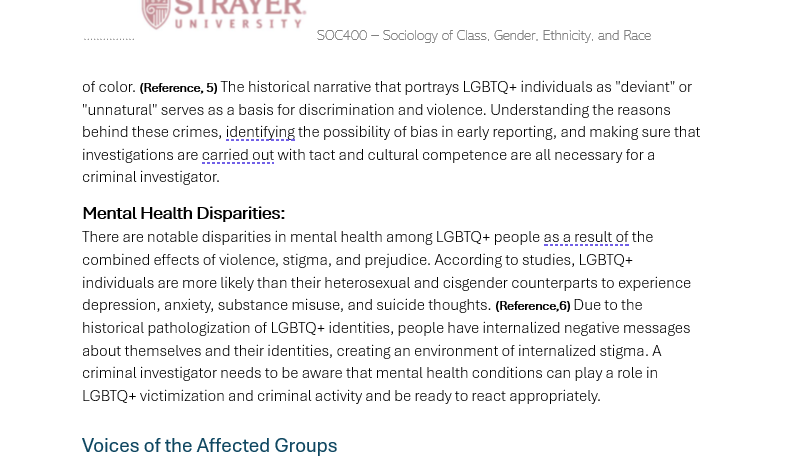
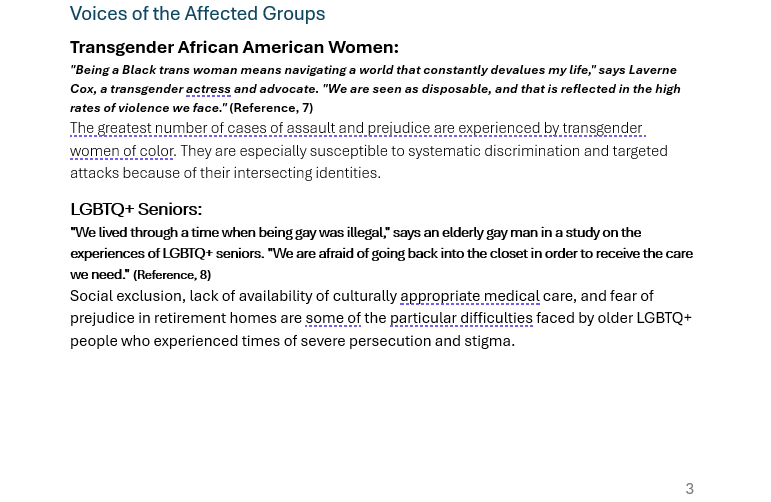
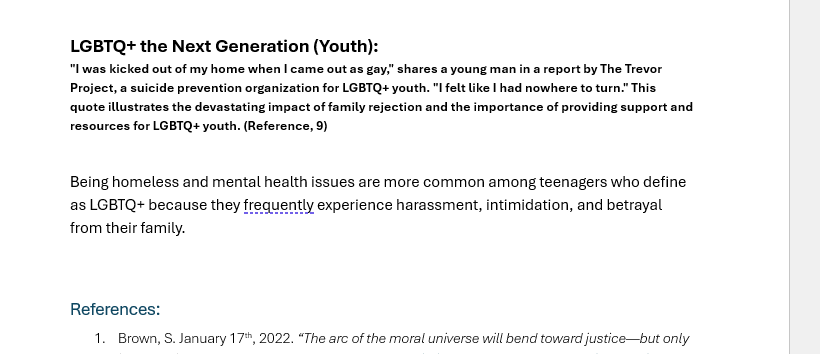
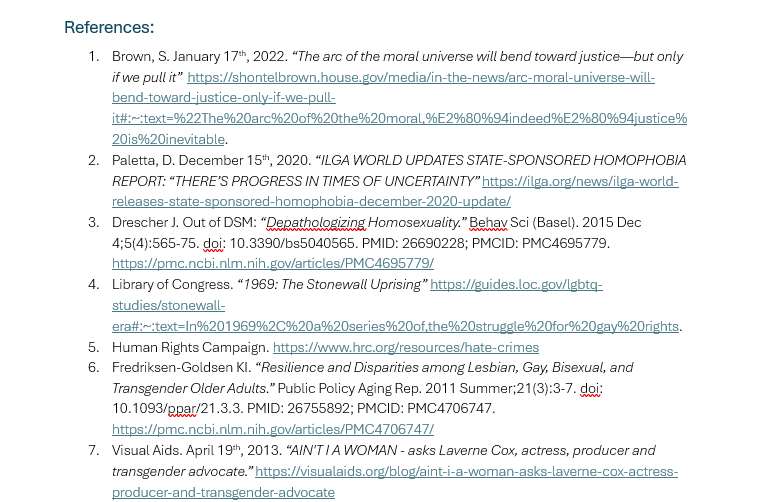
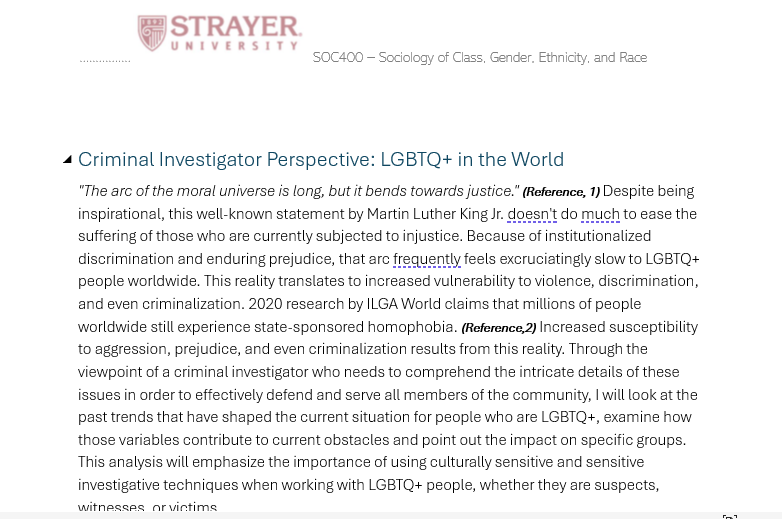
SOC400 - Sociology of Class, Gender, Ethnicity, and Race Criminal Investigator Perspective: LGBTQ+ in the World "The arc of the moral universe is long, but it bends towards justice." (Reference, 1) Despite being inspirational, this well-known statement by Martin Luther King Jr. doesn't do much to ease the suffering of those who are currently subjected to injustice. Because of institutionalized discrimination and enduring prejudice, that arc frequently feels excruciatingly slow to LGBTQ+ people worldwide. This reality translates to increased vulnerability to violence, discrimination, and even criminalization. 2020 research by ILGA World claims that millions of people worldwide still experience state-sponsored homophobia. (Reference,2) Increased susceptibility to aggression, prejudice, and even criminalization results from this reality. Through the viewpoint of a criminal investigator who needs to comprehend the intricate details of these issues in order to effectively defend and serve all members of the community, I will look at the past trends that have shaped the current situation for people who are LGBTQ+, examine how those variables contribute to current obstacles and point out the impact on specific groups. This analysis will emphasize the importance of using culturally sensitive and sensitive investigative techniques when working with LGBTQ+ people, whether they are suspects, witnesses, or victims.Historical Factors Shaping the LGBTQ+ Experience (Past 50-100 Years) The Pathophysiology of Sexual Orientation: The American Psychiatric Association (APA) categorized homosexuality as a mental illness throughout a large portion of the 20th century. This medicalized perspective encouraged discriminating behavior and societal stigma. Although the APA made a historic decision in 1973 to remove homosexuality from the Diagnostic and Statistical Manual of Mental Disorders (DSM), attitudes and perceptions are still influenced by the pathologization's aftereffects. (Reference, 3) Despite having little scientific backing and being strongly. disapproved of by medical professionals, this diagnosis for decades justified family rejection, job termination, and even coerced medical procedures like conversion therapy, which attempts to alter a person's sexual orientation or gender identity. Because of the atmosphere of fear and shame brought forth by this historical pathologization, LGBTQ+ people were forced into the background and became more susceptible to abuse and exploitation.Examination of Historical Elements and Present Concerns Prejudice in Employment, Housing, and Healthcare: Although improvements have been made in various areas, LGBTQ+ citizens still face prejudice in employment, housing, and healthcare in numerous parts of the world. They are at risk of being refused employment, housing, or medical care due to their gender identity or sexual orientation because many jurisdictions lack adequate legal safeguards. LGBTQ+ people are still at a disadvantage due to systemic hurdles imposed by the past lack of rights and opportunity. These discriminatory practices can take many different forms for a criminal investigator, including denial of assistance that might result in mental or physical health issues or even financial hardship. Hate Crimes and Violence: Hate acts of violence towards LGBTQ+ individuals are still fueled by the history of pathologization and social stigma. According to the Human Rights Campaign, there are a lot of hate crimes that are committed against LGBTQ+ individuals, especially transgender women of color. (Reference, 5) The historical narrative that portrays LGBTQ+ individuals as "deviant" or "unnatural" serves as a basis for discrimination and violence. Understanding the reasons behind these crimes, identifying the possibility of bias in early reporting, and making sure that investigations are carried out with tact and cultural competence are all necessary for a criminal investigator.criminal investigator. Mental Health Disparities: There are notable disparities in mental health among LGBTQ+ people as a result of the combined effects of violence, stigma, and prejudice. According to studies, LGBTQ+ individuals are more likely than their heterosexual and cisgender counterparts to experience depression, anxiety, substance misuse, and suicide thoughts. (Reference,6) Due to the historical pathologization of LGBTQ+ identities, people have internalized negative messages about themselves and their identities, creating an environment of internalized stigma. A STRAYER UNIVERSITY SOC400 - Sociology of Class, Gender, Ethnicity, and Race criminal investigator needs to be aware that mental health conditions can play a role in LGBTQ+ victimization and criminal activity and be ready to react appropriately.Voices of the Affected Groups Transgender African American Women: "Being a Black trans woman means navigating a world that constantly devalues my life," says Laverne Cox, a transgender actress and advocate. "We are seen as disposable, and that is reflected in the high rates of violence we face." (Reference, 7) The greatest number of cases of assault and prejudice are experienced by transgender women of color. They are especially susceptible to systematic discrimination and targeted attacks because of their intersecting identities. LGBTQ+ Seniors: "We lived through a time when being gay was illegal," says an elderly gay man in a study on the experiences of LGBTQ+ seniors. "We are afraid of going back into the closet in order to receive the care we need." (Reference, 8) Social exclusion, lack of availability of culturally appropriate medical care, and fear of prejudice in retirement homes are some of the particular difficulties faced by older LGBTQ+ people who experienced times of severe persecution and stigma.LGBTQ+ the Next Generation (Youth): \"| was kicked out of my home when / came out as gay,' shares a young man in a report by The Trevor Project, a suicide prevention organization for LGBTQ+ youth. "| felt like | had nowhere to turn.\" This quote illustrates the devastating impact of family rejection and the importance of providing support and resources for LGBTQ+ youth. (Reference, 9) Strategies & Solutions for Addressing Challenges Confronting Worldwide LGBTQ+ Community. Proposed Improvements for Bettering the Circumstance: Legislative Reforms to Safeguard LGBTQ+ Rights The global advantage of anti-discrimination legislation for LGBTQ+ folks may stand for one of the most substantial advancements. LGBTQ+ individuals in certain regions continue to be. regarded as criminals, possess limited workplace rights, and are denied access to fundamental services such as health care, housing, and learning. (Reference, 1) Constitutional guarantees for gender as well as sexual orientation must take precedence, and legislation should be enacted to guarantee the enforcement of these rights. Regulations must be enacted to criminalize hate crimes motivated by sexual or gender identity. Consequently, individuals with these identities have more societal inclusion, and the legal system denounces violence directed at them. Reforms in Educational and Societal Policies Acquiring fresh perspectives and information through education can facilitate a transformation of negative attitudes towards the LGBTQ+ community. Instilling an appreciation for diversity, gender identification, and sexual orientation in children at a youngReforms in Educational and Societal Policies Acquiring fresh perspectives and information through education can facilitate a transformation of negative attitudes towards the LGBTQ+ community. Instilling an appreciation for diversity, gender identification, and sexual orientation in children at a young age might mitigate discrimination. Training teachers, counselors, and administrators is essential for ensuring school safety and affirming LGBTQ+ children. Mitigating stigma can be_ achieved through public messaging, workshops, and ally training. Reforming social policy can enhance the acceptance and visibility of LGBTQ+ identities among the general populace. Economic Empowerment and Employment Security Measures A considerable number of individuals within the LGBTQ+ community experience poverty due to workplace discrimination. A crucial recommendation is to implement regulations that protect individuals in the workplace through legislation promoting equal opportunity and governmental support for diversity. LGBTQ+ entrepreneurship, vocational training, and educational help can reduce dependency and strengthen neglected communities. Both the public and private sectors ought to endorse LGBTQ+ individuals in pivotal positions and critical roles. Such economic advancements foster liberty and dignity which are essential for societal progress.Types of Actions Performed The Gender Identity Law of Argentina In 2012, Argentina enacted a law permitting individuals to identify as a different gender without the necessity of operations or medicines, and without requiring judicial consent. This reform has enabled thousands to access public services aligned with their sexual orientation. (Reference,2) Similarly, health insurance providers are obligated to cover gender-affirming care. Argentina demonstrated that inclusive regulations can turn the healthcare system and the legal sector into more tolerant domains. It demonstrates how to clearly implement measures to safeguard and enhance transgender rights. The Fight for Decriminalizetion in India In 2018, India's Supreme Court decriminalized consensual same-sex partnerships by annulling Section 377 of the Indian Penal Code. (Reference,3) The legal action significantly enhanced LGBTQ+ rights within a socially conservative context. Their endeavors encompassed numerous years of demonstrations, litigation, and public awareness regarding local non-governmental organizations. Despite the persistence of cultural stigma, this verdict provides legal protection and recognition for LGBTQ+ individuals in India. The ruling will prompt further discussion over marital equality and anti-discrimination legislation.The School Protection Coalition in Australia. The Safe Schools Coalition in Australia provides training for educators and supplies resources to assist LGBTQ+ children. Schools were guided by the initiative to address the meteor, assist gender-diverse pupils, and evaluate any school policies that may adversely affect LGBTQ+ individuals. Despite opposition from certain conservatives, the findings indicated a substantial reduction in bullying and an improvement in children's mental health. (Reference,4) Evidence demonstrated that altering the architecture of educational institutions can enhance students' sense of safety and promote their health and well-being. The impact of this program remains apparent in the evolution of initiatives globally. Advantages That May Be Achieved Pertaining to These Modifications Enhanced Psychological Health and Well-Being LGBTQ+ individuals go through elevated levels of depression, anxiety, and suicidal ideation due to persistent stigma, harassment, and marginalization. Legislation, educationalinstitutions, and economic reforms may alleviate stress among minorities and foster their sense of societal acceptance. (Reference, 5) Individuals who experience reduced psychological distress attain superior academic performance, exhibit enhanced work efficiency, and cultivate healthier interpersonal relationships. Social acceptance encourages individuals to seek help and assistance when necessary. A sound mind enhances life and diminishes the expenses associated with untreated illnesses. Economic Engagement and Development Incorporating LGBTQ+ individuals into the economy enhances national productivity. Equitable opportunities and occupational safety enhance the likelihood of participation, innovation, and leadership development. Fostering diversity within organizations enhances cognitive diversity, facilitates informed decision-making, and yields superior market outcomes. Diversifying the economy results in less reliance on welfare and more money from taxes for the government. Enhanced cooperation among nations across the economic sphere promotes society and future progress. Social Stability and Diminished Violence Locations that embrace and advocate for LGBTQ+ individuals typically experience a reduction in acts of hatred, disruptions, and divisions among their constituents. Diversity can be embraced through institutional reform and the identification of local necessities, resulting in more cohesive and accountable communities. Stringent measures against individuals apprehended for criminal activities mitigate violence and facilitate judicial justice. All individuals gain from social peace when uniform laws govern them, and they receiveHistorical Factors Shaping the LGBTQ+ Experience (Past 50-100 Years) The Pathophysiology of Sexual Orientation: The American Psychiatric Association (APA) categorized homosexuality as a mental illness throughout a large portion of the 20th century. This medicalized perspective encouraged discriminating behavior and societal stigma. Although the APA made a historic decision in 1973 to remove homosexuality from the Diagnostic and Statistical Manual of Mental Disorders (DSM), attitudes and perceptions are still influenced by the pathologization's aftereffects. (Reference, 3) Despite having little scientific backing and being strongly disapproved of by medical professionals, this diagnosis for decades justified family rejection, job termination, and even coerced medical procedures like conversion therapy, which attempts to alter a person's sexual orientation or gender identity. Because of the atmosphere of fear and shame brought forth by this historical pathologization, LGBTQ+ people were forced into the background and became more susceptible to abuse and exploitation.How Modifications Could Address Issues and Advantage for the Parties Involved Encouragement of Safety and Dignity for All implementing new safety legislation will encourage more societal participation from LGBTQ+ community members. Inclusive education reduces the prevalence of bullying and equips young individuals to embrace and advocate for equality within their neighborhoods. (Reference,6) These changes acknowledge the significance of LGBIQ+ individuals' lives and gy STRAYER 5S0C400 Sociology of Class, Gender, Ethnicity, and Race foster the development of more compassionate communities. Consequently, each member of society encounters diminished bias and reduced conflict. Growing Representation and Visibility Access to legal and financial assistance empowers LGBTQ+ individuals to advocate, effectuate change, and assume leadership positions. Increased diversity in media challenges prejudices and promotes the advocacy of equal rights. When communities observe LGBTQ+ individuals thriving, diversity becomes more commonplace. Media, government, and corporations are being held accountable for their acts. Visibility is crucial as it can motivate young individuals to persist in safeguarding their privileges in the future. Minimizing Systemic Inequality Reforms in governmental and legal frameworks, particularly within educational institutions, might mitigate the enduring impacts of imperialism, racism, and classism on individuals in the LGBTQ+ community. Recognizing the impact of societal injustice on LGBTQ+ individuals who are African American and those in poverty facilitates the identification of equitable solutions; intersectional strategies for reform assist the most marginalized members of the community. When equality is established as a normative practice, it facilitates prosperity for all individuals. As a result, we observe enhanced equity and comprehension among various community factions. Challenges to Implementing or Maintaining ChangesChallenges to Implementing or Maintaining Changes Cultural and Religious Opposition In many nations, conventional beliefs and conventions conflict with LGBTQ+ individuals. Frequently, these concepts rationalize the exclusion of individuals, the enactment of discriminatory laws, or the incitement of violence. Societal reform in analogous situations may elicit resistance from individuals. Numerous leaders refrain from addressing these issues due to the potential loss of support from conservatives. Reformers must confront numerous legal, moral, and cultural challenges when advocating for change. Political Reluctance or Dispute Certain governments, in an effort to augment their authority, either disregard the rights of LGBTQ individuals or seek to restrict them. (Reference, 7) In many nations characterized by authoritarian regimes or pronounced nationalism, LGBTQ+ issues are portrayed as Western imports associated with negative ideals. It impedes legal reforms and internationalComprehensive Examination of a Major Barrier: Cultural and Religious Opposition The Case Against Change Opponents of LGBTQ+ rights articulate their perspectives by invoking religion, traditions, and collective values. These claims have been reiterated and transmitted, affording them a distinctive cultural significance. Certain individuals contend that LGBTQ+ identities undermine moral norms, jeopardize familial stability, and diminish a nation's identity. (Reference, 8) Certain religious institutions oppose new legislation and may intimidate dissenters. The intensity of emotional sentiments renders the debate on this subject difficult. A Justification for Change Despite Challenges Notwithstanding certain dissent, historical evidence demonstrates that cultural ideas evolve via education, more exposure, and empathy. Traditions and beliefs can persist while adjusting their ideals to promote universal human dignity. Numerous religious leaders currently advocate for an interpretation of sacred texts that encompasses inclusiveness for all individuals. Authorities must prioritize human rights, as legislation should not rely solely on religious convictions. The inclusion of all individuals fosters peace, facilitates societal cohesion, and advances justice and growth within the nation. LGBTQ+ individuals globally persist in facing challenges stemming from discriminatory legislation, societal bias, and insufficient economic prospects. Conversely, legislative reform,The AIDS Pandemic and the Rise of Stigma: The spread of AIDS of the 1980s and 1990s primarily afflicted gay males. A renewed anti-gay sentiment and increased marginalization of LGBTQ+ people resulted from the early ignorance of the illness and the government's tardy reaction, which stoked fear and false information. Many believed that AIDS was a "gay plague," which strengthened preconceived notions and made prejudice worse. Because LGBTQ+ organizations moved in to providing care, instruction, and awareness when authorities failed to act, the crisis also demonstrated the strength of community unity and activism. This period highlighted how existing prejudices might be weaponized amid a public health crisis, leading to deep and lasting consequences. The emergence of LGBTQ+ activism with the Stonewall Riots: The LGBTQ+ rights movement underwent a sea change in 1969 with the Stonewall Riots. A new wave of action and advocacy was sparked by the unplanned protest against police intimidation at the Stonewall Inn, a gay nightclub in New York City. This occasion gave LGBTQ+ people the confidence to band together and defend their rights, calling for an end to criminalization and discrimination. (Reference,4) Existing power systems and the ongoing fear of authorities acting against a marginalized population might be seen as the direct causes of the riots themselves. It is impossible to overestimate the effect of Stonewall; it served as a catalyst for the founding of multiple LGBTQ+ rights organizations and established the groundwork for subsequent legislative successes.Examination of Historical Elements and Present Concerns Prejudice in Employment, Housing, and Healthcare: Although improvements have been made in various areas, LGBTQ+ citizens still face prejudice in employment, housing, and healthcare in numerous parts of the world. They are at risk of being refused employment, housing, or medical care due to their gender identity or sexual orientation because many jurisdictions lack adequate legal safeguards. LGBTQ+ people are still at a disadvantage due to systemic hurdles imposed by the past lack of rights and opportunity. These discriminatory practices can take many different forms for a criminal investigator, including denial of assistance that might result in mental or physical health issues or even financial hardship. Hate Crimes and Violence: Hate acts of violence towards LGBTQ+ individuals are still fueled by the history of pathologization and social stigma. According to the Human Rights Campaign, there are a lot. of hate crimes that are committed against LGBTQ+ individuals, especially transgender women 2STRAYER. UNIVERSITY SOC400- Sociology of Class, Gender. Ethnicity, and Race of color. (Reference, 5) The historical narrative that portrays LGBTQ+ individuals as "deviant" or "unnatural" serves as a basis for discrimination and violence. Understanding the reasons behind these crimes, identifying the possibility of bias in early reporting, and making sure that investigations are carried out with tact and cultural competence are all necessary for a criminal investigator. Mental Health Disparities: There are notable disparities in mental health among LGBTQ+ people as a result of the combined effects of violence, stigma, and prejudice. According to studies, LGBTQ+ individuals are more likely than their heterosexual and cisgender counterparts to experience depression, anxiety, substance misuse, and suicide thoughts. (Reference,6) Due to the historical pathologization of LGBTQ+ identities, people have internalized negative messages about themselves and their identities, creating an environment of internalized stigma. A criminal investigator needs to be aware that mental health conditions can play a role in LGBTQ+ victimization and criminal activity and be ready to react appropriately. Voices of the Affected GroupsVoices of the Affected Groups Transgender African American Women: "Being a Black trans woman means navigating a world that constantly devalues my life," says Laverne Cox, a transgender actress and advocate. "We are seen as disposable, and that is reflected in the high rates of violence we face." (Reference, 7) The greatest number of cases of assault and prejudice are experienced by transgender women of color. They are especially susceptible to systematic discrimination and targeted attacks because of their intersecting identities. LGBTQ+ Seniors: "We lived through a time when being gay was illegal," says an elderly gay man in a study on the experiences of LGBTQ+ seniors. "We are afraid of going back into the closet in order to receive the care we need." (Reference, 8) Social exclusion, lack of availability of culturally appropriate medical care, and fear of prejudice in retirement homes are some of the particular difficulties faced by older LGBTQ+ people who experienced times of severe persecution and stigma.LGBTQ+ the Next Generation (Youth): "| was kicked out of my home when | came out as gay," shares a young man in a report by The Trevor Project, a suicide prevention organization for LGBTQ+ youth. "I felt like | had nowhere to turn.\" This quote illustrates the devastating impact of family rejection and the importance of providing support and resources for LGBTQ+ youth. (Reference, 9) Being homeless and mental health issues are more common among teenagers who define from their family. References: 1. Brown, S. January 17", 2022. \"The arc of the moral universe will bend toward justicebut only References: 1. Brown, S. January 17 , 2022. "The arc of the moral universe will bend toward justice-but only if we pull it" https://shontelbrown.house.gov/media/in-the-news/arc-moral-universe-will- bend-toward-justice-only-if-we-pull- it#:text=%22The%20arc%20of%20the%20moral, %E2%80%94indeed%E2%80%94justice% 20is%20inevitable. 2. Paletta, D. December 15th, 2020. "ILGA WORLD UPDATES STATE-SPONSORED HOMOPHOBIA REPORT: "THERE'S PROGRESS IN TIMES OF UNCERTAINTY" https://ilga.orgews/ilga-world- releases-state-sponsored-homophobia-december-2020-update/ 3. Drescher J. Out of DSM: "Depathologizing Homosexuality." Behav Sci (Basel). 2015 Dec 4;5(4):565-75. doi: 10.3390/bs5040565. PMID: 26690228; PMCID: PMC4695779. https://pmc.ncbi.nlm.nih.gov/articles/PMC4695779/ 4. Library of Congress. "1969: The Stonewall Uprising" https://guides.loc.gov/lgbtq- studies/stonewall- era#:~:text=In%201969%2C%20a%20series%20of,the%20struggle%20for%20gay%20rights. 5. Human Rights Campaign. https://www.hrc.org/resources/hate-crimes 6. Fredriksen-Goldsen KI. "Resilience and Disparities among Lesbian, Gay, Bisexual, and Transgender Older Adults." Public Policy Aging Rep. 2011 Summer;21(3):3-7. doi; 10.1093/ppar/21.3.3. PMID: 26755892; PMCID: PMC4706747. https://pmc.ncbi.nlm.nih.gov/articles/PMC4706747/ 7. Visual Aids. April 19"h, 2013. "AIN'TI A WOMAN - asks Laverne Cox, actress, producer and transgender advocate."https://visualaids.org/blog/aint-i-a-woman-asks-laverne-cox-actress- producer-and-transgender-advocateSTRAYER. UNIVERSITY SOC400 - Sociology of Class, Gender. Ethnicity, and Race Criminal Investigator Perspective: LGBTQ+ in the World "The arc of the moral universe is long, but it bends towards justice." (Reference, 1) Despite being inspirational, this well-known statement by Martin Luther King Jr. doesn't do much to ease the suffering of those who are currently subjected to injustice. Because of institutionalized discrimination and enduring prejudice, that arc frequently feels excruciatingly slow to LGBTQ+ people worldwide. This reality translates to increased vulnerability to violence, discrimination, and even criminalization. 2020 research by ILGA World claims that millions of people worldwide still experience state-sponsored homophobia. (Reference,2) Increased susceptibility to aggression, prejudice, and even criminalization results from this reality. Through the viewpoint of a criminal investigator who needs to comprehend the intricate details of these issues in order to effectively defend and serve all members of the community, I will look at the past trends that have shaped the current situation for people who are LGBTQ+, examine how those variables contribute to current obstacles and point out the impact on specific groups. This analysis will emphasize the importance of using culturally sensitive and sensitive investigative techniques when working with LGBTQ+ people, whether they are suspects, witnesses or vintims
Step by Step Solution
There are 3 Steps involved in it
1 Expert Approved Answer
Step: 1 Unlock
Question Has Been Solved by an Expert!
Get step-by-step solutions from verified subject matter experts
Step: 2 Unlock
Step: 3 Unlock
Students Have Also Explored These Related Accounting Questions!









 Study Help