







Question: Can you help me with this case study? i need summary of 5 most important points from the case study Case study 6 Process management
Can you help me with this case study?
i need summary of 5 most important points from the case study
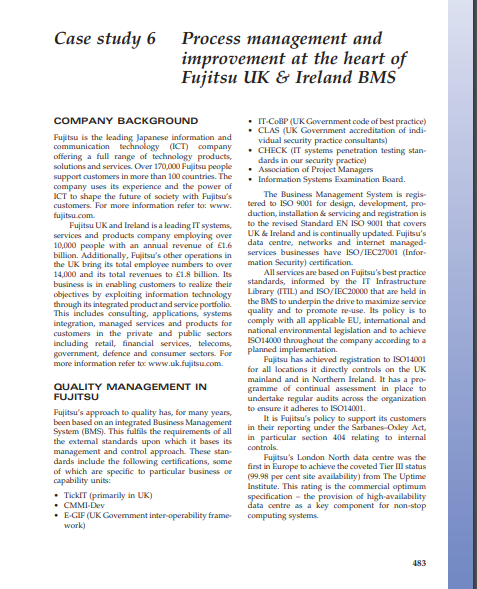
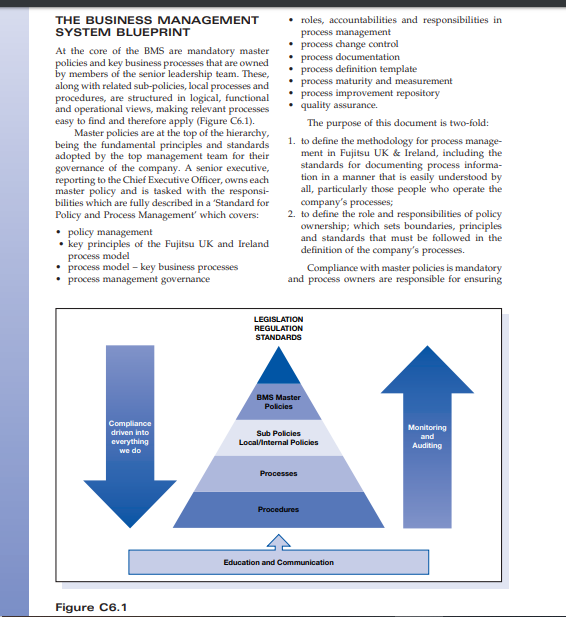
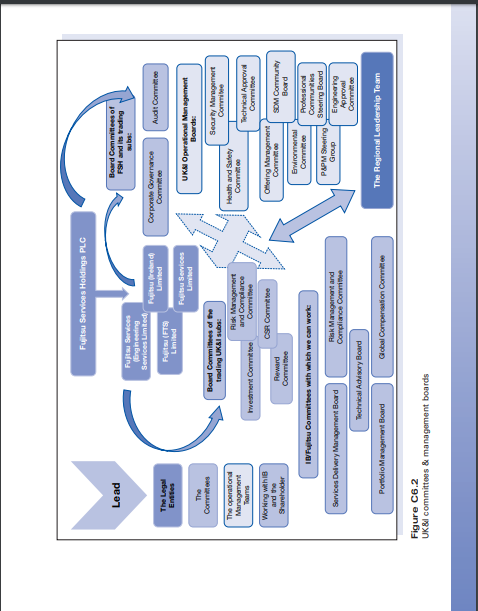
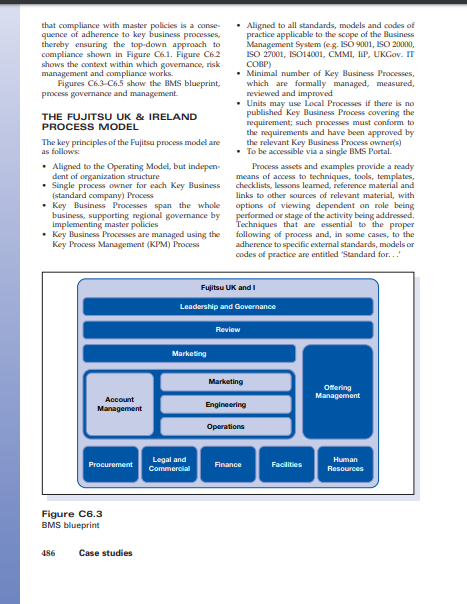
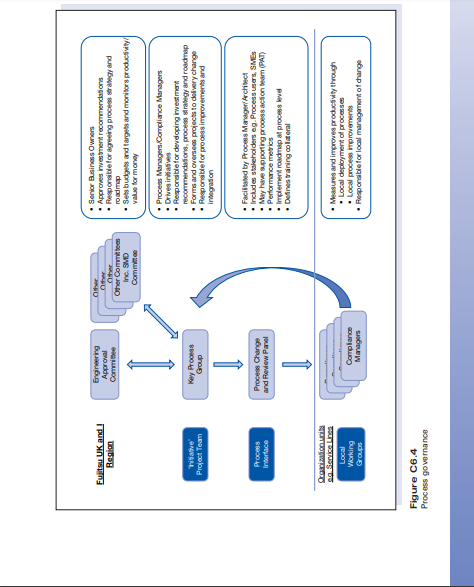
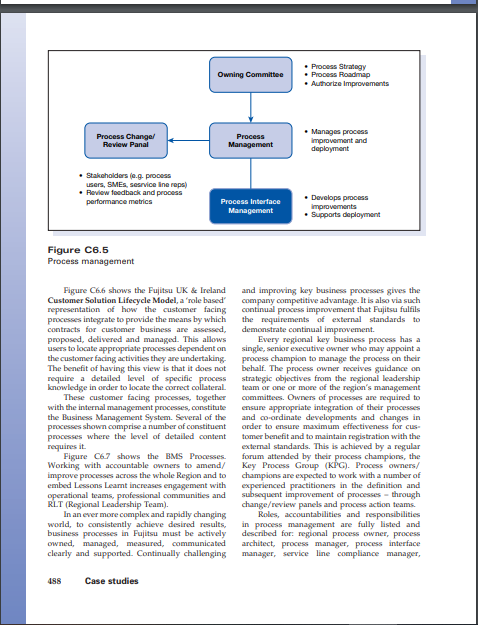
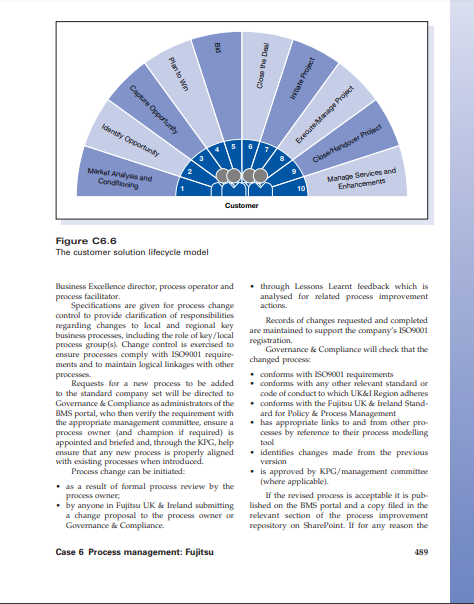
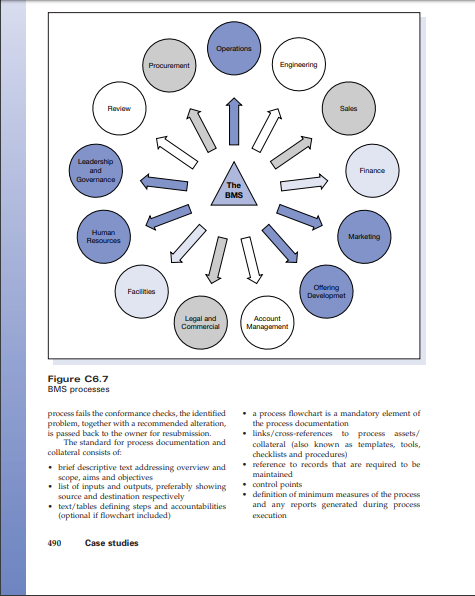
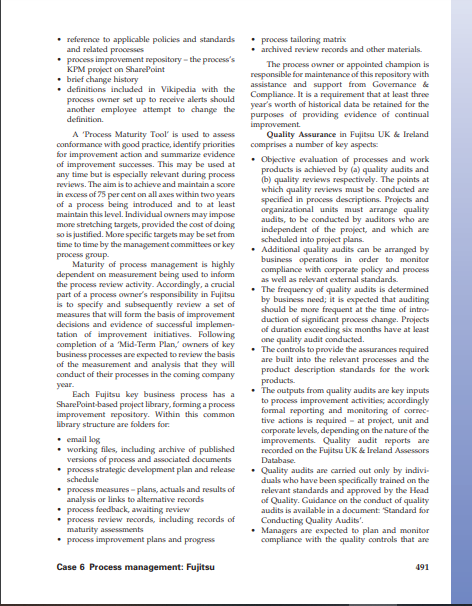
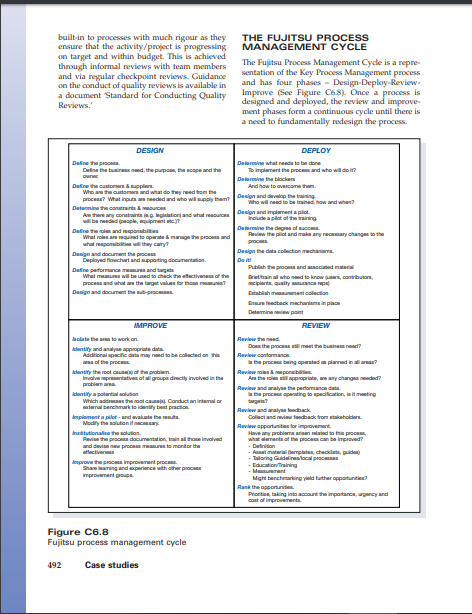
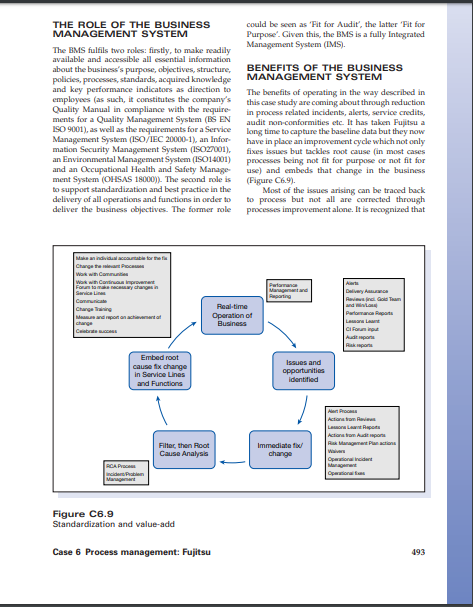
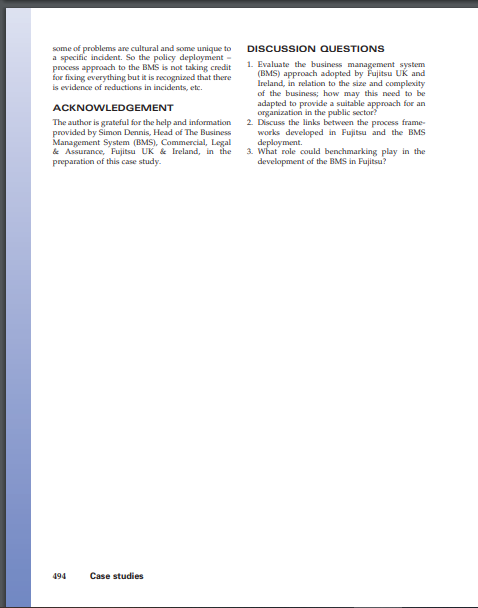
Case study 6 Process management and improvement at the heart of Fujitsu UK & Ireland BMS COMPANY BACKGROUND Fujitsu is the leading Japanese information and communication technology (ICT) company offering a full range of technology products, solutions and services. Over 170,000 Fujitsu people support customers in more than 100 countries. The company uses its experience and the power of ICT to shape the future of society with Fujitsu's customers. For more information refer to: www. fujitsu.com Fujitsu UK and Ireland is a leading IT systems, services and products company employing over 10,000 people with an annual revenue of 1.6 billion. Additionally, Fujitsu's other operations in the UK bring its total employee numbers to over 14,000 and its total revenues to 1.8 billion. Its business is in enabling customers to realize their objectives by exploiting information technology through its integrated product and service portfolio This includes consulting, applications, systems integration, managed services and products for customers in the private and public sectors including retail, financial services, telecoms, government, defence and consumer sectors. For more information refer to www.uk.fujitsu.com QUALITY MANAGEMENT IN FUJITSU Fujitsu's approach to quality has, for many years, been based on an integrated Business Management System (BMS). This fulfils the requirements of all the extemal standards upon which it bases its management and control approach. These stan- dards include the following certifications, some of which are specific to particular business or capability units TickIT (primarily in UK) . CMMI-Dev E-GIF (UK Goverment interoperability frame work) IT-COBP (UK Government code of best practice) CLAS (UK Government accreditation of indi vidual security practice consultants) CHECK (IT systems penetration testing stan- dards in our security practice) Association of Project Managers Information Systems Examination Board. The Business Management System is regis tered to ISO 9001 for design, development, pro duction, installation & servicing and registration is to the revised Standard EN ISO 9001 that covers UK & Ireland and is continually updated. Fujitsu's data centre, networks and internet managed services businesses have ISO/IEC 27001 (Infor- mation Security) certification All services are based on Fujitsu's best practice standards, informed by the IT Infrastructure Library (ITIL) and ISO/IEC 20000 that are held in the BMS to underpin the drive to maximize service quality and to promote re-use. Its policy is to comply with all applicable EU, international and national environmental legislation and to achieve ISO14000 throughout the company according to a planned implementation Fujitsu has achieved registration to ISO14001 for all locations it directly controls on the UK mainland and in Northern Ireland. It has a pro gramme of continual assessment in place to undertake regular audits across the organization to ensure it adheres to ISO14001 It is Fujitsu's policy to support its customers in their reporting under the Sarbanes-Oxley Act, in particular section 404 relating to nternal controls Fujitsu's London North data centre was the first in Europe to achieve the coveted Tier III status (99.98 per cent site availability) from The Uptime Institute. This rating is the commercial optimum specification - the provision of high-availability data centre as a key component for non-stop computing systems. 483 THE BUSINESS MANAGEMENT SYSTEM BLUEPRINT At the core of the BMS are mandatory master policies and key business processes that are owned by members of the senior leadership team. These, along with related sub-policies, local processes and procedures, are structured in logical, functional and operational views, making relevant processes easy to find and therefore apply (Figure C6.1). Master policies are at the top of the hierarchy, being the fundamental principles and standards adopted by the top management team for their governance of the company. A senior executive, reporting to the Chief Executive Officer, owns each master policy and is tasked with the responsi- bilities which are fully described in a 'Standard for Policy and Process Management which covers: policy management key principles of the Fujitsu UK and Ireland process model process model - key business processes process management governance roles, accountabilities and responsibilities in process management process change control process documentation process definition template process maturity and measurement process improvement repository quality assurance The purpose of this document is two-fold: 1. to define the methodology for process manage- ment in Fujitsu UK & Ireland, including the standards for documenting process informa- tion in a manner that is easily understood by all, particularly those people who operate the company's processes 2. to define the role and responsibilities of policy ownership; which sets boundaries, principles and standards that must be followed in the definition of the company's processes. Compliance with master policies is mandatory and process owners are responsible for ensuring LEGISLATION REGULATION STANDARDS BMS Master Policies Compliance driven into everything we do Sub Policies Local/Internal Policies Monitoring and Auditing Processes Procedures Education and Communication Figure C6.1 Fujitsu Services Holdings PLC Lead Board Committees of FSH and its trading subs: Fujitsu Services Engineering Services Limited Futureland Limited Corporate Governance Committee Audit Committee The Legal Enities Fujitsu (FTS Limited Fujitsu Services Limited UKM Operational Management Boards: The Committees The operational Management Teams Board Committees of the trading UK Subs: Risk Management and Compliance Investment Committee Committee CSR Committee Reward Committee Working with B and the Shareholder Security Management Comitee Health and Safety Committee Technical Approval Committee Offering Management Committee SOM Community Board Environmental Committee Professional Communities PUPM Sering Steering Board Engineering Approval Committee I Fujitsu Committees with which we can work Group Services Delivery Management Board Risk Management and Compliance Committee Technical Achisory Board Portfolio Management Board Global Compensation Committee The Regional Leadership Team Figure C6.2 UK & committees & management boards that compliance with master policies is a conse quence of adherence to key business processes, thereby ensuring the top-down approach to compliance shown in Figure 26.1. Figure C62 shows the context within which governance, risk management and compliance works. Figures C6.3-C6.5 show the BMS blueprint, process governance and management. THE FUJITSU UK & IRELAND PROCESS MODEL The key principles of the Fujitsu process model are as follows: Aligned to the Operating Model, but indepen dent of organization structure Single process owner for each Key Business (standard company) Process Key Business Processes span the whole business, supporting regional governance by implementing master policies Key Business Processes are managed using the Key Process Management (KPM) Process Aligned to all standards, models and codes of practice applicable to the scope of the Business Management System (eg ISO 9001, ISO 20000 ISO 27001, ISO14001, CMMI, HIP, UKGov. IT COBP) Minimal number of Key Business Processes, which are formally managed, measured, reviewed and improved Units may use Local Processes if there is no published Key Business Process covering the requirement; such processes must conform to the requirements and have been approved by the relevant Key Business Process owners) To be accessible via a single BMS Portal Process assets and examples provide a ready means of access to techniques, tools, templates. checklists, lessons leamed, reference material and links to other sources of relevant material, with options of viewing dependent on role being performed or stage of the activity being addressed. Techniques that are essential to the proper following of process and, in some cases, to the adherence to specific external standards, models or codes of practice are entitled Standard for... Fujitsu UK and I Leadership and Governance Review Marketing Marketing Offering Management Account Management Engineering Operations Procurement Legal and Commercial Finance Facilities Human Resources Figure C6.3 BMS blueprint 486 Case studies Fujitsu UK and I Region Engineering Approval Committee Other Committees Ine SMD Committee Senior Business Owners Approves Investment recommendations Responsible for ageng process Strategy and roadmap Sets budgets and targets and monitor productivity value for money Process Managers/Compliance Managers Drives initiatives Responsible for developing investment recommendations, process Strategy and roadmap Forms and overseas projects to delivery change Responsible for process improvements and integration nitiative Project Team Key Proosas Group Process Interface Process Change and Review Panel Facilitated by Process Manager Architect Includes stakeholders eg. Process users. SMES . May have supporting prooss action team (PAT) Performance metrics Implement roadmap at process level Define training colateral Ocamino og Service Lines Local Working Groups Complance Managers Measures and improves productivity through Local deployment of processes Local process improvements Responsible for local management of change Figure C6.4 Process governance Owning Committee Process Strategy Process Roadmap Authorize Improvements Process Change Review Panal Process Management Manages process Improvement and deployment Stakeholders (eg process users, SMEs, service ine reps Review feedback and process performance metrics Process Interface Management Develops process improvements Supports deployment Figure C6.5 Process management Figure Cbb shows the Fujitsu UK & Ireland Customer Solution Lifecycle Model, a'role based representation of how the customer facing processes integrate to provide the means by which contracts for customer business are assessed, proposed, delivered and managed. This allows users to locate appropriate processes dependent on the customer facing activities they are undertaking The benefit of having this view is that it does not require a detailed level of specific process knowledge in order to locate the correct collateral These customer facing processes, together with the internal management processes, constitute the Business Management System. Several of the processes shown.comprise a number of constituent processes where the level of detailed content requires it Figure C6.7 shows the BMS Processes. Working with accountable owners to amend/ improve processes across the whole Region and to embed Lessons Learnt increases engagement with operational teams, professional communities and RLT (Regional Leadership Team). In an ever more complex and rapidly changing world, to consistently achieve desired results, business processes in Fujitsu must be actively owned, managed, measured, communicated clearly and supported. Continually challenging and improving key business processes gives the company competitive advantage. It is also via such continual process improvement that Fujitsu fulfils the requirements of external standards to demonstrate continual improvement Every regional key business process has a single, senior executive owner who may appoint a process champion to manage the process on their behalf. The process owner receives guidance on strategic objectives from the regional leadership team or one or more of the region's management committees. Owners of processes are required to ensure appropriate integration of their processes and co-ordinate developments and changes in order to ensure maximum effectiveness for cus tomer benefit and to maintain registration with the external standards. This is achieved by a regular forum attended by their process champions, the Key Process Group (KPG). Process owners/ champions are expected to work with a number of experienced practitioners in the definition and subsequent improvement of processes through change/review panels and process action teams. Roles, accountabilities and responsibilities in process management are fully listed and described for regional process owner, process architect, process manager, process interface manager, service line compliance manager, 488 Case studies pl Plan to Win Clase the Deal Idently Opportunity Capture Opportunity Execute Manage Project Close Handover Project Market Analysis and Conditioning Manage Services and Enhancements 10 Customer Figure C6.6 The customer solution lifecycle model Business Excellence director, process operator and process facilitator Specifications are given for process change control to provide darification of responsibilities regarding changes to local and regional key business processes, including the role of key/local process group(s). Change control is exercised to ensure processes comply with 1509001 require ments and to maintain logical linkages with other processes Requests for a new process to be added to the standard company set will be directed to Governance & Compliance as administrators of the BMS portal, who then verify the requirement with the appropriate management committee, ensure a process owner and champion if required) is appointed and briefed and through the KPG, help ensure that any new process is properly aligned with existing processes when introduced Process change can be initiated: as a result of formal process review by the process owner, .by anyone in Fujitsu UK & Ireland submitting a change proposal to the process owner or Governance & Compliance. through Lessons Learnt feedback which is analysed for related process improvement actions Records of changes requested and completed are maintained to support the company's ISO9001 registration Governance & Compliance will check that the changed process conforms with ISO9001 requirements conforms with any other relevant standard or code of conduct to which UK&I Region adheres conforms with the Fujitsu UK & Ireland Stand ard for Policy & Process Management has appropriate links to and from other peo cesses by reference to their process modelling tool identifies changes made from the previous version . is approved by KPG/management committee (where applicable) If the revised process is acceptable it is pub lished on the BMS portal and a copy filed in the relevant section of the process Improvement repository on SharePoint. If for any reason the Case 6 Process management: Fujitsu 499 Operations Procurement Engineering Review Sales Leadership and Governance Finance The BMS Human Resources Marketing Facilities Offering Developmet Legal and Commercial Account Management Figure C6.7 BMS processes process fails the conformance checks, the identified problem, together with a recommended alteration, is passed back to the owner for resubmission The standard for process documentation and collateral consists of: brief descriptive text addressing overview and scope, aims and objectives list of inputs and outputs, preferably showing source and destination respectively text/tables defining steps and accountabilities (optional if flowchart included) . a process flowchart is a mandatory element of the process documentation links/cross-references to process assets/ collateral (also known as templates, tools, checklists and procedures) reference to records that are required to be maintained control points definition of minimum measures of the process and any reports generated during process execution 490 Case studies reference to applicable policies and standards and related processes process improvement repository - the process's KPM project on SharePoint brief change history definitions included in Vikipedia with the process owner set up to receive alerts should another employee attempt to change the definition A Process Maturity Tool' is used to assess conformance with good practice, identify priorities for improvement action and summarize evidence of improvement successes. This may be used at any time but is especially relevant during process reviews. The aim is to achieve and maintain a score in excess of 75 per cent on all axes within two years of a process being introduced and to at least maintain this level. Individual owners may impose more stretching targets, provided the cost of doing so is justified. More specific targets may be set from time to time by the management committees or key process group Maturity of process management is highly dependent on measurement being used to inform the process review activity. Accordingly, a crucial part of a process owner's responsibility in Fujitsu is to specify and subsequently review a set of measures that will form the basis of improvement decisions and evidence of successful implemen- tation of improvement initiatives. Following completion of a 'Mid-Term Plan,' owners of key business processes are expected to review the basis of the measurement and analysis that they will conduct of their processes in the coming company year. Each Fujitsu key business process has a SharePoint-based project library, forming a process improvement repository. Within this common library structure are folders for email log working files, including archive of published versions of process and associated documents process strategic development plan and release schedule process measures-plans, actuals and results of analysis or links to alternative records process feedback, awaiting review process review records, including records of maturity assessments process improvement plans and progress process tailoring matrix archived review records and other materials. The process owner or appointed champion is responsible for maintenance of this repository with assistance and support from Governance & Compliance. It is a requirement that at least three year's worth of historical data be retained for the purposes of providing evidence of continual improvement Quality Assurance in Fujitsu UK & Ireland comprises a number of key aspects . Objective evaluation of processes and work products is achieved by (a) quality audits and (b) quality reviews respectively. The points at which quality reviews must be conducted are specified in process descriptions Projects and organizational units must arrange quality audits, to be conducted by auditors who are independent of the project, and which are scheduled into project plans. . Additional quality audits can be arranged by business operations in order to monitor compliance with corporate policy and process as well as relevant external standards. The frequency of quality audits is determined by business need, it is expected that auditing should be more frequent at the time of intro- duction of significant process change. Projects of duration exceeding six months have at least one quality audit conducted . The controls to provide the assurances required are built into the relevant processes and the product description standards for the work products. The outputs from quality audits are key inputs to process improvement activities accordingly formal reporting and monitoring of correc tive actions is required-at project, unit and corporate levels, depending on the nature of the improvements. Quality audit reports are recorded on the Fujitsu UK & Ireland Assessors Database. . Quality audits are carried out only by indivi duals who have been specifically trained on the relevant standards and approved by the Head of Quality. Guidance on the conduct of quality audits is available in a document: Standard for Conducting Quality Audits! Managers are expected to plan and monitor compliance with the quality controls that are Case 6 Process management: Fujitsu 491 will be hand built-in to processes with much rigour as they THE FUJITSU PROCESS ensure that the activity/project is progressing MANAGEMENT CYCLE on target and within budget. This is achieved through informal reviews with team members The Fujitsu Process Management Cycle is a repre and via regular checkpoint reviews. Guidance sentation of the Key Process Management process on the conduct of quality reviews is available in and has four phases - Design-Deploy-Review- a document Standard for Conducting Quality Improve (See Figure C68). Once a process is Reviews designed and deployed, the review and improve ment phases forma continuous cycle until there is a need to fundamentally redesign the process. DESIGN DEPLOY Date the Deine what needs to become Define the business and the purpose, the cope and the To implement the process and who wild Det the blocks Define the customer supplier And how to overcome the Who are the moment and what do they med from the proces? What is needed and who will apply them? Design and develop the training Vihe will need to be trained, how and when Determine the construire Design and implement aplict Include a pilot of the training Define the end responsibilities Deurmine the degree of com What role and to prewed Preview the pilot and make any recommary changes to the what response will they carry? Design and document the process Design the data collection mechanikerna. Deployed flouchurt and supporting documentation De Dalin performance and gets Publish the process and sociedade What measures will be used to check the activeness of the Drietinal wood to know who process and what was the target value for those ? recipients, quality Map Design and document the stablishment IMPROVE At the to work on sentity and analyse appropriate data. Additional spaccata may red to be collected on this REVIEW Review themed Does the process will meet the business need? Reviewoman the proces being paraadpled in ? As the role oil appropriate, we any changes meded? Review and walipoma the procent penting to specification, is it mating cently the mother Inici pretresat el groupe directly involved in the problema chantily a potatis motion Which is the cost canal. Conduct an internal or Collect and check from other Review opportunities for improvement In the lion Revise the production, wil home inced and device processes to monitor the Improve the process Improvement proces Sharming and experience with other proces Improvement groups - Definition Anstaterial parplats, checklis, qui - Tallaringdom - og Might benchmarking yield further opportunities? Rank the app Prilor in their way and cost of improvements Figure C6.8 Fujitsu process management cycle 492 Case studies could be seen as 'Fit for Audit', the latter 'Fit for Purpose'. Given this, the BMS is a fully Integrated Management System (IMS). THE ROLE OF THE BUSINESS MANAGEMENT SYSTEM The BMS fulfils two roles: firstly, to make readily available and accessible all essential information about the business's purpose, objectives, structure, policies, processes, standards, acquired knowledge and key performance indicators as direction to employees (as such, it constitutes the company's Quality Manual in compliance with the require ments for a Quality Management System (ES EN ISO 9001), as well as the requirements for a Service Management System (ISO/IEC 20000-1), an Infor mation Security Management System (ISO27001), an Environmental Management System (ISO14001) and an Occupational Health and Safety Manage ment System (OHSAS 18000)). The second role is to support standardization and best practice in the delivery of all operations and functions in order to deliver the business objectives. The former role BENEFITS OF THE BUSINESS MANAGEMENT SYSTEM The benefits of operating in the way described in this case study are coming about through reduction in process related incidents, alerts, service credits, audit non-conformities etc. It has taken Fujitsu a long time to capture the baseline data but they now have in place an improvement cycle which not only fixes issues but tackles root cause in most cases processes being not fit for purpose or not fit for use) and embeds that change in the business (Figure C6.9). Most of the issues arising can be traced back to process but not all are corrected through processes improvement alone. It is recognized that Performance Magne Charge the work with Communities Was with Continuous improvement |Faram Sarice Line Com Charge Training and portance Cambre Real-time Operation of Business Delivery Radio and Partowa Lawan Lant Cifra ko Embed root cause fix change in Service Lines and Functions Issues and opportunities identified Art Pro Action from Lore Los Risk Managers Filter, then Root Cause Analysis Immediate change ROAP Figure C6.9 Standardization and value-add Case 6 Process management: Fujitsu 493 some of problems are cultural and some unique to a specific incident. So the policy deployment - process approach to the BMS is not taking credit for fixing everything but it is recognized that there is evidence of reductions in incidents, etc. ACKNOWLEDGEMENT The author is grateful for the help and information provided by Simon Dennis, Head of The Business Management System (BMS), Commercial, Legal & Assurance, Fujitsu UK & Ireland, in the preparation of this case study. DISCUSSION QUESTIONS 1. Evaluate the business management system (BMS) approach adopted by Fujitsu UK and Ireland, in relation to the size and complexity of the business; how may this need to be adapted to provide a suitable approach for an organization in the public sector? 2. Discuss the links between the process frame works developed in Fujitsu and the BMS deployment 3. What role could benchmarking play in the development of the BMS in Fujitsu? 494 Case studies Step by Step Solution
There are 3 Steps involved in it
1 Expert Approved Answer
Step: 1 Unlock

Question Has Been Solved by an Expert!
Get step-by-step solutions from verified subject matter experts
Step: 2 Unlock
Step: 3 Unlock
 Study Help