


Question: Can you make an introduction and include also the reference FINAL TERM IHS REPORTING OUTLINE TOPICS GROUP 3: EXTENDED PHARMACY SERVICES IN THE HEALTH CARE

Can you make an introduction and include also the reference
Can you make an introduction and include also the
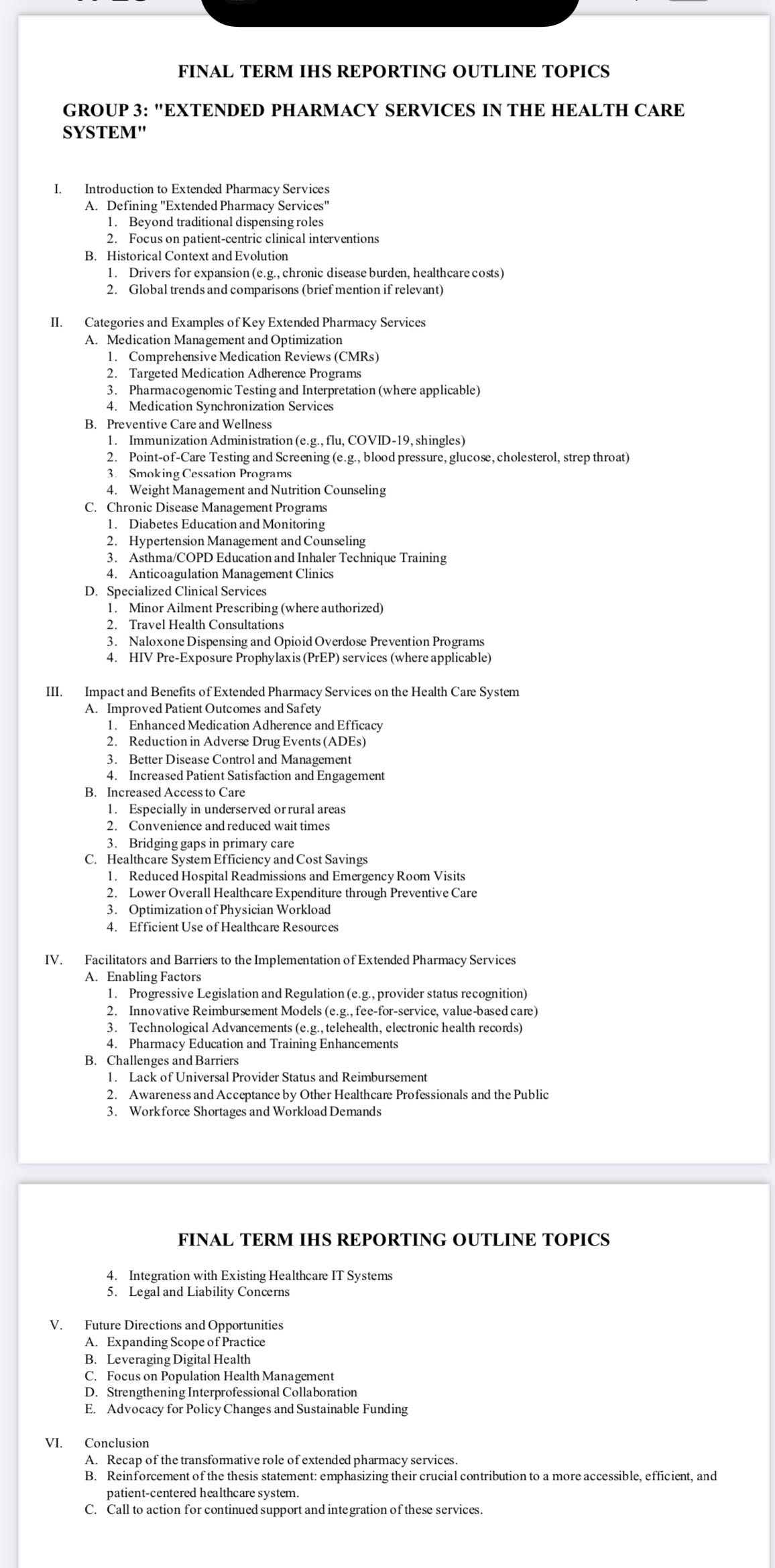
FINAL TERM IHS REPORTING OUTLINE TOPICS GROUP 3: "EXTENDED PHARMACY SERVICES IN THE HEALTH CARE SYSTEM" Il. It. IV. VI. Introduction to Extended Pharmacy Services A. Defining "Extended Pharmacy Services" 1. Beyond traditional dispensing roles 2. Focus on patient-centric clinical interventions B. Historical Context and Evolution 1. Drivers for expansion (e.g., chronic disease burden, healthcare costs) 2. Global trends and comparisons (brief mention if relevant) Categories and Examples of Key Extended Pharmacy Services A. Medication Management and Optimization 1. Comprehensive Medication Reviews (CMRs) 2. Targeted Medication Adherence Programs 3. Pharmacogenomic Testing and Interpretation (where applicable) 4. Medication Synchronization Services B. Preventive Care and Wellness 1. Immunization Administration (e.g., flu, COVID-19, shingles) 2. Point-of-Care Testing and Screening (e.g., blood pressure, glucose, cholesterol, strep throat) 3. Smoking Cessation Programs 4. Weight Management and Nutrition Counseling C. Chronic Disease Management Programs 1. Diabetes Education and Monitoring 2. Hypertension Management and Counseling 3. Asthma/COPD Education and Inhaler Technique Training 4. Anticoagulation Management Clinics D. Specialized Clinical Services 1. Minor Ailment Prescribing (where authorized) 2. Travel Health Consultations 3. Naloxone Dispensing and Opioid Overdose Prevention Programs 4. HIV Pre-Exposure Prophylaxis (PrEP) services (where applicable) Impact and Benefits of Extended Pharmacy Services on the Health Care System A. Improved Patient Outcomes and Safety 1. Enhanced Medication Adherence and Efficacy 2. Reduction in Adverse Drug Events (ADEs) 3. Better Disease Control and Management 4. Increased Patient Satisfaction and Engagement B. Increased Access to Care 1. Especially in underserved orrural areas 2. Convenience and reduced wait times 3. Bridging gaps in primary care C. Healthcare System Efficiency and Cost Savings 1. Reduced Hospital Readmissions and Emergency Room Visits Lower Overall Healthcare Expenditure through Preventive Care Optimization of Physician Workload Efficient Use of Healthcare Resources ery Facilitators and Barriers to the Implementation of Extended Pharmacy Services A. Enabling Factors 1. Progressive Legislation and Regulation (c.g., provider status recognition) 2. Innovative Reimbursement Models (c.g., fee-for-service, value-based care) 3. Technological Advancements (.g., telehealth, electronic health records) 4. Pharmacy Education and Training Enhancements B. Challenges and Barriers 1. Lack of Universal Provider Status and Reimbursement 2. Awarenessand Acceptance by Other Healthcare Professionals and the Public 3. Workforce Shortages and Workload Demands FINAL TERM IHS REPORTING OUTLINE TOPICS 4. Integration with Existing Healthcare IT Systems 5. Legal and Liability Concerns Future Directions and Opportunities Expanding Scope of Practice Leveraging Digital Health Focus on Population Health Management Strengthening Interprofessional Collaboration Advocacy for Policy Changes and Sustainable Funding BONDS Conclusion A. Recap of the transformative role of extended pharmacy services. B. Reinforcement of the thesis statement: emphasizing their crucial contribution to a more accessible, efficient, and patient-centered healthcare system. C. Call to action for continued support and integration of these services

Step by Step Solution

There are 3 Steps involved in it

1 Expert Approved Answer
Step: 1 Unlock blur-text-image

Question Has Been Solved by an Expert!

Get step-by-step solutions from verified subject matter experts

Step: 2 Unlock
Step: 3 Unlock

Students Have Also Explored These Related Accounting Questions!