



Question: can you please answer the questions in order and make it simple. i Requirements , using ed ending in to the ned then (b) av
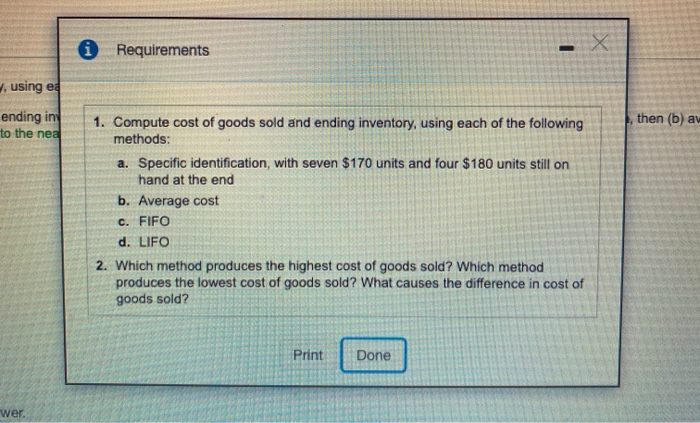
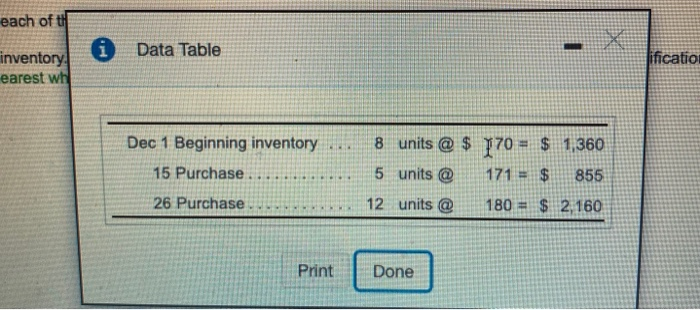
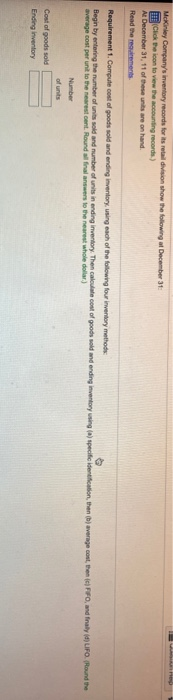
i Requirements , using ed ending in to the ned then (b) av 1. Compute cost of goods sold and ending inventory, using each of the following methods: a. Specific identification, with seven $170 units and four $180 units still on hand at the end b. Average cost c. FIFO d. LIFO 2. Which method produces the highest cost of goods sold? Which method produces the lowest cost of goods sold? What causes the difference in cost of goods sold? Print Done wer. each of the * Data Table lificatio inventory earest wt . Dec 1 Beginning inventory 15 Purchase 8 units @ $ 170 - $ 1,360 5 units @ 171 = $ 855 26 Purchase 12 units @ 180 = $ 2,160 Print Done McKinley Company's inventory records for its retail division show the following of December 31 Click the icon to view the accounting records) A December 31, 11 of these units are on hand. Read the requirements Requirement 1. Compute cost of goods sold and ending inventory using each of the following four inventory methods Begin by entering the number of units sold and number of units in ending inventory. Then calculate cost of goods sold and ending inventory using a specific identification, then (b) average cout, then cFFO, ad finally )LIFO. (Round the average cost per unit to the nearest cent. Round will final answers to the nearest whole dollar) Number of units Cost of goods sold Ending inventory
Step by Step Solution
There are 3 Steps involved in it

Get step-by-step solutions from verified subject matter experts