Question: Can you please answer this student please. Module 7 - Plagiarism Francisca Shaw posted Apr 25, 2024 6:53 PM Subscribe To My Fellow Students, As
Can you please answer this student please.
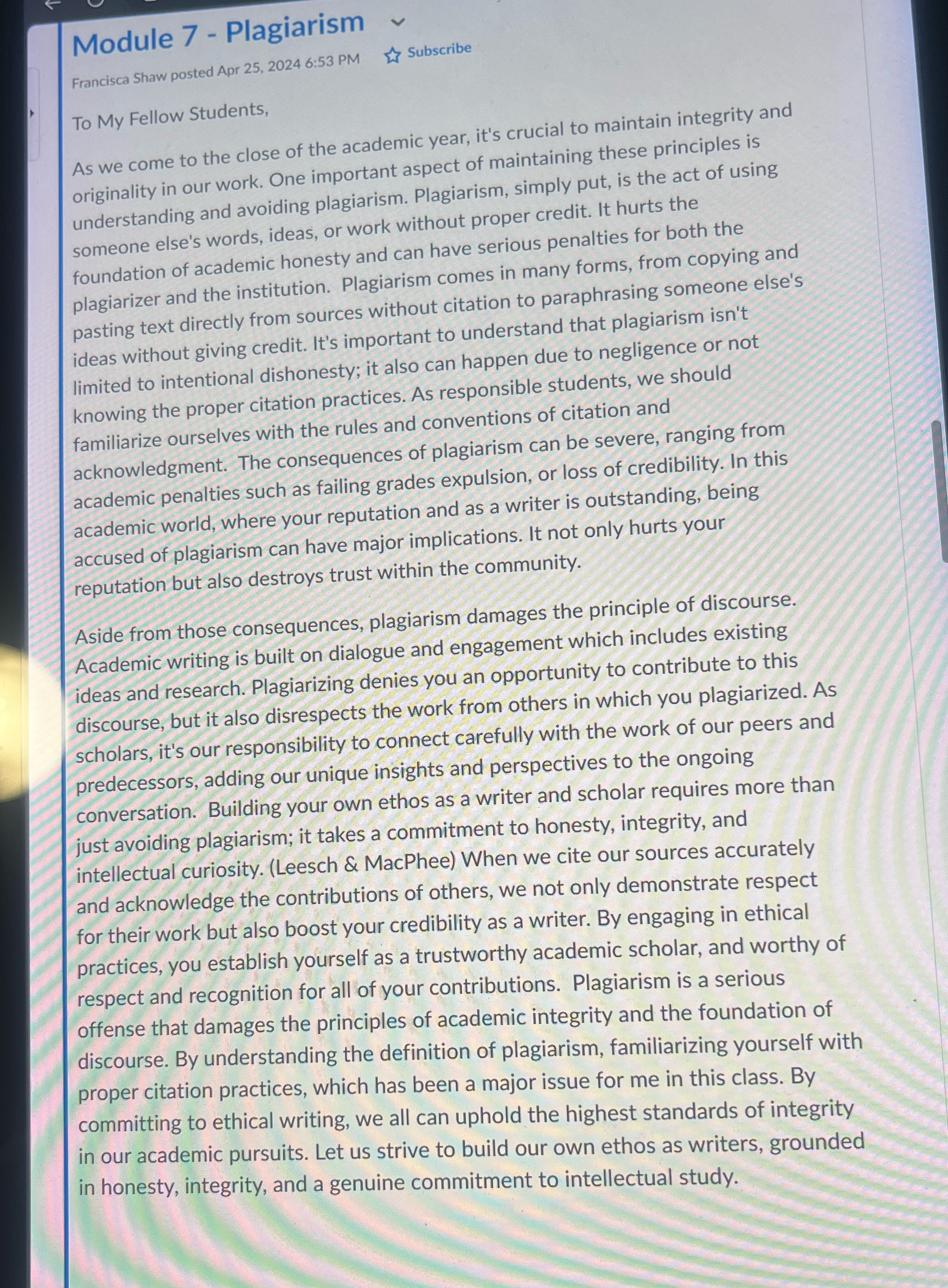
Module 7 - Plagiarism Francisca Shaw posted Apr 25, 2024 6:53 PM Subscribe To My Fellow Students, As we come to the close of the academic year, it's crucial to maintain integrity and originality in our work. One important aspect of maintaining these principles is understanding and avoiding plagiarism. Plagiarism, simply put, is the act of using someone else's words, ideas, or work without proper credit. It hurts the foundation of academic honesty and can have serious penalties for both the plagiarizer and the institution. Plagiarism comes in many forms, from copying and pasting text directly from sources without citation to paraphrasing someone else's ideas without giving credit. It's important to understand that plagiarism isn't limited to intentional dishonesty; it also can happen due to negligence or not knowing the proper citation practices. As responsible students, we should familiarize ourselves with the rules and conventions of citation and acknowledgment. The consequences of plagiarism can be severe, ranging from academic penalties such as failing grades expulsion, or loss of credibility. In this academic world, where your reputation and as a writer is outstanding, being accused of plagiarism can have major implications. It not only hurts your reputation but also destroys trust within the community. Aside from those consequences, plagiarism damages the principle of discourse. Academic writing is built on dialogue and engagement which includes existing ideas and research. Plagiarizeng denies you an opportunity to contribute to this discourse, but it also disrespects the work from others in which you plagiarized. As scholars, it's our responsibility to connect carefully with the work of our peers and predecessors, adding our unique insights and perspectives to the ongoing conversation. Building your own ethos as a writer and scholar requires more than just avoiding plagiarism; it takes a commitment to honesty, integrity, and intellectual curiosity. (Leesch & MacPhee) When we cite our sources accurately and acknowledge the contributions of others, we not only demonstrate respect for their work but also boost your credibility as a writer. By engaging in ethical practices, you establish yourself as a trustworthy academic scholar, and worthy of respect and recognition for all of your contributions. Plagiarism is a serious offense that damages the principles of academic integrity and the foundation of discourse. By understanding the definition of plagiarism, familiarizing yourself with proper citation practices, which has been a major issue for me in this class. By committing to ethical writing, we all can uphold the highest standards of integrity in our academic pursuits. Let us strive to build our own ethos as writers, grounded in honesty, integrity, and a genuine commitment to intellectual study









 Study Help