







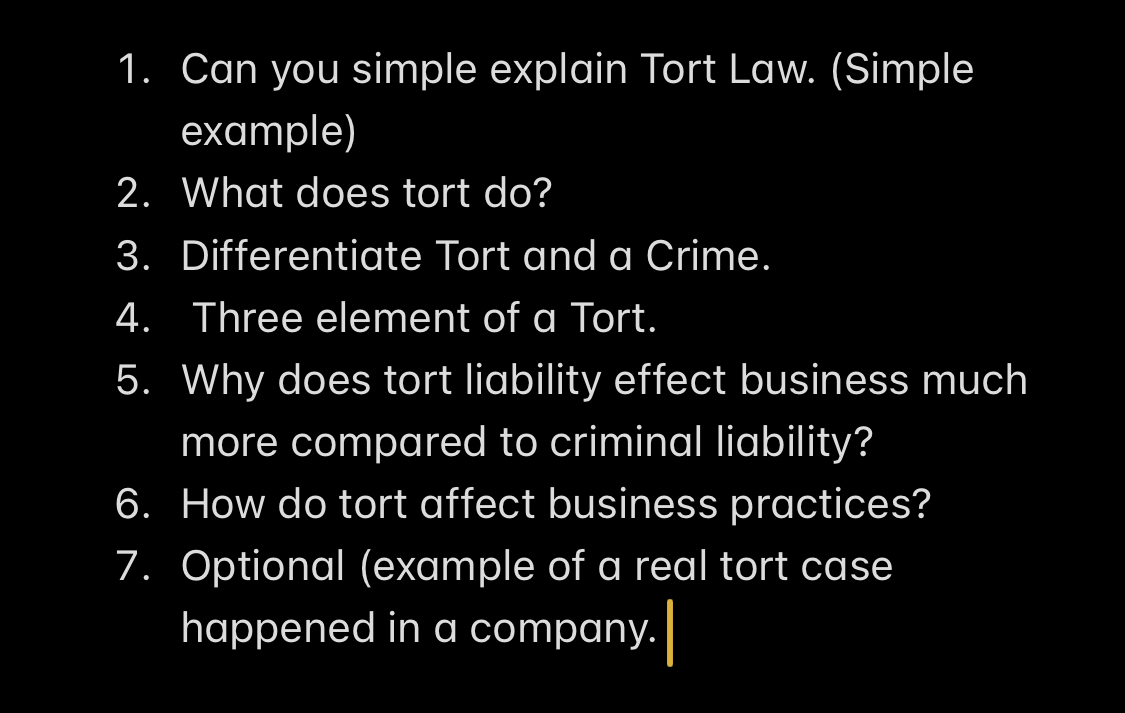
Question: . Can you simple explain Tort Law. (Simple example) . What does tort do? . Differentiate Tort and a Crime. Three element of a Tort.
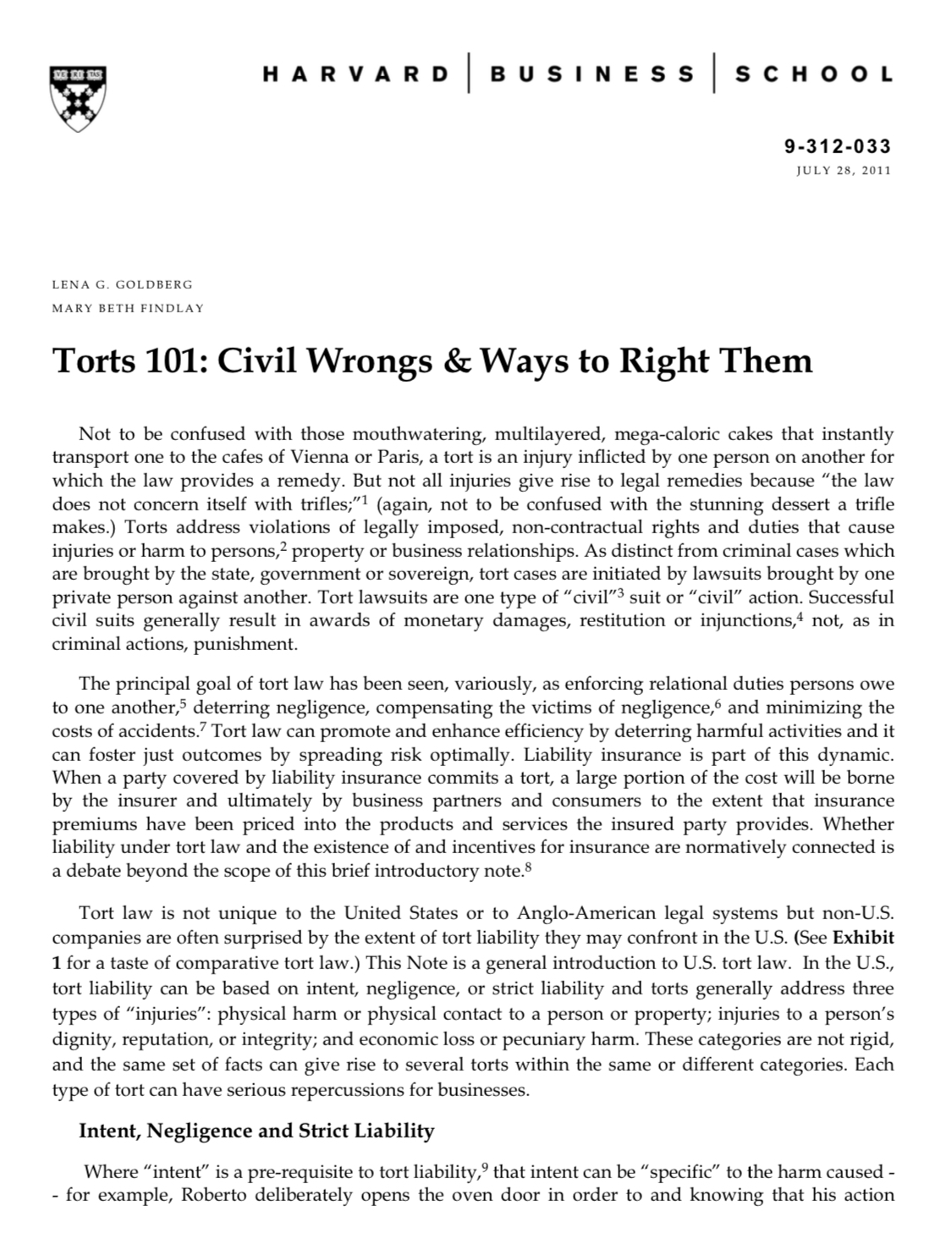
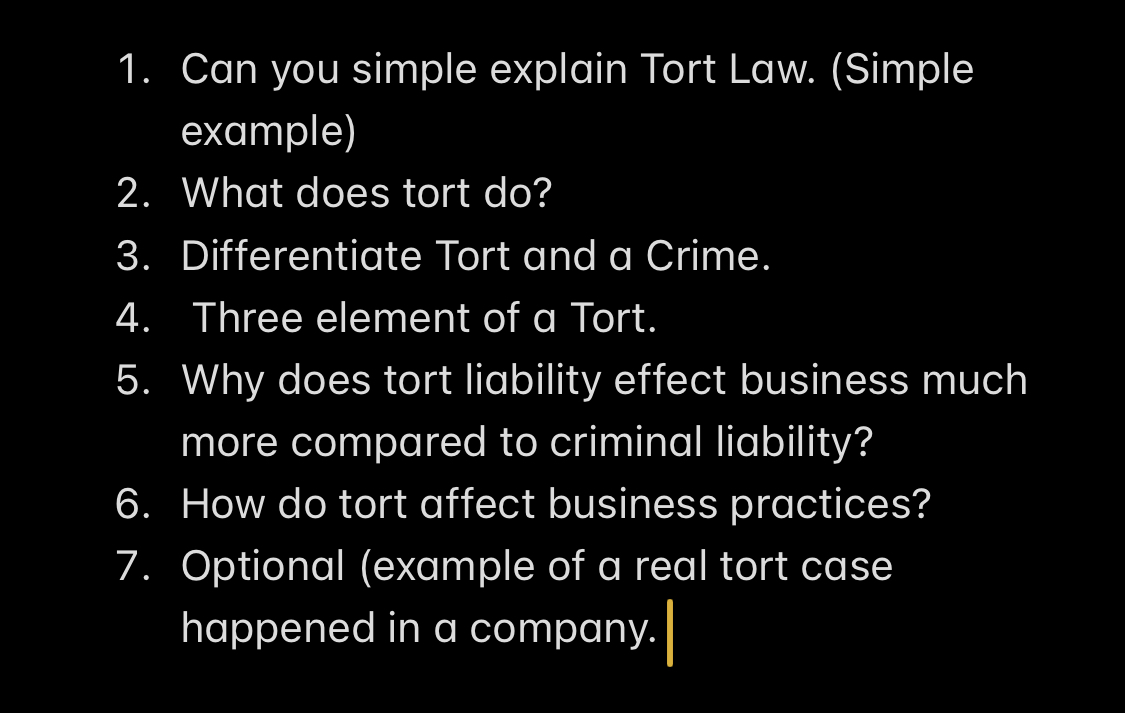
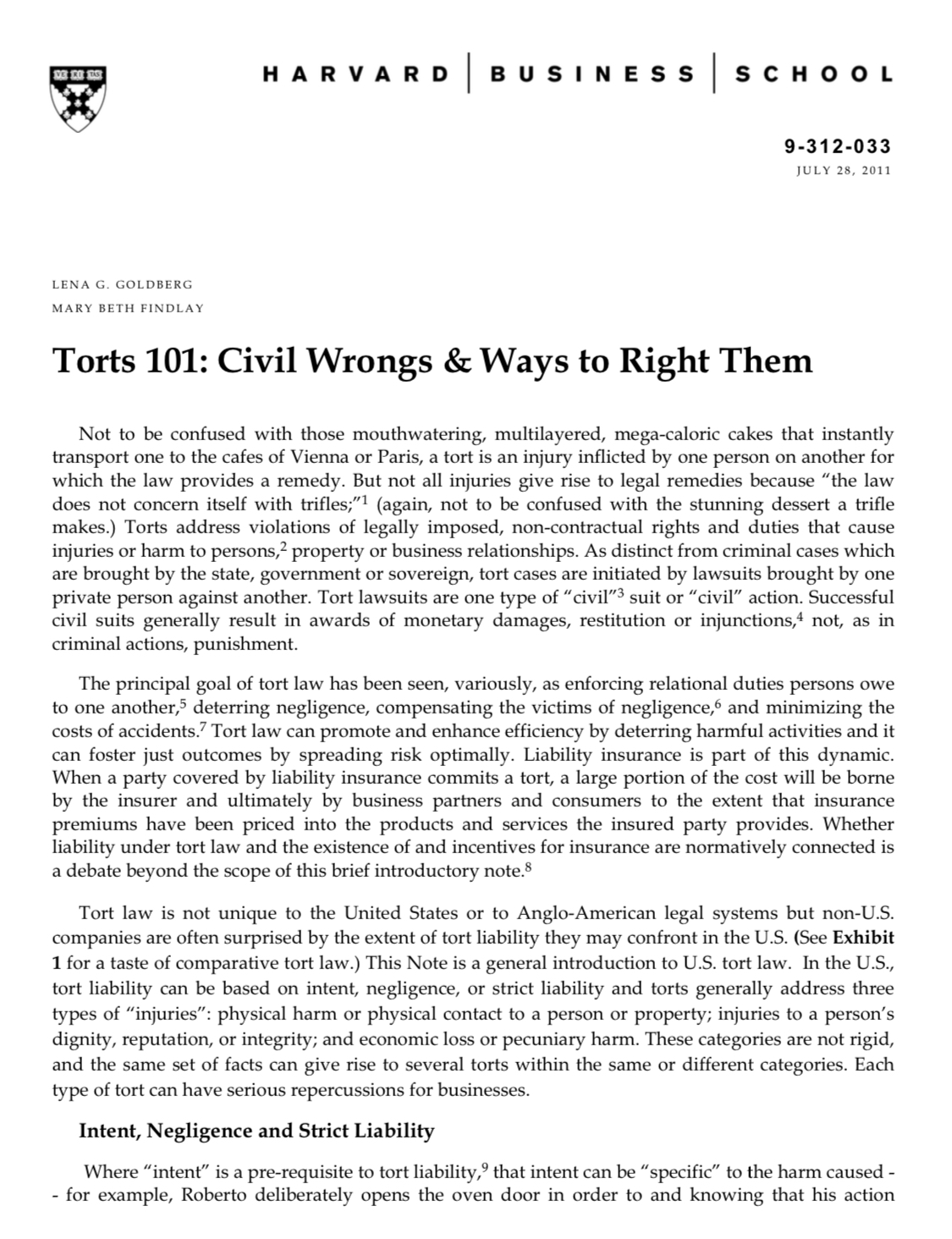
. Can you simple explain Tort Law. (Simple example) . What does tort do? . Differentiate Tort and a Crime. Three element of a Tort. . Why does tort liability effect business much more compared to criminal liability? . How do tort affect business practices? . Optional (example of a real tort case happened in a company. mum: HARVARD BUSINESS SCHOOL 9-312-033 JL'L'I' 25, 2011 LENA U. GOLDBERG MARY BE'I'II FINDLAY Torts 101: Civil Wrongs 8: Ways to Right Them Not to be confused with those mouthwatering, multilayered, mega-caloric cakes that instantly transport one to the cafes of Vienna or Paris, a tort is an injury inflicted by one person on another for which the law provides a remedy. But not all injuries give rise to legal remedies because "the law does not concern itself with trifles;"I (again, not to be confused with the stunning dessert a trie makes.) Torts address violations of legally imposed, non-contractual rights and duties that cause injuries or harm to persons,2 property or business relationships. As distinct from criminal cases which are brought by the state, government or sovereign, tort cases are initiated by lawsuits brought by one private person against another. Tort lawsuits are one type of "civil\"3 suit or "civil" action. Successful civil suits generally result in awards of monetary damages, restitution or injunctions} not, as in criminal actions, punishment. The principal goal of tort law has been seen, variously, as enforcing relational duties persons owe to one another? deterring negligence, compensating the victims of negligence? and minimizing the costs of accidents? Tort law can promote and enhance efficiency by deterring harmful activities and it can foster just outcomes by spreading risk optimally. Liability insurance is part of this dynamic. When a party covered by liability insurance commits a tort, a large portion of the cost will be borne by the insurer and ultimately by business partners and consumers to the extent that insurance premiums have been priced into the products and services the insured party provides. Whether liability under tort law and the existence of and incentives for insurance are nonnatively connected is a debate beyond the scope of this brief introductory note.3 Tort law is not unique to the United States or to Anglo-American legal systems but non-U5. companies are often surprised by the extent of tort liability they may confront in the US. (See Exhibit 1 for a taste of comparative tort law.) This Note is a general introduction to US. tort law. In the U.S., tort liability can be based on intent, negligence, or strict liability and torts generally address three types of "injuries": physical harm or physical contact to a person or property,- injuries to a person's dignity, reputation, or integrity; and economic loss or pecuniary harm. These categories are not rigid, and the same set of facts can give rise to several torts within the same or different categories. Each type of tort can have serious repercussions for businesses. Intent, Negligence and Strict Liability Where \"intent" is a pre-requisite to tort liability,9 that intent can be "specific\" to the harm caused - - for example, Roberto deliberately opens the oven door in order to and knowing that his action
Step by Step Solution
There are 3 Steps involved in it

Get step-by-step solutions from verified subject matter experts
 Study Help