







Question: can you solve this case study asap i need information to make presentation CASE 7-EASTERN PROVINCIAL UNIVERSITY The following job descriptions are used for compensation
can you solve this case study asap 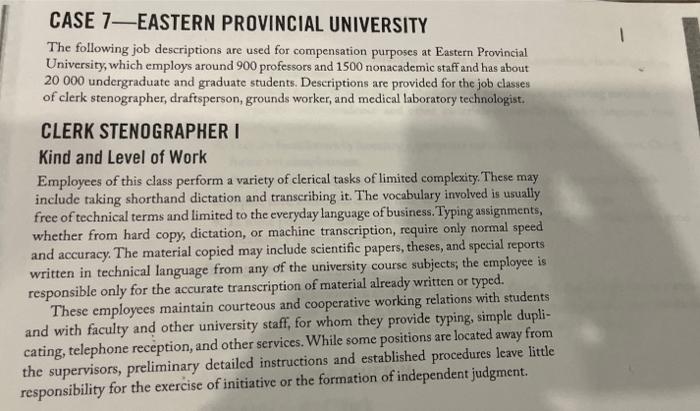
i need information to make presentation
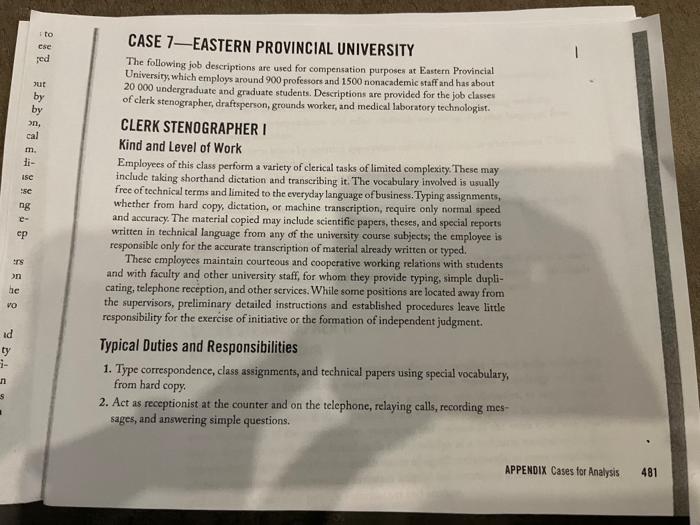
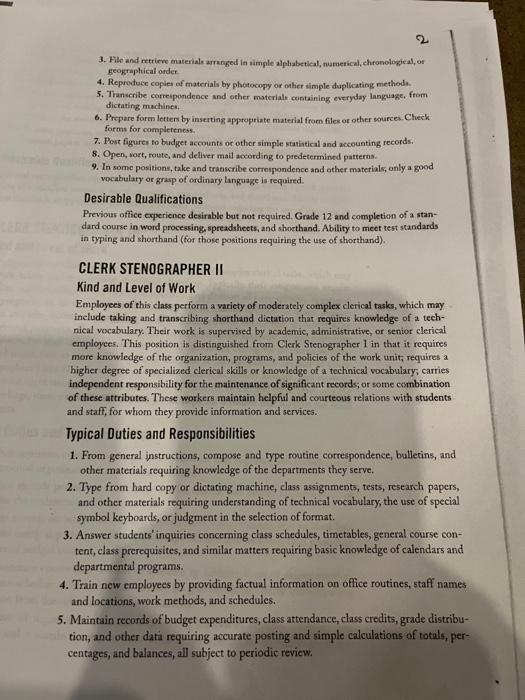
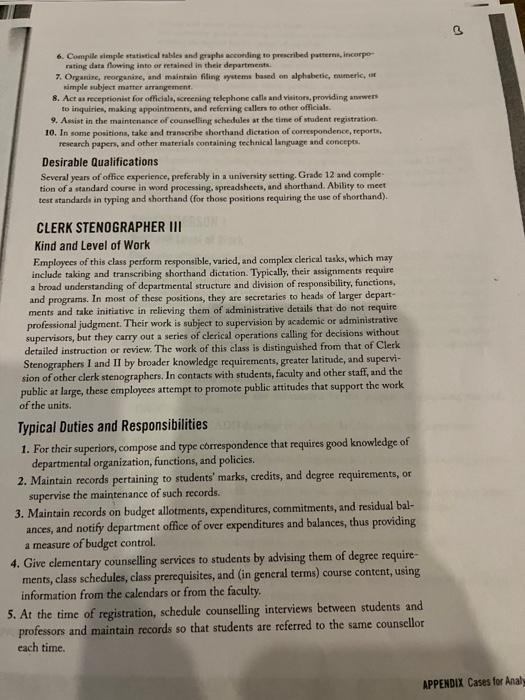
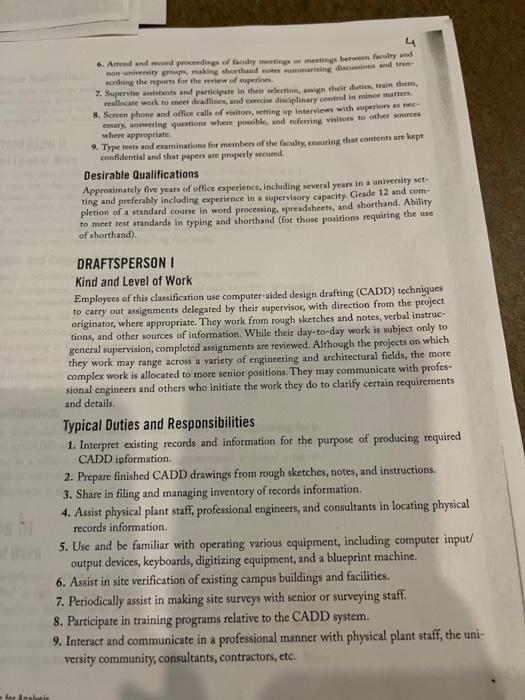
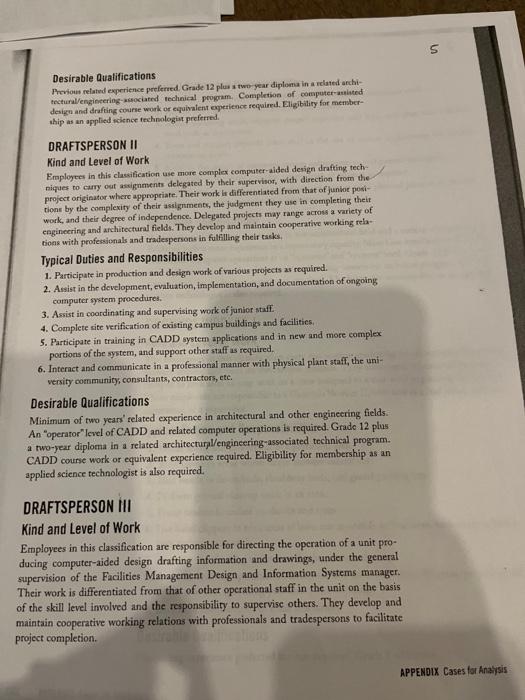
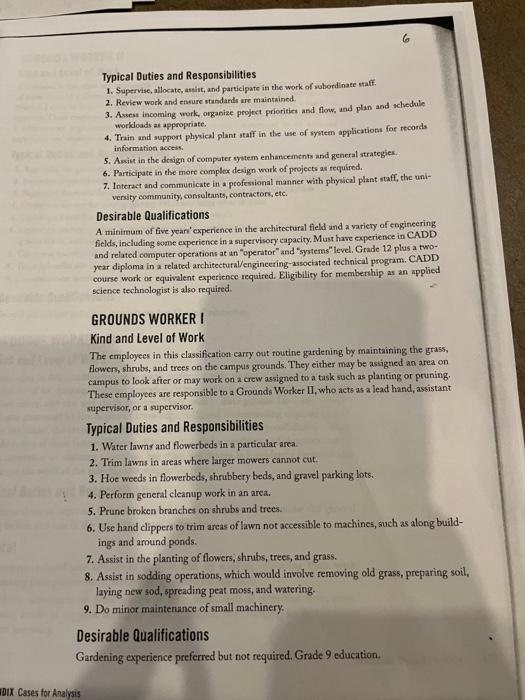
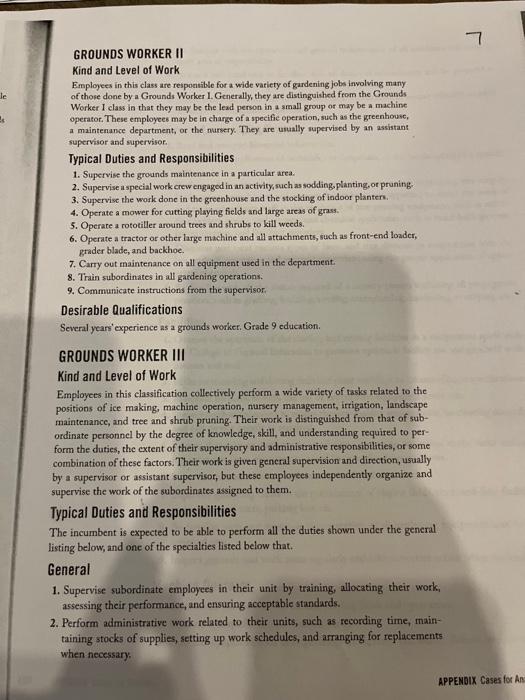
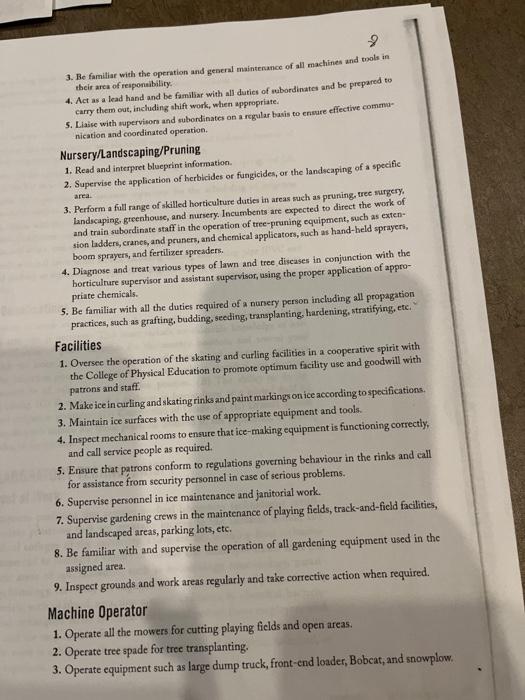
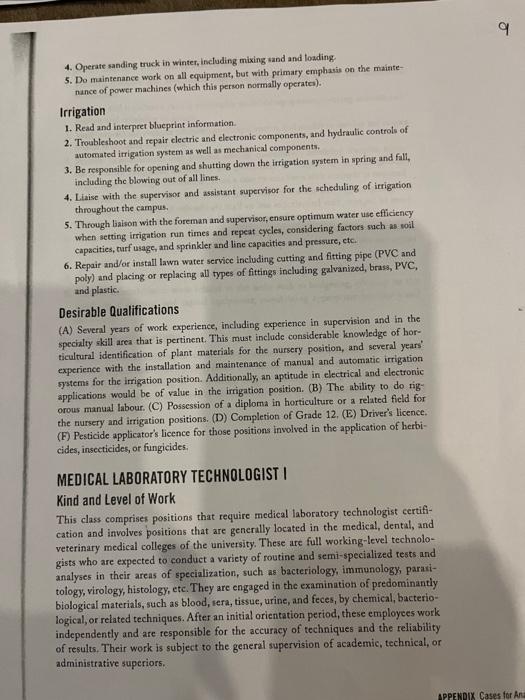
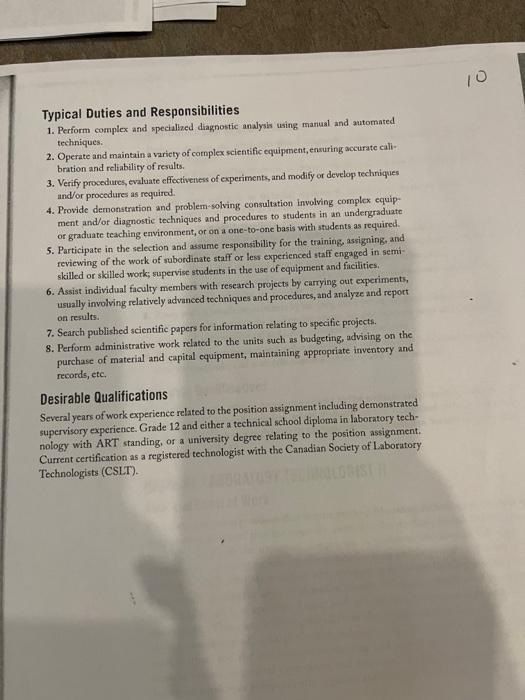
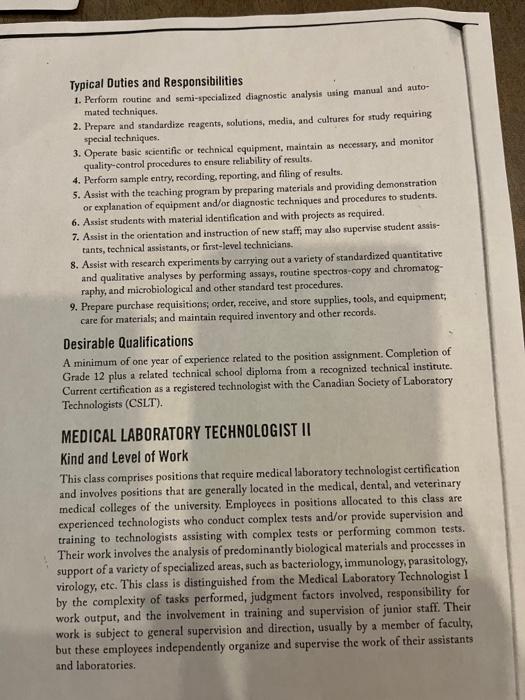
CASE 7-EASTERN PROVINCIAL UNIVERSITY The following job descriptions are used for compensation purposes at Eastern Provincial University, which employs around 900 professors and 1500 nonacademic staff and has about 20000 undergraduate and graduate students. Descriptions are provided for the job classes of clerk stenographer, draftsperson, grounds worker, and medical laboratory technologist. CLERK STENOGRAPHER I Kind and Level of Work Employees of this class perform a variety of clerical tasks of limited complexity. These may include taking shorthand dictation and transcribing it. The vocabulary involved is usually free of technical terms and limited to the everyday language of business. Typing assignments, whether from hard copy, dictation, or machine transcription, require only normal speed and accuracy. The material copied may include scientific papers, theses, and special reports written in technical language from any of the university course subjects, the employee is responsible only for the accurate transcription of material already written or typed. These employees maintain courteous and cooperative working relations with students and with faculty and other university staff, for whom they provide typing, simple duplicating, telephone reception, and other services. While some positions are located away from the supervisors, preliminary detailed instructions and established procedures leave little responsibility for the exercise of initiative or the formation of independent judgment. CASE 7EASTERN PROVINCIAL UNIVERSITY The following job descriptions are used for compensation purposes at Eastern Provincial University, which employs around 900 professors and 1500 nonacademic staft and has about 20000 undergraduate and graduate students. Descriptions are provided for the job classes of clerk stenographer, draftsperson, grounds worker, and medical laboratory technologist. CLERK STENOGRAPHER I Kind and Level of Work Employees of this class perform a variety of cletical tasks of limited complexity. These may include taking shorthand dictation and transcribing it. The vocabulary involved is usually frec of technical terms and limited to the everyday language of business. Typing assignments, whether from hard copy, dictation, of machine transcription, require only normal speed and accuracy. The material copied may include scientific papers, theses, and special reports written in technical language from any of the university course subjects; the employee is responsible only for the accurate transcription of material already written or typed. These employees maintain courteous and cooperative working relations with students and with faculty and other university staff, for whom they provide typing, simple duplicating, telephone reception, and other services. While some positions are located away from the supervisors, preliminary detailed instructions and established procedures leave little responsibility for the exercise of initiative or the formation of independent judgment. 3. Hile and retrieve ematerials arranged in simple alphabetical, numetical, ehronological, ot geographical order 4. Reproduce copies of materials by phetocopy or onher simple duplicating methods. 5. Thanscribe correspondence and other materiale centaining everyday langaage, from dictating machines. 6. Prepare form letters by inserting appropriate material from files or other sources. Check. forms for completeness. 7. Post figures to budget accounts or other simpie statistical and accounting records: 8. Open, wort, route, and delliver mail according to predetermined patterns. 9. In some positions, take and transcribe correrpondence and other materials, only a good vocabulary or grap of ordinary langaage is required. Desirable Qualifications Previous office experience desirable bat not required. Grade 12 and completion of a standard course in word processing, spreadsheets, and shocthand. Ability to meet rest standards in typing and shorthand (for those positions requiring the use of shorthand). CLERK STENOGRAPHER II Kind and Level of Work Employees of this class perform a variety of moderately complex clerical tasks, which may inelude taking and transcribing shorthand dictation that requires knowledge of a technical vocabulary. Their work is supervised by academic, administrative, or seniot clerical employees. This position is distinguished from Clerk Stenographer 1 in that it requires more knowledge of the organization, programs, and policies of the work unit, requires a higher degree of specialized clerical skills or knowledge of a technical vocabulary; carries independent responsibility for the maintenance of significant records, or some combination. of these attributes. These workers maintain helpful and courteous relations with students and staff, for whom they provide information and services. Typical Duties and Responsibilities 1. From general instructions, compose and type routine correspondence, bulletins, and other materials requiring knowledge of the departments they serve. 2. Type from hard copy or dictating machine, class assignments, tests, research papers, and other materials requiring understanding of technical vocabulary, the use of special symbol keyboards, or judgment in the selection of format. 3. Answer students' inquiries concerning class schedules, timetables, general course content, class prerequisites, and similar matters requiring basic knowledge of calendars and departmental programs. 4. Train new employees by providing factual information on office routines, staff names and locations, work methods, and schedules. 5. Maintain records of budget expenditures, class attendance, class credits, grade distribution, and other data requiring accurate posting and simple calculations of totals, percentages, and balances, all subject to periodic review. 6. Compile wienple statistical sables and graphs acconling so prescribed patterns, ifucerpos. rating data flowing into ar rerained in their departmenta. 7. Organize, reogganixe, and maintain fiting ryutems based an alphabetie, mureeric, at vimple subject matter arrangement. 8. Act an receptionist for officials, acreening relephone calls and viaiton, providing anwers to inquiries, making appointment, and referring callen to oeher offlcials. 9. Assist in the maintenance of counselling sehedules at the tiane of stadent registration. 10. In some positions, take and transcribe shorthand dictation of correspondence, reports, research papen, and other materials containing fechnical language and concepts. Desirable Qualifications Several years of office experience, peeferably in a university setting. Grade 12 and cornpletion of a standard course in word processings spreadiheets, and shorthand. Ability to meet test standards in typing and shorthand (for those positions requiring the use of shorthand). CLERK STENOGRAPHER III Kind and Level of Work Employees of this class perform responsible, varied, and complex clerical tasks, which may include taking and transcribing shorthand dictation. Typically, their assignments require a broad understanding of departmental structure and division of responsibility, functions, and prograras. In most of these positions, they are secretaries to heads of larger departments and rake initiative in relieving them of administrative details that do not require professional judgment. Their work is subject to supervision by acadcmic or administrative supervisors, but they carry out a series of clerical operations calling for decisions withoue detailed instraction of review. The work of this class is distinguished frosn that of Clerk Stenographers I and II by broader knowledge requirements, greater latitude, and supervision of other clerk stenographers. In contacts with students, faculty and other staft, and the public at large, these employees attempt to promote public attitudes that support the wotk of the units. Typical Duties and Responsibilities 1. For their superiors, compose and type correspondence that requires good knowledge of departmental organization, functions, and policies. 2. Maintain records pertaining to students' marks, credits, and degree requirements, or supervise the maintenance of such records. 3. Maintain records on budget allotments, expenditures, commitments, and residual balances, and norify department office of over expenditures and balances, thus providing a measure of budget control. 4. Give elementary counselling services to students by advising them of degree requirements, class schedules, class prerequisites, and (in general terms) course content, using information from the calendars or from the faculty. 5. At the time of registration, schedule counselling interviews between students and professors and maintain records so that students are referred to the same counsellor each time. 6. Artend anul procid preveredings of factulfy mestings \& meetings berwecn facolfy and scribirg the repoets for the roview of superinars. 7. Supervise unhatants and participate in their telection, awign their dutien, train them, reallocate werk to meet deadlines, and earrie disciplinary contril in minor mantern. 8. Sereen phone and office call of visitors, setting up interviews with soperion as necessary annwering quentions where poenble, and effrring visitats to other sources where approptiate. 9. Type tents and examinations for members of the faculty, ensuring that contents are lopt confidential and that papers are properly sccured. Desirable Qualifications Approximately tive years of office experience, includiag several years in a uaiversity setting and preferably including experience in a supervisory capacity. Grube 12 and completion of a standard course in word procening, spreadsheets, and shorthand. Ability to meet test standards in typing and shothand (for those positions requiring the use of shorthand). DRAFTSPERSON I Kind and Level of Work Employees of this classification use computer-aided design drafting (CADD) technigues to carry out assignments delegated by their supervisor, with direction from the project. originator, where appropriate. They work from rough sketches and notes, verbal instructions, and other sources of information. While their day-to-day work is subject only to general supervisaon, completed assignments are reviewed. Although the projects on which complex work is allocated to more senior positions. They may communicate with profes sional engineers and others who initiate the work they do to elatify certain requirements and detail6. Typical Duties and Responsibilities 1. Interpret existing records and information for the purpose of producing required CADD ipformation. 2. Prepare finished CADD drawings from rough sketches, notes, and instructions. 3. Share in filing and managing inventory of records information. 4. Assist physical plant staff, professional engineers, and consultants in locating physical records information. 5. Use and be familiar with operating various equipment, including computer input/ output devices, keyboands, digitizing equipment, and a blueprint machine. 6. Assist in site verification of existing campus buildings and facilities. 7. Periodically assist in making site surveys with senior or surveying staff. 8. Participate in training programs relative to the CADD system. 9. Interact and communicate in a professional manner with physical plant staff, the university community, consultants, contractors, etc. Desirable Qualifications Provious refated experience preferred. Graile 12 plua a two year diploma in a related anchitrctural/engiotering-ksociatrd sechnical peopram. Completion of computer-assiated design and drafting course work or equivalent eperience required. Eligibility far mensberwhip as an applied noience technologiv preferred. DRAFTSPERSON II Kind and Level of Work Eimployees in this classification use more complex compater-aided derign drafting techniques to eary out assignments delegated by their supervisor, with direction from the project originator wherc approptiate. Their work in differentiated from that of funsot positions by the complexity of their assigrments, the judgment they use in completing theit work, and their degree of independence. Delegated projects may range across a variety of enginecring and architectural fields. They develop and maintain cooperative workang rehations with professionals and tradespersons in fulfilling their tseks, Typical Duties and Responsibilities 1. Participate in production and desiga work of various projects as required. 2. Assist in the development, evaluation, implementation, and documentation of ongoing camputer system procedures. 3. Assist in coardinating and supervising work of junior staff 4. Complete site verification of existing eampus buildings and facilities, 5. Participate in training in CADD system applacations and in new and more complex portions of the system, and support other staff as required. 6. Interact and coenmunicate in a professional manner with physical plant staff, the university community, consultants, contractors, ctc. Desirable Qualifications Minimum of two years' related experience in architectural and other engineering fields. An "operator" level of CADD and related computer operations is required. Grade 12 plus a two-year diploma in a related architectural/engineering-associated technical program. CADD couns work or equivalent experience required. Eligibility for membership as an applied science technologist is also requircd. DRAFTSPERSON III Kind and Level of Work Employees in this classification are responsible for directing the operation of a unit producing computer-aided design drafting information and drawings, under the general supervision of the Facilities Management Design and Information Systems manager. Their work is differentiated from that of other operational staff in the unit on the basis of the skill level involved and the responsibility to supervise others. They develop and maintain cooperative working relations with professionals and tradespersons to facilitate project completion. APPENDIX C Typical Duties and Responsibilities 1. Supervise, allocate, astint, and participate in the work of subordinate staff. 2. Review woek and ensure standards are maintained. 3. Assess incoming work, organize project prioritiei and flow, and plan and selvedrie workdoads as appropriate. 4. Train and support physical plant staff in the use of symem applications for records information access. 5. Assist in the design of compater syutem enhancements and general strategies. 6. Participate in the more complex design work of projects as required. 7. Interact and communicate in a professional manner with plysical plant staff, the university commanity, consultants, contractors, etc. Desirable Qualifications A minimum of five year' experience in the architectural field and a variety of engineering fields, including some experience in a supervisory eapacity. Must have experience in CADD and related computer operations at in "operator" and "systems" level. Grade 12 plus a twoyear diploma in a related architectural/engincering-associated technical program. CADD course work or equivalent experience required. Eligibilify for membenhip as an applied science technologist is also requited. GROUNDS WORKER I Kind and Level of Work The employees in this classification carry out routine gardening by maintaining the grass, Howern, shrubs, and trees on the campus grounds. They either may be assigned an area on campus to look after or may work on a crew assigned to a task soch as planting or pruning, These employees are responsible to a Crounds Worker II, who acts as a lead hand, assistant supervisor, or a supervisor. Typical Duties and Responsibilities 1. Water lawns and flowerbeds in a particular area. 2. Trim lawns in areas where larger mowers cannot cut. 3. Hoe weeds in flowerbeds, shrubbery beds, and gravel parking lots.- 4. Perform general cleanup work in an area. 5. Prune broken branches on shrubs and trees. 6. Use hand clippers to trim areas of lawn not accessible to machines, such as along buildings and around ponds. 7. Assist in the planting of flowers, shrubs, trees, and grass. 8. Assist in sodding operations, which would involve removing old grass, preparing soil, GROUNDS WORKER II Kind and Level of Work Employees in this class are responible for a wide variety of gardening jobs involving many of those done by a Grounds Worker 1. Generally, they are distinguished from the Grounds Worker 1 class in that they may be the lead person in a small group or may be a machine operator. These employees may be in charge of a specific operation, such as the greenhouse, a maintenance department, or the nursery. They are usually supervised by an assistant supervisor and supervisor. Typical Duties and Responsibilities 1. Supervise the grounds maintenance in a particular area. 2. Supervise a special work crew engaged in an activity, such as soddings planting, or pruning- 3. Supervise the work done in the greenhouse and the stocking of indoor planter. 4. Operate a mower for cutting playing fields and large areas of grass. 5. Operare a rototiller around trees and shrubs to kill weeds. 6. Operate a tractor or other large machine and all attachments, such as front-end loader, grader blade, and backhoe. 7. Carry out maintenance on all equipment used in the department. 8. Train subordinates in all gardening operations: 9. Communicate instructions from the supervisor. Desirable Qualifications Several years' experience as a grounds worker. Grade 9 cducation. GROUNDS WORKER III Kind and Level of Work Employees in this classification collectively perform a wide variety of tasks related to the positions of ice making, machine operation, nursery management, irrigation, landscape maintenance, and tree and shrub pruning. Their work is distinguished from that of subordinate personnel by the degree of knowledge, skill, and understanding required to perform the duties, the extent of their supervisory and administrative responsibilities, or some combination of these factors. Their work is given general supervision and direction, usually by a supervisor or assistant supervisor, but these employees independently organize and supervise the work of the subordinates assigned to them. Typical Duties and Responsibilities The incumbent is expected to be able to perform all the duties shown under the general listing below, and one of the specialies listed below that. General 1. Supervise subordinate employees in their unit by training, allocating their work, assessing their performance, and ensuring acceptable standards. 2. Perform administrative work related to their units, such as recording time, maintaining stocks of supplies, setting up work schedules, and arranging for replacements when necessary: APPENaIX Cases 3. Be familiae with the operation and general maintenance of all machines and tools in their area of reaponsibility. 4. Act as a lead hand and be familiar with all dutics of subordinates and be prepared to carry them cat, including shift work, when appropriate. 5. Liase with supervison and subondinates on a regular basis to ensure effective comma" nication and coordinated operation. Nursery/Landscaping/Pruning 1. Read and interpret blueprint information. 2. Supervise the application of herbicides or fungicides, or the landecaping of a specific area. 3. Perform a full range of skilled horticulture duties in areas such as pruning, tree surgery, landscaping, greenhouse, and nursery. Incumbents are expected to direct the work of and train subordinate staff in the operation of tree-prraning equipment, such as extension ladders, cranes, and pruners, and chemical applicators, such as hand-beld sprayeri, boom sprayers, and fertilizer spreaders. 4. Diagnose and treat various types of lawn and tree discases in conjunction with the horticulture supervisor and assistant supervisor, asing the proper application of appropriate chemicals. 5. Be familiar with all the duties required of a nunery person including all propagation practices, such as grafting, budding, seeding, transplanting, hardening, stratifying, etc, Facilities 1. Oversee the operation of the skating and curling facilities in a cooperative spirit with the College of Physical Education to promote optimum facility use and goodwill with patrons and staff. 2. Make ice incurling and skating rinks and paint markings on ice acconding to specifications. 3. Maintain ice surfaces with the use of appropriate equipment and tools. 4. Inspect mechanical rooms to ensure that ice-making equipment is functioning correctly, and call service people as required. 5. Ensure that patrons conform to regulations governing behaviour in the rinks and call for assistance from security personnel in case of serious problems. 6. Supervise personnel in ice maintenance and janitorial work. 7. Supervise gardening crews in the maintenance of playing fields, track-and-ficld facilities, and landscaped areas, parking lots, etc. 8. Be familiar with and supervise the operation of all gardening equipment used in the assigned area. 9. Inspect grounds and work areas regularly and take corrective action when required. Machine Operator 1. Operate all the mowers for cutting playing fields and open areas. 2. Operate tree spade for tree transplanting. 3. Operate equipment such as large dump truck, front-end loader, Bobcat, and snowplow. 4. Operate sanding truck in winter, including mixing sand and foading 5. Do maintenance work on all equipment, but with primary emphazis on the maintenance of power machines (which this person normatly operates). Irrigation 1. Read and interpcet blucprint information. 2. Troubleshoot and repair clectric and electronic components, and trydrautic controls of antomated irrigation system as well as mechanical components. 3. Be recponsible for opening and shutting down the irrigation system in spring and fall, including the blowing out of all lines. 4. Liaise with the supervisor and assistant supervisor for the scheduling of irrigation throughout the campus. 5. Through liaison with the foreman and superviser, ensure optimum water use efficiency when setting irrigation run times and repeat cyeles, considering factors sach as woil capacities, turf usage, and sprinkler and line capacities and pressure, etcu 6. Repair and/or install lawn water service incloding cutting and fitting pipe (PVC and poly) and placing or replacing all types of fittings including galvanized, brass, PVC, and plastic. Desirable Qualifications (A) Several years of work experience, including experience in supervision and in the specialty skill area that is pertinent. This must include considerable knowledge of horticultural identification of plant materials for the nursery position, and scveral years' experience with the installation and maintenance of manual and automatic irrigation systems for the irrigation position. Additionally, an aptitude in electrical and electronic applications would be of value in the irrigation position. (B) The ability to do rigorous manual labour. (C) Possession of a diploma in horticulture or a related field for (F) Pesticide applicator's licence for those positions involved in the application of herbicides, insecticides, or fungicides. cides, insecticides, or fungicides. MEDICAL LABORATORY TECHNOLOGISTI Kind and Level of Work This class comprises positions that require medical laboratory technologist certiffcation and involves positions that are generilly located in the medical, dental, and veterinary medical colleges of the university. These are full working-level technologists who are expected to conduct a varicty of routine and semi-specialized tests and analyses in thcir areas of specialization, such as bacteriology, immunology, paraxitology, virology, histology, etc. They are engaged in the examination of predominantly biological materials, such as blood, sera, tissue, urine, and feces, by chemical, bacteriological, or related techniques. After an initial orientation period, these employees work independently and are responsible for the accuracy of techniques and the reliability of results. Their work is subject to the general supervision of academic, technical, or administrative superiors. Typical Duties and Responsibilities 1. Perform complex and specialhed diagnostic analysis using manual and automated technicques: 2. Operate and maintain a varicty of cornplex scientific equipment, ensuring accurate calibration and reliability of results. 3. Verify procedures, evaluate effectiveness of experiments, and modify or develop techniques andor procedures as requircd. 4. Provide demonstration and problem-solving consultation involving complex equipment and/or diagnostic techniques and procedures to students in an undergraduate or graduate teaching environrment, or on a one-to-one basis with students as required. 5. Participate in the selection and assume responssbility for the training, assigning, and reviewing of the work of subordinate staff or less experienced staft engaged in semiskilled or skilled work; supervise students in the use of equipment and ficilities: 6. Assist individual faculty members with research projects by carrying out experiments, usually involving relatively advanced tochniques and procedures, and analyze and report on results. 7. Search published scientific papers for information relating to specific projects. 8. Perform administrative work related to the units such as budgeting, advising on the purchase of material and capital equipment, maintaining appropriate inventory and records, etc. Desirable Qualifications Several years of work experience related to the position assignment including demonstrated supervisory experience. Grade 12 and cither a technical school diploma in laboratory technology with ART standing, or a university degree relating to the position assignment. Current certification as a registered technologist with the Canadian Society of Laboratory Technologists (CSLT). Typical Duties and Responsibilities 1. Perform routine and semi-spocialized diagnostic analysis using manual and automated techniques. 2. Prepare and standardize reagents, solutions, media, and cultures for study requiring special techniques. 3. Operate basic scientific or technical equipment, maintain as necessary, and monitor quality-control procedures to ensure reliability of results. 4. Perform sample entry, recording, reporting, and filing of results. 5. Assist with the teaching program by preparing materials and providing demonstration or explanation of equipment and/or diagnostic techniques and procedures to students. 6. Assist students with material identification and with projects as required. 7. Assist in the orientation and instruction of new staff; may also supervise student assistants, technical assistants, or first-level technicians. 8. Assist with research experiments by carrying out a variety of standardized quantitative and qualitative analyses by performing assays, routine spectros-copy and chromatography, and microbiological and other standard test procedures. 9. Prepare purchase requisitions; order, receive, and store supplies, tools, and equipment; care for materials; and maintain required inventory and other records. Desirable Qualifications A minimum of one year of experience related to the position assignment. Completion of Grade 12 plas a related technical school diploma from a recognized technical institute. Current certification as a registered technologist with the Canadian Society of Laboratory Technologists (CSLT). MEDICAL LABORATORY TECHNOLOGIST II Kind and Level of Work This class comprises positions that require medical laboratory technologist certification and involves positions that are generally located in the medical, dental, and veterinary medical colleges of the university. Employees in positions allocated to this class are experienced technologists who conduct complex tests and/or provide supervision and training to technologists assisting with complex tests or performing common tests. Their work involves the analysis of predominantly biological materials and processes in support of a varicty of specialized areas, such as bacteriology, immunology, parasitology, virology, etc. This class is distinguished from the Medical Laboratory Technologist 1 by the complexity of tasks performed, judgment factors involved, responsibility for work output, and the involvement in training and supervision of junior staft. Their work is subject to general supervision and direction, usually by a member of faculty, but these employees independently organize and supervise the work of their assistants and laboratories
Step by Step Solution
There are 3 Steps involved in it
1 Expert Approved Answer
Step: 1 Unlock

Question Has Been Solved by an Expert!
Get step-by-step solutions from verified subject matter experts
Step: 2 Unlock
Step: 3 Unlock
 Study Help