



Question: Can't figure out this question but I know the answer is D. Lawrence Company is considering the adoption of an activity-based costing (ABC) system because
Can't figure out this question but I know the answer is D.
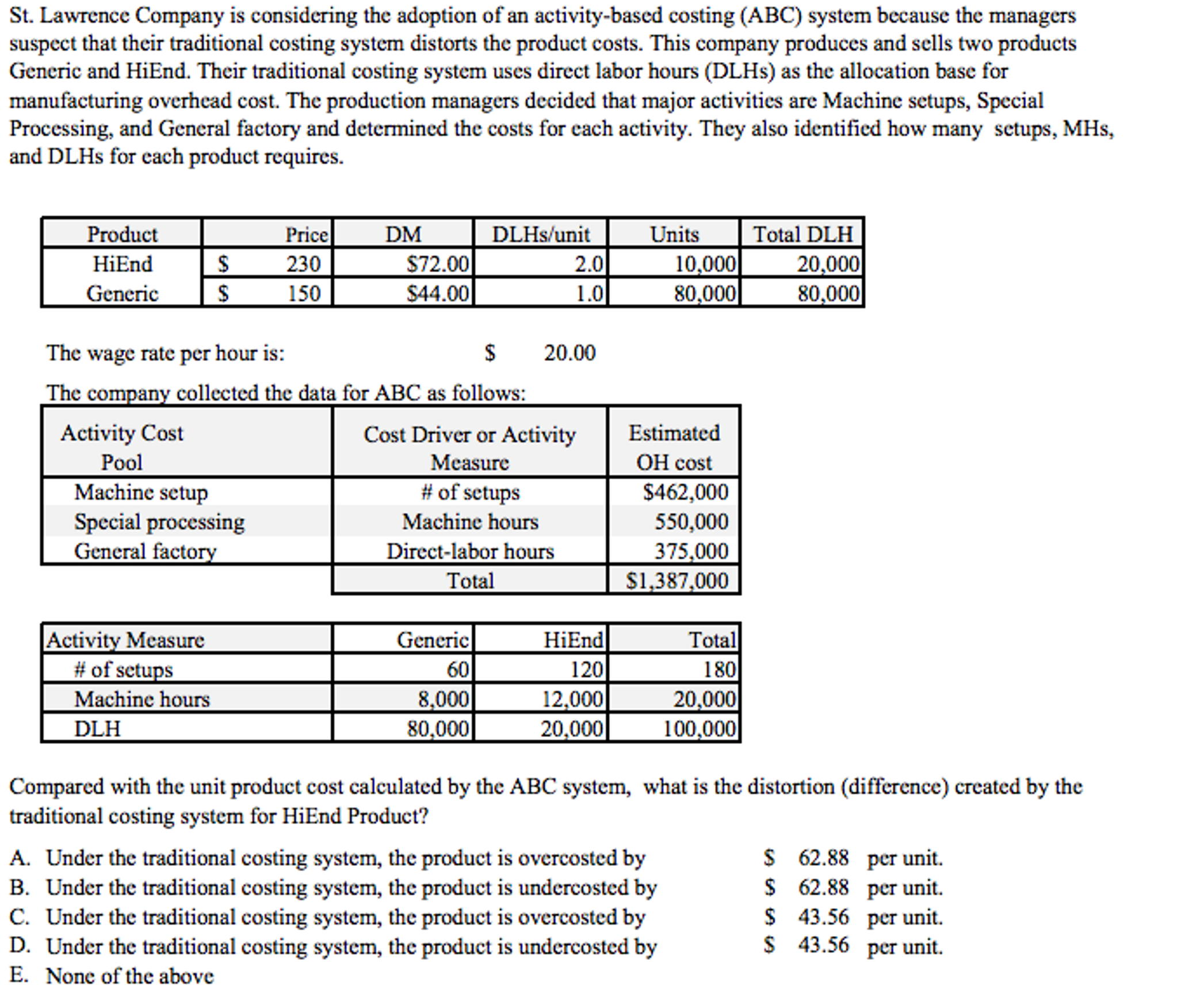
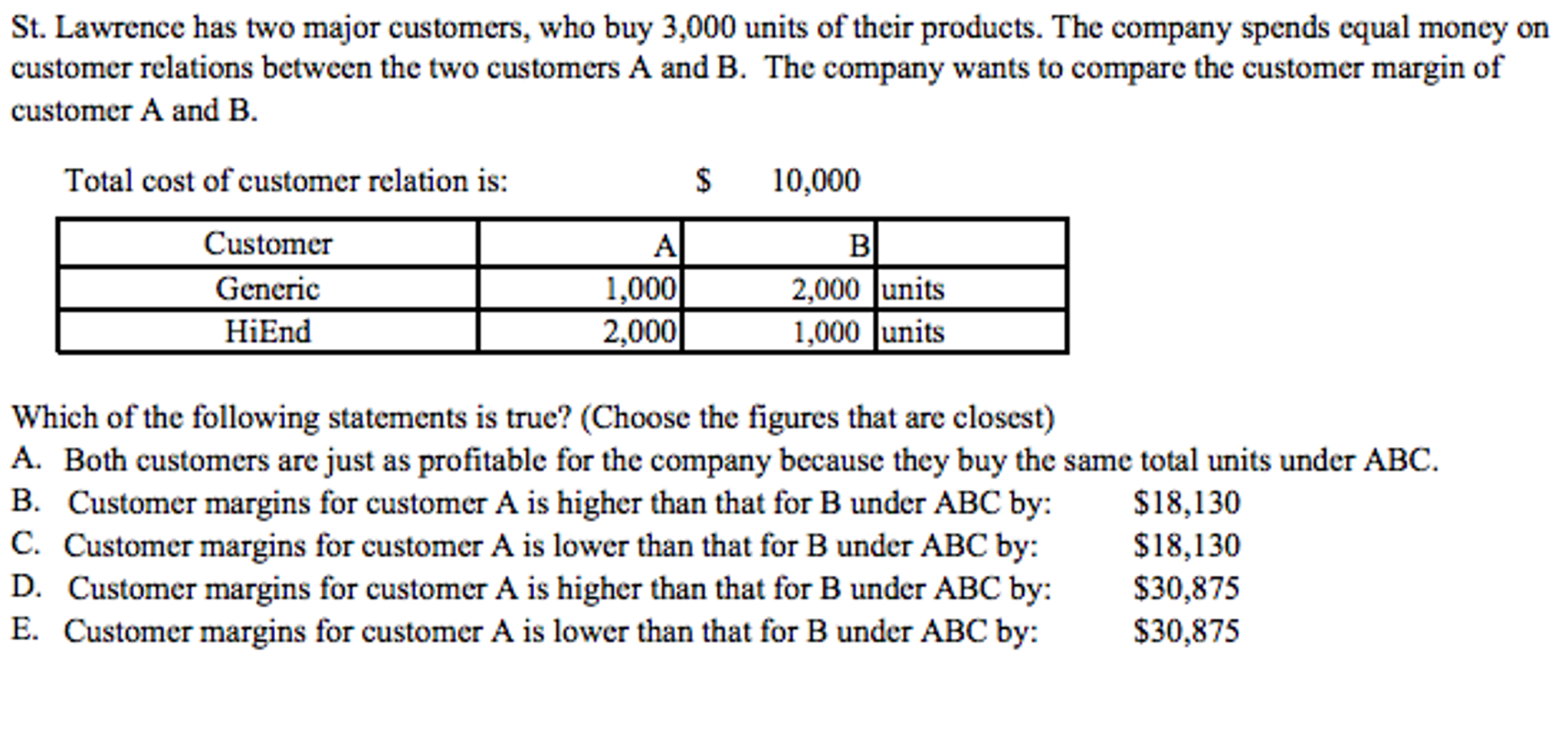
Lawrence Company is considering the adoption of an activity-based costing (ABC) system because the managers suspect that their traditional costing system distorts the product costs. This company produces and sells two products Generic and HiEnd. Their traditional costing system uses direct labor hours (DLHs) as the allocation base for manufacturing overhead cost. The production managers decided that major activities arc Machine setups, Special Processing, and General factory and determined the costs for each activity. They also identified how many setups, MHs, and DLHs for each product requires. The wage rate per hour is: $ 20.00 The company collected the data for ABC as follows: Compared with the unit product cost calculated by the ABC system, what is the distortion (difference) created by the traditional costing system for HiEnd Product? A. Under the traditional costing system, the product is overcosted by S 62.88 per unit. B. Under the traditional costing system, the product is undercosted by S 62.88 per unit. C. Under the traditional costing system, the product is overcosted by S 43.56 per unit. D. Under the traditional costing system, the product is undercosted by S 43.56 per unit. E. None of the above St. Lawrence has two major customers, who buy 3,000 units of their products. The company spends equal money on customer relations between the two customers A and B. The company wants to compare the customer margin of customer A and B. Total cost of customer relation is: $ 10,000 Which of the following statements is true? (Choose the figures that arc closest) A. Both customers are just as profitable for the company because they buy the same total units under ABC. B. Customer margins for customer A is higher than that for B under ABC by: $18.130 C. Customer margins for customer A is lower than that for B under ABC by: $18, 130 D. Customer margins for customer A is higher than that for B under ABC by: $30, 875 E. Customer margins for customer A is lower than that for B under ABC by: $30, 875
Step by Step Solution
There are 3 Steps involved in it

Get step-by-step solutions from verified subject matter experts