







Question: Capacitors Worksheet PHYS 421 First {Last Names 1. The capacitor from the example problem is detached from the battery. You then pull the plates further
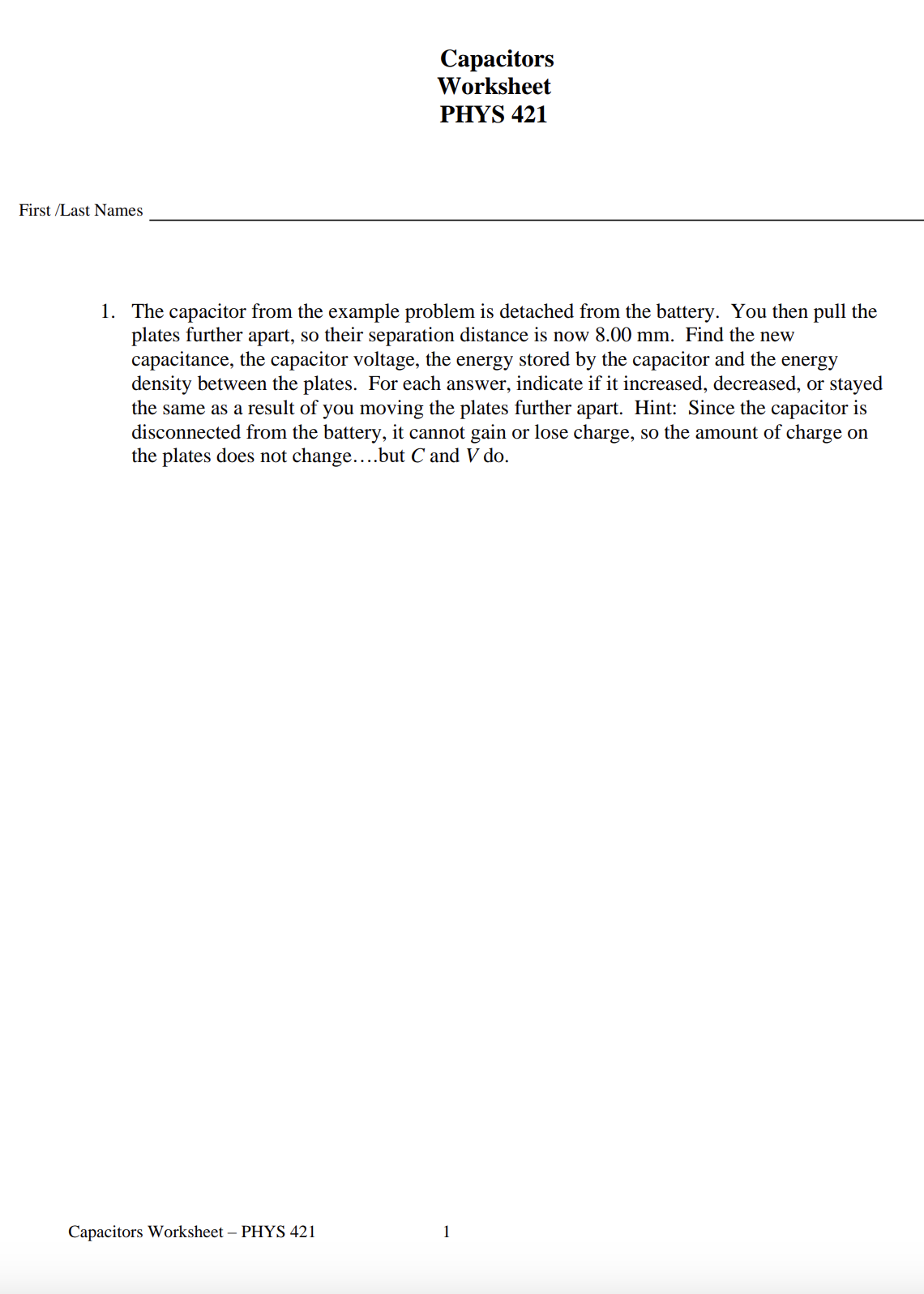
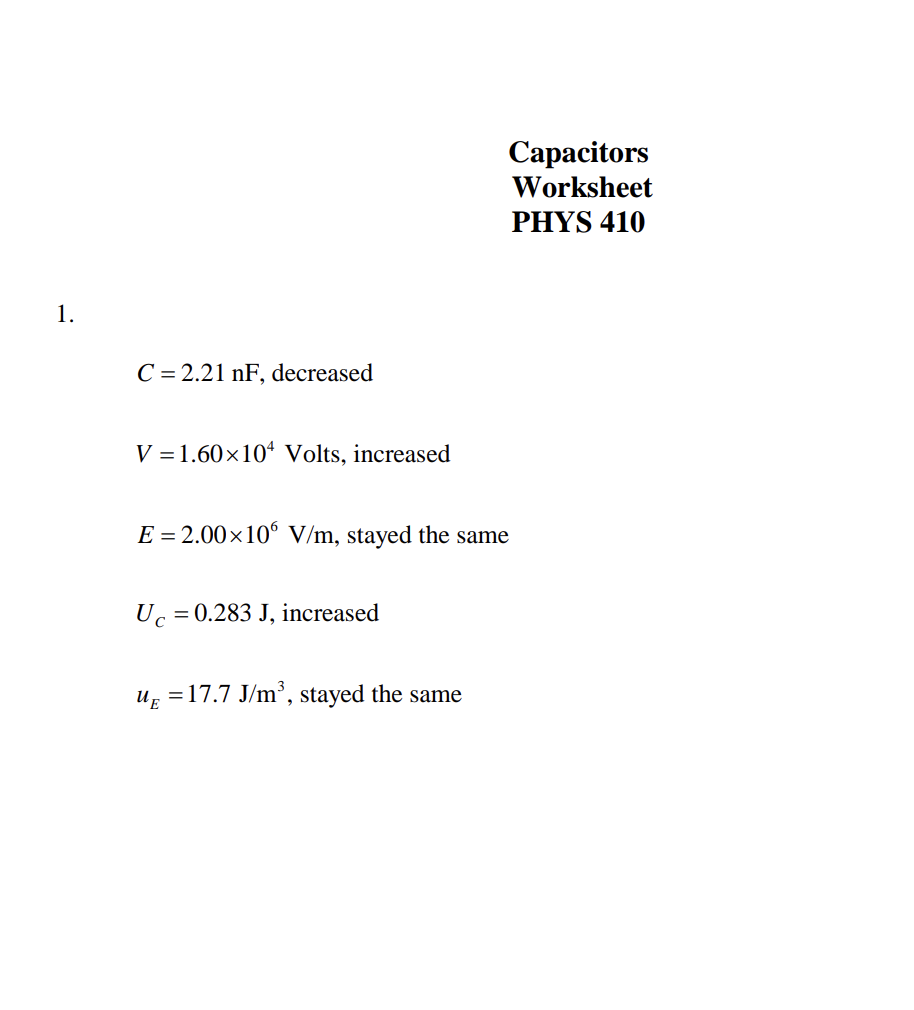
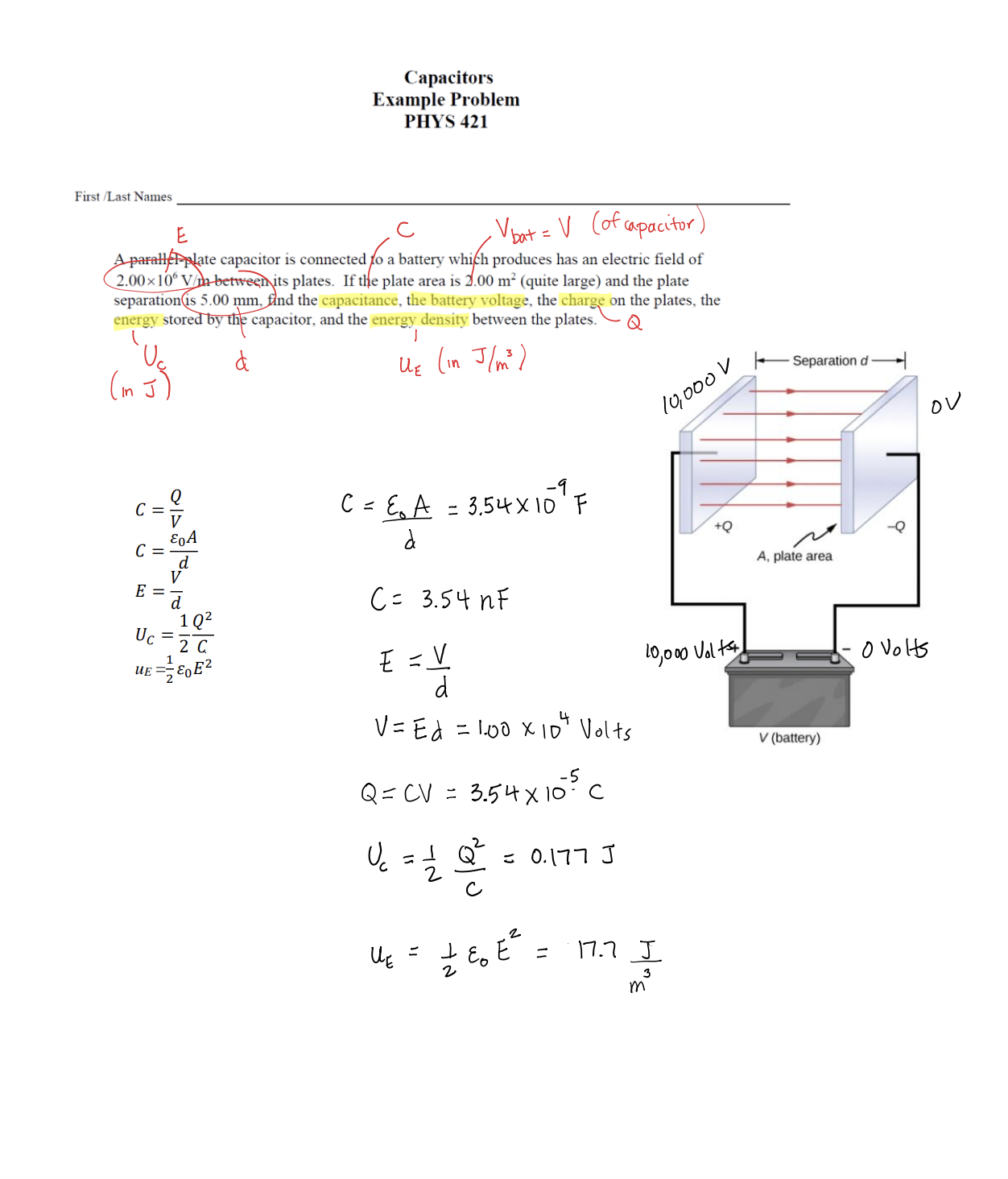
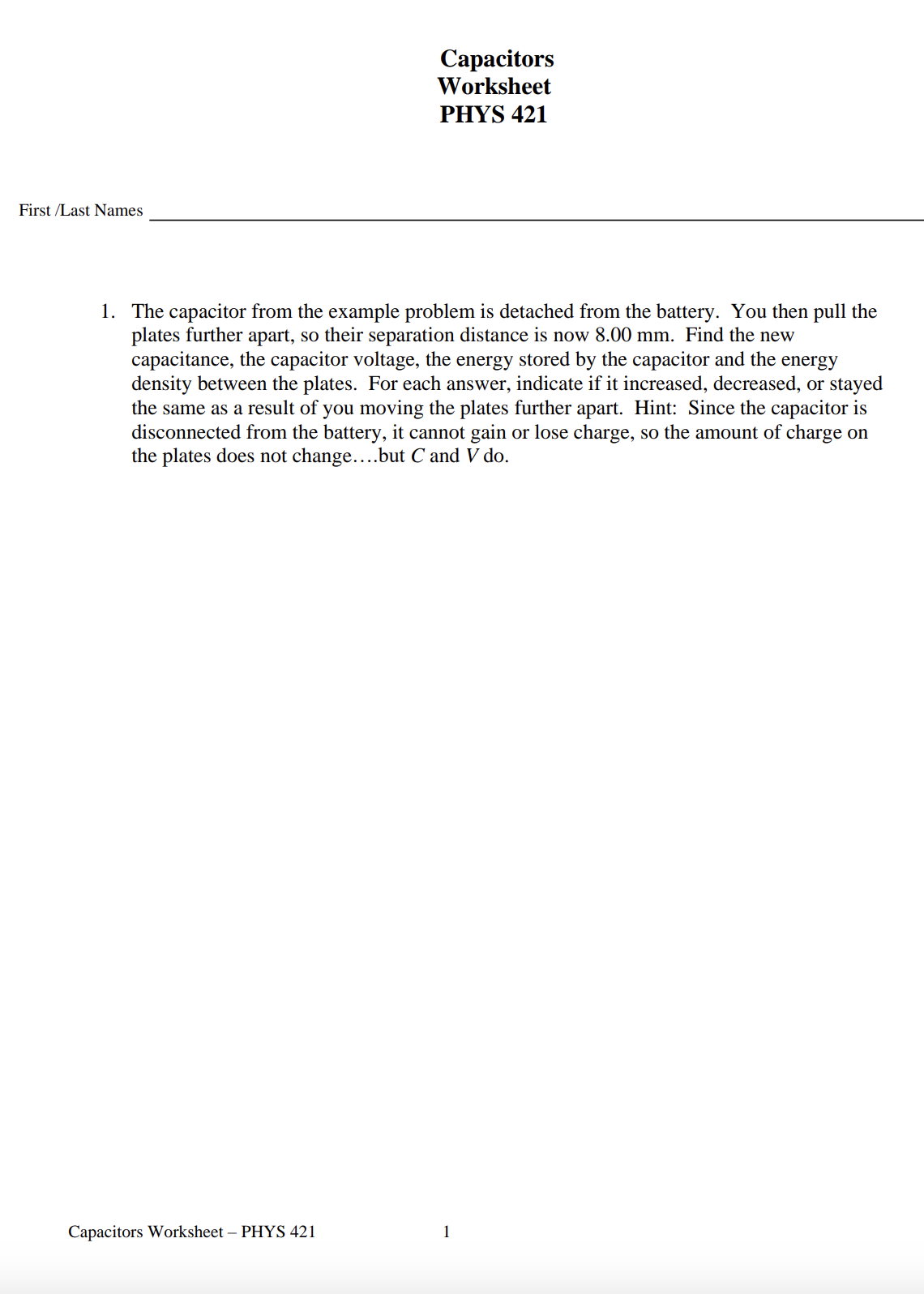
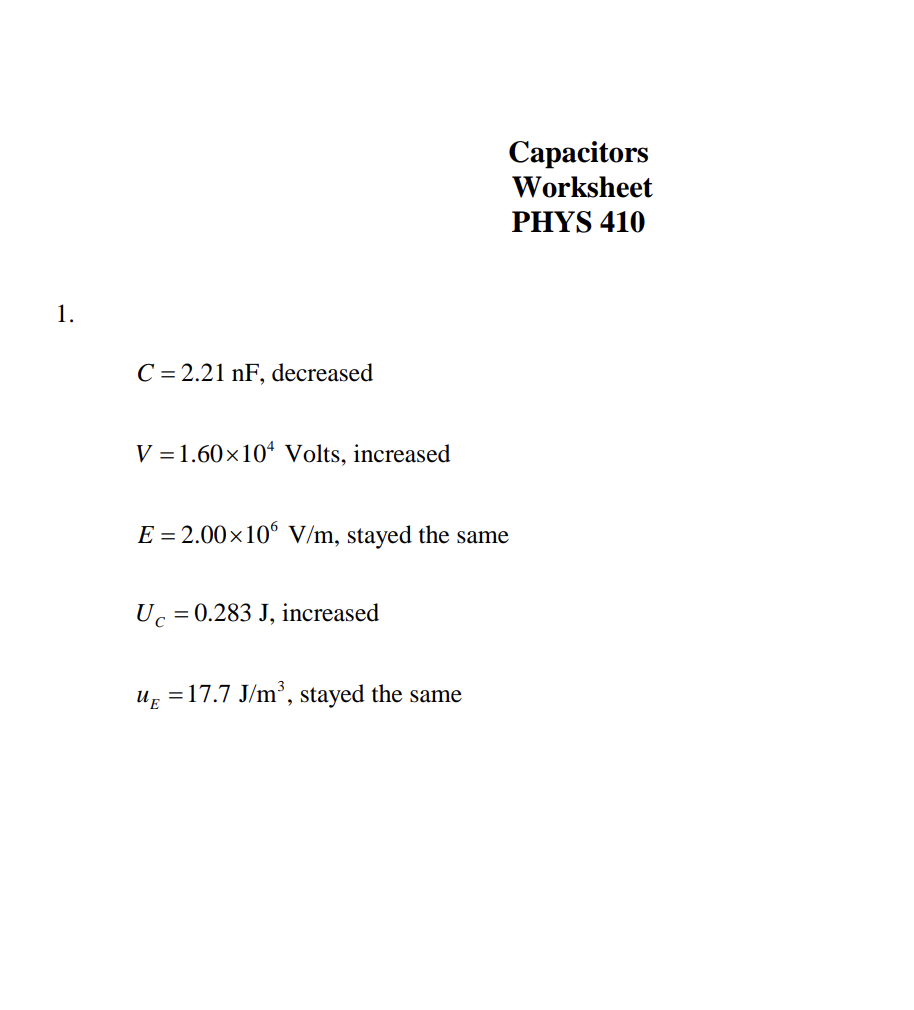
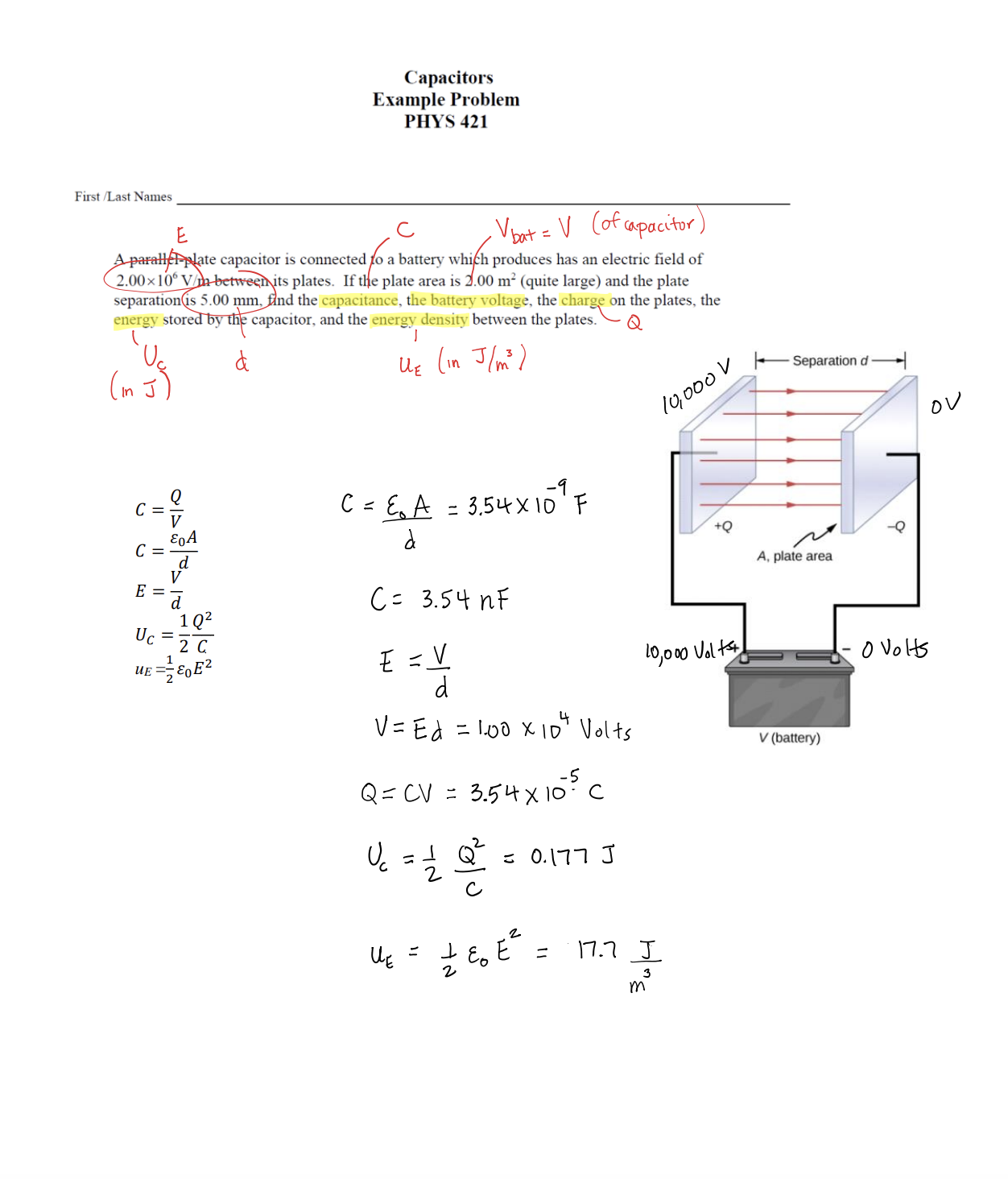
Capacitors Worksheet PHYS 421 First {Last Names 1. The capacitor from the example problem is detached from the battery. You then pull the plates further apart, so their separation distance is now 8.00 mm. Find the new capacitance, the capacitor voltage, the energy stored by the capacitor and the energy density between the plates. For each answer, indicate if it increased, decreased, or stayed the same as a result of you moving the plates further apart. Hint: Since the capacitor is disconnected from the battery, it cannot gain or lose charge, so the amount of charge on the plates does not change. ...but C and Vdo. Capacitors Worksheet PHYS 421 l Capacitors Worksheet PHYS 410 1. C =2.21 nF, decreased V =1.60x10* Volts, increased E =2.00x10' V/m, stayed the same Uc =0.283 J, increased up =17.7 J/m', stayed the sameCapacitors Example Problem PHYS 421 First /Last Names E C Vbat = V ( of capacitor ) A parallel-plate capacitor is connected to a battery which produces has an electric field of 2.00x 10' V/m-between its plates. If the plate area is 2.00 m (quite large) and the plate separation is 5.00 mm, find the capacitance, the battery voltage, the charge on the plates, the energy stored by the capacitor, and the energy density between the plates. Q a WE ( In J /m3 ) Separation d ( in J ) 10,000 V OV C= C = E. A = 3.54 X 10 F EOA +Q -Q C = d A, plate area E = INRIGA C = 3.54 nF UC = E = V 10,000 Volts+ 0 Volts d V = Ed = 1.00 x 10 Volts V (battery) Q = CV = 3.54 X 10 : C UC = = Q = 0. 17 7 J C 2 WE = LEE = 17.7 J m
Step by Step Solution
There are 3 Steps involved in it

Get step-by-step solutions from verified subject matter experts
 Study Help