



Question: Carefully read the case study below. Government's response to COVID-19: Has the Bill of Rights been given effect to? Under the heading The virus does
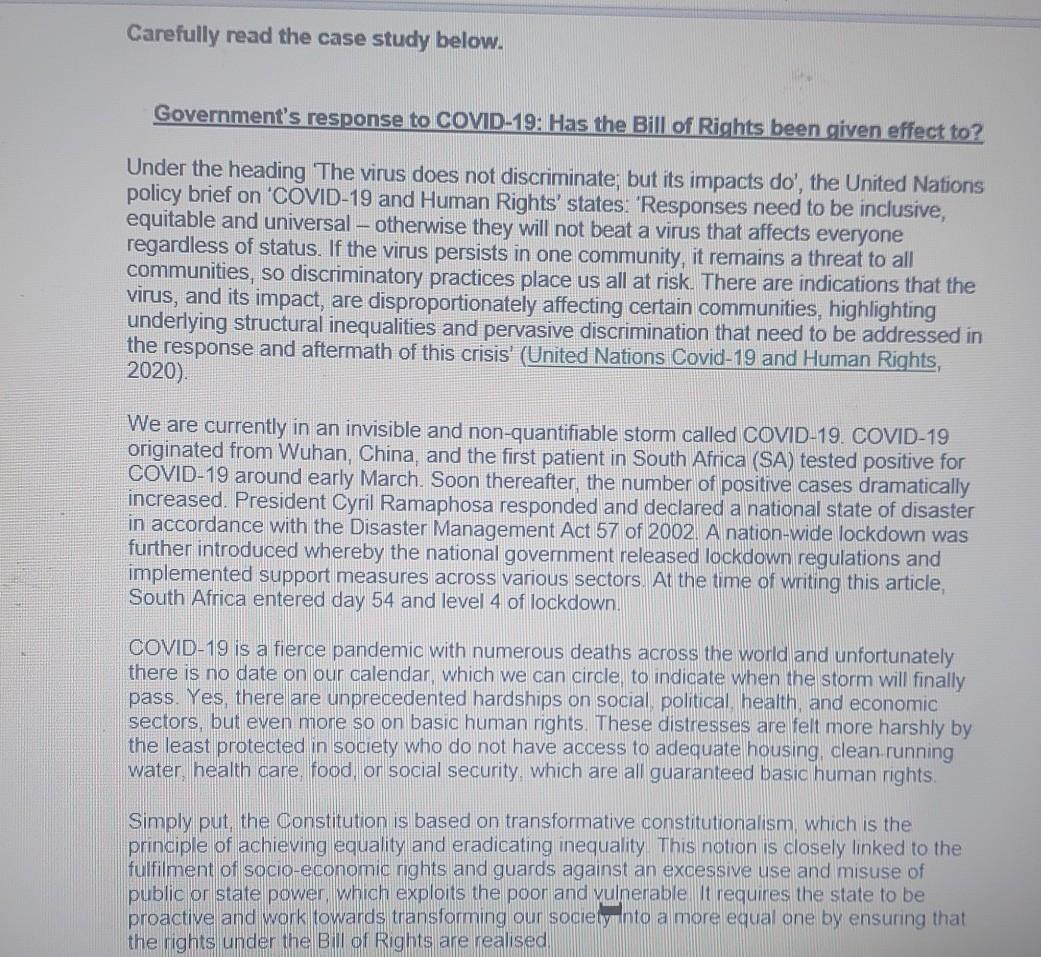
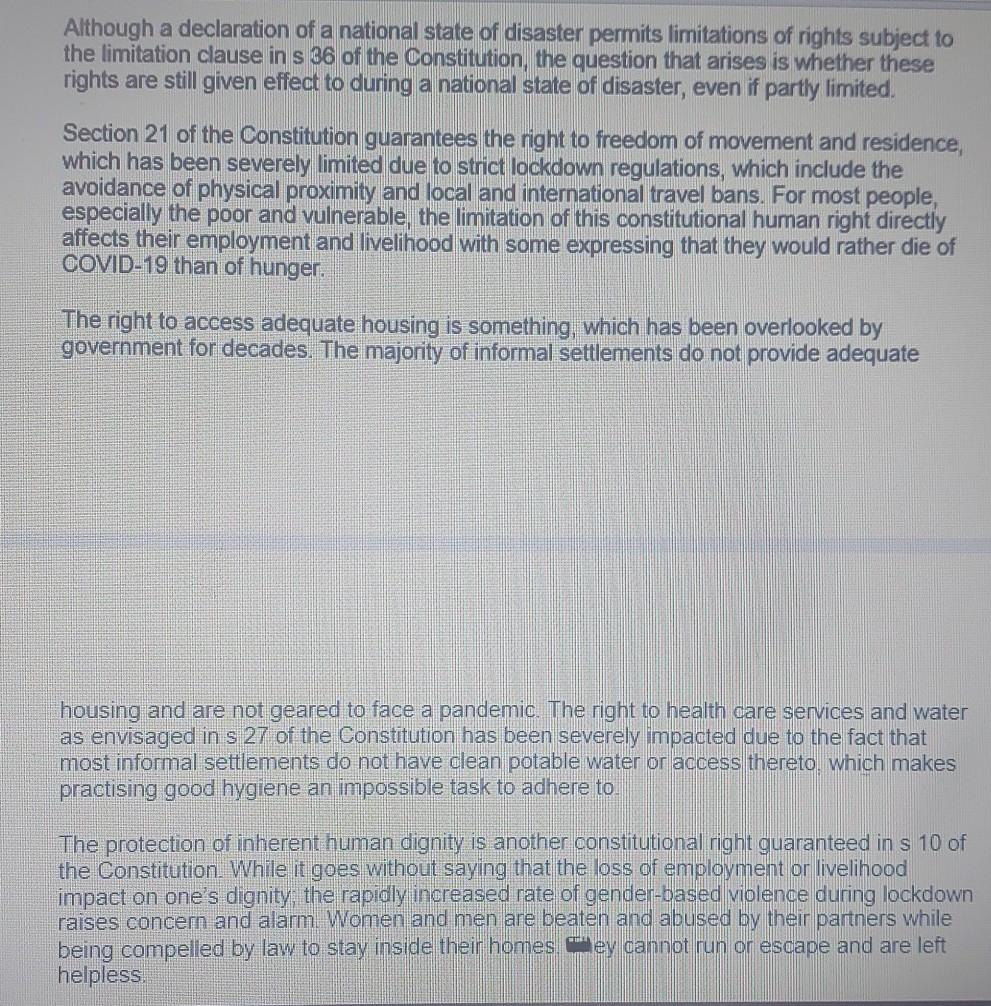
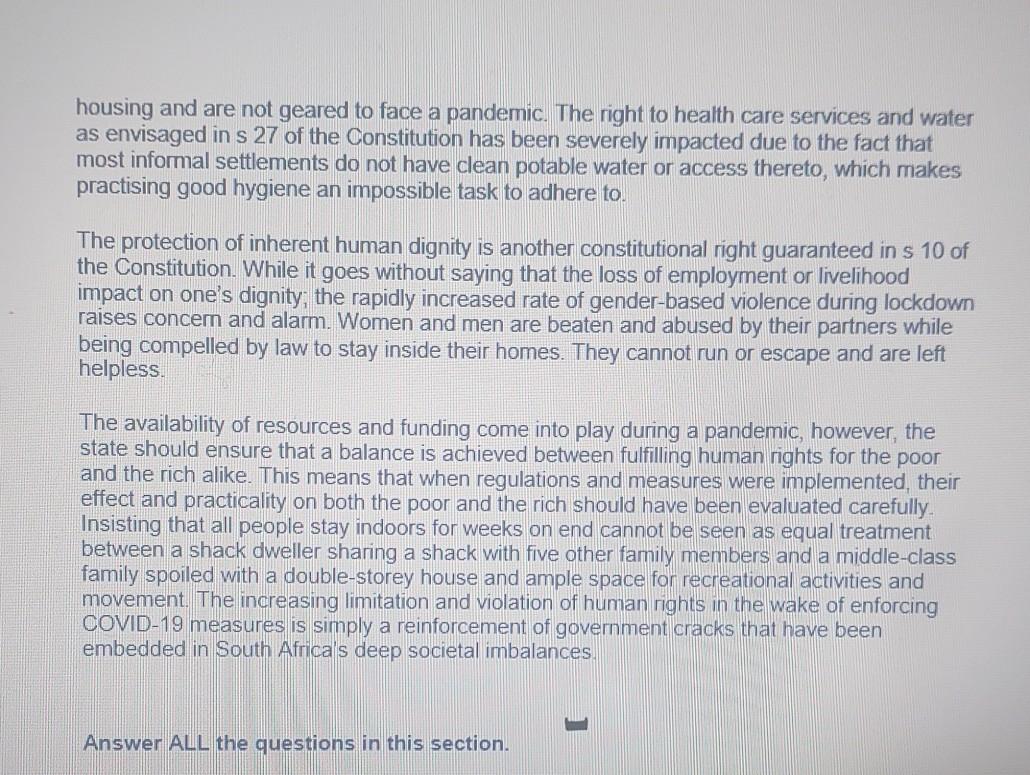
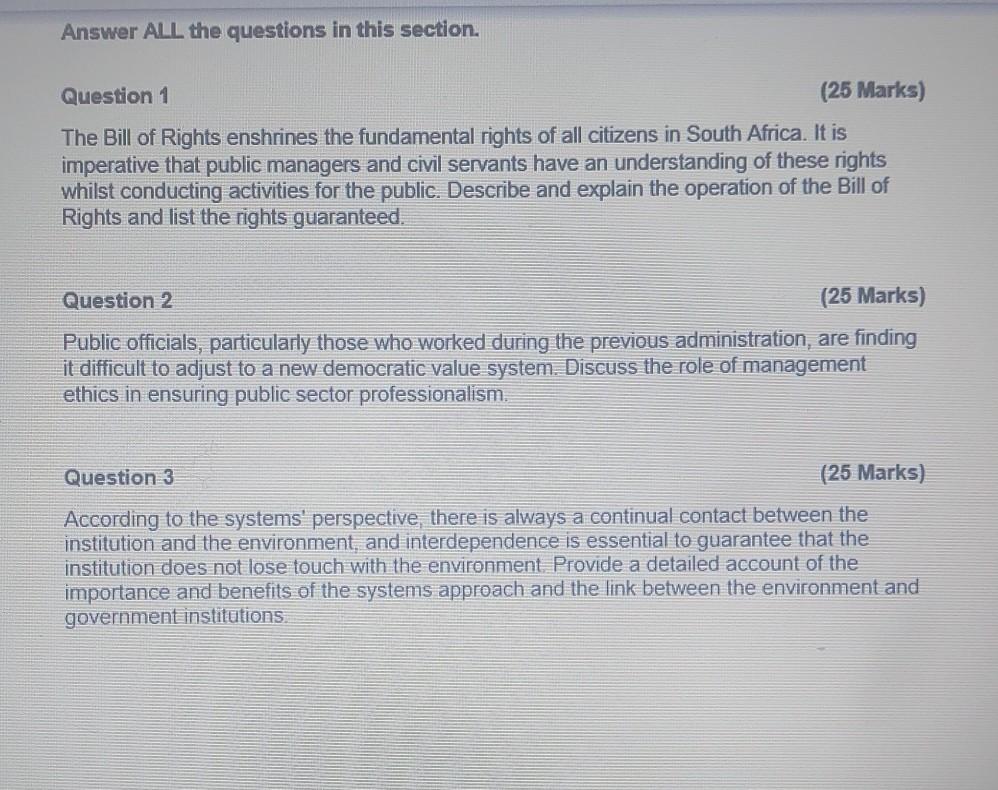
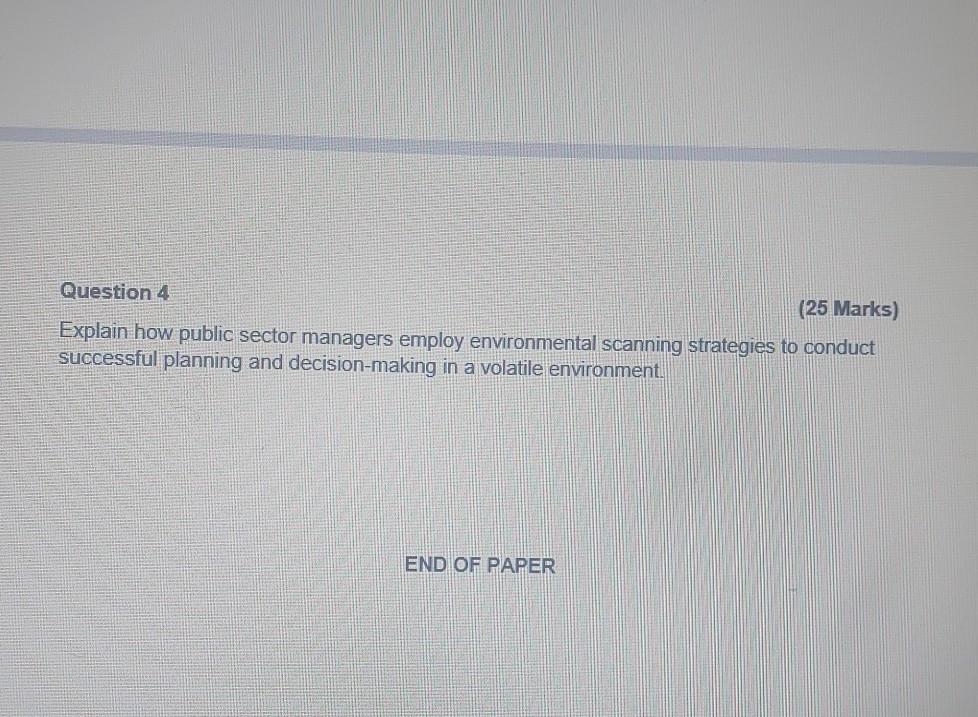
Carefully read the case study below. Government's response to COVID-19: Has the Bill of Rights been given effect to? Under the heading The virus does not discriminate, but its impacts do', the United Nations policy brief on 'COVID-19 and Human Rights' states: 'Responses need to be inclusive, equitable and universal - otherwise they will not beat a virus that affects everyone regardless of status. If the virus persists in one community, it remains a threat to all communities, so discriminatory practices place us all at risk. There are indications that the virus, and its impact, are disproportionately affecting certain communities, highlighting underlying structural inequalities and pervasive discrimination that need to be addressed in the response and aftermath of this crisis' (United Nations Covid-19 and Human Rights, 2020) We are currently in an invisible and non-quantifiable storm called COVID-19. COVID-19 originated from Wuhan, China, and the first patient in South Africa (SA) tested positive for COVID-19 around early March. Soon thereafter, the number of positive cases dramatically increased. President Cyril Ramaphosa responded and declared a national state of disaster in accordance with the Disaster Management Act 57 of 2002. A nation-wide lockdown was further introduced whereby the national government released lockdown regulations and implemented support measures across various sectors. At the time of writing this article, South Africa entered day 54 and level 4 of lockdown. COVID-19 is a fierce pandemic with numerous deaths across the world and unfortunately there is no date on our calendar, which we can circle to indicate when the storm will finally pass. Yes, there are unprecedented hardships on social political health and economic sectors, but even more so on basic human rights. These distresses are felt more harshly by the least protected in society who do not have access to adequate housing, clean running water health care, food, or social security, which are all guaranteed basic human rights. Simply put, the Constitution is based on transformative constitutionalism which is the principle of achieving equality and eradicating inequality This notion is closely linked to the fulfilment of socio-economic nghts and guards against an excessive use and misuse of public or state power, which exploits the poor and vulnerable It requires the state to be proactive and work towards transforming our society into a more equal one by ensuring that the rights under the Bill of Rights are realised Although a declaration of a national state of disaster permits limitations of rights subject to the limitation clause in s 36 of the Constitution, the question that arises is whether these rights are still given effect to during a national state of disaster, even if partly limited. Section 21 of the Constitution guarantees the right to freedom of movement and residence, which has been severely limited due to strict lockdown regulations, which include the avoidance of physical proximity and local and international travel bans. For most people, especially the poor and vulnerable, the limitation of this constitutional human right directly affects their employment and livelihood with some expressing that they would rather die of COVID-19 than of hunger. The right to access adequate housing is something, which has been overlooked by government for decades. The majority of informal settlements do not provide adequate housing and are not geared to face a pandemic. The right to health care services and water as envisaged in s 27 of the Constitution has been severely impacted due to the fact that most informal settlements do not have clean potable water or access thereto, which makes practising good hygiene an impossible task to adhere to The protection of inherent human dignity is another constitutional right guaranteed in s 10 of the Constitution. While it goes without saying that the loss of employment or livelihood impact on one's dignity, the rapidly increased rate of gender-based violence during lockdown raises concern and alarm. Women and men are beaten and abused by their partners while being compelled by law to stay inside their homes Cey cannot run or escape and are left helpless housing and are not geared to face a pandemic. The right to health care services and water as envisaged in s 27 of the Constitution has been severely impacted due to the fact that most informal settlements do not have clean potable water or access thereto, which makes practising good hygiene an impossible task to adhere to. The protection of inherent human dignity is another constitutional right guaranteed in s 10 of the Constitution. While it goes without saying that the loss of employment or livelihood impact on one's dignity, the rapidly increased rate of gender-based violence during lockdown raises concem and alarm. Women and men are beaten and abused by their partners while being compelled by law to stay inside their homes. They cannot run or escape and are left helpless The availability of resources and funding come into play during a pandemic, however, the state should ensure that a balance is achieved between fulfilling human rights for the poor and the rich alike. This means that when regulations and measures were implemented, their effect and practicality on both the poor and the rich should have been evaluated carefully Insisting that all people stay indoors for weeks on end cannot be seen as equal treatment between a shack dweller sharing a shack with five other family members and a middle-class family spoiled with a double-storey house and ample space for recreational activities and movement. The increasing limitation and violation of human rights in the wake of enforcing COVID-19 measures is simply a reinforcement of government cracks that have been embedded in South Africa's deep societal imbalances Answer ALL the questions in this section. Answer ALL the questions in this section. Question 1 (25 Marks) The Bill of Rights enshrines the fundamental rights of all citizens in South Africa. It is imperative that public managers and civil servants have an understanding of these rights whilst conducting activities for the public. Describe and explain the operation of the Bill of Rights and list the rights guaranteed. Question 2 (25 Marks) Public officials, particularly those who worked during the previous administration, are finding it difficult to adjust to a new democratic value system. Discuss the role of management ethics in ensuring public sector professionalism. Question 3 (25 Marks) According to the systems' perspective, there is always a continual contact between the institution and the environment, and interdependence is essential to guarantee that the institution does not lose touch with the environment Provide a detailed account of the importance and benefits of the systems approach and the link between the environment and government institutions. Question 4 (25 Marks) Explain how public sector managers employ environmental scanning strategies to conduct successful planning and decision-making in a volatile environment. END OF PAPER
Step by Step Solution
There are 3 Steps involved in it
1 Expert Approved Answer
Step: 1 Unlock

Question Has Been Solved by an Expert!
Get step-by-step solutions from verified subject matter experts
Step: 2 Unlock
Step: 3 Unlock