







Question: Case 1 Baum Co. has two processing departments: Fabrication and Assembly. In the Fabrication Department, metal is cut and formed into various components, which
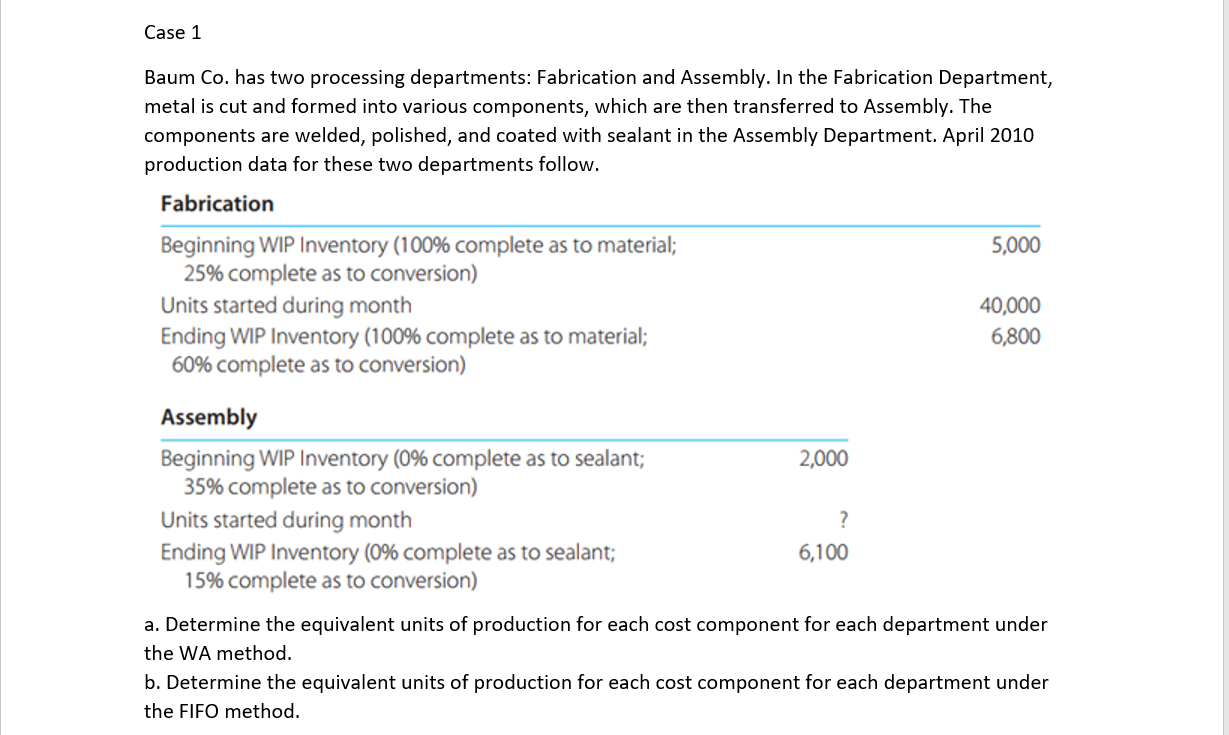
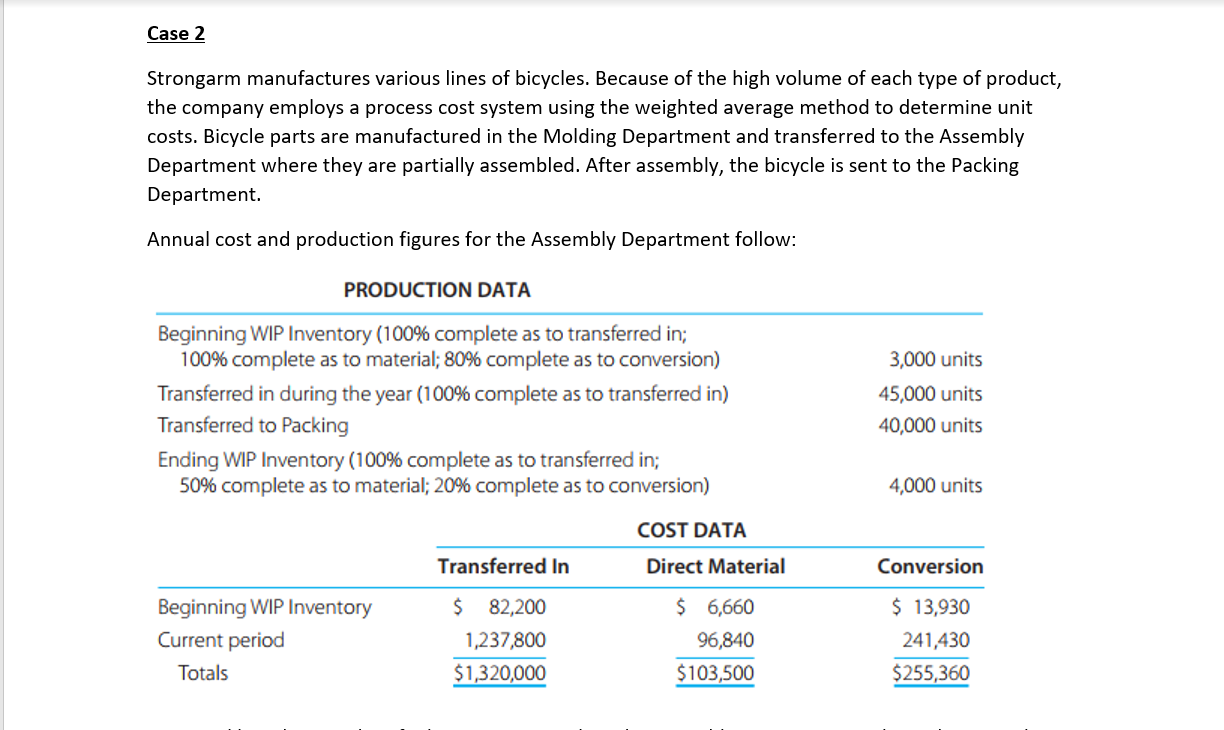
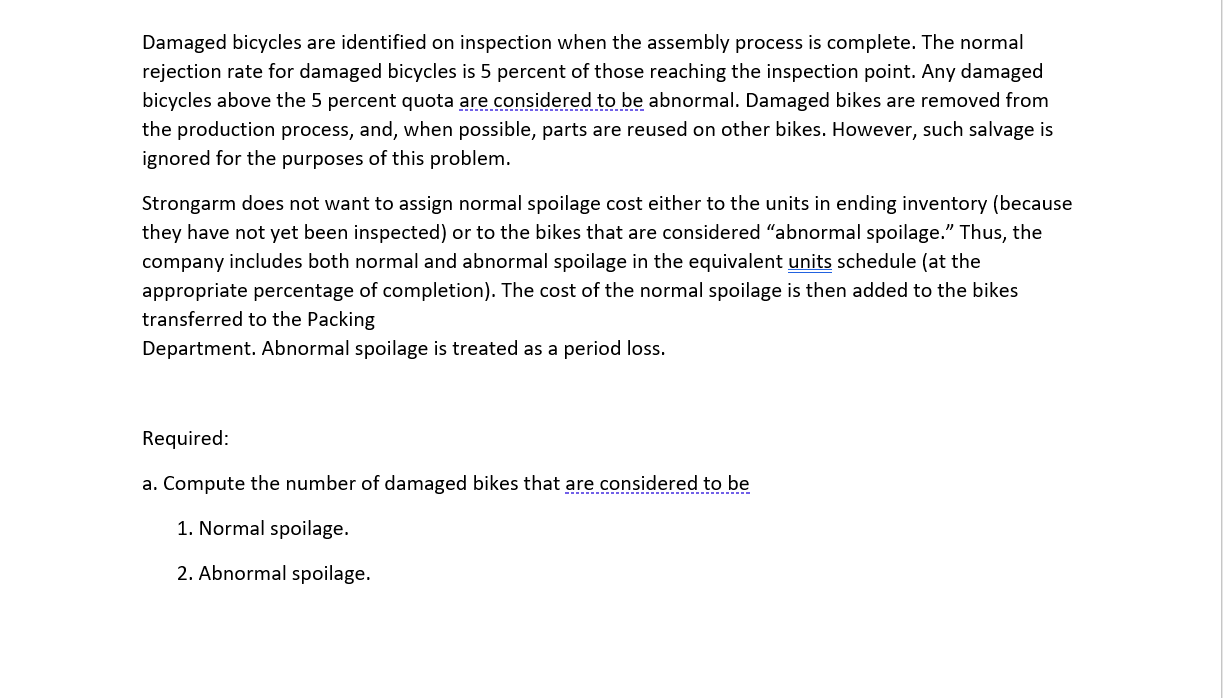
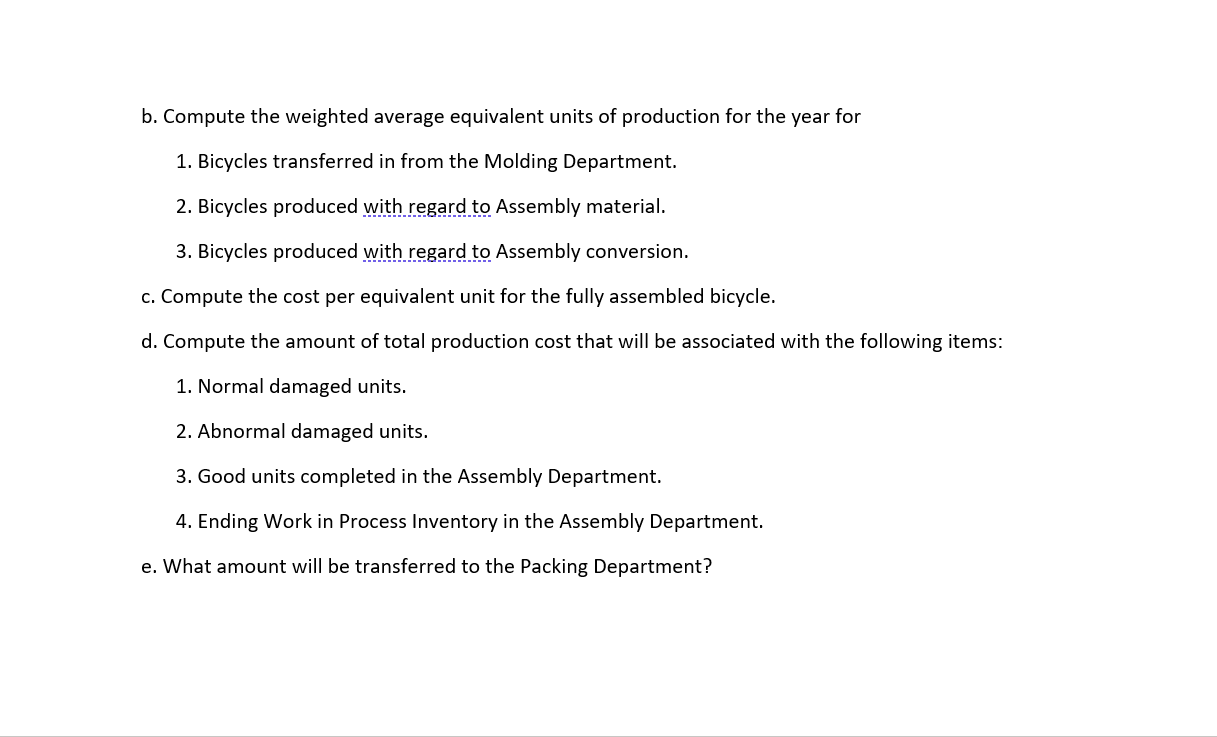
Case 1 Baum Co. has two processing departments: Fabrication and Assembly. In the Fabrication Department, metal is cut and formed into various components, which are then transferred to Assembly. The components are welded, polished, and coated with sealant in the Assembly Department. April 2010 production data for these two departments follow. Fabrication Beginning WIP Inventory (100% complete as to material; 25% complete as to conversion) Units started during month Ending WIP Inventory (100% complete as to material; 60% complete as to conversion) Assembly 5,000 40,000 6,800 Beginning WIP Inventory (0% complete as to sealant; 2,000 35% complete as to conversion) Units started during month Ending WIP Inventory (0% complete as to sealant; ? 6,100 15% complete as to conversion) a. Determine the equivalent units of production for each cost component for each department under the WA method. b. Determine the equivalent units of production for each cost component for each department under the FIFO method. Case 2 Strongarm manufactures various lines of bicycles. Because of the high volume of each type of product, the company employs a process cost system using the weighted average method to determine unit costs. Bicycle parts are manufactured in the Molding Department and transferred to the Assembly Department where they are partially assembled. After assembly, the bicycle is sent to the Packing Department. Annual cost and production figures for the Assembly Department follow: PRODUCTION DATA Beginning WIP Inventory (100% complete as to transferred in; 100% complete as to material; 80% complete as to conversion) 3,000 units Transferred in during the year (100% complete as to transferred in) 45,000 units Transferred to Packing 40,000 units Ending WIP Inventory (100% complete as to transferred in; 50% complete as to material; 20% complete as to conversion) 4,000 units Transferred In Beginning WIP Inventory Current period Totals $ 82,200 1,237,800 $1,320,000 COST DATA Direct Material $ 6,660 96,840 $103,500 Conversion $ 13,930 241,430 $255,360 Damaged bicycles are identified on inspection when the assembly process is complete. The normal rejection rate for damaged bicycles is 5 percent of those reaching the inspection point. Any damaged bicycles above the 5 percent quota are considered to be abnormal. Damaged bikes are removed from the production process, and, when possible, parts are reused on other bikes. However, such salvage is ignored for the purposes of this problem. Strongarm does not want to assign normal spoilage cost either to the units in ending inventory (because they have not yet been inspected) or to the bikes that are considered "abnormal spoilage." Thus, the company includes both normal and abnormal spoilage in the equivalent units schedule (at the appropriate percentage of completion). The cost of the normal spoilage is then added to the bikes transferred to the Packing Department. Abnormal spoilage is treated as a period loss. Required: a. Compute the number of damaged bikes that are considered to be 1. Normal spoilage. 2. Abnormal spoilage. b. Compute the weighted average equivalent units of production for the year for 1. Bicycles transferred in from the Molding Department. 2. Bicycles produced with regard to Assembly material. 3. Bicycles produced with regard to Assembly conversion. c. Compute the cost per equivalent unit for the fully assembled bicycle. d. Compute the amount of total production cost that will be associated with the following items: 1. Normal damaged units. 2. Abnormal damaged units. 3. Good units completed in the Assembly Department. 4. Ending Work in Process Inventory in the Assembly Department. e. What amount will be transferred to the Packing Department?
Step by Step Solution
There are 3 Steps involved in it
CASE1 Fabrication Department Weighted Average WA Method 1Material Direct Material Equivalent Units a Beginning WIP Inventory 5000 units 100 5000 equivalent units b Units started and completed 40000 un... View full answer

Get step-by-step solutions from verified subject matter experts
 Study Help