Question: Case 1: George Jones was a level 1 assembler in the heavy-components assembly department. He worked with six other assemblers of the same grade, constructing
Case 1: George Jones was a level 1 assembler in the heavy-components assembly department. He worked with six other assemblers of the same grade, constructing cabs for power shovels. The supervisor, Ralph Barnes, was in charge of three of these heavy-assembly crews. George Jones had been with GMFC for about four years. Over the past six months, he had spent all of his time with his present work crew. (*continued on picture)
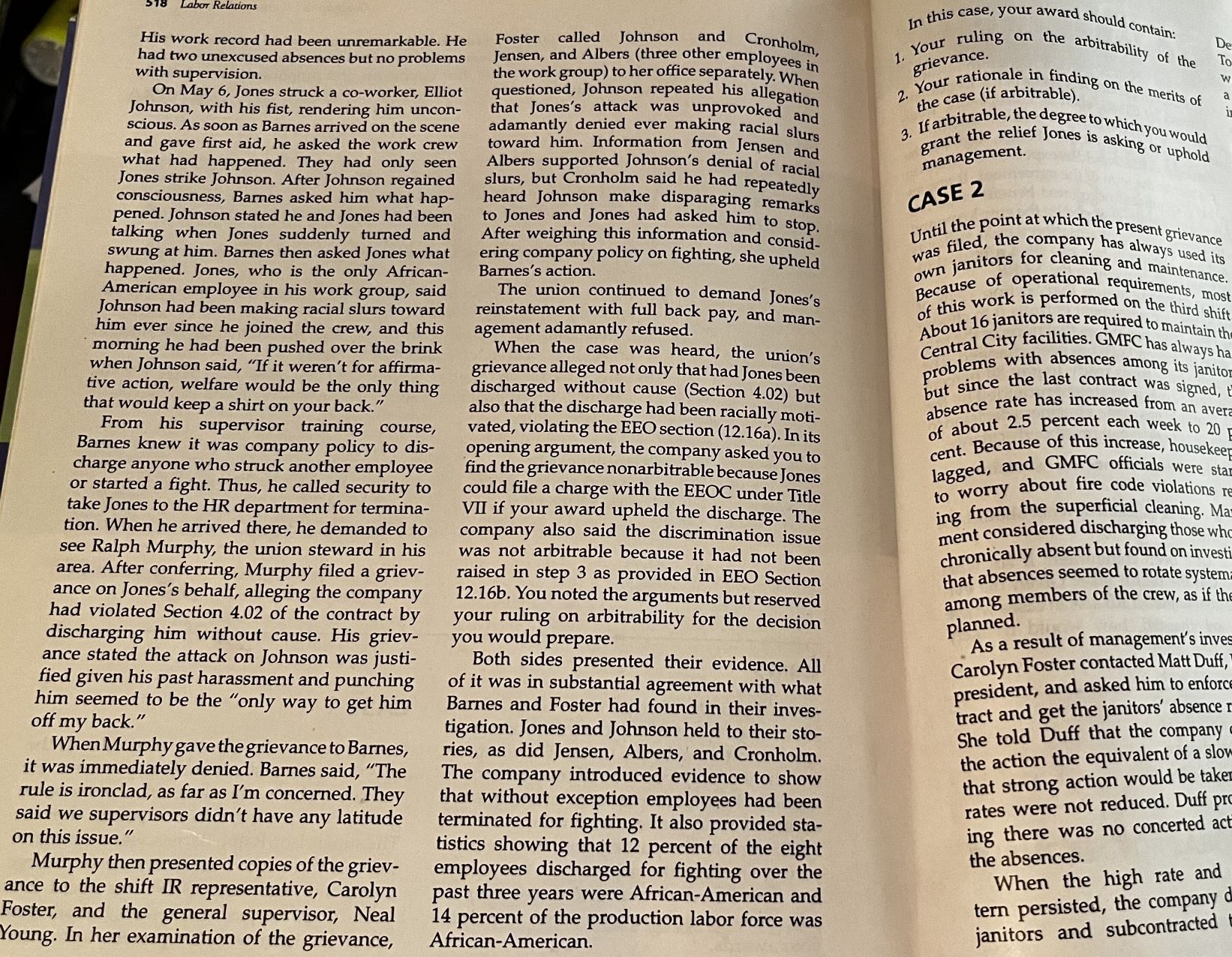
His work record had been unremarkable. He Foster called Johnson and Cronholm, had two unexcused absences but no problems Jensen, and Albers (three other employees in with supervision. the work group) to her office separately. When On May 6, Jones struck a co-worker, Elliot questioned, Johnson repeated his allegation Johnson, with his fist, rendering him uncon- that Jones's attack was unprovoked and scious. As soon as Barnes arrived on the scene adamantly denied ever making racial slurs and gave first aid, he asked the work crew toward him. Information from Jensen and what had happened. They had only seen Albers supported Johnson's denial of racial Jones strike Johnson. After Johnson regained slurs, but Cronholm said he had repeatedly pened. Johnson stated he and Jones had been to Jones and Jones had asked him to stop. talking when Jones suddenly turned and After weighing this information and considswung at him. Barnes then asked Jones what ering company policy on fighting, she upheld happened. Jones, who is the only African- Barnes's action. American employee in his work group, said The union continued to demand Jones's Johnson had been making racial slurs toward reinstatement with full back pay, and manhim ever since he joined the crew, and this agement adamantly refused. that would keep a shirt on your back." also that the discharge had been racially motiFrom his supervisor training course, vated, violating the EEO section(12.16a). In its Barnes knew it was company policy to dis- opening argument, the company asked you to charge anyone who struck another employee find the grievance nonarbitrable because Jones or started a fight. Thus, he called security to could file a charge with the EEOC under Title take Jones to the HR department for termina- VII if your award upheld the discharge. The tion. When he arrived there, he demanded to company also said the discrimination issue see Ralph Murphy, the union steward in his was not arbitrable because it had not been area. After conferring, Murphy filed a griev- raised in step 3 as provided in EEO Section ance on Jones's behalf, alleging the company 12.16b. You noted the arguments but reserved had violated Section 4.02 of the contract by your ruling on arbitrability for the decision discharging him without cause. His griev- you would prepare. ance stated the attack on Johnson was justi- Both sides presented their evidence. All fied given his past harassment and punching of it was in substantial agreement with what him seemed to be the "only way to get him Barnes and Foster had found to enforc was immediately denied. Barnes said, "The ries, as did Jensen, Albers, and Cronholm. le is ironclad, as far as I'm concerned. They that without exception employees had been this issue." terminated for fighting. It also provided staMurphy then presented copies of the griev- employees discharged for fighting over the e to the shift IR representative, Carolyn past three years were African-American and er, and the general supervisor, Neal 14 percent of the production labor force was ig. In her examination of the grievance, African-American









 Study Help