







Question: Case Question on Starwood Hotel 1. Explain using relevant examples from the case, the relationship between employee experience engagement, customer satisfaction and company profitability. 2.
Case Question on Starwood Hotel 1. Explain using relevant examples from the case, the relationship between employee experience engagement, customer satisfaction and company profitability. 2. Given the facts of the case, describe how service companies can differentiate themselves from their competitors and explain your understanding of HR analytics. 3. Describe the process, which the study used to achieve a better survey. 4. Explain the issues that can influence employees motivation to provide excellent service.
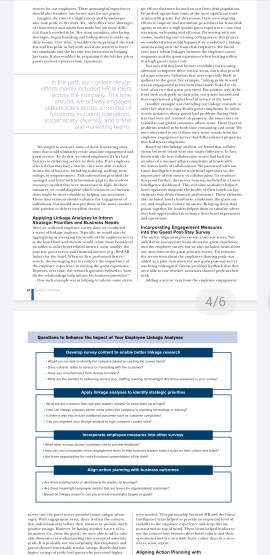
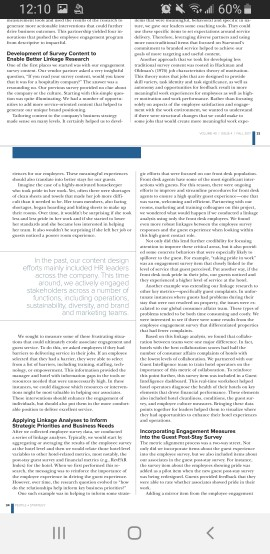
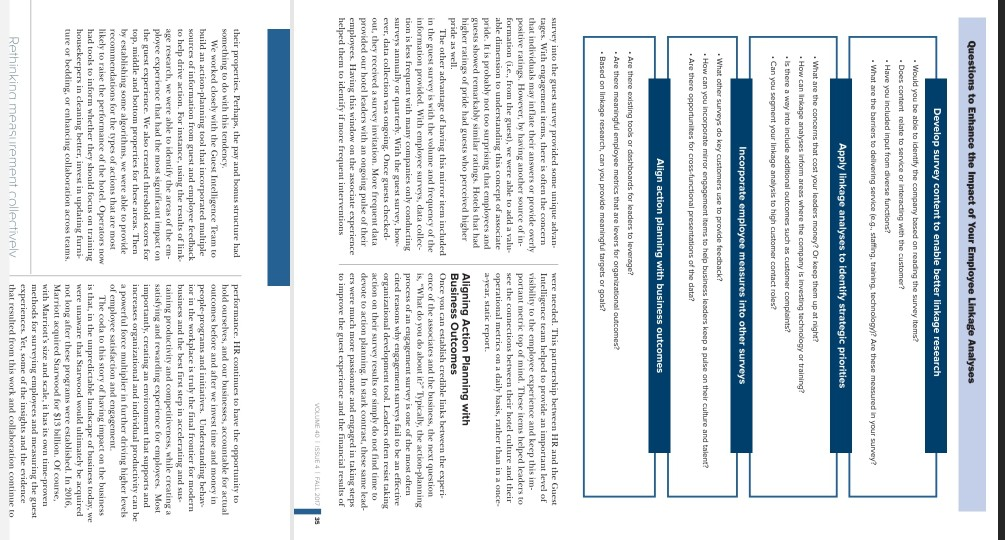
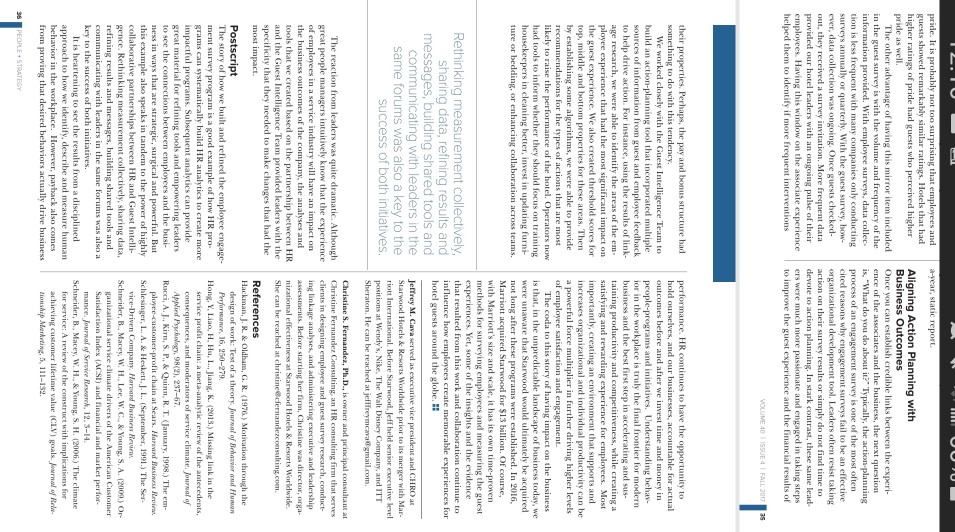
Case Study: Starwood Hotels From test Engberenant Survey to the Cut Experience How 4/6 12:09 P a O il 60% Case Study: Starwood Hotels From Descriptive to Impact Linking the Employee Engagement Survey to the US Experience 12:10 PS OS 60% Bound, we actively engaged Stakeholders across a number of non cuong operations and marking as Questions to enhance the Impact of Your Employee Linkage Analyses Develop survey content to enable better linkage research . Would you be able to identify the company based on reading the survey items? - Does content relate to service or interacting with the customer? Have you included input from diverse functions? What are the barriers to delivering service leg., staffing, training, technologyl? Are these measured in your survey? Apply linkage analyses to identify strategic priorities What are the concerns that cost your leaders money? Or keep them up at night? . How can Inicage analyses inform areas where the company is investing technology or training? Is there a way into include additional outcomes such as customer complaints? . Can you segment your linkage analysis to high customer contact roles? Incorporate employee measures into other surveys What other surveys do key customers use to provide feedback? . How can you incorporate mirror engagement items to help business leaders keep a pulse on their culture and talent? Are there opportunities for cross-functional presentations of the data? Align action planning with business outcomes . Are there exsting tools or dashboards for leaders to leverage? . Are there meaningful employee metrics that are levers for organizational outcomes? . Based on linkage research, can you provide meaningful targets or goals? were needed. This partnership between HR and the Guest Intelligence team helped to provide an important level of visibility to the employee experience and keep this im- portant metric top of mind. These items helped leaders to see the connections between their hotel culture and their operational metrics on a daily basis, rather than in a once- a year, static report. survey into the guest survey provided some unique advan tages. With engagement items, there is often the concern that individuals may inflate their answers or provide overly positive ratings. However, by having another source of in- formation i.e., from the guest), we were able to add a valu able dimension to understanding this concept of associate pride. It is probably not too surprising that employees and guests showed remarkably similar ratings. Hotels that had higher ratings of pride had guests who perceived higher pride as well. The other advantage of having this mirror item included in the guest survey is with the volume and frequency of the information provided. With employee surveys, data collec- tion is less frequent with many companies only conducting surveys annually or quarterly. With the guest survey, how ever, data collection was ongoing. Once guests checked out, they received a survey invitation. More frequent data provided our hotel leaders with an ongoing pulse of their employees. Having this window on the associate experience helped them to identify if more frequent interventions Aligning Action Planning with Business Outcomes Once you can establish credible links between the experi- ence of the associates and the business, the next question is, "What do you do about it? Typically, the action-planning process of an engagement survey is one of the most often cited reasons why engagement surveys fail to be an effective organizational development tool. Leaders often resist taking action on their survey results or simply do not find time to devote to action planning. In stark contrast, these same lead- ers were much more passionate and engaged in taking steps to improve the guest experience and the financial results of VOLUME 40 TISSUE 4 FALL 2017 their properties. Perhaps, the pay and boms structure had something to do with this tendency. We worked closely with the Guest Intelligence Team to build an action planning tool that incorporated multiple sources of information from guest and employee feedback to help drive action. For instance, using the results of link age research, we were able to identity the areas of the em- ployee experience that had the most significant impact on the guest experience. We also created threshold scores for top, middle and bottom properties for these areas. Then by establishing some algorithms, we were able to provide recommendations for the types of actions that are most likely to raise the performance of the hotel. Operators now had tools to inform whether they should focus on training housekeepers in cleaning better, invest in updating furns ture or bedding or enhancing collaboration across teams. performance. HR continues to have the opportunity to hold ourselves, and our businesses, accountable for actual outcomes before and after we invest time and money in people programs and initiatives. Understanding behar ior in the workplace is truly the final frontier for modern business and the best first step in accelerating and sus- taining productivity and competitiveness, while creating a satisfying and rewarding experience for employees. Most importantly, creating an environment that supports and increases organizational and individual productivity can be a powerful force multiplier in further driving higher levels of employee satisfaction and engagement The coda to this story of having impact on the business is that, in the unpredictable landscape of business today, we were unaware that Starwood would ultimately be acquired not long after these programs were established. In 2016, Marriott acquired Starwood for $13 billion. Of course, with Marriott's size and scale. It has its own time proven methods for surveying employees and measuring the guest experiences. Yet, some of the insights and the evidence that resulted from this work and collaboration continue to Rethinkina measurement collectively " TU -year, Static report. pride. It is probably not too surprising that employees and guests showed remarkably similar ratings. Hotels that had higher ratings of pride had guests who perceived higher pride as well. The other advantage of having this mirror item included in the guest survey is with the volume and frequency of the information provided. With employee surveys, data collec tion is less frequent with many companies only conducting surveys annually or quarterly. With the guest survey, how- ever, data collection was ongoing. Once guests checked- out, they received a survey invitation. More frequent data provided our hotel leaders with an ongoing pulse of their employees. Having this window on the associate experience helped them to identify if more frequent interventions Aligning Action Planning with Business Outcomes Once you can establish credible links between the experi- ence of the associates and the business, the next question is, "What do you do about it? Typically, the action planning process of an engagement survey is one of the most often cited reasons why engagement surveys fail to be an effective organizational development tool. Leaders often resist taking action on their survey results or simply do not find time to clevote to action planning. In stark contrast, these same lead ers were much more passionate and engaged in taking steps to improve the guest experience and the financial results of VOLUME 40 ISSUE 4 FALL 2017 their properties. Perhaps, the pay and bonus structure had something to do with this tendency. We worked closely with the Guest Intelligence Team to build an action-planning tool that incorporated multiple sources of information from guest and employee feedback to help drive action. For instance, using the results of link- e research, we were able to identify the areas of the em ployee experience that had the most significant impact on the guest experience. We also create threshold scores for top, middle and bottom properties for these areas. Then tyy establishing some algorithms, we were able to provide recommendations for the types of actions that are most likely to raise the performance of the hotel. Operators now had tools to inform whether they should focus on training housekeepers in cleaning better, invest in updating furni ture or bedding, or enhancing collaboration across teams. performance. HR continues to have the opportunity to hold ourselves, and our businesses, accountable for actual outcomes before and after we invest time and money in people-programs and initiatives. Understanding behas- ior in the workplace is truly the final frontier for modern business and the best first step in accelerating and sus- taining productivity and competitiveness, while creating a satisfying and rewarding experience for employees. Most importantly, creating an environment that supports and increases organizational and individual productivity can be a powerful force multiplier in further driving higher levels of employee satisfaction and engagement. The coda to this story of having impact on the business is that, in the unpredictable landscape of business today, we were unaware that Starwood would ultimately be acquired not long after these programs were established. In 2016, Marriott acquired Starwood for $13 billion. Of course, with Marriott's size and scale, it has its own time-proven methods for surveying employees and measuring the guest experiences. Yet, some of the insights and the evidence that resulted from this work and collaboration continue to influence how employees create memorable experiences for hotel guests around the globe. !! Rethinking measurement collectively, sharing data, refining results and messages, building shared tools and communicating with leaders in the same forums was also a key to the Success of both initiatives. Jeffrey M. Cava served as executive vice president and CHRO at Starwood Hotels & Resorts Worldheide prior to its merger with Mar- riott International. Before Sard , Jebeld senior executive level positions at Wendy's, Nike, The Walt Disney Company, and ITT Sheraton. He can be reached at jellemcavgmail.com The reaction from leaders was quite dramatic. Although great people managers intuitively know that the experience of employees in a service industry will have an impact on the business outcomes of the company, the analyses and tools that we created based on the partnership between HR and the Guest Intelligence Team provided leaders with the specificity that they needed to make changes that had the most impact Christine S. Fernandez, Ph.D., is owner and pripal consultant al Christine Fernandez Consulting an HR Consulting firm that serves clients in designing employee and guest survey research, conduct ing linkage analyses, and administering executive and leadership assessments. Before starting her firm, Christine was director, orga- nizational effectiveness at Starwood Hotels & Resorts Worldwide. She can be reached at christine oder anderconsulting.com Postscript The story of how we built and refined the employee engage ment survey program is a good example of how HR pro grams can systematically build HR analytics to create more impactful programs. Subsequent analytics can provide great material for refining tools and empowering leaders to see the connections between employees and the busi- ness in ways that are strategic, surgical and powerful. But this example als speaks in tandem to the power of highly collaborative partnerships between HR and Guest Intelli- gence. Rethinking measurement collectively, sharing data, refining results and messages, building shared tools and communicating with leaders in the same forums was also a key to the success of both initiatives. It is heartening to see the results from a disciplined approach to how we identity, describe and measure human behavior in the workplace. However, paytrack also comes from proving that desired behaviors actually drive business References Hackman, J. R. & Oldham, G. R. (1976.) Motivation through the design of work: Test of a theory fournal of Behavior and HRM Performance, 16, 250-279. Hong, Y. Liao, H, Hu, L., Jiang, K. (2015.) Missing link in the service proti chaina m aanalytic review of the antecedents, consequences, and moderators of service climate. Journal of Applied Psychology, 98(2), 237-67. Rucci, A. J. Kirn, S.P., & Quinn, R.T. (January, 1998.) The em ployee-customer profit chain at Sears. Hard Business Retina Schlesinger, L. A. & Heskel. (September, 1991.) The Ser vice-Driven Company. Harvard Business Revi Schneider, B., Macey, W. H., Lee, W. C., & Young, S.A. (2009.) Or ganizational service climate drivers of the American Customer Satisfaction Index (MOSI) and financial and market perfor mance. Journal of Service Research. 12. 3-14. Schneider, B., Macey, W. H., & Young, S. H. (2006.) The climate for service: A review of the construct with implications for achieving customer lifetime value (CV) goals.forway Race Lionship Marketing, 111-132. EOPLE STRATEGY Case Study: Starwood Hotels From test Engberenant Survey to the Cut Experience How 4/6 12:09 P a O il 60% Case Study: Starwood Hotels From Descriptive to Impact Linking the Employee Engagement Survey to the US Experience 12:10 PS OS 60% Bound, we actively engaged Stakeholders across a number of non cuong operations and marking as Questions to enhance the Impact of Your Employee Linkage Analyses Develop survey content to enable better linkage research . Would you be able to identify the company based on reading the survey items? - Does content relate to service or interacting with the customer? Have you included input from diverse functions? What are the barriers to delivering service leg., staffing, training, technologyl? Are these measured in your survey? Apply linkage analyses to identify strategic priorities What are the concerns that cost your leaders money? Or keep them up at night? . How can Inicage analyses inform areas where the company is investing technology or training? Is there a way into include additional outcomes such as customer complaints? . Can you segment your linkage analysis to high customer contact roles? Incorporate employee measures into other surveys What other surveys do key customers use to provide feedback? . How can you incorporate mirror engagement items to help business leaders keep a pulse on their culture and talent? Are there opportunities for cross-functional presentations of the data? Align action planning with business outcomes . Are there exsting tools or dashboards for leaders to leverage? . Are there meaningful employee metrics that are levers for organizational outcomes? . Based on linkage research, can you provide meaningful targets or goals? were needed. This partnership between HR and the Guest Intelligence team helped to provide an important level of visibility to the employee experience and keep this im- portant metric top of mind. These items helped leaders to see the connections between their hotel culture and their operational metrics on a daily basis, rather than in a once- a year, static report. survey into the guest survey provided some unique advan tages. With engagement items, there is often the concern that individuals may inflate their answers or provide overly positive ratings. However, by having another source of in- formation i.e., from the guest), we were able to add a valu able dimension to understanding this concept of associate pride. It is probably not too surprising that employees and guests showed remarkably similar ratings. Hotels that had higher ratings of pride had guests who perceived higher pride as well. The other advantage of having this mirror item included in the guest survey is with the volume and frequency of the information provided. With employee surveys, data collec- tion is less frequent with many companies only conducting surveys annually or quarterly. With the guest survey, how ever, data collection was ongoing. Once guests checked out, they received a survey invitation. More frequent data provided our hotel leaders with an ongoing pulse of their employees. Having this window on the associate experience helped them to identify if more frequent interventions Aligning Action Planning with Business Outcomes Once you can establish credible links between the experi- ence of the associates and the business, the next question is, "What do you do about it? Typically, the action-planning process of an engagement survey is one of the most often cited reasons why engagement surveys fail to be an effective organizational development tool. Leaders often resist taking action on their survey results or simply do not find time to devote to action planning. In stark contrast, these same lead- ers were much more passionate and engaged in taking steps to improve the guest experience and the financial results of VOLUME 40 TISSUE 4 FALL 2017 their properties. Perhaps, the pay and boms structure had something to do with this tendency. We worked closely with the Guest Intelligence Team to build an action planning tool that incorporated multiple sources of information from guest and employee feedback to help drive action. For instance, using the results of link age research, we were able to identity the areas of the em- ployee experience that had the most significant impact on the guest experience. We also created threshold scores for top, middle and bottom properties for these areas. Then by establishing some algorithms, we were able to provide recommendations for the types of actions that are most likely to raise the performance of the hotel. Operators now had tools to inform whether they should focus on training housekeepers in cleaning better, invest in updating furns ture or bedding or enhancing collaboration across teams. performance. HR continues to have the opportunity to hold ourselves, and our businesses, accountable for actual outcomes before and after we invest time and money in people programs and initiatives. Understanding behar ior in the workplace is truly the final frontier for modern business and the best first step in accelerating and sus- taining productivity and competitiveness, while creating a satisfying and rewarding experience for employees. Most importantly, creating an environment that supports and increases organizational and individual productivity can be a powerful force multiplier in further driving higher levels of employee satisfaction and engagement The coda to this story of having impact on the business is that, in the unpredictable landscape of business today, we were unaware that Starwood would ultimately be acquired not long after these programs were established. In 2016, Marriott acquired Starwood for $13 billion. Of course, with Marriott's size and scale. It has its own time proven methods for surveying employees and measuring the guest experiences. Yet, some of the insights and the evidence that resulted from this work and collaboration continue to Rethinkina measurement collectively " TU -year, Static report. pride. It is probably not too surprising that employees and guests showed remarkably similar ratings. Hotels that had higher ratings of pride had guests who perceived higher pride as well. The other advantage of having this mirror item included in the guest survey is with the volume and frequency of the information provided. With employee surveys, data collec tion is less frequent with many companies only conducting surveys annually or quarterly. With the guest survey, how- ever, data collection was ongoing. Once guests checked- out, they received a survey invitation. More frequent data provided our hotel leaders with an ongoing pulse of their employees. Having this window on the associate experience helped them to identify if more frequent interventions Aligning Action Planning with Business Outcomes Once you can establish credible links between the experi- ence of the associates and the business, the next question is, "What do you do about it? Typically, the action planning process of an engagement survey is one of the most often cited reasons why engagement surveys fail to be an effective organizational development tool. Leaders often resist taking action on their survey results or simply do not find time to clevote to action planning. In stark contrast, these same lead ers were much more passionate and engaged in taking steps to improve the guest experience and the financial results of VOLUME 40 ISSUE 4 FALL 2017 their properties. Perhaps, the pay and bonus structure had something to do with this tendency. We worked closely with the Guest Intelligence Team to build an action-planning tool that incorporated multiple sources of information from guest and employee feedback to help drive action. For instance, using the results of link- e research, we were able to identify the areas of the em ployee experience that had the most significant impact on the guest experience. We also create threshold scores for top, middle and bottom properties for these areas. Then tyy establishing some algorithms, we were able to provide recommendations for the types of actions that are most likely to raise the performance of the hotel. Operators now had tools to inform whether they should focus on training housekeepers in cleaning better, invest in updating furni ture or bedding, or enhancing collaboration across teams. performance. HR continues to have the opportunity to hold ourselves, and our businesses, accountable for actual outcomes before and after we invest time and money in people-programs and initiatives. Understanding behas- ior in the workplace is truly the final frontier for modern business and the best first step in accelerating and sus- taining productivity and competitiveness, while creating a satisfying and rewarding experience for employees. Most importantly, creating an environment that supports and increases organizational and individual productivity can be a powerful force multiplier in further driving higher levels of employee satisfaction and engagement. The coda to this story of having impact on the business is that, in the unpredictable landscape of business today, we were unaware that Starwood would ultimately be acquired not long after these programs were established. In 2016, Marriott acquired Starwood for $13 billion. Of course, with Marriott's size and scale, it has its own time-proven methods for surveying employees and measuring the guest experiences. Yet, some of the insights and the evidence that resulted from this work and collaboration continue to influence how employees create memorable experiences for hotel guests around the globe. !! Rethinking measurement collectively, sharing data, refining results and messages, building shared tools and communicating with leaders in the same forums was also a key to the Success of both initiatives. Jeffrey M. Cava served as executive vice president and CHRO at Starwood Hotels & Resorts Worldheide prior to its merger with Mar- riott International. Before Sard , Jebeld senior executive level positions at Wendy's, Nike, The Walt Disney Company, and ITT Sheraton. He can be reached at jellemcavgmail.com The reaction from leaders was quite dramatic. Although great people managers intuitively know that the experience of employees in a service industry will have an impact on the business outcomes of the company, the analyses and tools that we created based on the partnership between HR and the Guest Intelligence Team provided leaders with the specificity that they needed to make changes that had the most impact Christine S. Fernandez, Ph.D., is owner and pripal consultant al Christine Fernandez Consulting an HR Consulting firm that serves clients in designing employee and guest survey research, conduct ing linkage analyses, and administering executive and leadership assessments. Before starting her firm, Christine was director, orga- nizational effectiveness at Starwood Hotels & Resorts Worldwide. She can be reached at christine oder anderconsulting.com Postscript The story of how we built and refined the employee engage ment survey program is a good example of how HR pro grams can systematically build HR analytics to create more impactful programs. Subsequent analytics can provide great material for refining tools and empowering leaders to see the connections between employees and the busi- ness in ways that are strategic, surgical and powerful. But this example als speaks in tandem to the power of highly collaborative partnerships between HR and Guest Intelli- gence. Rethinking measurement collectively, sharing data, refining results and messages, building shared tools and communicating with leaders in the same forums was also a key to the success of both initiatives. It is heartening to see the results from a disciplined approach to how we identity, describe and measure human behavior in the workplace. However, paytrack also comes from proving that desired behaviors actually drive business References Hackman, J. R. & Oldham, G. R. (1976.) Motivation through the design of work: Test of a theory fournal of Behavior and HRM Performance, 16, 250-279. Hong, Y. Liao, H, Hu, L., Jiang, K. (2015.) Missing link in the service proti chaina m aanalytic review of the antecedents, consequences, and moderators of service climate. Journal of Applied Psychology, 98(2), 237-67. Rucci, A. J. Kirn, S.P., & Quinn, R.T. (January, 1998.) The em ployee-customer profit chain at Sears. Hard Business Retina Schlesinger, L. A. & Heskel. (September, 1991.) The Ser vice-Driven Company. Harvard Business Revi Schneider, B., Macey, W. H., Lee, W. C., & Young, S.A. (2009.) Or ganizational service climate drivers of the American Customer Satisfaction Index (MOSI) and financial and market perfor mance. Journal of Service Research. 12. 3-14. Schneider, B., Macey, W. H., & Young, S. H. (2006.) The climate for service: A review of the construct with implications for achieving customer lifetime value (CV) goals.forway Race Lionship Marketing, 111-132. EOPLE STRATEGY
Step by Step Solution
There are 3 Steps involved in it
1 Expert Approved Answer
Step: 1 Unlock

Question Has Been Solved by an Expert!
Get step-by-step solutions from verified subject matter experts
Step: 2 Unlock
Step: 3 Unlock
 Study Help