



Question: Case Questions for Discussion: 1. After reviewing the work study, who's case is justifiedthe state or the employee? Explain your reasoning. 2. What other issues
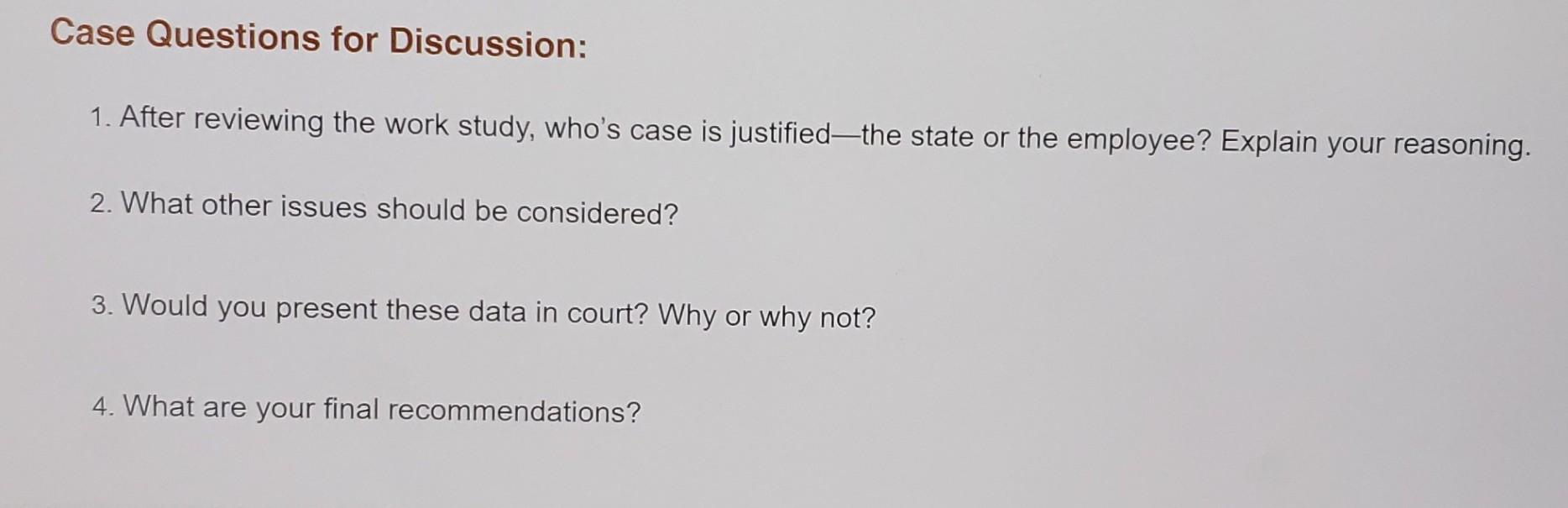
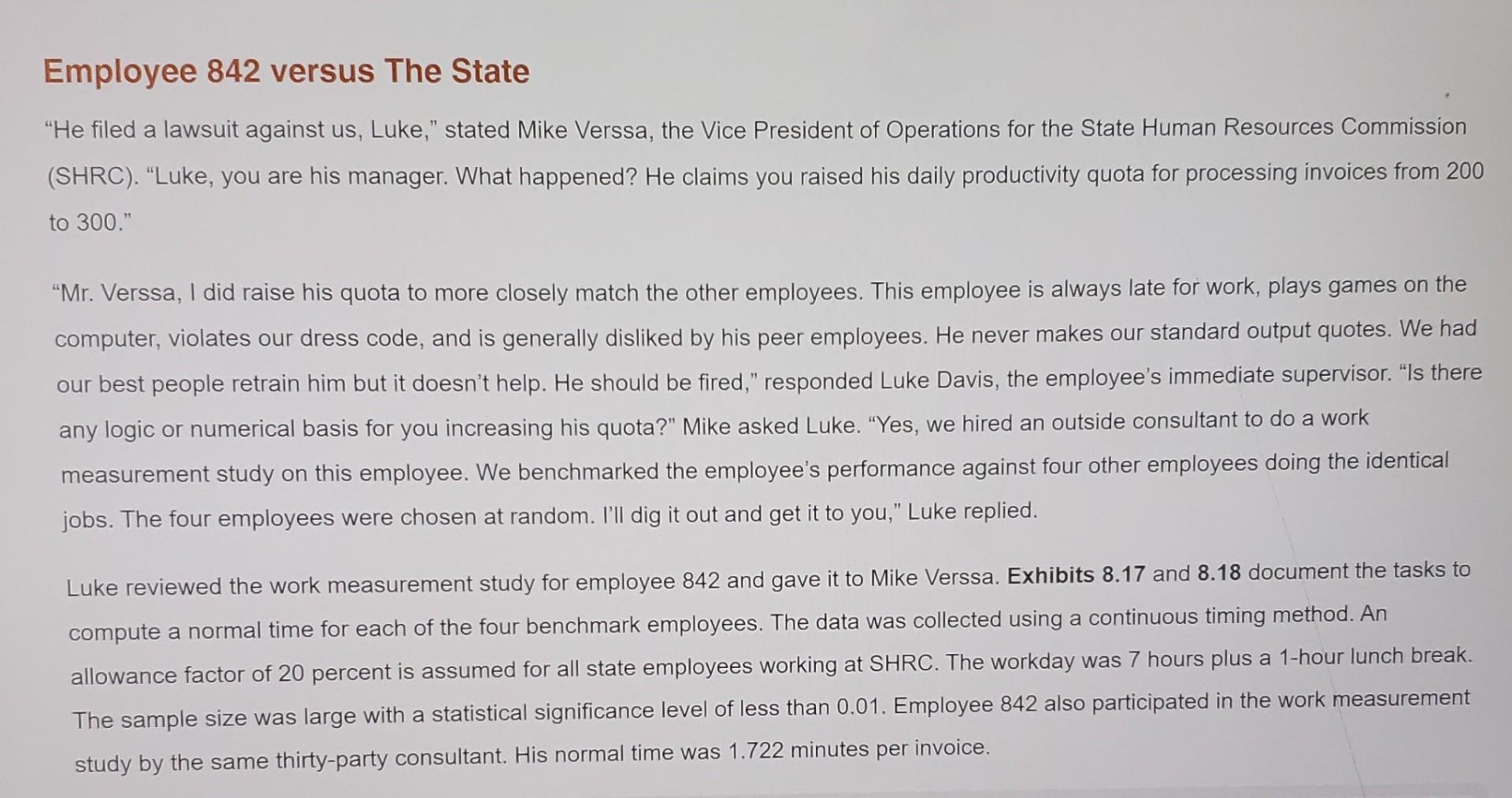
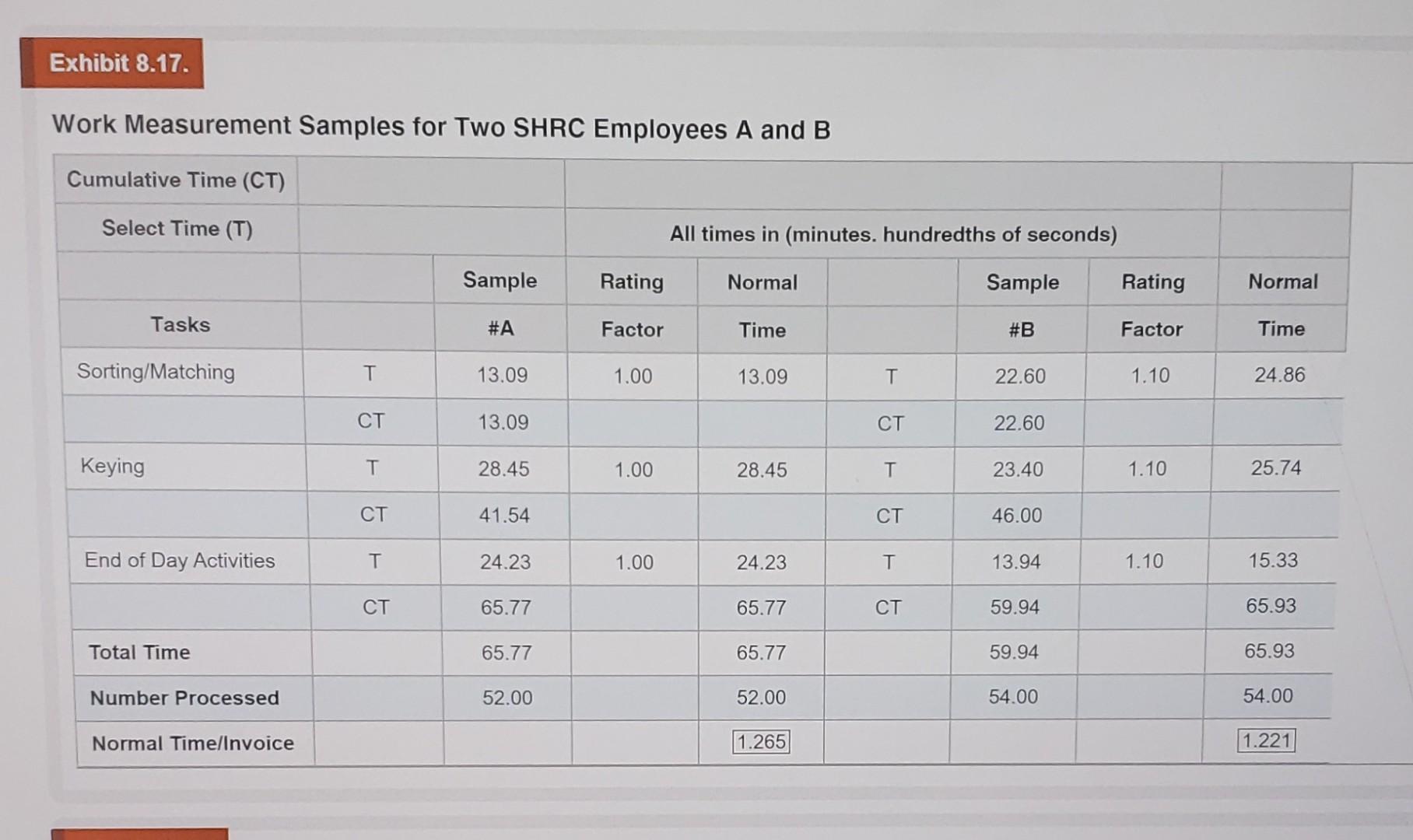
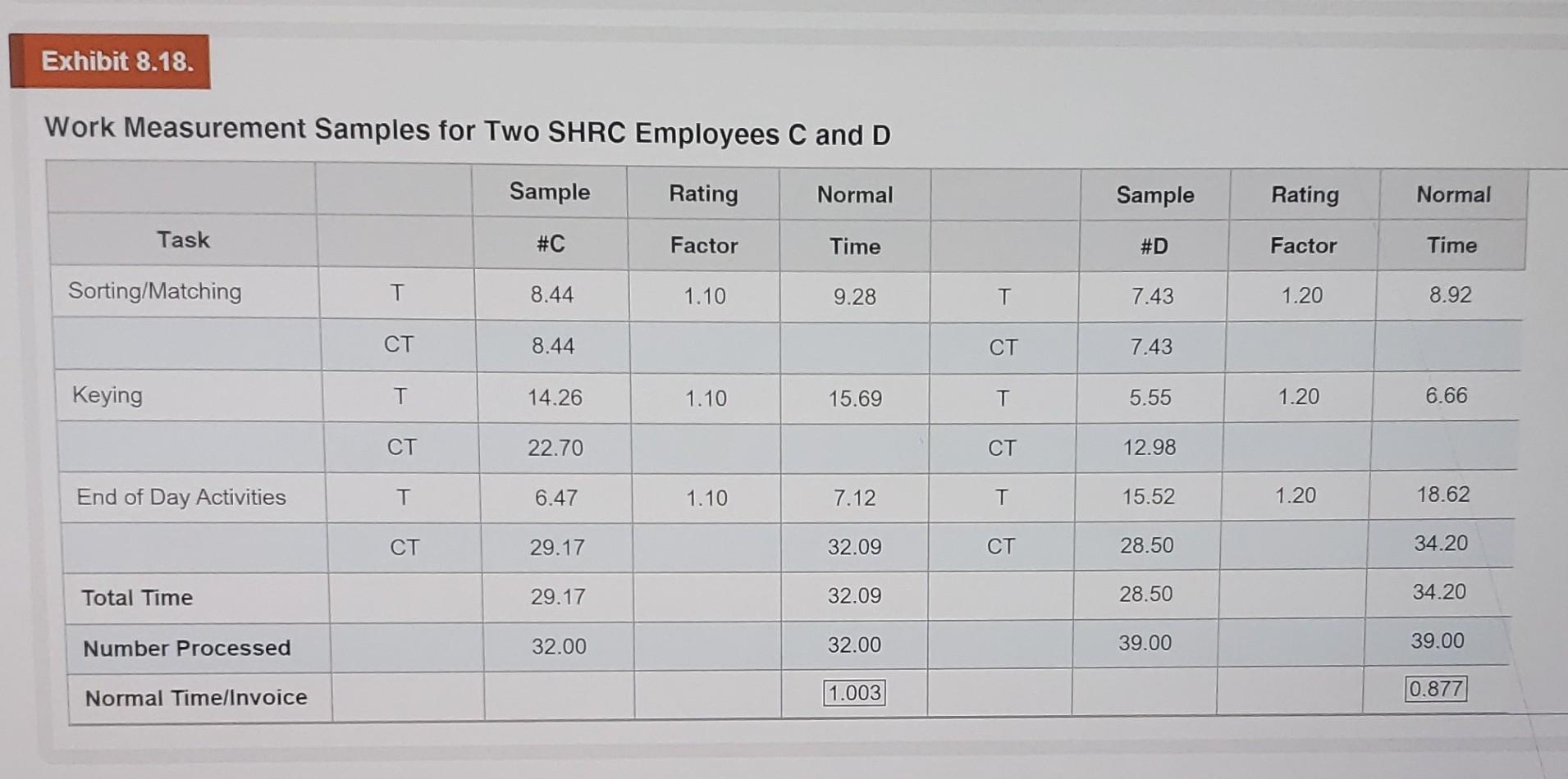
Case Questions for Discussion: 1. After reviewing the work study, who's case is justifiedthe state or the employee? Explain your reasoning. 2. What other issues should be considered? 3. Would you present these data in court? Why or why not? 4. What are your final recommendations? Employee 842 versus The State "He filed a lawsuit against us, Luke," stated Mike Verssa, the Vice President of Operations for the State Human Resources Commission (SHRC). "Luke, you are his manager. What happened? He claims you raised his daily productivity quota for processing invoices from 200 to 300." "Mr. Verssa, I did raise his quota to more closely match the other employees. This employee is always late for work, plays games on the computer, violates our dress code, and is generally disliked by his peer employees. He never makes our standard output quotes. We had our best people retrain him but it doesn't help. He should be fired," responded Luke Davis, the employee's immediate supervisor. Is there any logic or numerical basis for you increasing his quota?" Mike asked Luke. "Yes, we hired an outside consultant to do a work measurement study on this employee. We benchmarked the employee's performance against four other employees doing the identical jobs. The four employees were chosen at random. I'll dig it out and get it to you," Luke replied. Luke reviewed the work measurement study for employee 842 and gave it to Mike Verssa. Exhibits 8.17 and 8.18 document the tasks to compute a normal time for each of the four benchmark employees. The data was collected using a continuous timing method. An allowance factor of 20 percent is assumed for all state employees working at SHRC. The workday was 7 hours plus a 1-hour lunch break. The sample size was large with a statistical significance level of less than 0.01. Employee 842 also participated in the work measurement study by the same thirty-party consultant. His normal time was 1.722 minutes per invoice. Exhibit 8.17. Work Measurement Samples for Two SHRC Employees A and B Cumulative Time (CT) Select Time (T) All times in (minutes. hundredths of seconds) Sample Rating Normal Sample Rating Normal Tasks #A Factor Time #B Factor Time Sorting/Matching T 13.09 1.00 13.09 T 22.60 1.10 24.86 13.09 22.60 Keying T 28.45 1.00 28.45 T 23.40 1.10 25.74 41.54 46.00 End of Day Activities T 24.23 1.00 24.23 T 13.94 1.10 15.33 65.77 65.77 59.94 65.93 Total Time 65.77 65.77 59.94 65.93 Number Processed 52.00 52.00 54.00 54.00 Normal Time/Invoice 1.265 1.221 Exhibit 8.18. Work Measurement Samples for Two SHRC Employees C and D Sample Rating Normal Sample Rating Normal Task #C Factor Time #D Factor Time Sorting/Matching T 8.44 1.10 9.28 T 7.43 1.20 8.92 8.44 7.43 Keying T 14.26 1.10 15.69 T 5.55 1.20 6.66 CT 22.70 12.98 End of Day Activities T 6.47 1.10 7.12 T 15.52 1.20 18.62 29.17 32.09 28.50 34.20 Total Time 29.17 32.09 28.50 34.20 Number Processed 32.00 32.00 39.00 39.00 1.003 0.877 Normal Time/Invoice
Step by Step Solution
There are 3 Steps involved in it
1 Expert Approved Answer
Step: 1 Unlock

Question Has Been Solved by an Expert!
Get step-by-step solutions from verified subject matter experts
Step: 2 Unlock
Step: 3 Unlock