







Question: Case Study 1: Carbon-Based Energy ACE533 Applied Chemical Engineering Il: Energy Background The Canadian Oil Sands are an unconventional petroleum reservoir located primarily in Alberta,
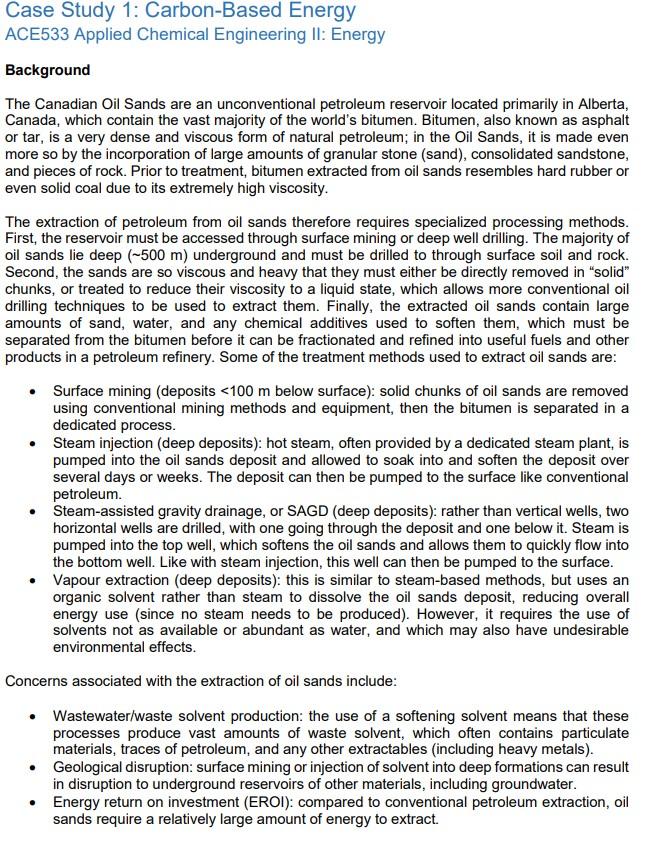
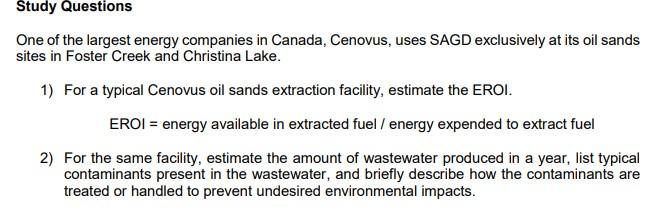
Case Study 1: Carbon-Based Energy ACE533 Applied Chemical Engineering Il: Energy Background The Canadian Oil Sands are an unconventional petroleum reservoir located primarily in Alberta, Canada, which contain the vast majority of the world's bitumen. Bitumen, also known as asphalt or tar, is a very dense and viscous form of natural petroleum; in the Oil Sands, it is made even more so by the incorporation of large amounts of granular stone (sand), consolidated sandstone, and pieces of rock. Prior to treatment, bitumen extracted from oil sands resembles hard rubber or even solid coal due to its extremely high viscosity. The extraction of petroleum from oil sands therefore requires specialized processing methods. First, the reservoir must be accessed through surface mining or deep well drilling. The majority of oil sands lie deep (-500 m) underground and must be drilled to through surface soil and rock. Second, the sands are so viscous and heavy that they must either be directly removed in "solid" chunks, or treated to reduce their viscosity to a liquid state, which allows more conventional oil drilling techniques to be used to extract them. Finally, the extracted oil sands contain large amounts of sand, water, and any chemical additives used to soften them, which must be separated from the bitumen before it can be fractionated and refined into useful fuels and other products in a petroleum refinery. Some of the treatment methods used to extract oil sands are: Surface mining (deposits
Step by Step Solution
There are 3 Steps involved in it

Get step-by-step solutions from verified subject matter experts
 Study Help