



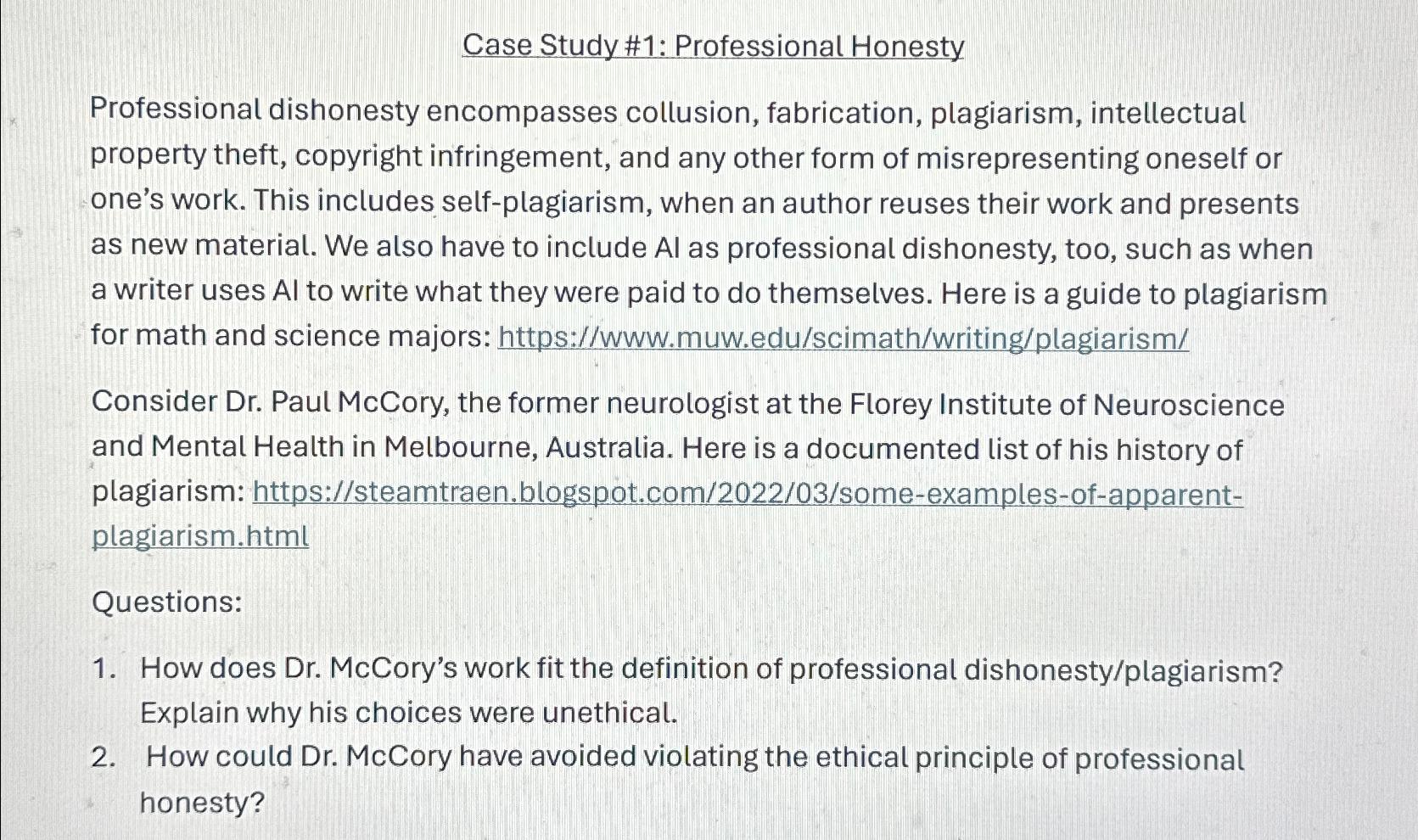
Question: Case Study # 1 : Professional Honesty Professional dishonesty encompasses collusion, fabrication, plagiarism, intellectual property theft, copyright infringement, and any other form of misrepresenting oneself
Case Study #: Professional Honesty
Professional dishonesty encompasses collusion, fabrication, plagiarism, intellectual property theft, copyright infringement, and any other form of misrepresenting oneself or one's work. This includes selfplagiarism, when an author reuses their work and presents as new material. We also have to include as professional dishonesty, too, such as when a writer uses Al to write what they were paid to do themselves. Here is a guide to plagiarism for math and science majors:
https:wwwmuw.eduscimathwritingplagiarism
Consider Dr Paul McCory, the former neurologist at the Florey Institute of Neuroscience and Mental Health in Melbourne, Australia. Here is a documented list of his history of plagiarism:
https:steamtraenblogspot.comsomeexamplesofapparentplagiarism.html
Questions:
How does Dr McCory's work fit the definition of professional dishonestyplagiarism Explain why his choices were unethical.
How could Dr McCory have avoided violating the ethical principle of professional honesty?
Step by Step Solution
There are 3 Steps involved in it
1 Expert Approved Answer
Step: 1 Unlock

Question Has Been Solved by an Expert!
Get step-by-step solutions from verified subject matter experts
Step: 2 Unlock
Step: 3 Unlock